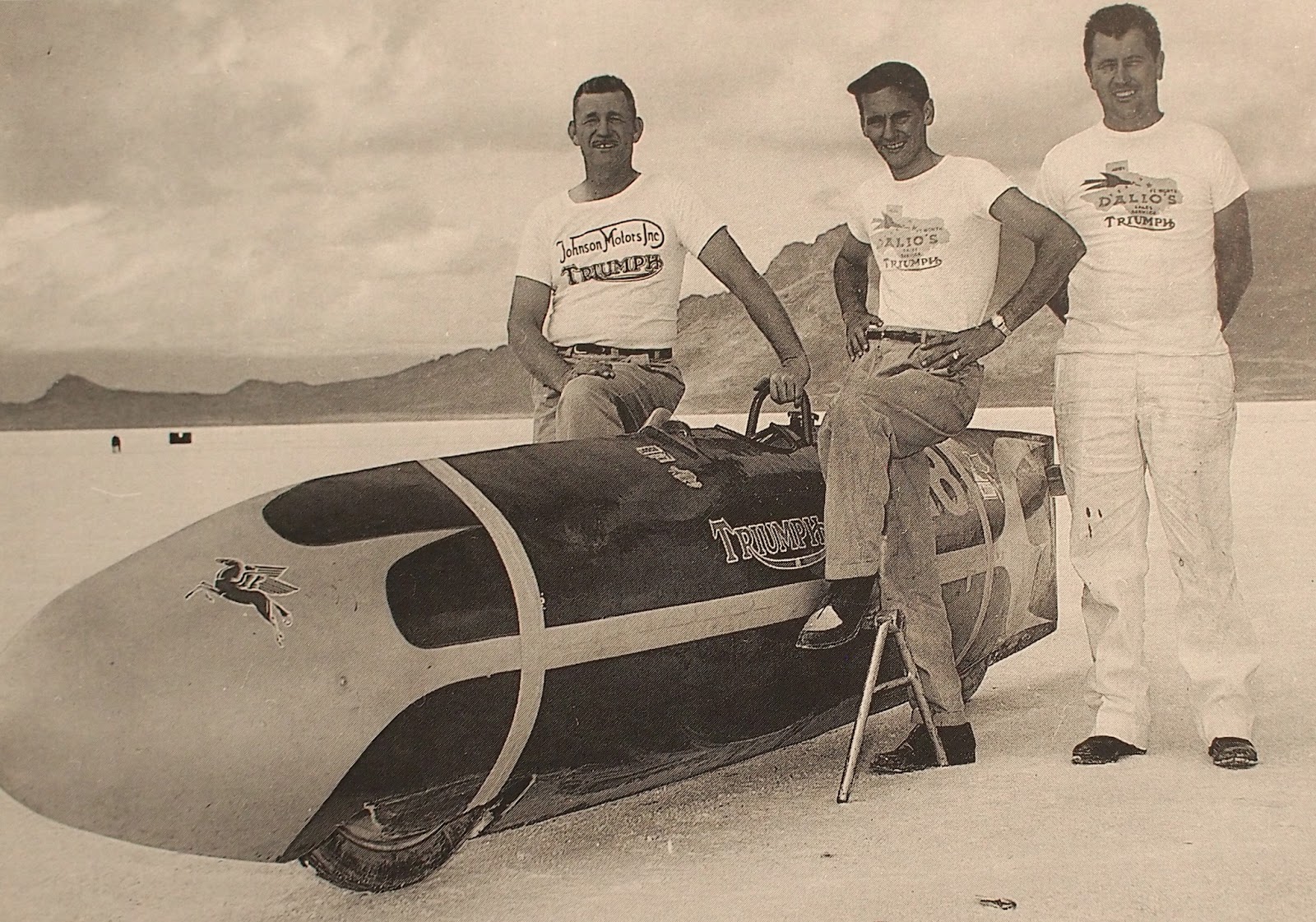
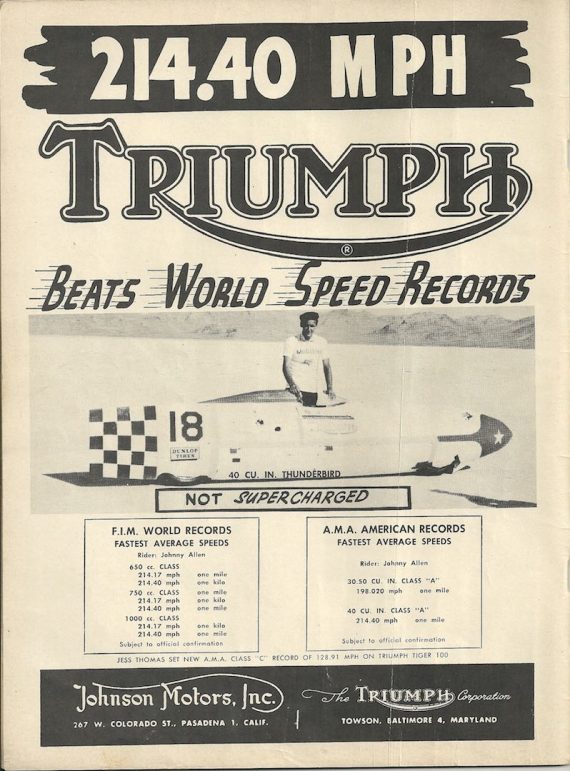
On September 6, 1956, a 27-year-old Texan named Johnny Allen squeezed into a homemade streamliner on the Bonneville Salt Flats and averaged 214.40 mph (345.04 km/h) through the measured mile. Nobody had ever gone faster on a motorcycle. Behind him sat a 650cc Triumph Thunderbird twin, and Triumph made sure the whole world heard about it. By late 1958 the company had a new sports model named after that patch of Utah salt. The Bonneville T120 would outlive the factory that built it and return under new ownership in Hinckley. Almost 70 years later, it’s still the bike most people picture when someone says Triumph.
Johnny Allen and the 214 MPH Streamliner
 Credit: Triumph Motorcycle Blog
The Texas Cee-Gar was a Fort Worth hot rod in every sense. Jack Wilson ran the service department at Dalio’s Triumph and built the engine, while airline pilot Stormy Mangham designed the long, narrow body. Ready to run, the machine weighed about 320 lb (145 kg) and had no suspension at all. Its lone Thunderbird twin burned a methanol-based blend and wasn’t supercharged.
Allen first took it to Bonneville in 1955 and ran roughly 193 mph (311 km/h). The FIM wouldn’t count it because none of its officials had been there to see it. When the team returned in 1956, German rider Wilhelm Herz had just pushed the record to 211.4 mph (340.2 km/h) on a supercharged 500cc NSU, and FIM observers were on hand this time. Allen later told Cycle magazine he hit the timing traps at 6,500 rpm. His two-way average made him the first American to hold the outright motorcycle record since 1923.
 Credit: Ultimate Motorcycling
What happened next gets murky. The run became tangled in a dispute with the FIM, and accounts still conflict on whether it was ever officially ratified. Triumph didn’t much care. Its ads started calling the product the “World’s Fastest Motorcycle,” and Allen’s speed stood until 1962, when Bill Johnson ran 224.57 mph (361.41 km/h) in another Triumph-powered streamliner.
Building the T120 Bonneville for 1959
 Credit: Triumph
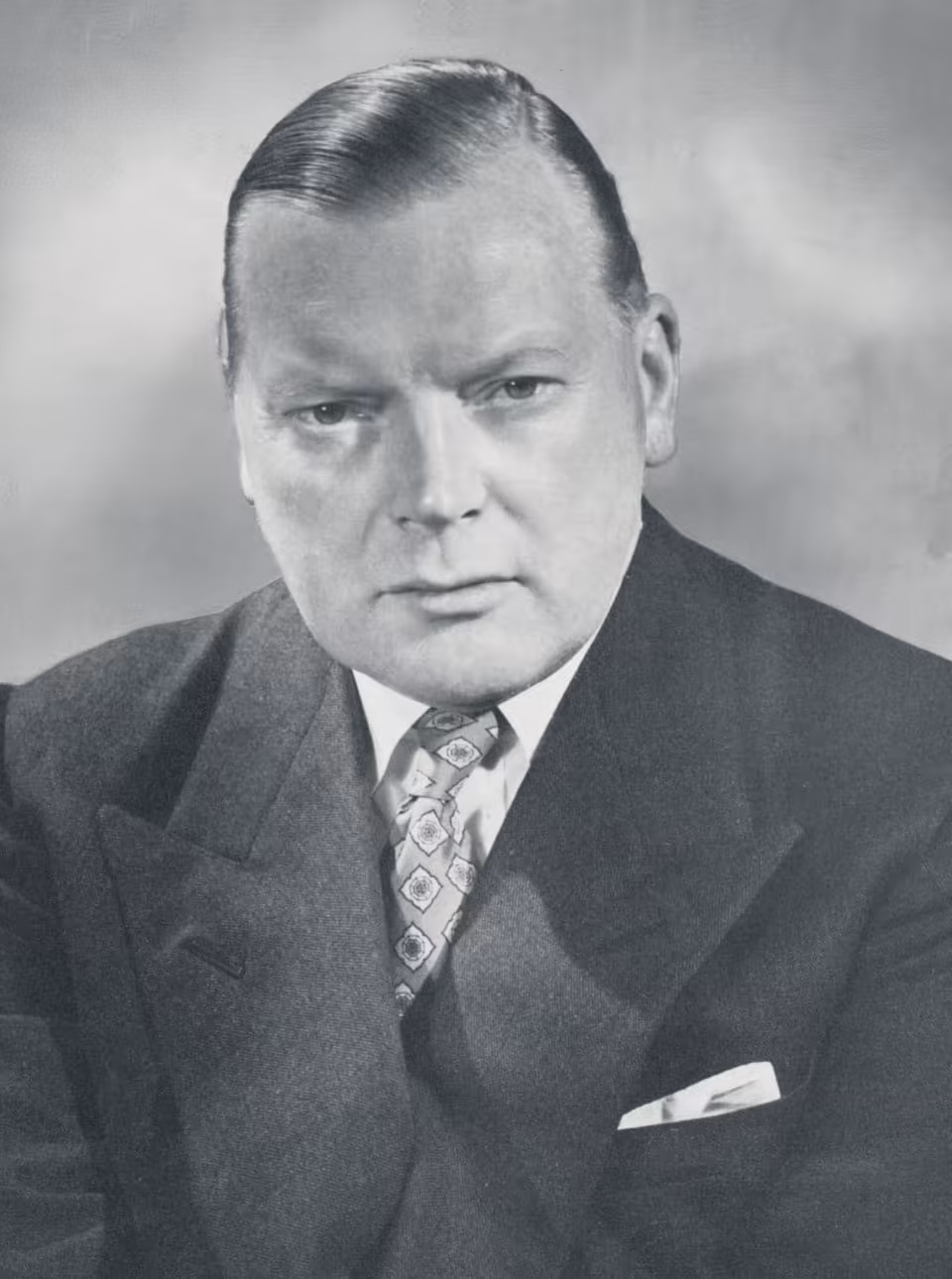
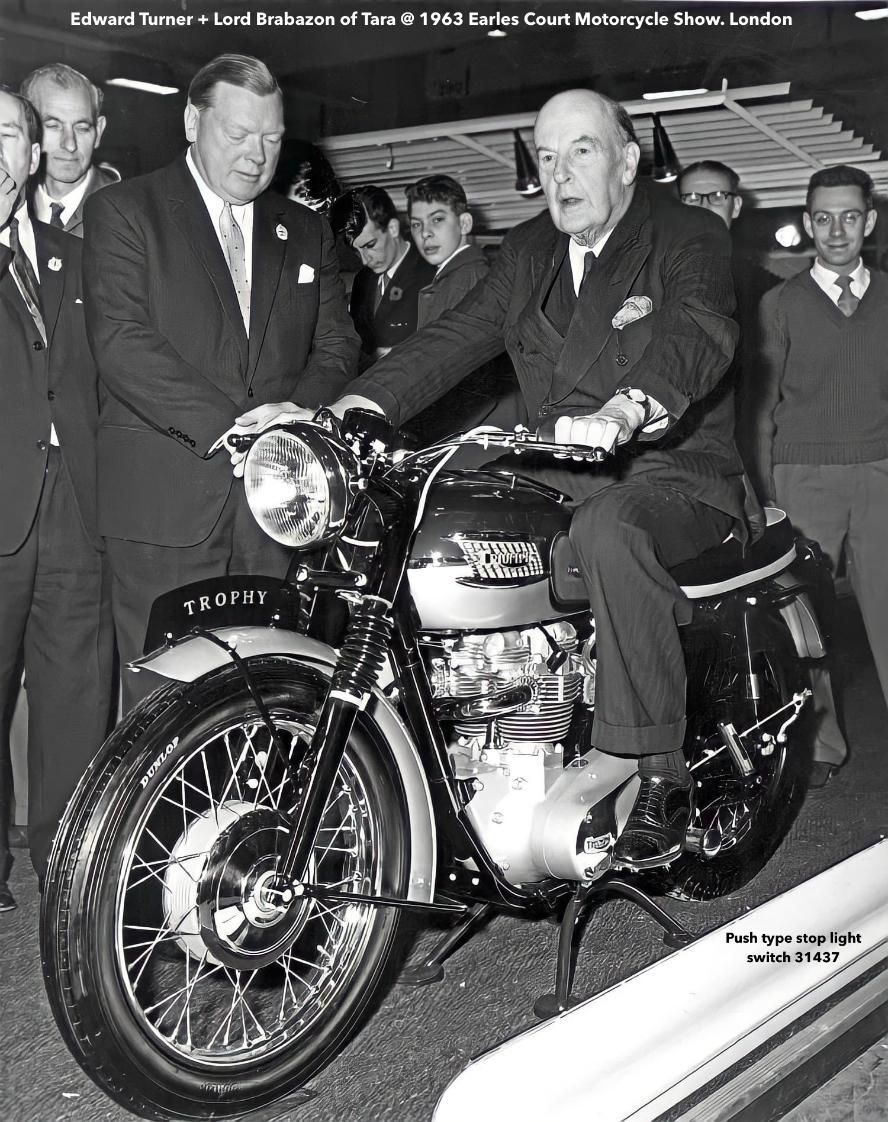
Triumph boss Edward Turner didn’t want the bike. Twin carburetors on a 650 sounded like trouble to him, and he reportedly warned that the project would take the company “straight into Carey Street,” the London home of the bankruptcy courts. The push came from America. Triumph’s US distributors knew their customers wanted more speed, and they talked Turner into building the bike and naming it after Allen’s run.
 Credit: Triumph
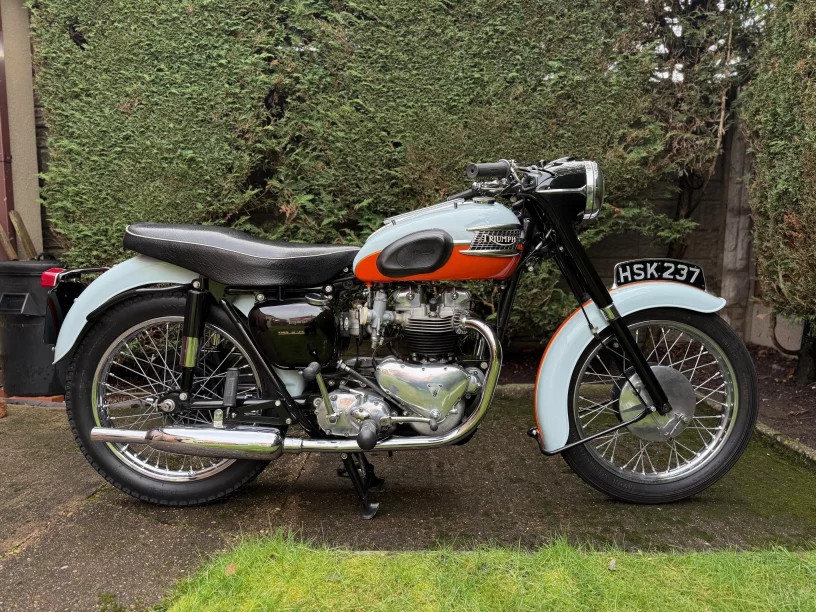
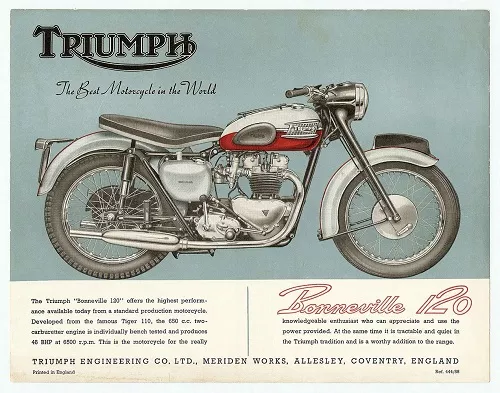
The T120 Bonneville debuted at the Earls Court show in London in November 1958. It came together so quickly that it never made Triumph’s 1959 catalog. Underneath, it was a Tiger 110 with the Tiger’s optional twin Amal Monobloc carburetors and hot inlet cam fitted as standard. The 649cc twin made 46 hp at 6,500 rpm and 37.8 lb-ft at 5,500 rpm. Real-world top speed landed somewhere between 108 and 115 mph (174 and 185 km/h), so the “120” in the name was more promise than measurement.
 Credit: IMCDB
Americans weren’t sold on the first version. It wore the touring Thunderbird’s headlight nacelle and big valanced fenders, painted in Pearl Grey and Tangerine, a look collectors now call the “Tangerine Dream.” The single-downtube frame also had a habit of weaving at speed. For 1960 Triumph switched to a twin-downtube duplex frame and a leaner look that suited the US market far better.
Production Racing and the Ton-Up Years
 Credit: Triumph
Unit construction arrived for 1963. The engine and gearbox now shared one set of cases, and the frame picked up extra bracing at the steering head and swingarm. In Britain, rockers used Bonnevilles to chase the “ton,” 100 mph (161 km/h), between transport cafés. Triumph’s biggest year in the US came in 1967, with an estimated 28,000 sales, and on December 31 of that year Evel Knievel jumped the Caesars Palace fountains on a T120TT. He came up short on the landing and was badly hurt.
 Credit: Didier Bassoulet
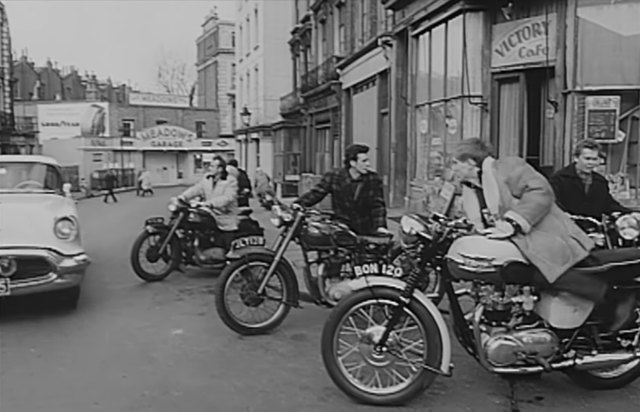
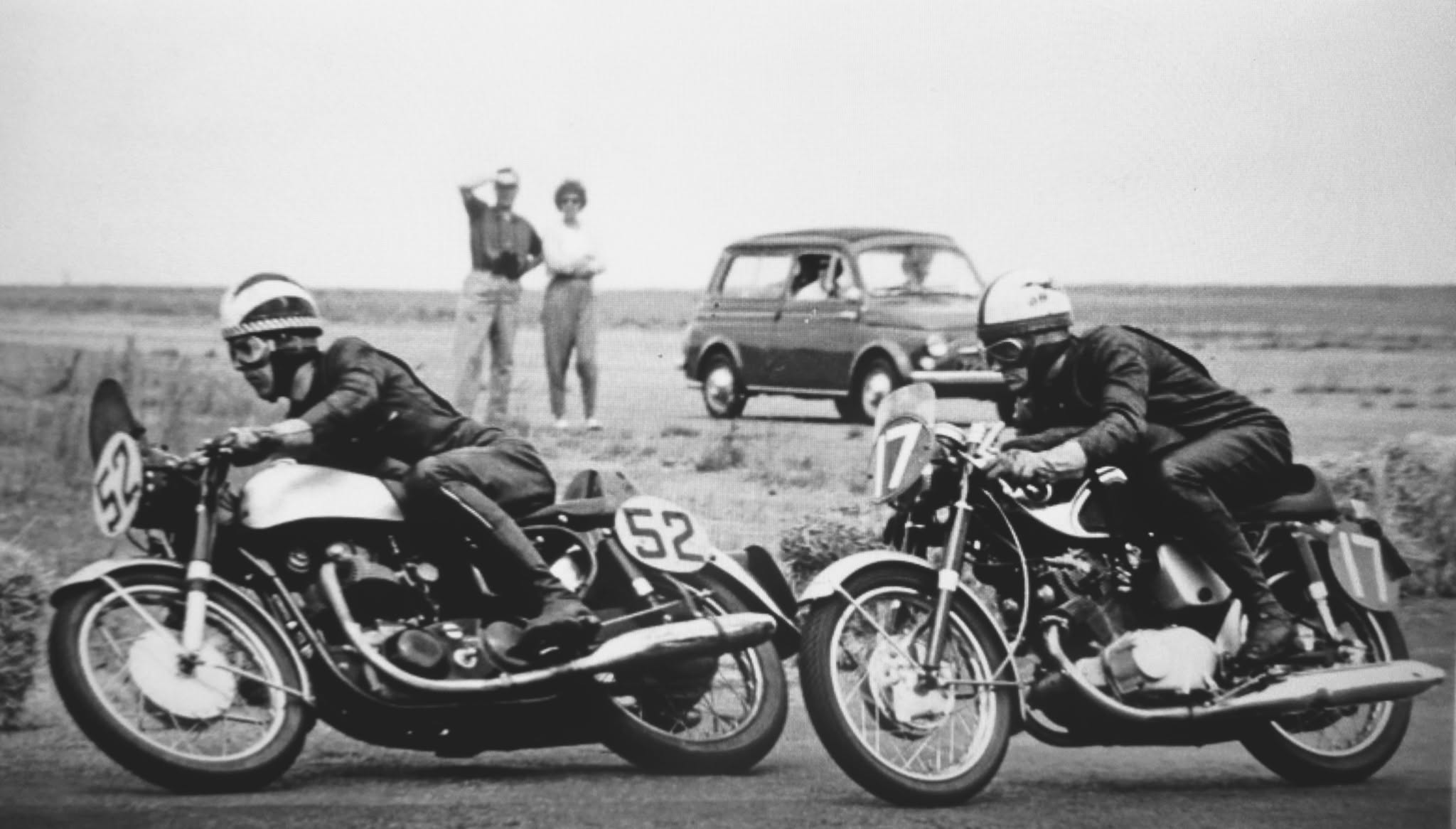
Racing is where the Bonneville earned its reputation. Tony Godfrey and John Holder won the 1962 Thruxton 500 on a T120, which led Triumph to build the T120R Thruxton, a hand-assembled homologation special with about 53 hp. Percy Tait and Malcolm Uphill won at Thruxton again in 1969. That June, Uphill took the 750cc Production TT on the Isle of Man, averaging 99.99 mph for the race with a best lap of 100.37 mph (161.53 km/h). Nobody had lapped the Mountain Course at over 100 mph on a production bike before. When the engine came apart afterward, the pistons turned out to be cracked. Dunlop renamed his K81 tires the TT100.
Japanese Pressure and the Meriden Decline
 Credit: Bike-Urious
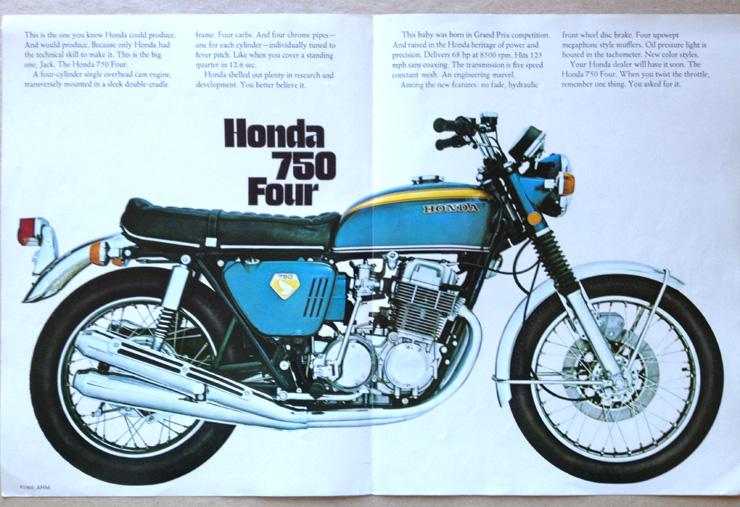
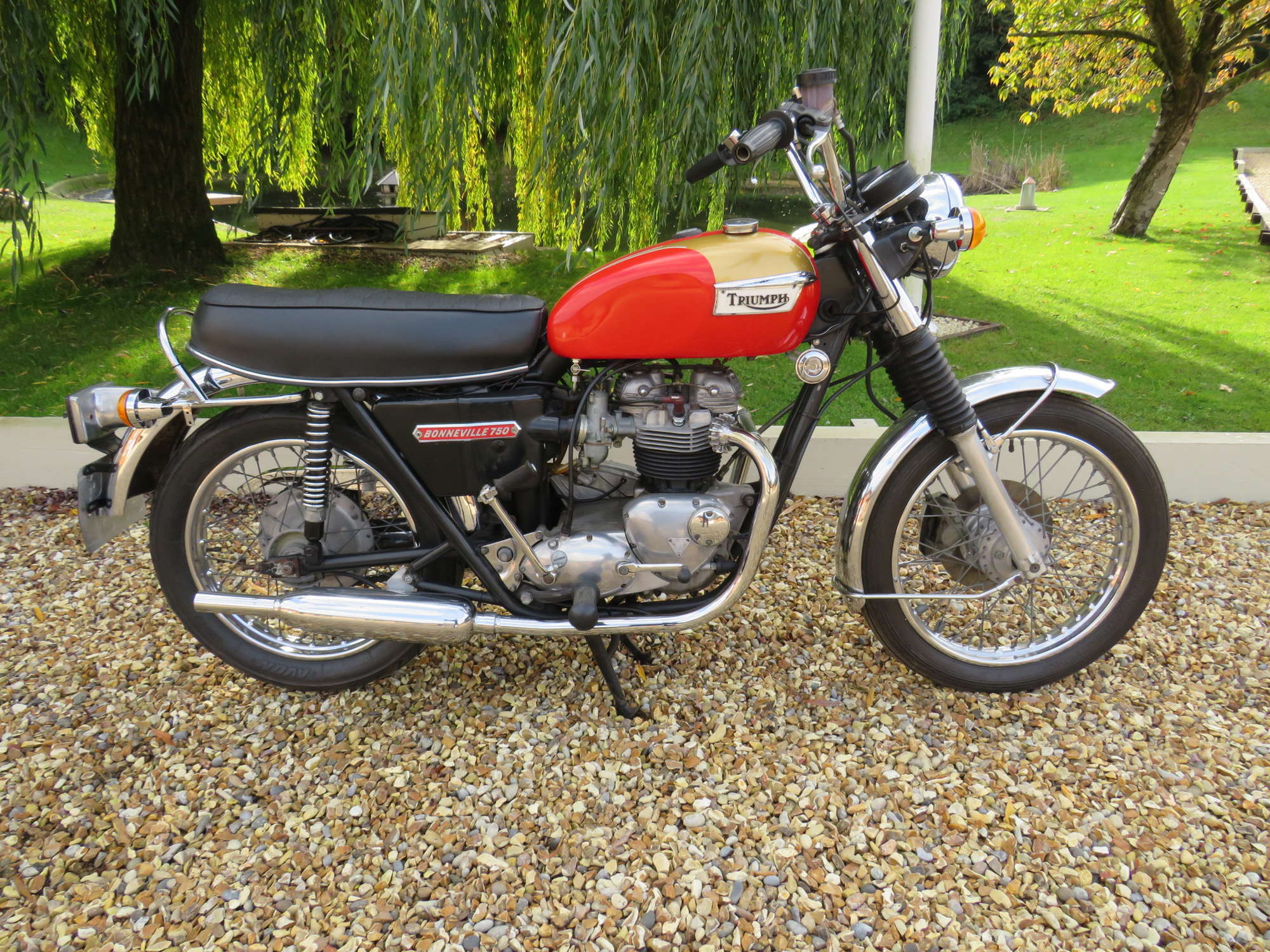
Then Honda’s CB750 showed up in 1969. Its four cylinders and electric starter made British twins feel old almost overnight, and BSA, Triumph’s parent company, was already losing money. The 1971 update moved the engine oil into the frame tubes. It was supposed to freshen the Bonneville up, but the taller seat it brought didn’t win many fans.
 Credit: Iconic Auctioneers
The T140 followed in 1973 with a 744cc version of the twin and a five-speed gearbox. Its timing was terrible. Later that year new owner Norton Villiers Triumph announced it would close Meriden, and the workers occupied the factory rather than walk away. The sit-in lasted into 1975. Fewer than 1,000 of the 650cc bikes were built in 1974, and the T120 never really came back.
The workers reopened Meriden as a cooperative with government money and kept the T140 going, adding electric start in 1980. It held on until August 1983. Housebuilder John Bloor bought the Triumph name and licensed Les Harris to keep making T140s in Newton Abbot, Devon. Using plenty of German and Italian parts, Harris built about 1,300 of them between 1985 and 1988.
Hinckley and the Modern Bonneville
 Credit: Paolo Cecchini
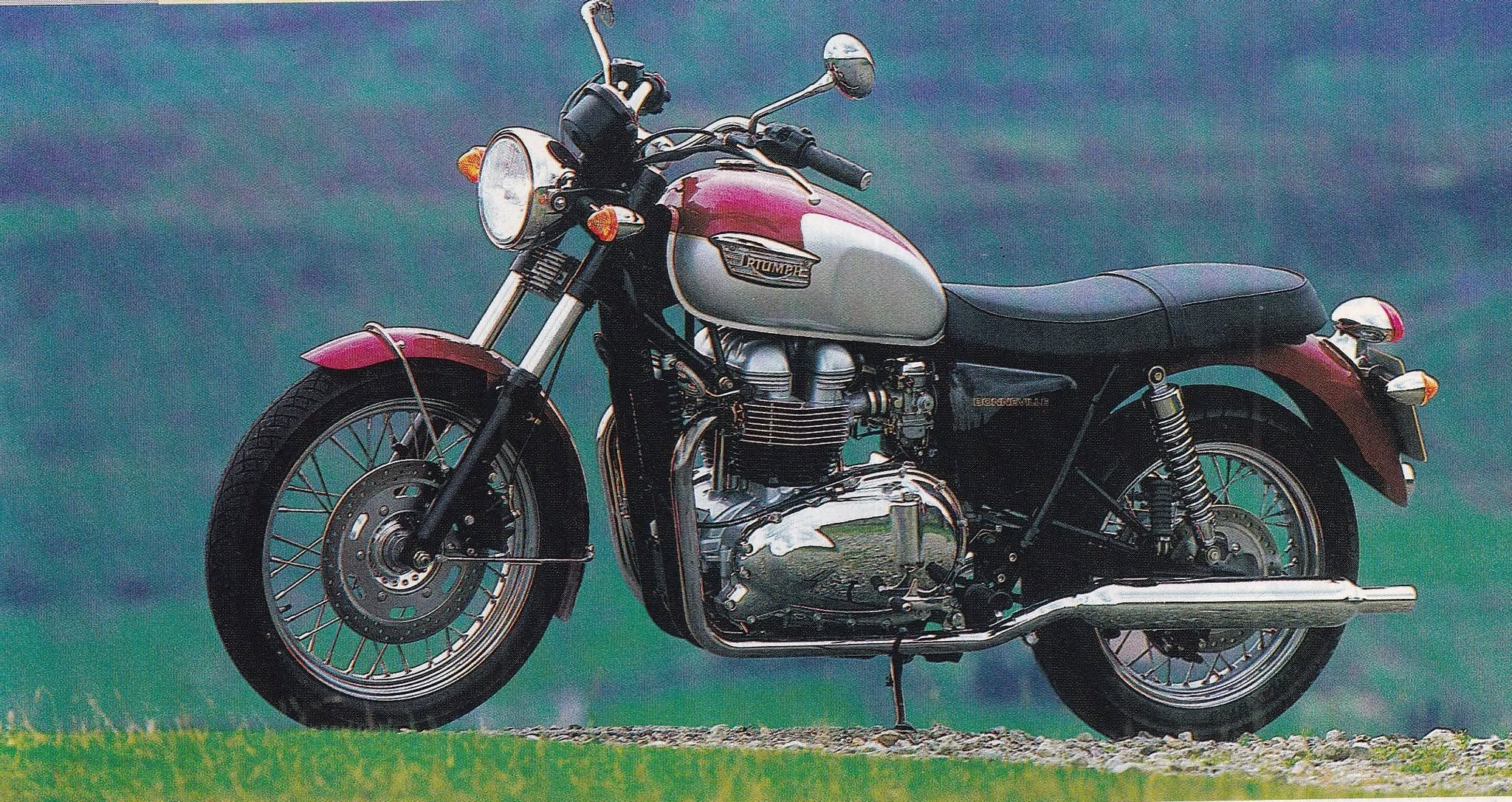
Bloor took his time. He built a new factory in Hinckley, Leicestershire, and spent the 1990s selling modern triples and fours before touching the Bonneville name. The new bike appeared at the Intermot show in Munich in September 2000 and went on sale in 2001. Its air-cooled 790cc twin made 62 hp at 7,400 rpm and 44 lb-ft at 3,500 rpm, and the styling leaned hard on the 1960s T120.
 Credit: Shannons Club
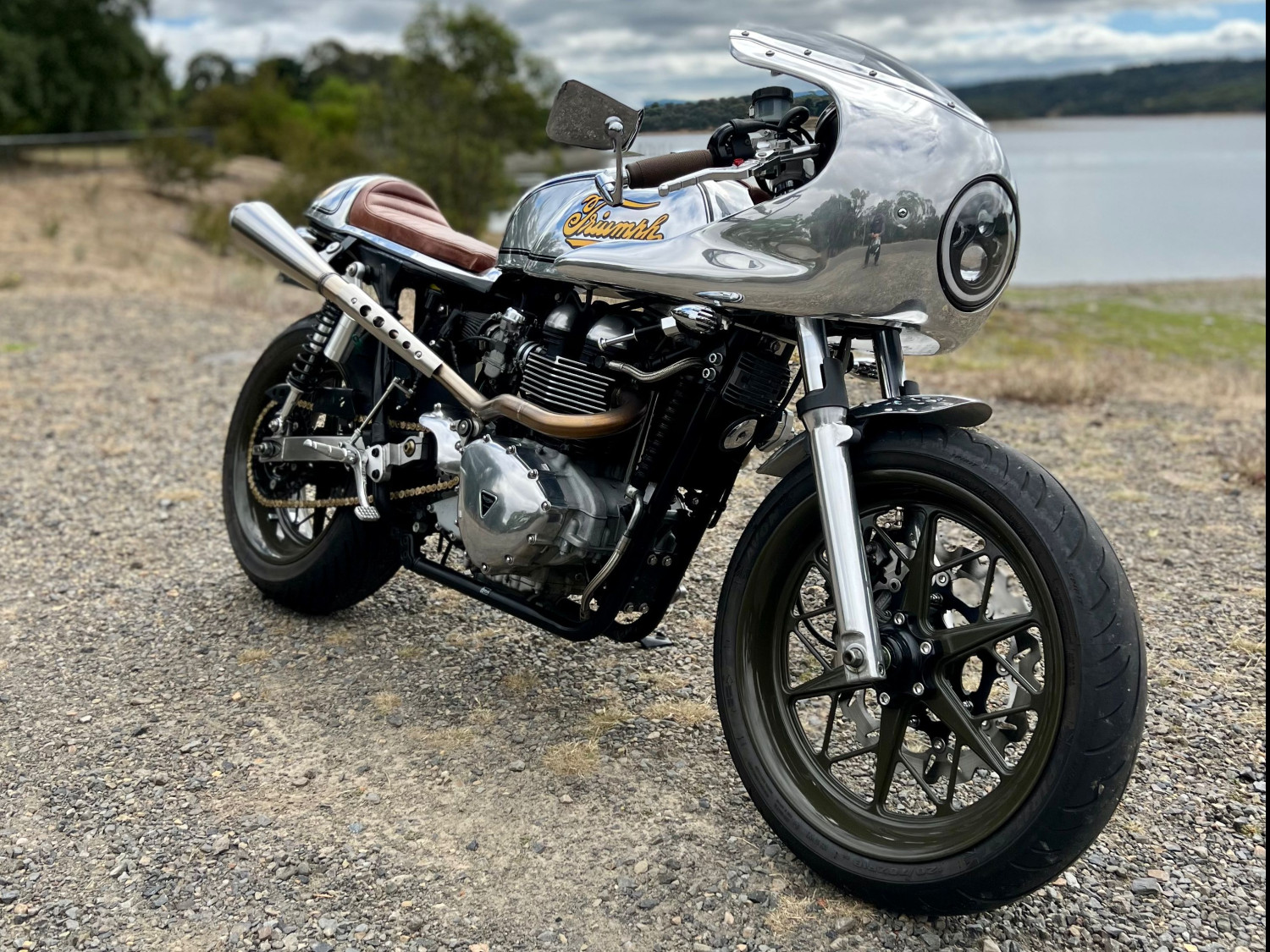
It grew from there. The Thruxton got an 865cc version in 2004, and every Bonneville had it by 2007. Fuel injection came for 2008 in Britain and 2009 in the US, hidden behind throttle bodies dressed up as carburetors. For 2016 the family switched to liquid cooling. Today’s Bonneville T120 runs a 1,200cc twin with a 270-degree crank, good for 79 hp at 6,550 rpm and 77.4 lb-ft at 3,500 rpm. That’s 33 hp more than the 1959 original from a bike that still looks the part.
The limited-edition Bonneville T214 made the link to the salt explicit. Triumph built 1,000 numbered examples in the Texas Cee-Gar’s Caspian Blue and Pure White, right down to the white star from the streamliner’s nose painted on the front fender.