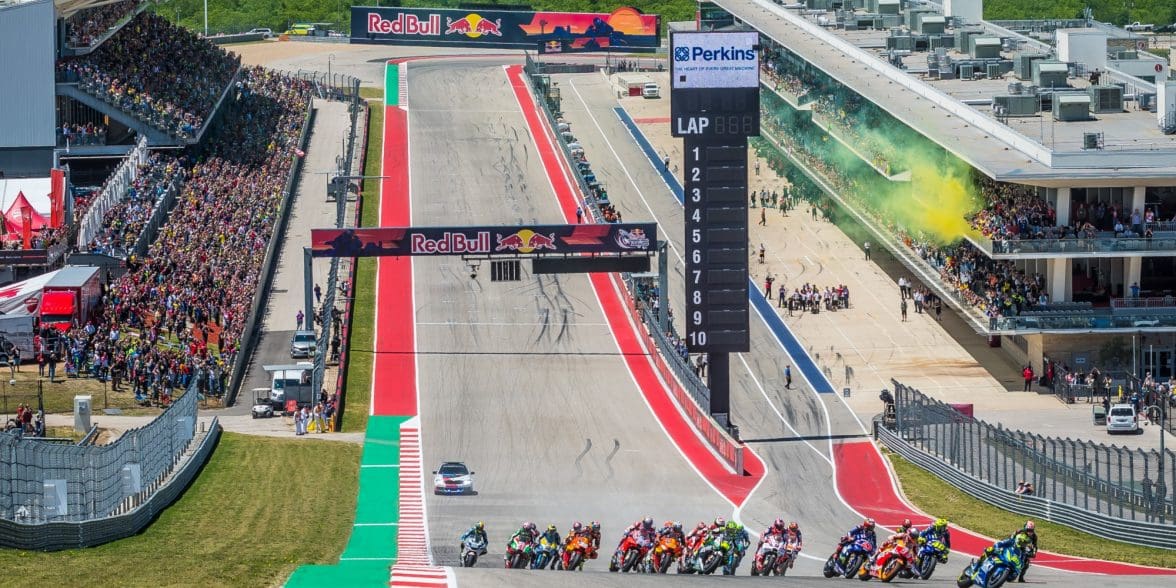
There’s something about watching superbikes in person that TV can’t match. You hear the bikes long before they come over the crest, and you finally get a sense of how fast the riders are going. Plenty of US tracks also let you go one step further and ride the circuit yourself on a track day.
We picked nine American tracks with strong motorcycle racing credentials. All of them are among the 10 venues on the 2026 MotoAmerica calendar, and most open their gates to amateur riders the rest of the year. For each one, you’ll find the length, the number of turns and the width (when the track publishes it), plus some history and the corners riders talk about most.
1. WeatherTech Raceway Laguna Seca, California
 Credit: Wethertech Raceway
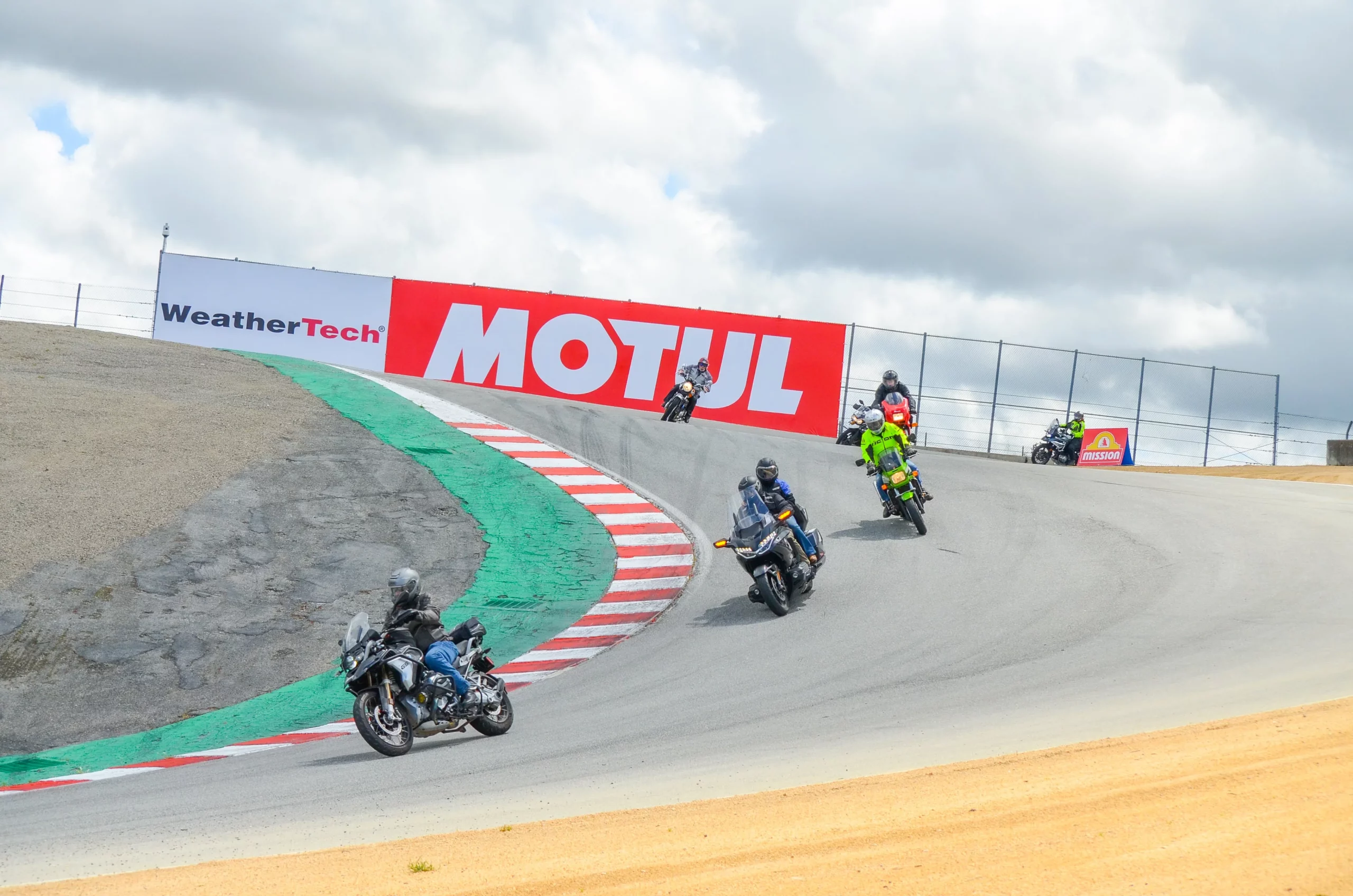
Laguna Seca has been around since 1957, and it takes its name from the dry lake bed it was built on. The track is 2.238 miles (3.602 km) long with 11 turns and about 40 ft (12.2 m) wide, with 180 ft (55 m) of elevation change over a lap. The current layout dates to 1988, when the infield section at Turns 3, 4 and 5 was added so the track would meet the FIM’s minimum length for Grand Prix motorcycle racing.
Its motorcycle résumé is long. MotoGP raced here between 2005 and 2013, and World Superbike visited for several seasons before the series dropped its US round. Today, Laguna Seca is still a stop on the MotoAmerica calendar.
Then there’s the Corkscrew. At Turns 8 and 8A, the track drops 59 ft (18 m) in roughly 450 ft (137 m), and the entry sits over a blind crest, so you have to start braking before you can see the apex. Right after it comes Turn 9, the Rainey Curve, named after three-time 500cc world champion Wayne Rainey. If you plan to stay the whole weekend, there are six camping areas around the track.
2. Road America, Wisconsin
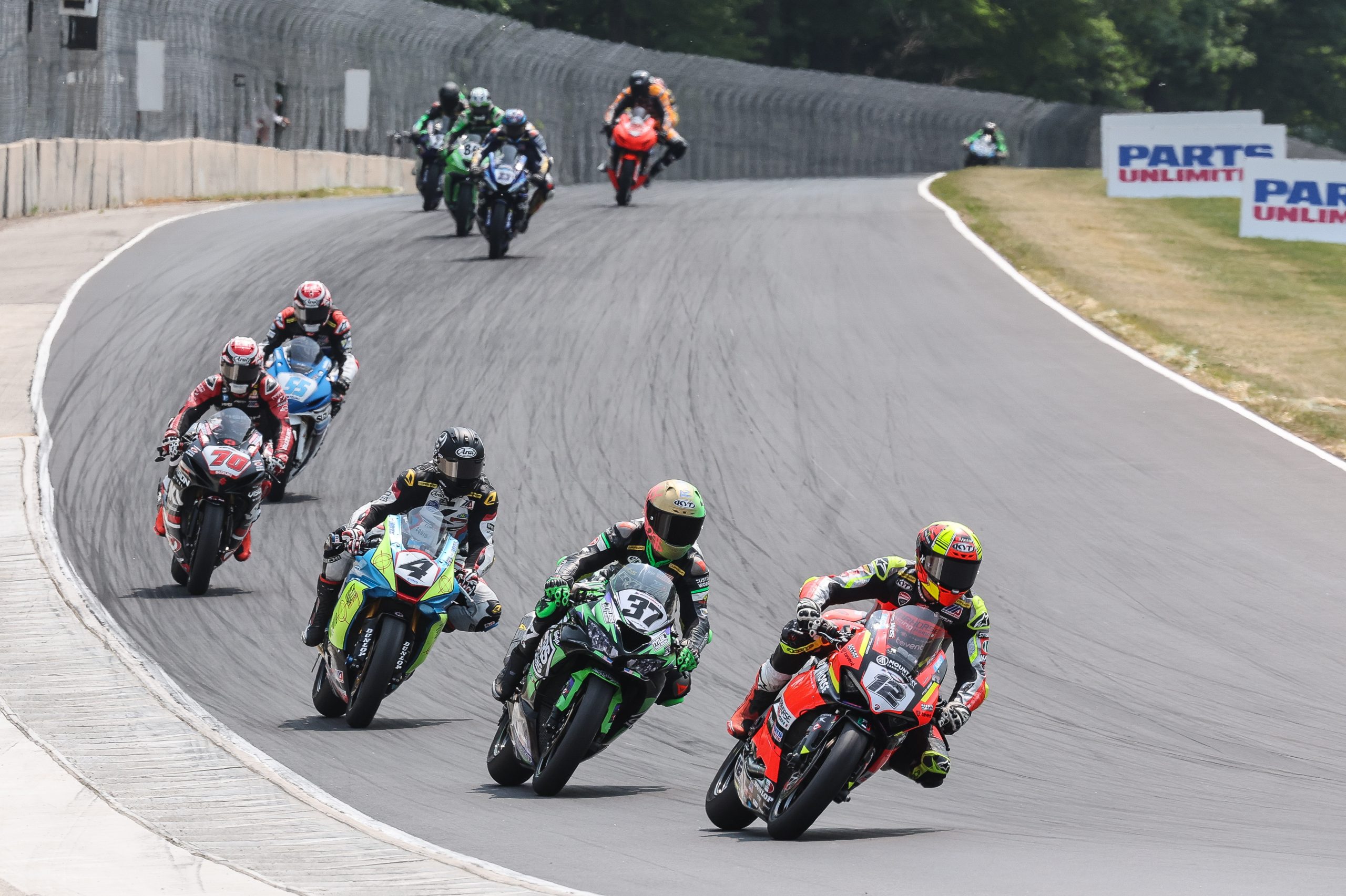 Credit: Motoamerica
Some people call Road America “America’s National Park of Speed,” and once you see the place you’ll get why. The track sits on 640 acres (259 hectares) of rolling countryside near Elkhart Lake, and fans can walk to most of the corners. The lap is 4.048 miles (6.515 km) long with 14 turns, which makes it the longest track on this list, and the 4,405 ft (1,343 m) front straight is 36 ft (11 m) wide.
The first race took place on September 10, 1955, and the layout hasn’t changed since. Very few circuits in the world can say that. Highway engineer Clif Tufte designed it after the races on public roads around Elkhart Lake came to an end, and he used the natural hills of the Kettle Moraine region to shape the lap.
Riders mostly talk about the Kink, a fast right-hander on the back section of the track. Motorcycle racing has a long history at Road America, and the track remains on the MotoAmerica schedule.
3. Barber Motorsports Park, Alabama
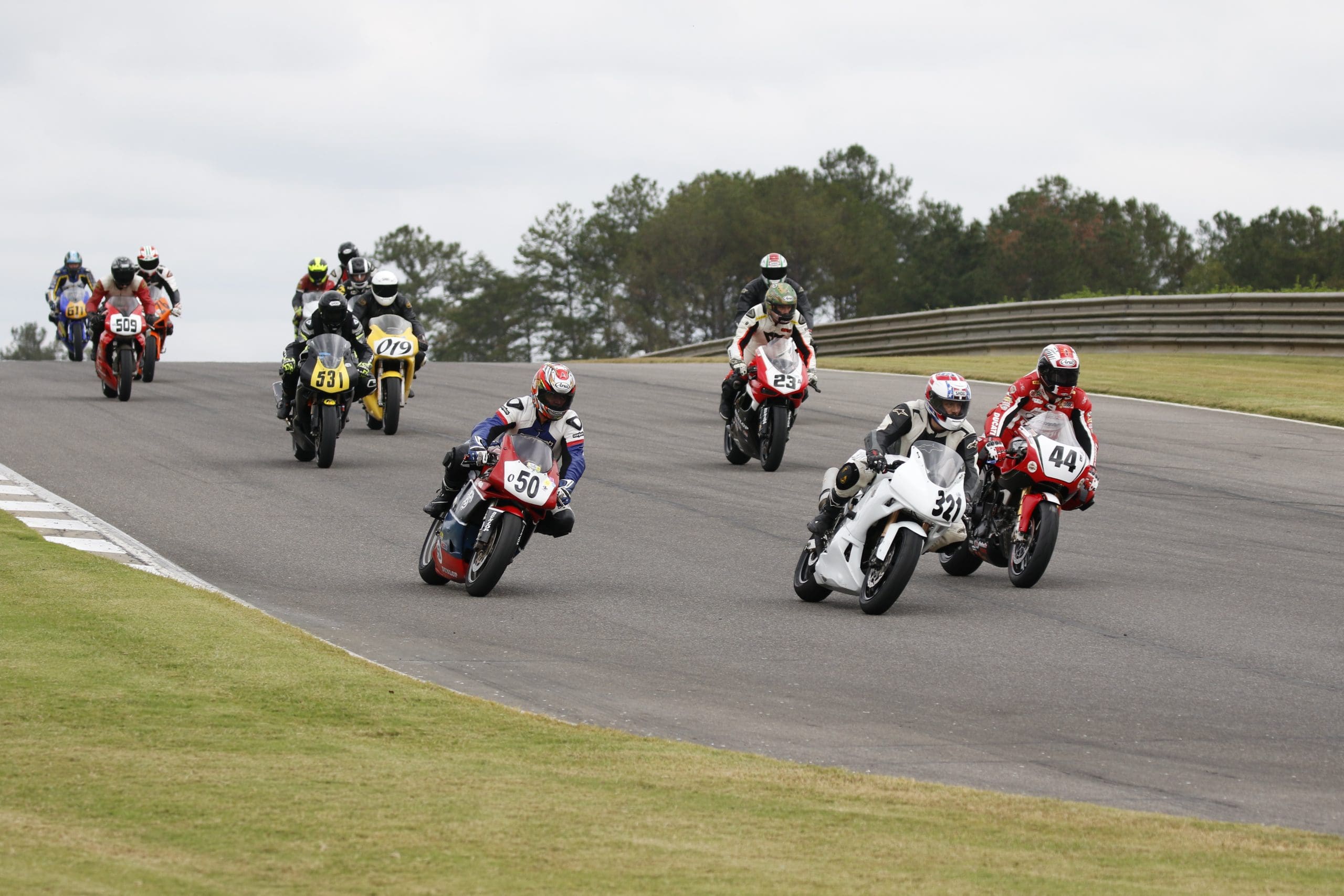 Credit: Alabama Travel
If you’re into vintage bikes, Barber Motorsports Park should be near the top of your list. George Barber built the park next to his motorcycle collection, and the Barber Vintage Motorsports Museum is recognized by Guinness World Records as the largest motorcycle museum in the world. It holds more than 1,400 bikes.
The track opened in 2003. Alan Wilson designed it on a hillside on the eastern side of Birmingham, and it runs clockwise for 2.38 miles (3.83 km) through 17 turns, with more than 80 ft (24 m) of elevation change. At 45 ft (13.7 m), it’s also wider than older tracks such as Laguna Seca and Mid-Ohio, so riders have room for different lines and passing.
The grounds look more like a golf course than a racetrack, which is why people call it “the Augusta National of Motorsports.” Keep an eye out for the giant steel spider next to Turn 5, which gave that section its nickname, Charlotte’s Web. MotoAmerica races here each spring, and the Barber Vintage Festival in the fall is one of the biggest vintage motorcycle gatherings in North America.
4. Circuit of the Americas, Texas
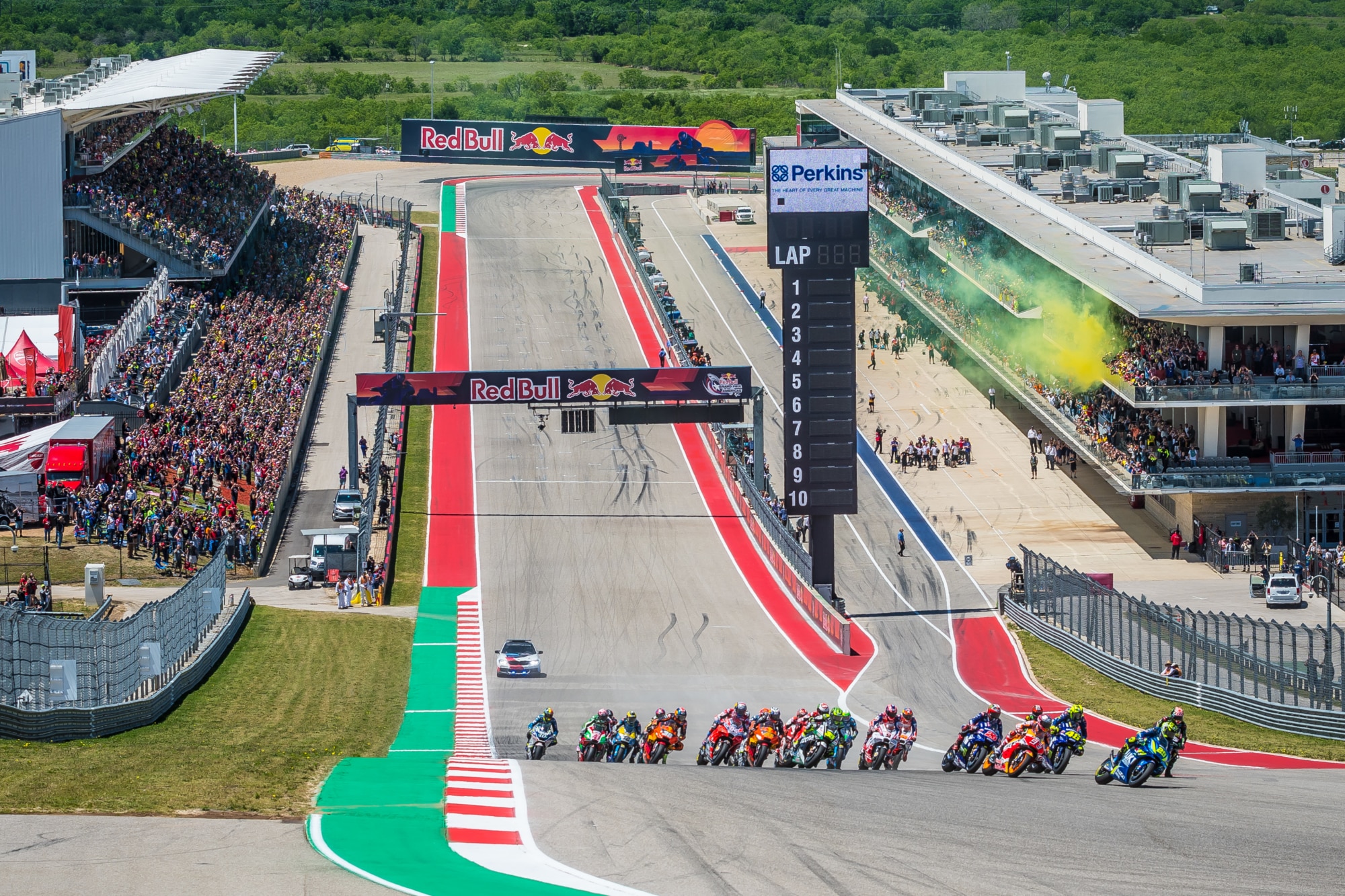 Credit: Motoamerica
COTA is the youngest track on this list. It opened in October 2012 as the first US circuit built specifically for Formula 1, and 1993 500cc world champion Kevin Schwantz was part of the design team. The Grand Prix layout is 3.426 miles (5.513 km) long with 20 turns and runs counterclockwise, with 133 ft (40 m) of elevation change. The width changes depending on the section, between 42 and 52 ft (12.8 and 15.8 m).
The lap starts with the part everyone remembers, a steep uphill run to Turn 1. It’s a tight, blind left-hander where you brake going uphill and turn in right at the crest. Some sections will look familiar to F1 fans, since Turns 3 through 6 are modeled on the Maggotts-Becketts complex at Silverstone and Turns 12 through 15 resemble the stadium section at Hockenheim. There’s also a shorter 2.3-mile (3.7 km) National layout used for smaller racing and driving events.
MotoGP has raced here since 2013, and Marc Márquez has the best record at the track, with seven premier-class wins, six of them in a row between 2013 and 2018. Marco Bezzecchi won the 2026 race. MotoAmerica also brought its riders to Austin in 2026.
5. VIRginia International Raceway, Virginia
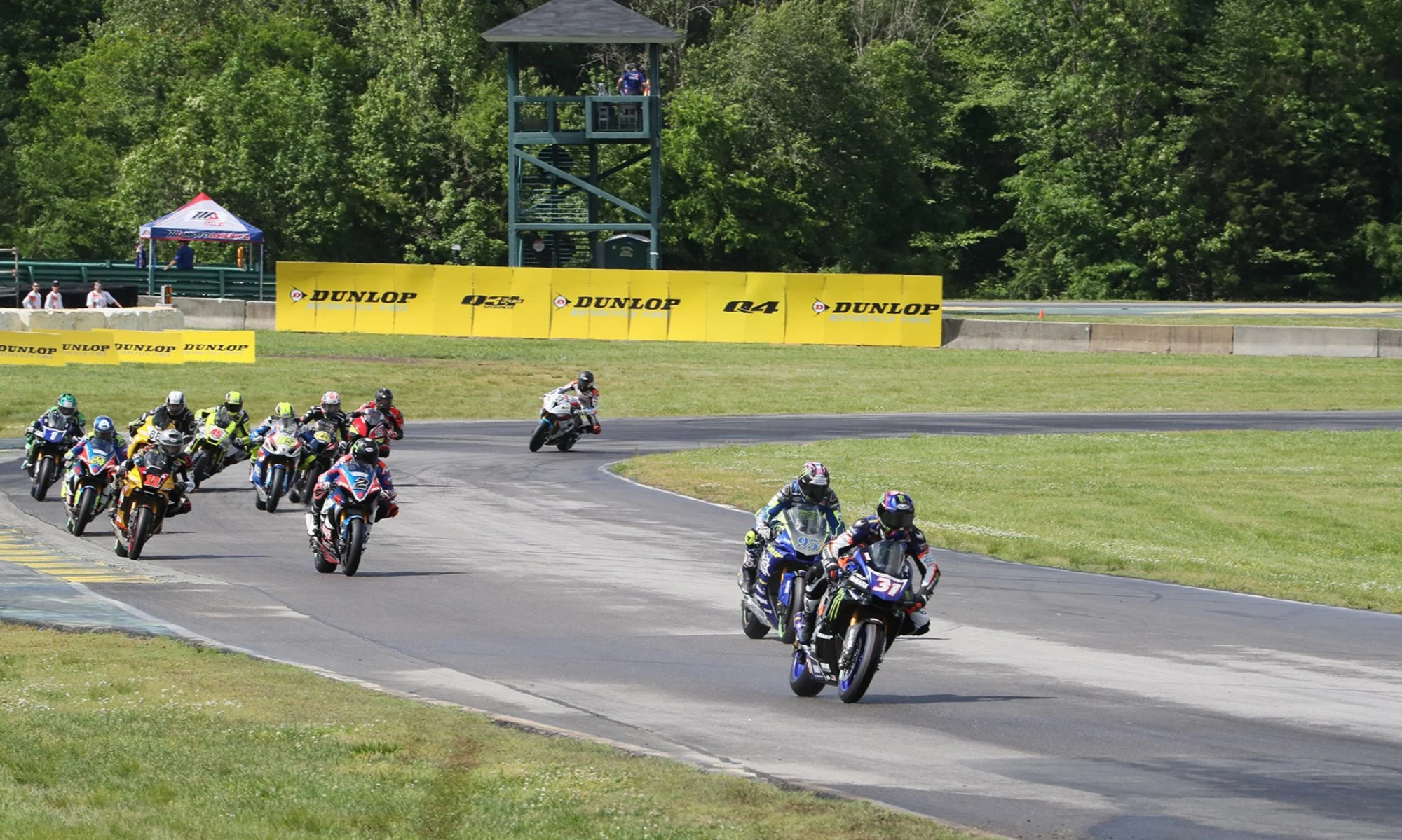 Credit: Roadracing World
VIR has one of the better comeback stories in American racing. It opened in 1957, and Carroll Shelby won the first SCCA race there in a Maserati 450S. Money problems shut it down in 1974, and the land went back to farming until the track reopened in 2000. The rebuild widened the surface to 40 ft (12.2 m) and added modern safety features, but the backbone of the original Full Course stayed.
That Full Course is 3.27 miles (5.263 km) long with 17 turns and about 130 ft (40 m) of elevation change. The best-known section is the Climbing Esses at Turns 7, 8 and 9, an uphill left-right-left-right sequence you enter at high speed. Oak Tree (Turn 11) is named after a tree that used to stand next to the corner. It’s slow, but it leads onto the long back straight, so a good exit pays off all the way down to the next braking zone. Later in the lap, the Roller Coaster at Turn 14 has a downhill drop that works like a smaller version of the Laguna Seca Corkscrew.
If you want to ride it yourself, VIR is a good bet. The facility has six configurations and can run two of them at the same time, so it hosts a lot of track days and club events every year. MotoAmerica races here in 2026 too.
6. Michelin Raceway Road Atlanta, Georgia
 Credit: MotoAmerica
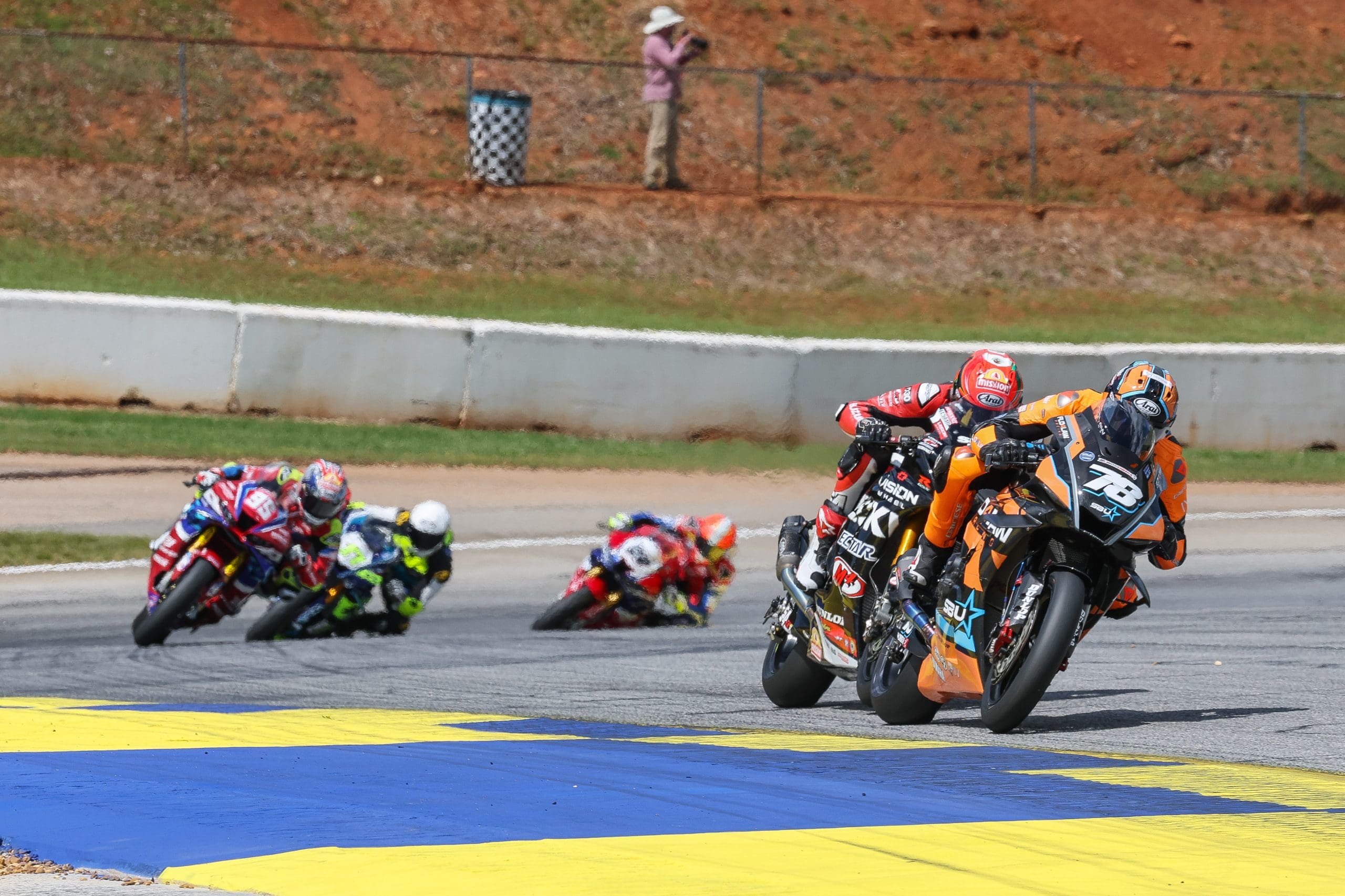
Road Atlanta was built in about six months and held its first race on September 13, 1970. The track is 2.54 miles (4.088 km) long with 12 turns, it’s about 40 ft (12.2 m) wide, and it has 79 ft (24 m) of elevation change. It hosted the SCCA Runoffs between 1970 and 1993, and since 1998 it has been home to Petit Le Mans, IMSA’s big endurance race.
Motorcycle racing has shaped this track too. In the winter of 2007-2008, Turns 4 and 12 were reconfigured to make them safer for bikes, while the line for cars stayed pretty much the same. MotoAmerica has raced here since 2015, and in April 2026, Road Atlanta hosted the first regular round of the MotoAmerica Superbike season.
On track, the esses between Turns 3 and 5 are the highlight. It’s a fast left-right-left sequence that goes downhill and then back up, and you don’t get much time to settle the bike between direction changes. Turn 12 is the other one to know, a blind downhill corner onto the front straight where you need to hit your turn-in point. You’ll also notice Georgia’s red clay all around the property. Michelin has held the naming rights since 2019.
7. Daytona International Speedway, Florida
 Credit: Roadracing World
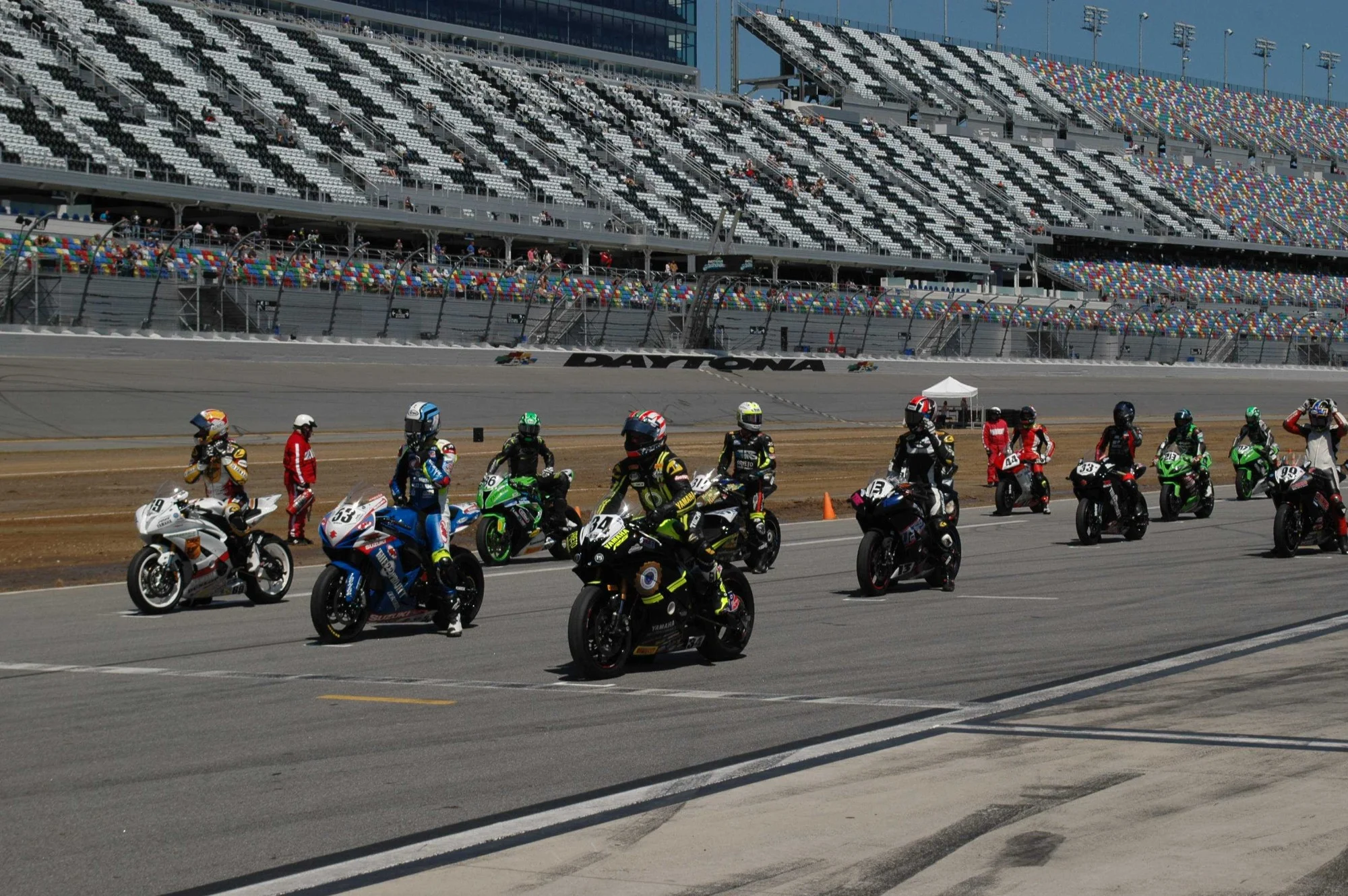
Daytona’s motorcycle history goes back further than the speedway itself. The Daytona 200 is the oldest AMA-sanctioned road race in the country, and it started in 1937 on a 3.2-mile (5.1 km) course that used the beach sand and a stretch of public road next to it. Ed Kretz won that first race on an Indian. The speedway opened in 1959, and the 200 moved there in 1961.

For the first three years at the speedway, safety concerns kept bikes off the 31-degree banking, so the race ran on an infield course. The banking was added in 1964. Today’s Daytona 200 runs on a 3.51-mile (5.65 km), 12-turn road course that links the tight infield to the banked oval, so riders deal with very high top speeds and slow, technical corners on the same lap.
MotoAmerica promotes the race through the 2028 edition, and it’s the only round in the series with pit stops for fuel and tires (the top finishers in 2026 made three stops each). That year, Josh Herrin won his fourth straight Daytona 200, something no rider had done before, and his fifth overall, tying Scott Russell and Miguel Duhamel for the most wins. The race also anchors Daytona Bike Week every March, an event that grew up around the original 1937 race.
8. Mid-Ohio Sports Car Course, Ohio
 Credit: MotoAmerica
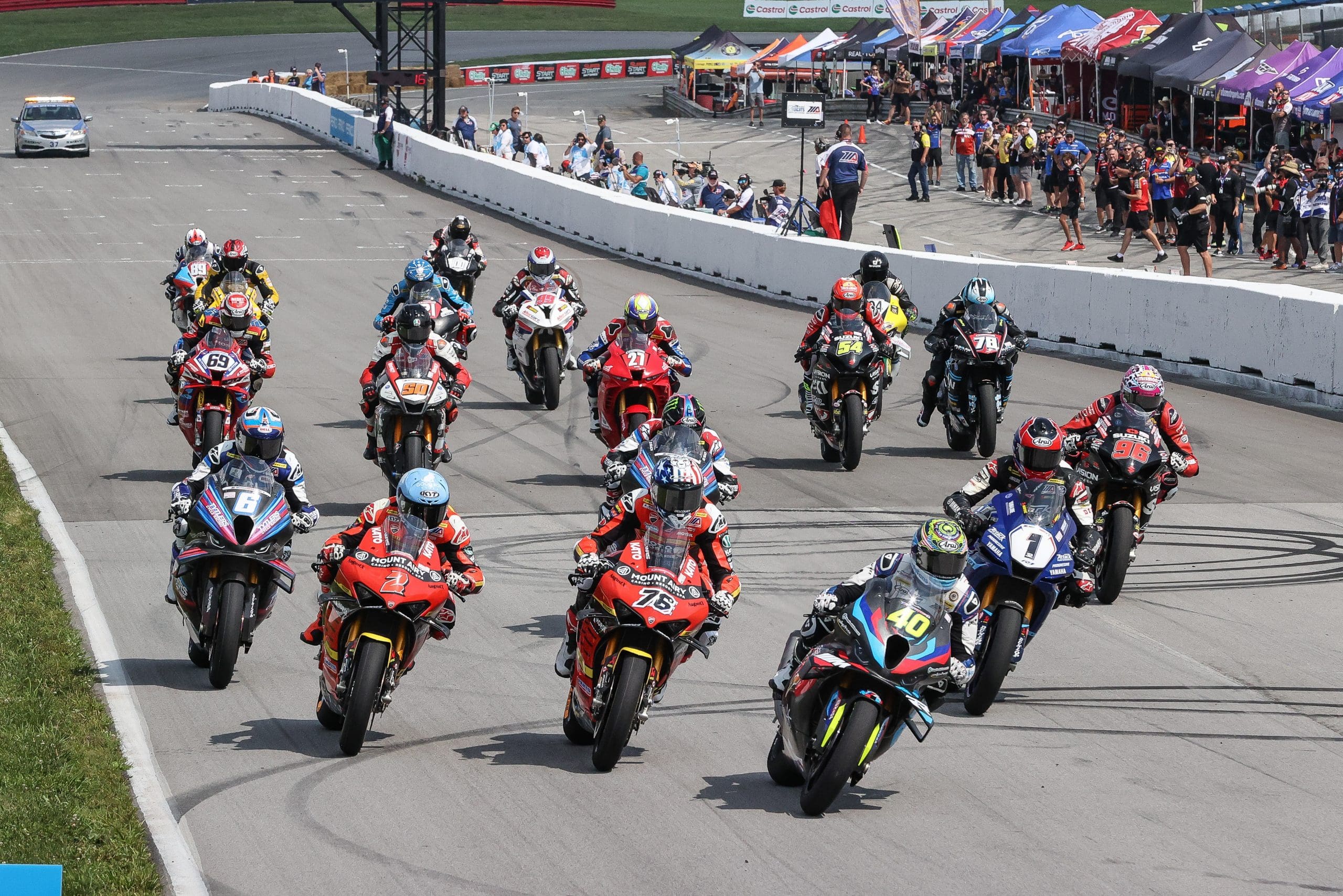
Mid-Ohio opened in 1962 on a 380-acre (154-hectare) property about 60 miles (97 km) north of Columbus. MotoAmerica and AMA Vintage Motorcycle Days use the full 2.4-mile (3.862 km), 15-turn course, while IndyCar runs a shorter 13-turn version. The track is at least 40 ft (12.2 m) wide, and the layout winds through rolling terrain with lots of linked corners and not many long straights, so smooth corner speed matters more here than horsepower.
The track has a long history with AMA superbike racing and is on the 2026 MotoAmerica schedule, but many riders know it best for AMA Vintage Motorcycle Days. The 2025 edition was the 33rd overall and the 30th at Mid-Ohio. The weekend brings vintage road racing on the full course, off-road events, bike shows and one of the largest motorcycle swap meets in North America, and the proceeds go to the AMA Motorcycle Hall of Fame in Pickerington, Ohio.
9. The Ridge Motorsports Park, Washington
 Credit: Roadracing World
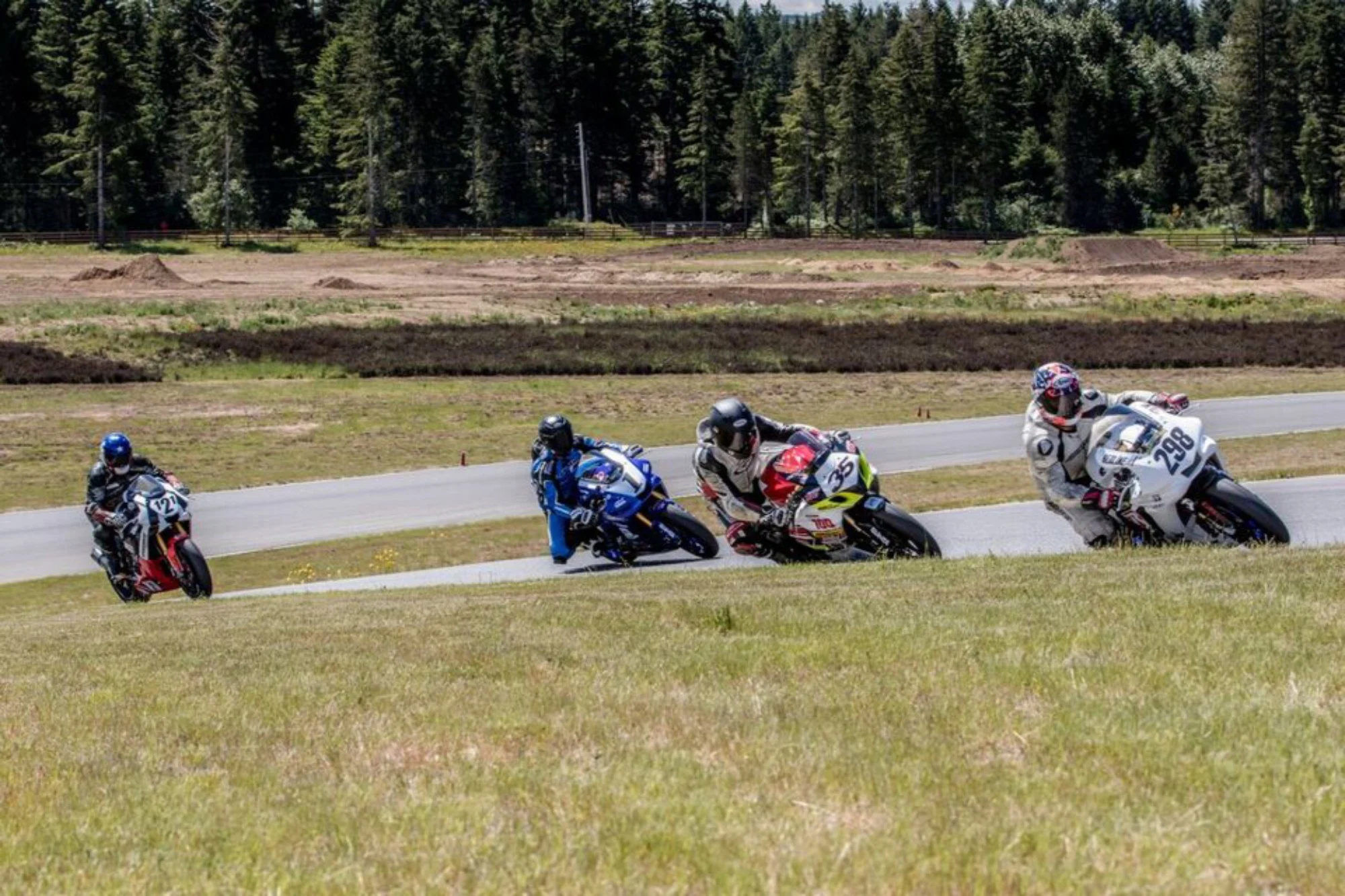
The Ridge opened in 2012, the same year as COTA, and it’s the Pacific Northwest pick on this list. Ground was broken in April 2011, and the first official race, a Washington Motorcycle Road Racing Association (WMRRA) event, was held on May 26, 2012. Steve Crawford, who also designed Thunderhill Raceway Park in California, laid out the track on forested hills about 25 miles (40 km) northwest of Olympia.
The track is 2.47 miles (3.975 km) long with 16 turns and is 40 ft (12.2 m) wide, but the elevation is what gets riders talking. Each lap adds up to more than 300 ft (91 m) of climbs and descents, with blind crests, compressions and a 50 ft (15 m) drop through the Ridge Complex near the end.
Since its first race was a motorcycle event, the Ridge has always had close ties to regional road racing, and you’ll find sanctioned bike races and track days on its calendar alongside car events. MotoAmerica has raced here every season since 2020, and the 2026 round took place June 26-28.
Before Your First Track Day
 Credit: Kirkistown Racing Circuit
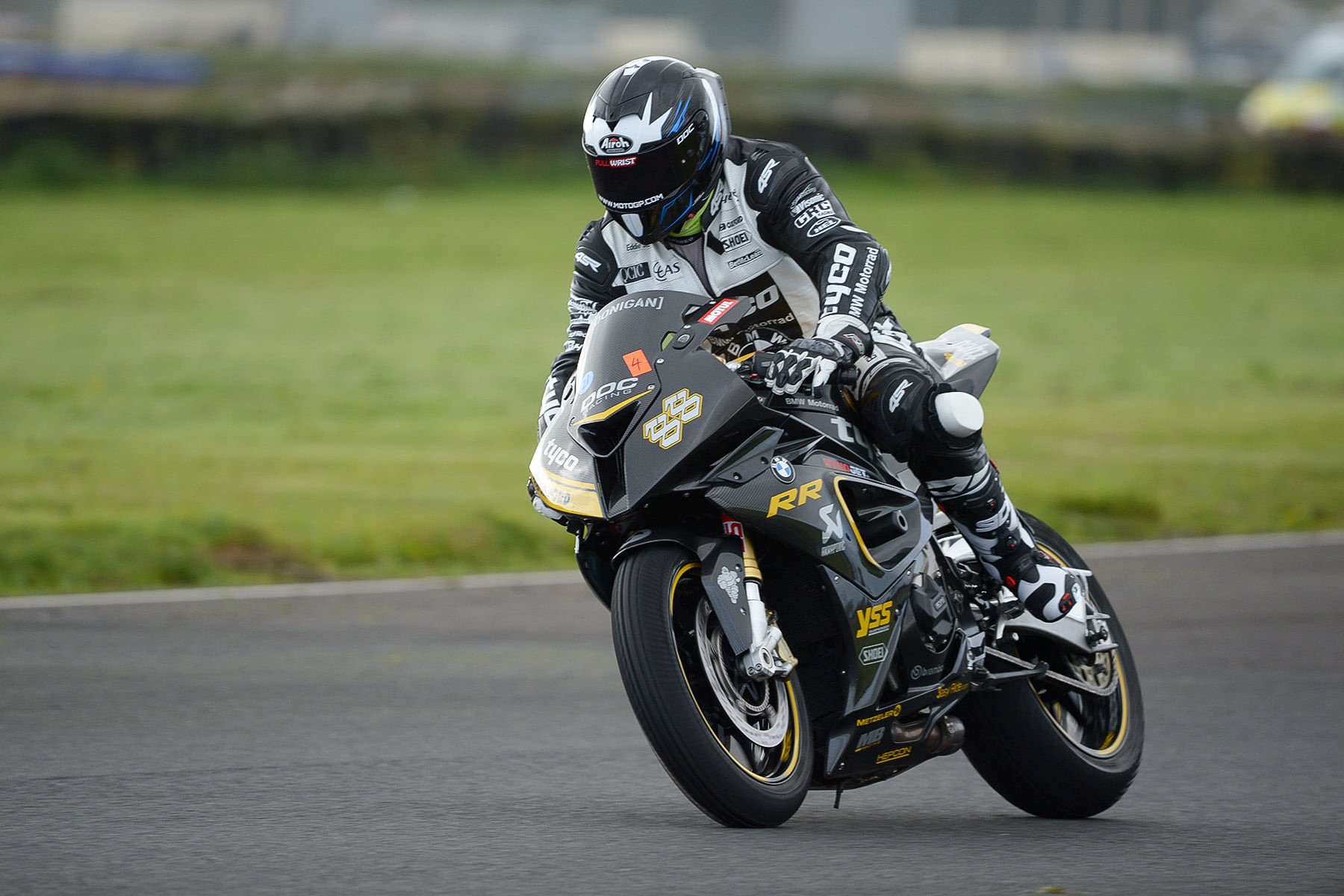
If you want to ride one of these tracks, start by reading the organizer’s rules, because they vary. In general, you’ll need a full-face helmet that meets the organizer’s certification standard, a one-piece leather suit or a two-piece suit that zips together securely, race gloves and over-the-ankle boots. A lot of organizers also ask for a back protector. [Internal link: WBW motorcycle leathers guide]
Your bike will usually go through a tech inspection before the first session. The details depend on the organizer, but tires, brakes, fluid leaks and taped-over lights and mirrors are common checks. If you’re new to track riding, sign up for the novice group. You’ll typically get classroom sessions and stricter passing rules, which takes a lot of pressure off your first day. A big, fast track like COTA or Road America isn’t always the best place to start, and several of the circuits above have shorter layouts used for club events. [Internal link: WBW back protector guide]
Choosing Where to Ride
All nine tracks host MotoAmerica rounds in 2026, so a race weekend is an easy way to check out a circuit before you ride it. If history is your thing, start with Laguna Seca, Road America or Daytona. If you want room to work on your lines, Barber and the Ridge are wide, modern tracks. Whichever one you pick, check the event calendar and the organizer’s gear and bike rules well before the date.