Hardly anyone buys a kit all at once. You buy a jacket in the spring, gloves after the first cold morning and boots a year later, once the sneakers start to look like a bad idea on a 40 mph road. What you end up with is four pieces sitting at four different levels of protection, and usually one that never leaves the closet because it never fit right to begin with.
Most of what you need to sort that out is already printed on labels sewn into the gear. Almost nobody reads them, and a few brands would rather you didn’t. Here’s what those labels actually mean and the order I’d buy in if I were starting from nothing today.
Read the Label Before You Read the Price Tag
 Credit: Pexels
Jackets and riding pants certified in Europe carry a label showing they were tested to EN 17092, and the standard sorts garments into classes worth knowing by heart. B is urban riding with no impact protectors fitted. A is urban riding with protectors. AA is aimed at touring gear. AAA is the highest the standard goes.
On leather meant for track days or fast road riding I wouldn’t spend money on anything under AAA. Textile is a different conversation, because plenty of perfectly good jackets land at A and a pair of ordinary jeans can pass that same test. When two textile jackets are close on price and features, take the higher class and don’t overthink it.
This is where the marketing gets slippery. The class applies to the finished garment and not to a swatch of fabric, because testing zones the garment by how likely each area is to hit the pavement and then looks at seam strength, tear strength, closures, sleeve restraint and how the thing holds its shape after you wash it. A brand telling you its shell material “passes AAA” is telling you nothing about the jacket in your hands. Ask what the garment is rated.
 Credit: Unsplash
Armor is certified separately under EN 1621-1 for shoulders, elbows, hips and knees, where Level 1 protectors transmit no more than 35 kN in lab testing and Level 2 no more than 20 kN. Back protectors sit under EN 1621-2 at 18 kN for Level 1 and 9 kN for Level 2, marked FB for full back coverage, CB for center back and LB for lower back only. Pull the back pad out of any jacket you’re considering. If it’s plain foam with nothing certified stamped on it, that pocket is decoration, and a lot of jackets ship that way to hit a price point.
One thing worth saying for American readers: there is no mandatory equivalent standard here, so on a lot of gear sold in the US the CE label is the only hard information you’re going to get.
Fit Is What Makes the Armor Work
 Credit: Unsplash
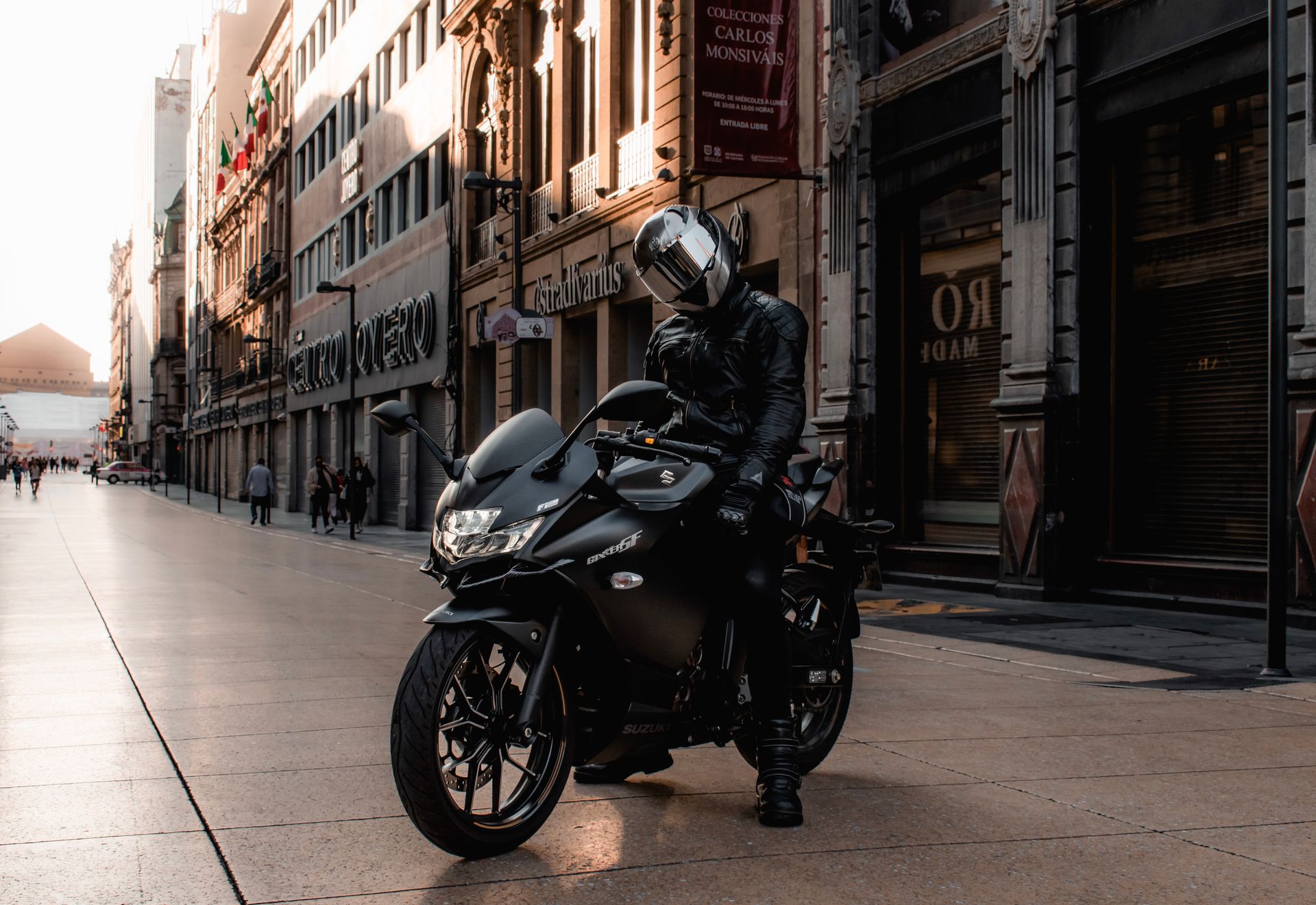
A Level 2 elbow protector sitting three inches up your forearm protects your forearm. Try the jacket on and then get into a riding position with your arms out where the bars would be, because that’s the only position that matters. Sleeves that reach your wrists while you’re standing in the shop will pull back past them the moment you reach forward.
Men’s patterns mostly differ in torso length, shoulder width and room through the chest and upper arm. Sizing up so you can layer underneath tends to backfire, since the armor starts floating around and the jacket balloons at highway speed. Buy the size that pins the protectors where they belong and deal with cold weather using a thermal liner or a decent base layer. Gloves are the same problem in miniature, and webBikeWorld’s motorcycle gloves buyer’s guide goes into sizing with more room than I have here.
Check the waist before you buy anything. Jackets and pants designed to pair use a connection zipper that stops the jacket riding up your back in a slide, and it only works if both halves share the same zipper design.
Match the Material to the Riding You Actually Do
 Credit: Pexels
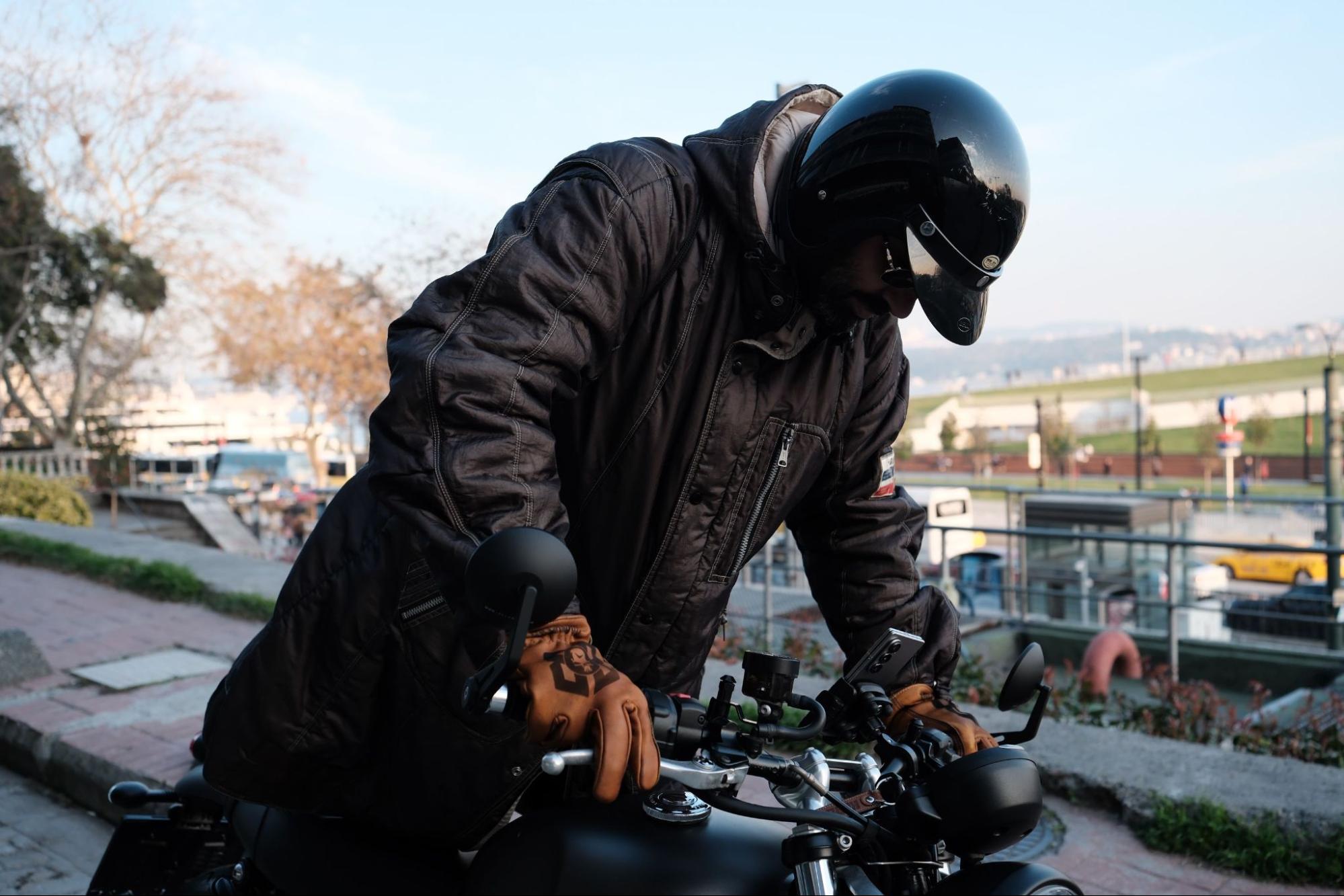
Leather still wins on abrasion resistance and it’s what I’d want for track days and hard road riding. It’s also heavy, it needs breaking in and it’s genuinely unpleasant sitting in traffic in July. Textile trades away some abrasion performance for weight, venting, pockets and weather protection, which for commuting and touring is the trade most riders should be making.
Mesh is the honest option for real heat. It slides worse than anything else here, and the tradeoff is that people who own mesh jackets keep their gear on in August instead of riding to work in a T-shirt. A rider in a Class A mesh jacket is in better shape than a rider with AAA leathers hanging up in the garage.

Laminated or Drop-Liner Waterproofing
Drop-liner construction puts the membrane behind the outer shell. It costs less and you’ll stay dry, but the shell itself soaks through and then sits wet against you for hours, which turns cold fast at 70 mph. Laminated construction bonds the membrane to the outer layer so the shell sheds water instead of holding it. It costs more and I’d pay it if you ride year round.
Buy in This Order and Nothing Sits in the Closet
 Credit: Unsplash
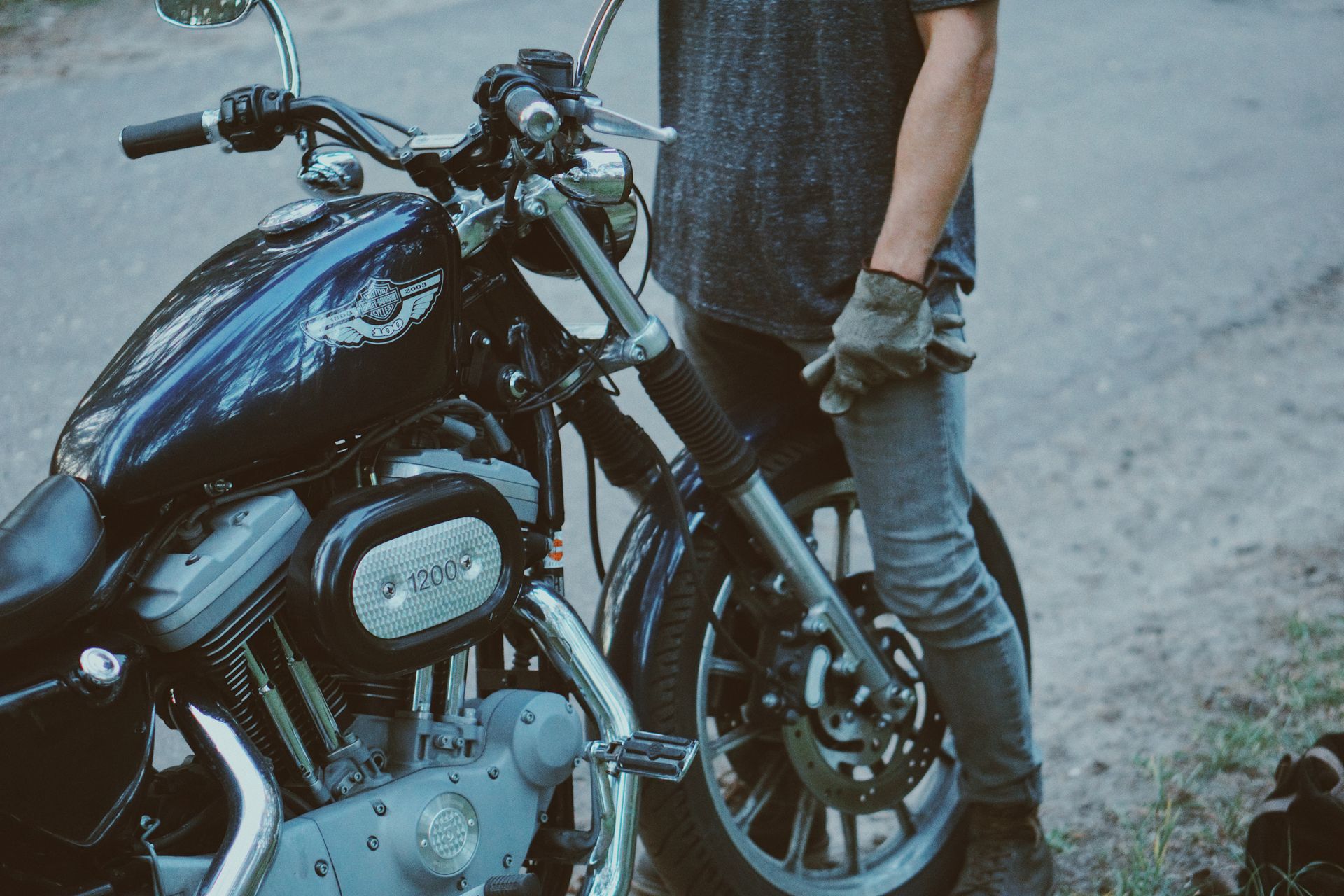
Helmet first, since it’s legally required almost everywhere and it’s the worst possible place to save $80. Gloves second, because hands go out on instinct and they hit first. Jacket third, pants fourth, boots fifth.
Boots deserve their own label check. EN 13634 rates them with four digits covering boot height, impact abrasion resistance, impact cut resistance and transverse rigidity, which is how well the boot holds up with a bike lying on top of it. A 2 in each slot is the higher rating, and short ankle boots always score 1 on the first digit regardless of how good the rest is.
 Credit: Unsplash
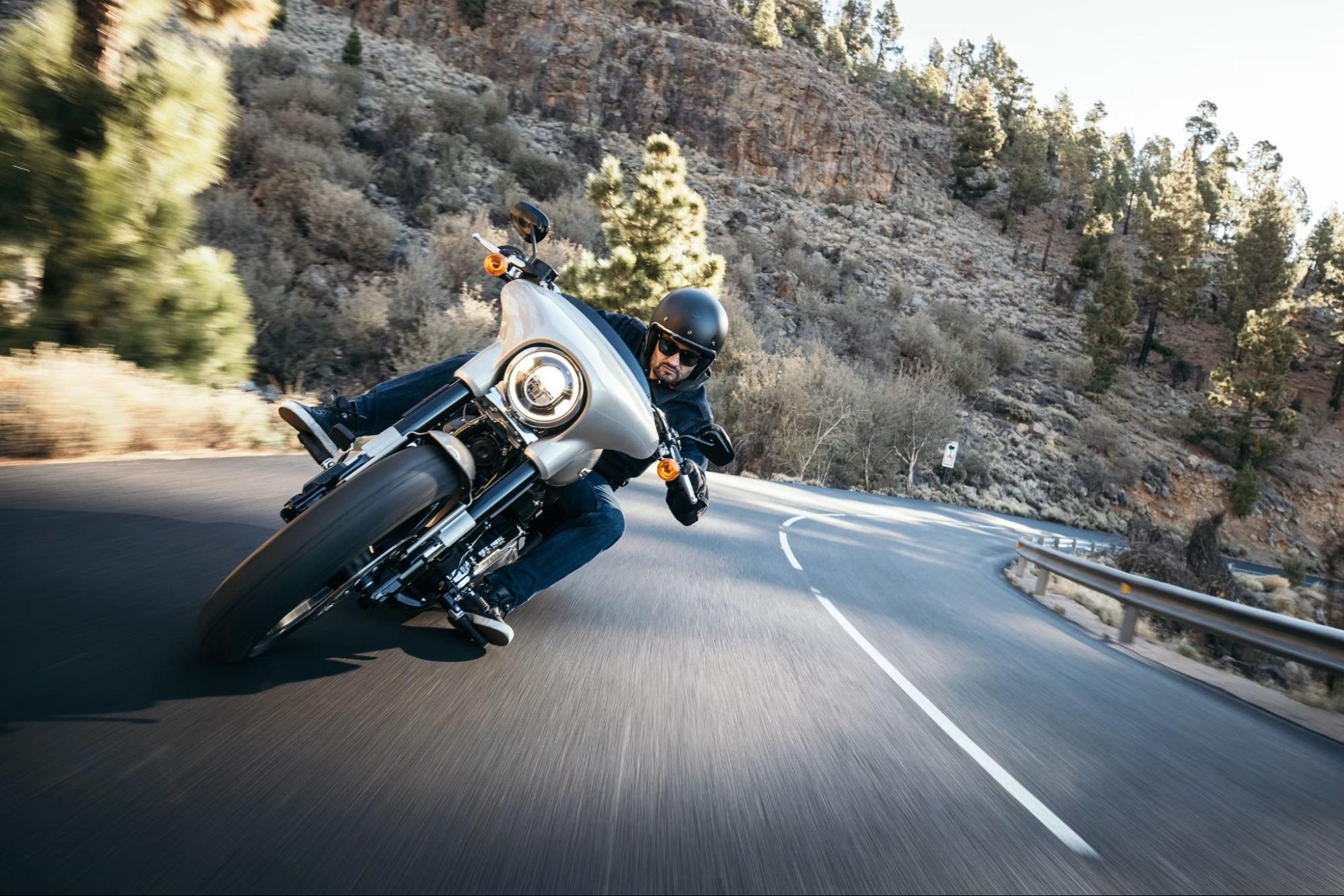
Buying the jacket and pants from one brand fixes the zipper problem, keeps sizing predictable and usually means the armor spec matches front to back. Brands with a full range make that straightforward, which is why a catalog like Rebelhorn’s motorcycle gear for men is worth going through as a set instead of one piece at a time. The Polish manufacturer covers textile and leather jackets, pants, gloves and boots across touring, urban and sport categories, certified to the standards above.
None of this needs to happen in one weekend. Get the helmet and gloves now, ride the season in them and put the jacket and pants on the list for fall, when last year’s stock clears out at prices worth waiting for. Every piece you add gets the same two checks. Read the class on the label, then get into a riding position and confirm the armor lands on your joints. Gear that passes both is gear you’ll keep reaching for, and the kit you actually wear is the only one that has ever protected anybody.