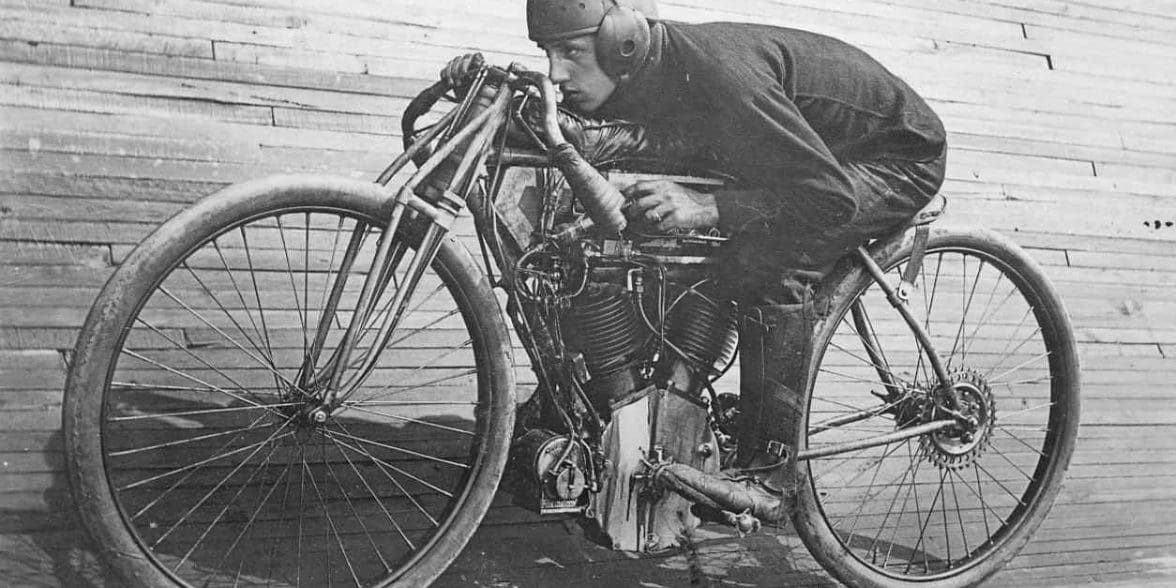
Whenever I think about the early days of American motorcycle racing, I picture some guy in a wool sweater and a leather cap throwing a brakeless Harley sideways into a dirt corner at 80 mph (130 km/h), with a steel shoe on his left boot and a grandstand full of people who honestly came to see the pigs get judged. I love that image. Sure, we’ve got MotoGP at COTA every year and plenty of Americans racing on pavement, but if you ask me what real American motorcycle racing looks like, I’m going to tell you it’s flat track. It’s Mert Lawwill in On Any Sunday. It’s a half-mile in Ohio on a Saturday night with dust hanging in the lights.
From Horse Tracks and Board Tracks to Class C
 Credit: Petrolicious
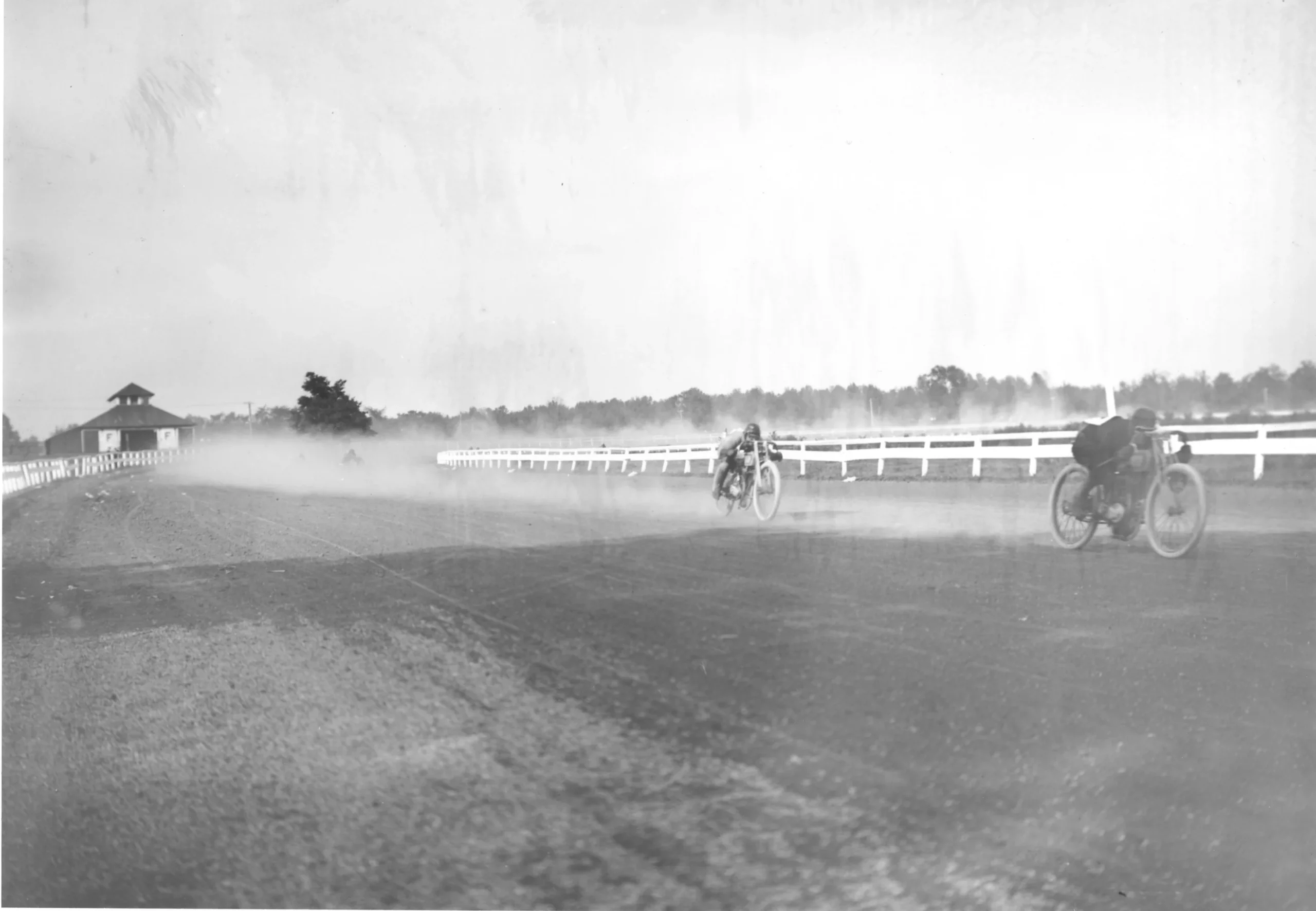
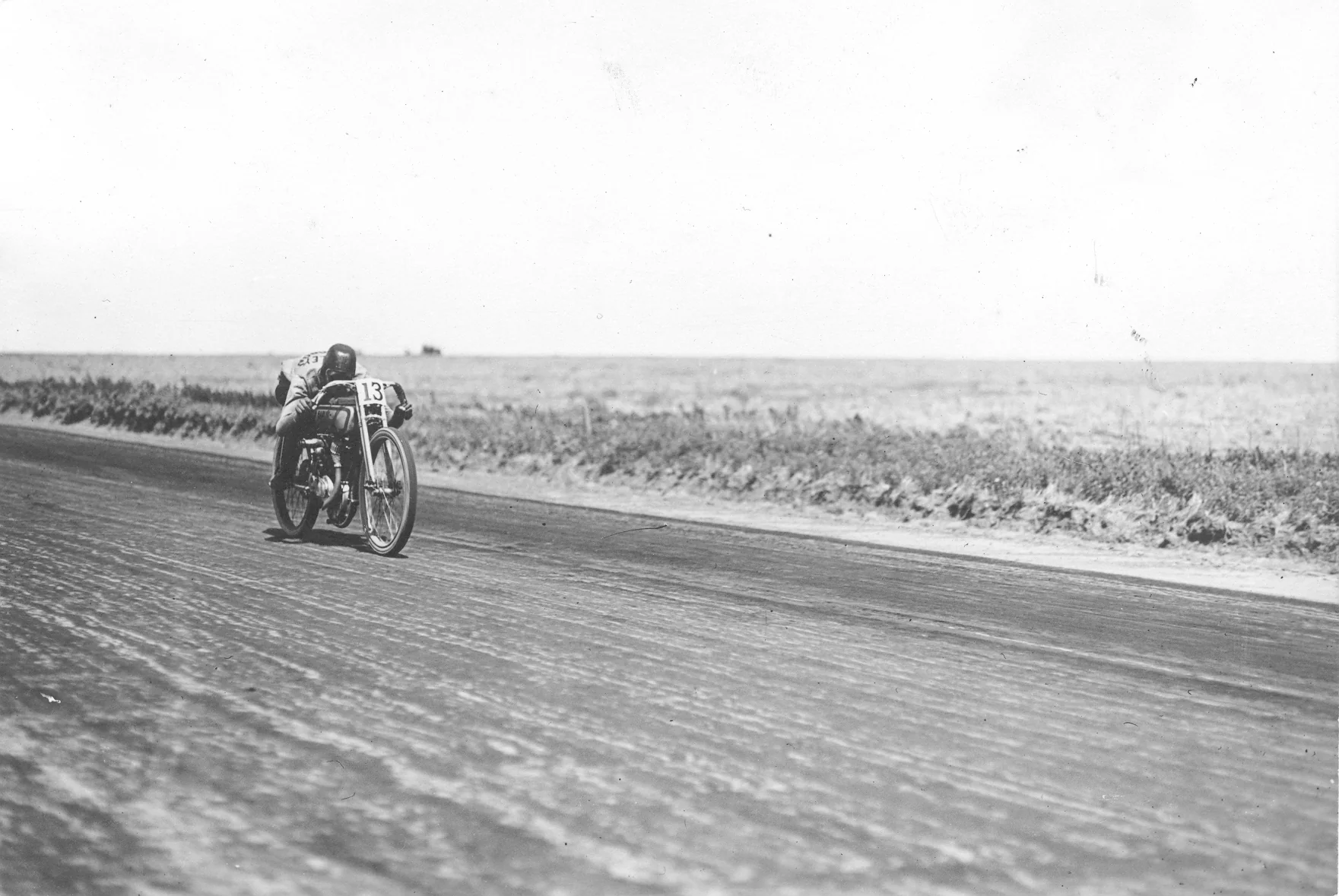
The reason flat track happened at all is pretty simple, really. Every county in the country had a fairground and every fairground had a dirt oval for horse racing, so early riders didn’t have to wait for anybody to build them anything. They just showed up and raced. Around the 1910s promoters also got into board tracks, which were these steep wooden bowls where bikes went past 100 mph (160 km/h) on planks. Newspapers started calling them “murderdromes” because riders and spectators kept getting killed, and most of them had rotted away or shut down by the end of the 1920s. The horse tracks were still there.
 Credit: Petrolicious
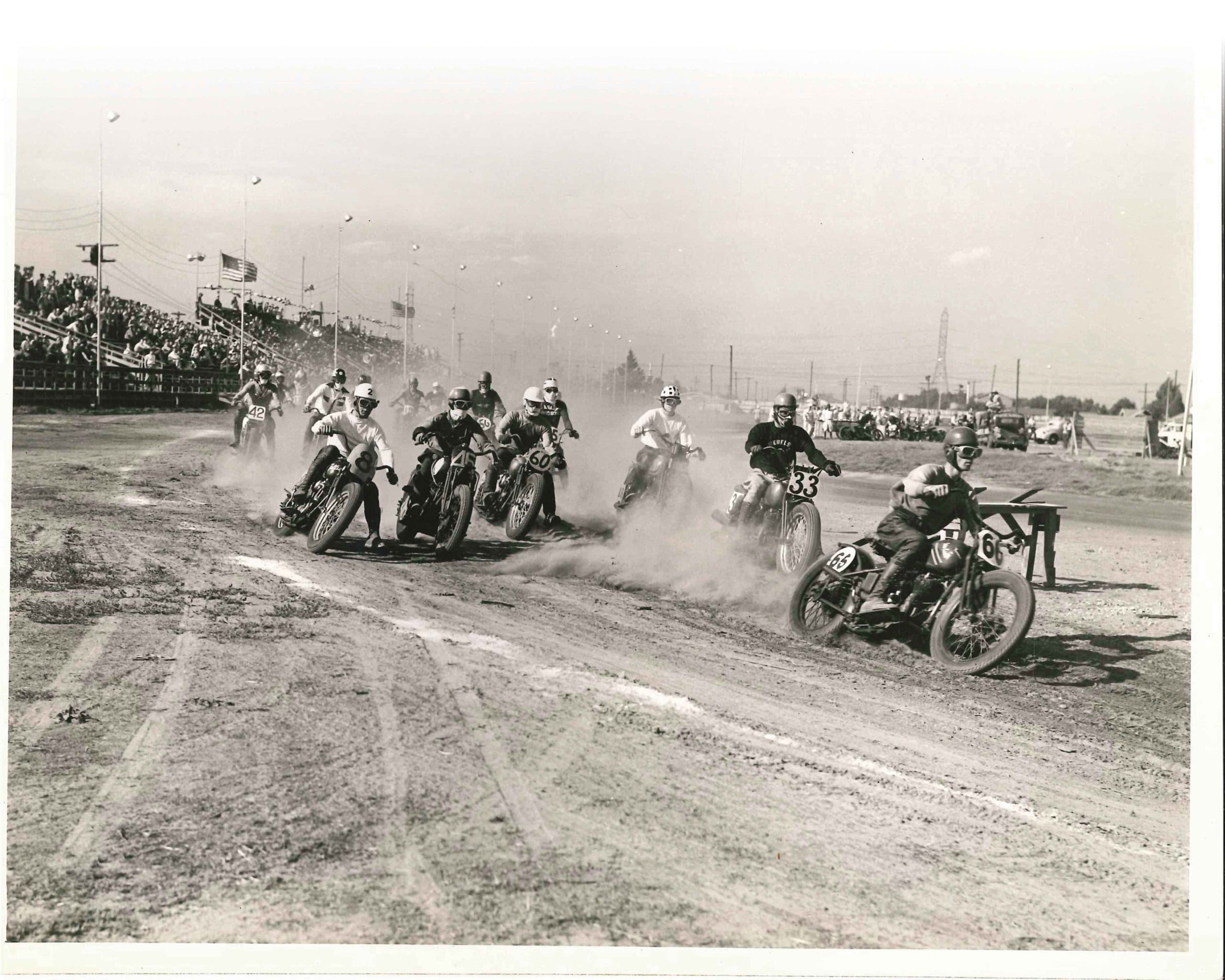
The AMA came along in 1924 and started sanctioning races, and here’s the part that always gets people. No brakes. I used to think that was just early 20th century bravado, but it actually makes sense once you think about what the surface is doing. Brakes need grip, and loose dirt doesn’t offer a lot of grip, so grabbing a lever going into a turn was more likely to put you on the ground than slow you down. Riders figured out how to kill speed by getting the bike sideways and working the throttle and their body weight instead. Brakes stayed off these bikes for a very long time, and on the ovals most guys still only run a rear brake today.
 Credit: American Motorcyclist Association
Then the Depression hit and nobody had money for factory race specials anymore. The AMA’s fix in 1933 was Class C, a rulebook based on regular production motorcycles, with 750cc allowed for side-valve engines and 500cc for overhead-valve ones. Plenty of racers rode their bike to the fairgrounds, took the headlight off, raced, and rode it home. That rule did a lot for the regular guy who wanted to race (and, not by accident, it also happened to fit Harley and Indian’s big flatheads perfectly). The Springfield Mile ran for the first time in 1937 at the Illinois State Fairgrounds, and people still treat it like a pilgrimage.
The Grand National Championship and the Harley-Davidson Era
 Credit: San Jose Valley of Heart’s Delight
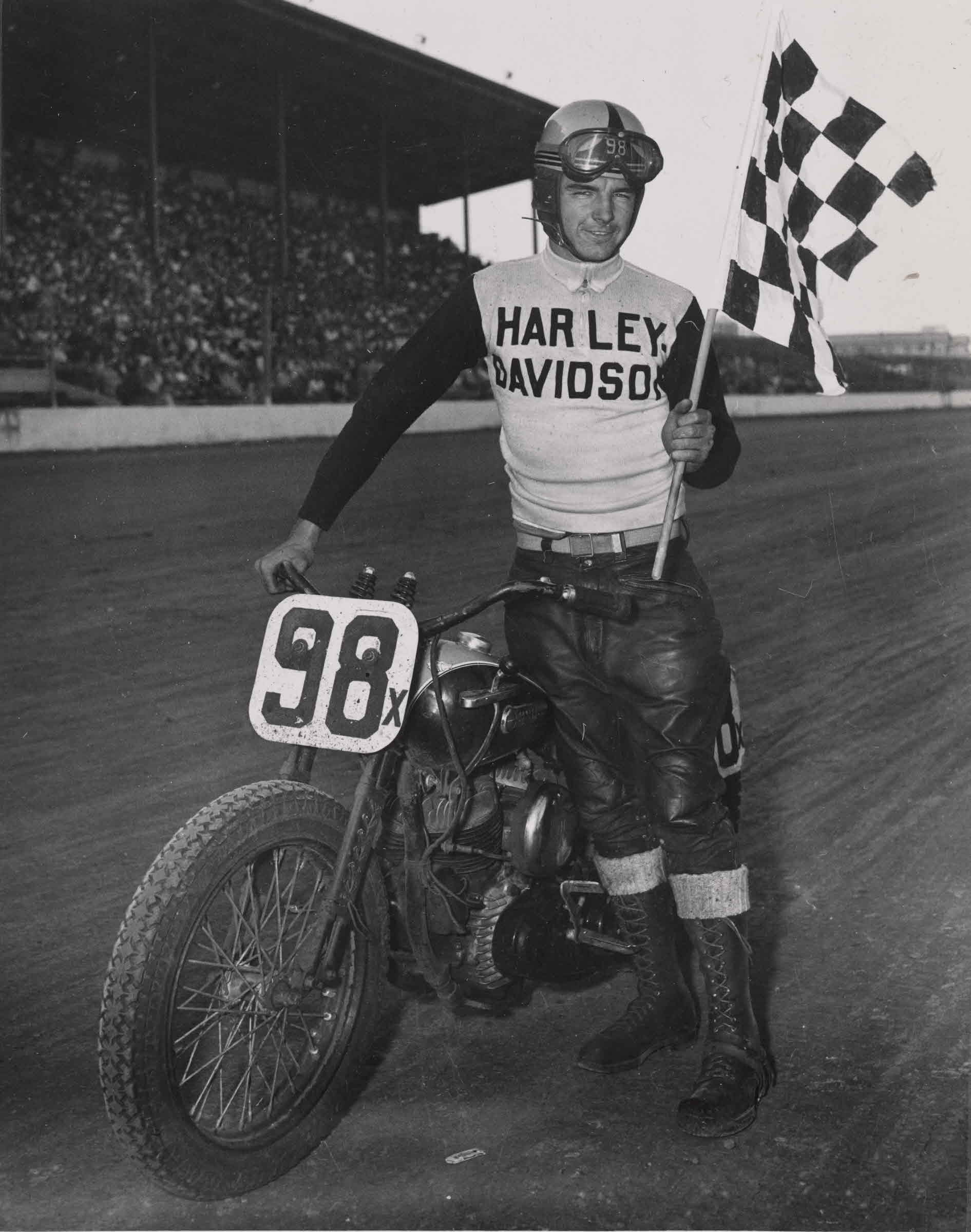
In 1954 the AMA started the Grand National Championship, and Joe Leonard won it on a Harley. He won two more after that and then went off to race Indy cars, which is about the most flat track career move I can imagine. The series back then was a mixed bag of miles, half-miles, short tracks, TTs and road races, so you couldn’t just be a specialist. Indian missed the whole thing, by the way. The original company had gone under in 1953, a year before the first title was handed out.
 Credit: Rider Files
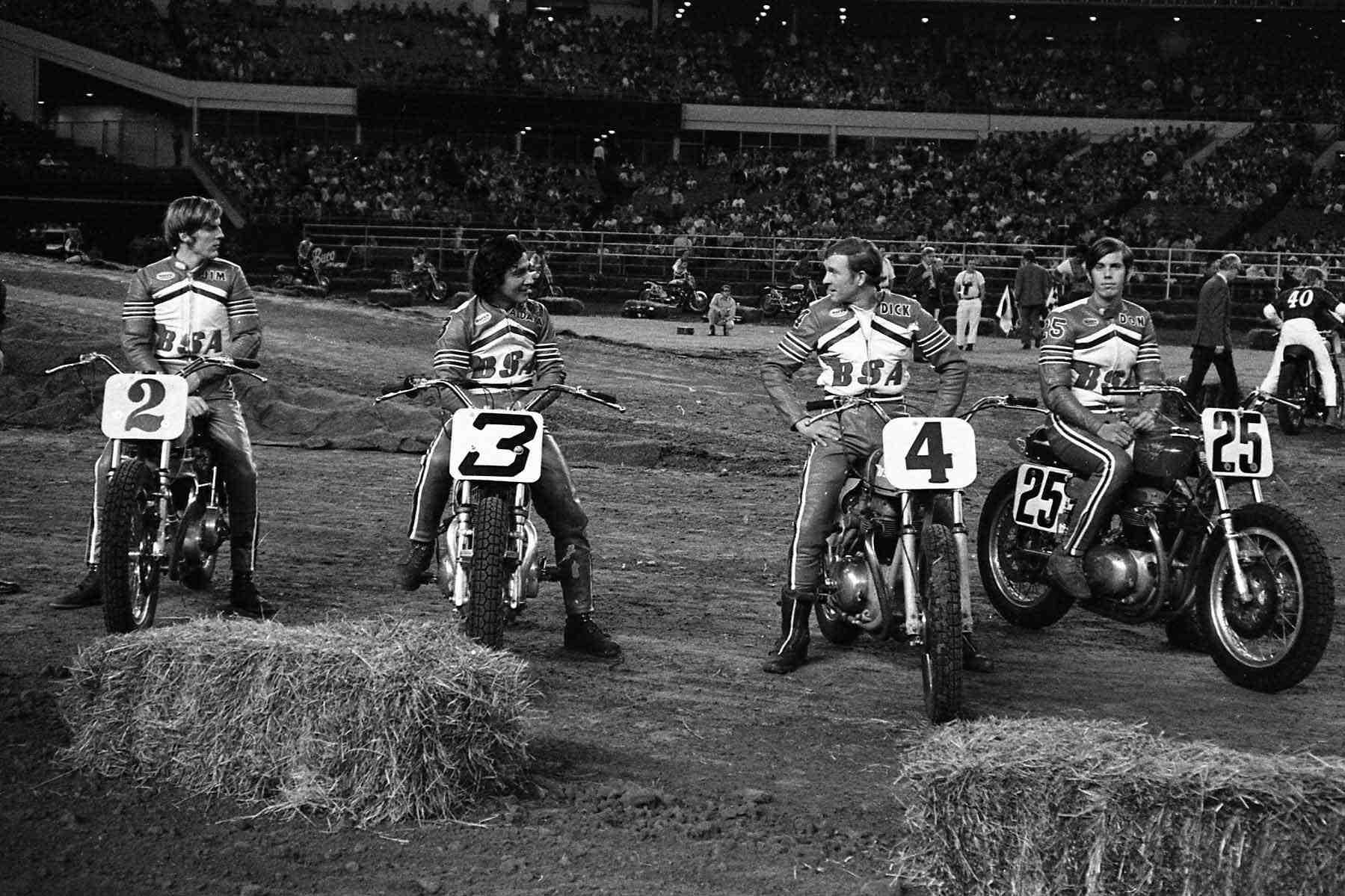
So Harley had the American side covered with its KR750 flathead, and the real fight came from Britain. British bikes were everywhere in the US during the 60s and the dirt tracks were no different. Dick Mann won in 1963 on a BSA, which was the first Grand National title for a British manufacturer, and Gary Nixon went back to back for Triumph in 1967 and 1968 when crowds at the big miles were just massive. After that the AMA rewrote the rules for 1970 and let 750cc overhead-valve engines in across the board. The old flathead advantage was gone overnight, and Harley needed something new.
The XR750 Arrives
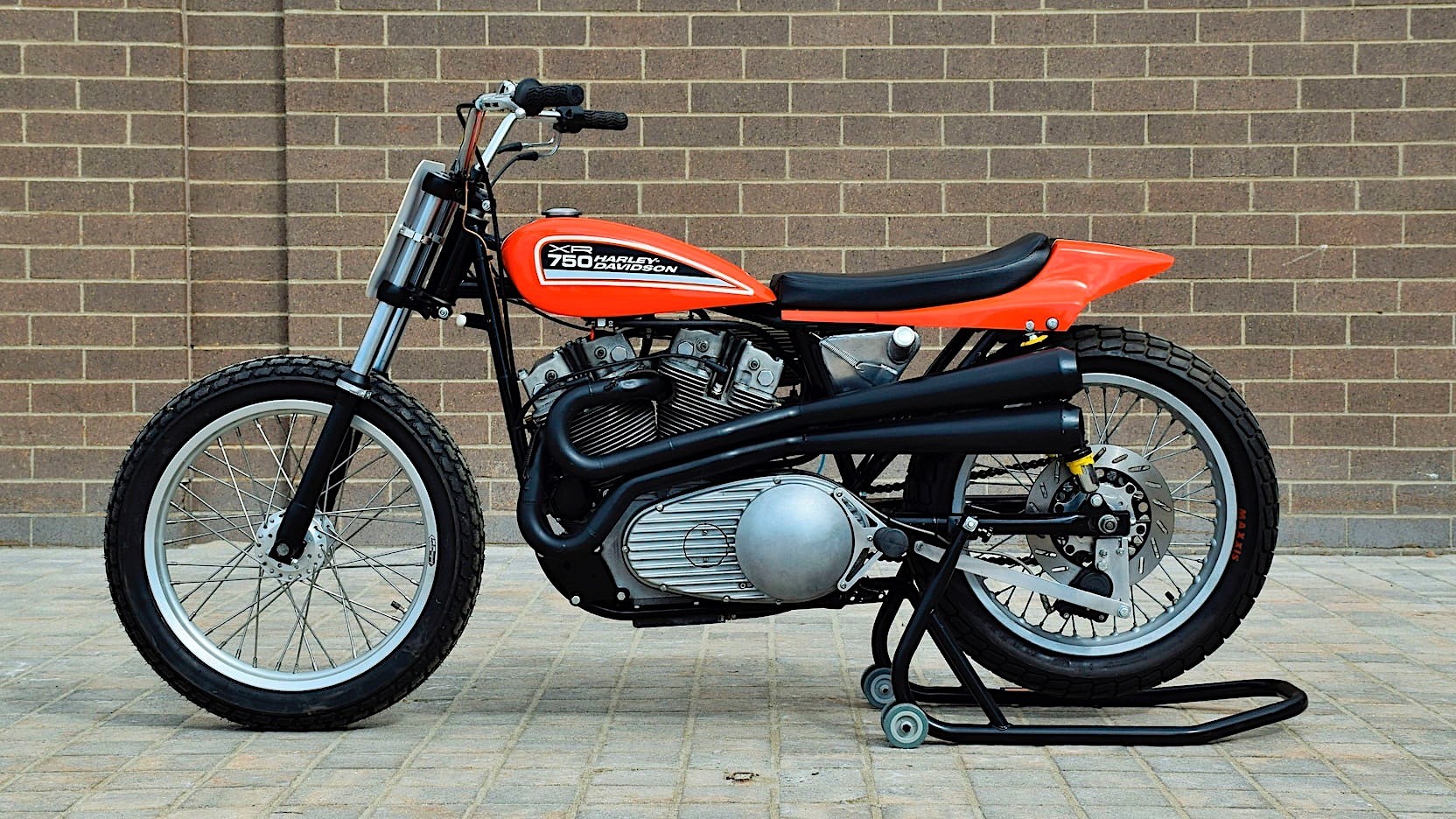
What Harley came up with was the XR750, basically a Sportster engine destroked down to 750cc with iron heads. It wasn’t great. The 1970 bike overheated and broke a lot, so Harley went back and gave it alloy heads for 1972, and Mark Brelsford won the championship with it that same year. You probably also know the XR750 as the bike Evel Knievel used to jump buses, which helped make it about as famous as a race bike can get.
 Credit: Autoevolution
The thing I can’t get over with the XR is how long it lasted. People were still winning national rounds on carbureted XR750s in 2016. Michael Lock, who was running American Flat Track around then, called it the most iconic race bike ever built in any discipline, and I’d have a hard time finding another bike that stayed competitive at the top level for over 40 years. I can’t think of one.
The Riders Who Defined the Mile
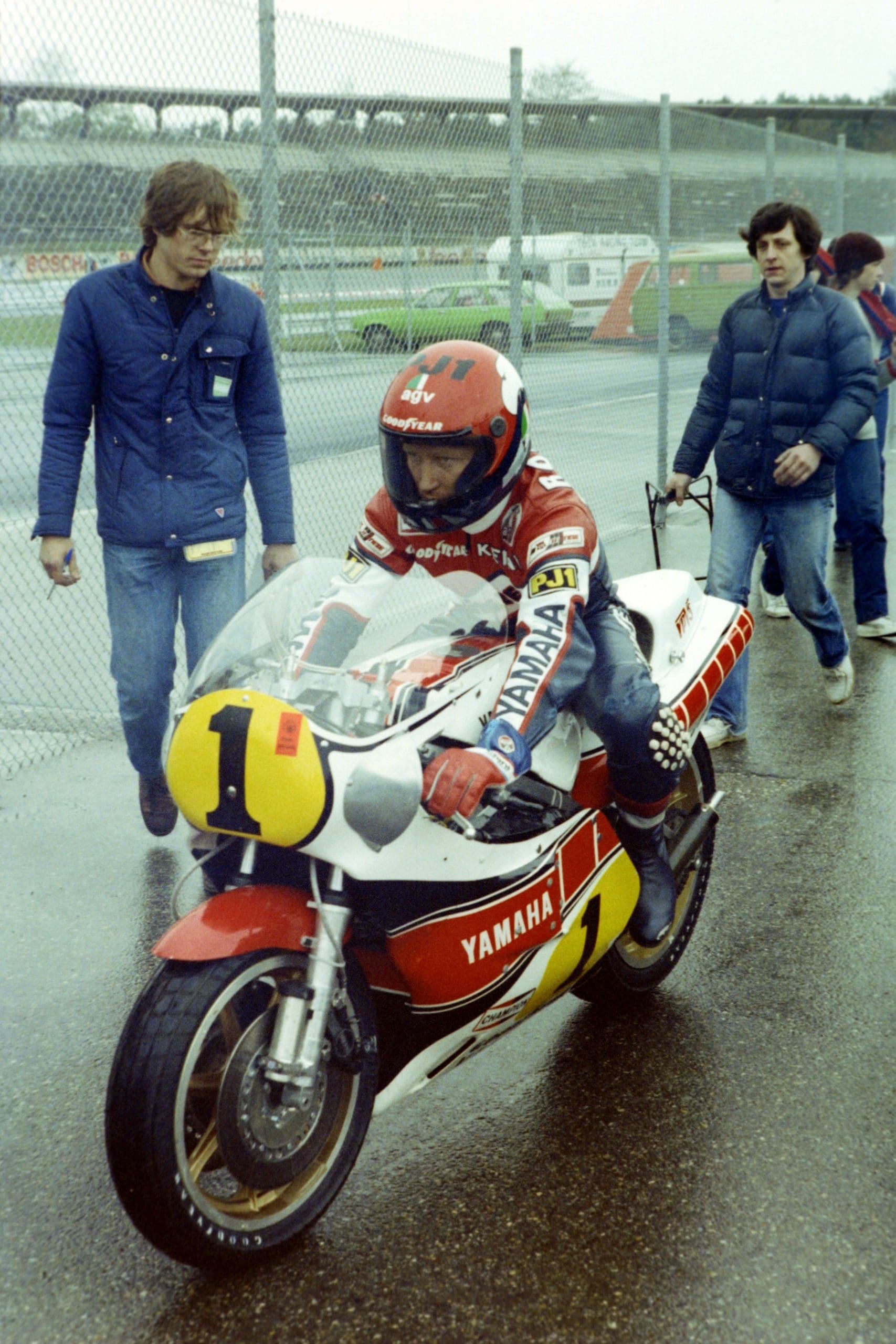
Then the Japanese showed up in the early 70s, and Yamaha brought Kenny Roberts. He won the title in 1973 and 1974, a lot of the time on bikes that were giving away power to the Harleys on the big tracks. Yamaha’s solution in 1975 was nuts. They put the TZ750 two-stroke road race engine in a dirt frame and Roberts took it to the Indy Mile, where he got by Corky Keener on the very last lap and won. Afterwards he basically said they didn’t pay him enough to ride that thing, and the AMA banned it pretty quickly. I’ve watched that footage more times than I’d like to admit.
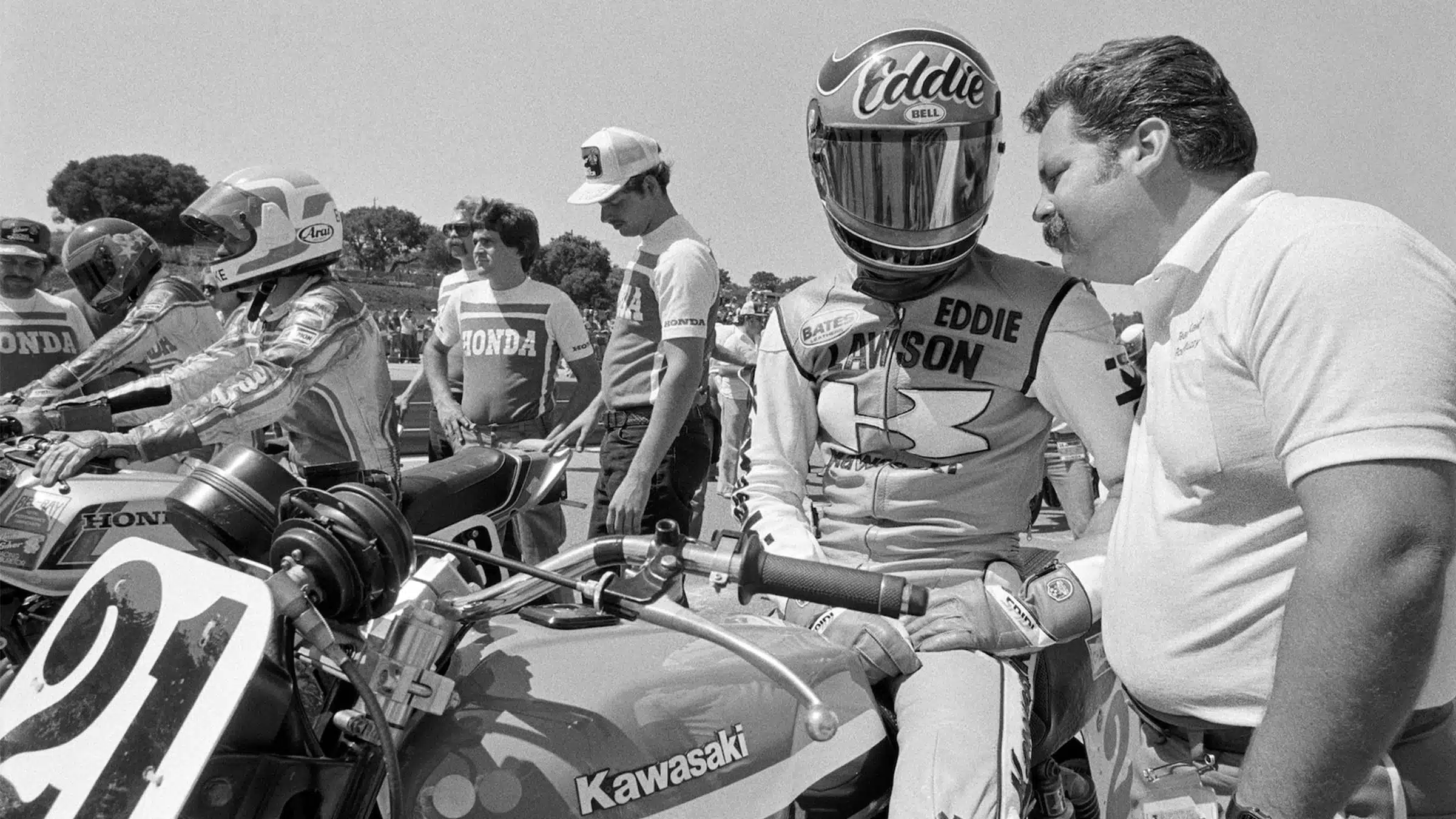
Roberts went over to Europe after that and won the 500cc world title in 1978, 1979 and 1980. He opened the door. Freddie Spencer and Eddie Lawson both came up racing dirt ovals and both became world champions, and Wayne Rainey did the same a few years later. Riders call it “backing it in,” using the rear tire to point the bike into a corner while it’s sliding, and the European guys who’d grown up on pavement didn’t really have an answer for it. For most of the 80s and into the early 90s, the Americans pretty much ran the premier class.
 Credit: Motor Sport Magazine
Not everyone went to Europe though. Jay Springsteen won three titles in a row between 1976 and 1978 and turned into a folk hero for the Harley crowd. Ricky Graham won his share during the 80s, and Bubba Shobert won three straight before he also switched to road racing. And then there’s Scott Parker, who won nine championships on XR750s between 1988 and 1998. Nine. Nobody’s touched that.
The Lean Years and the Rebuild
 Credit: Cycle Source
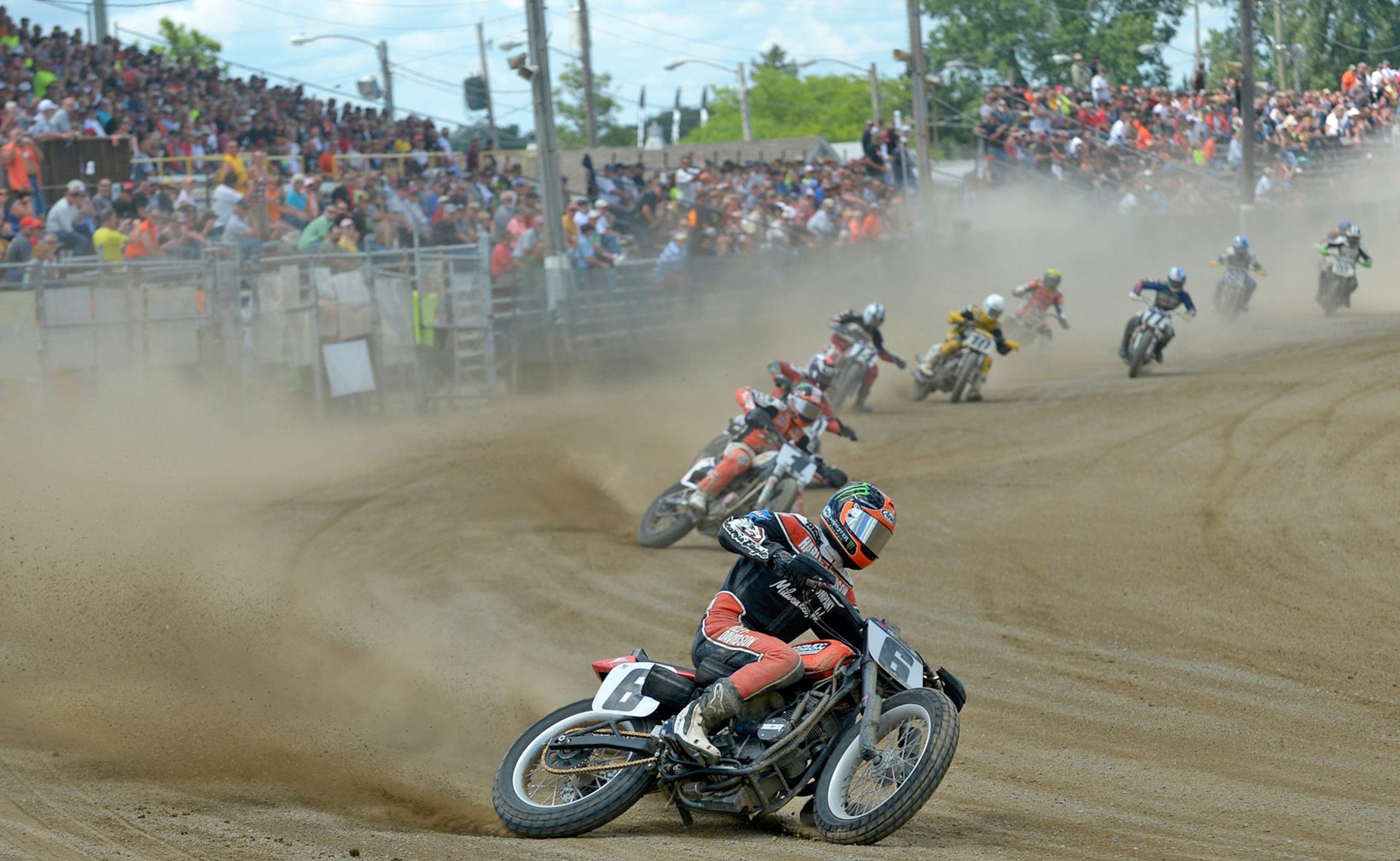
The downside of producing all those world champions was that flat track kept losing them. Road racing was international and paid a lot more, so the talent left for the pavement and the factories went with them. The Grand National kept running every single year, but by the 2000s it was mostly a sport for the people racing it and the fans who’d been following it forever.
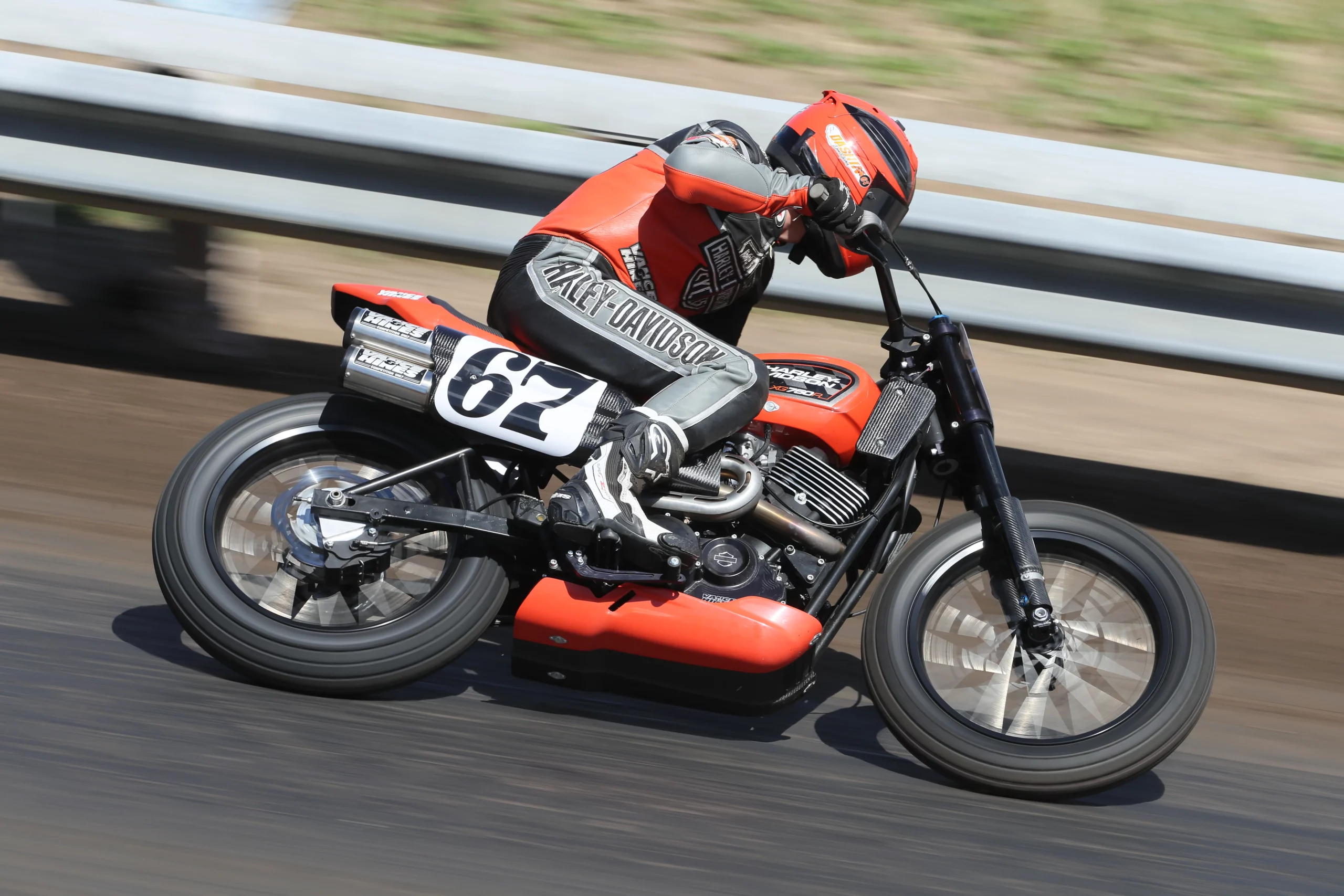
Harley stuck with it the whole time, and I think that’s the main reason the series stayed professional instead of turning into a weekend club thing. It took until the mid-2010s for other brands to come back around, with Kawasaki, Triumph and Ducati all getting involved to some degree. The big one was 2017. The series became American Flat Track, Indian came back with the Scout FTR750, and Jared Mees won the championship on it in its first year. Harley against Indian again, almost 65 years after the first Grand National.
 Credit: Petrolicious
Lock made an interesting point about the GP side of things around that time. Modern road racing bikes have electronics that manage a lot of the sliding that dirt track riders used to handle by feel, so the edge Americans had in the 80s isn’t really there anymore. You can see it in the results. Nicky Hayden won the MotoGP title in 2006 and no American has done it since.
Flat Track Today and Its Global Reach
 Credit: MotoAmerica
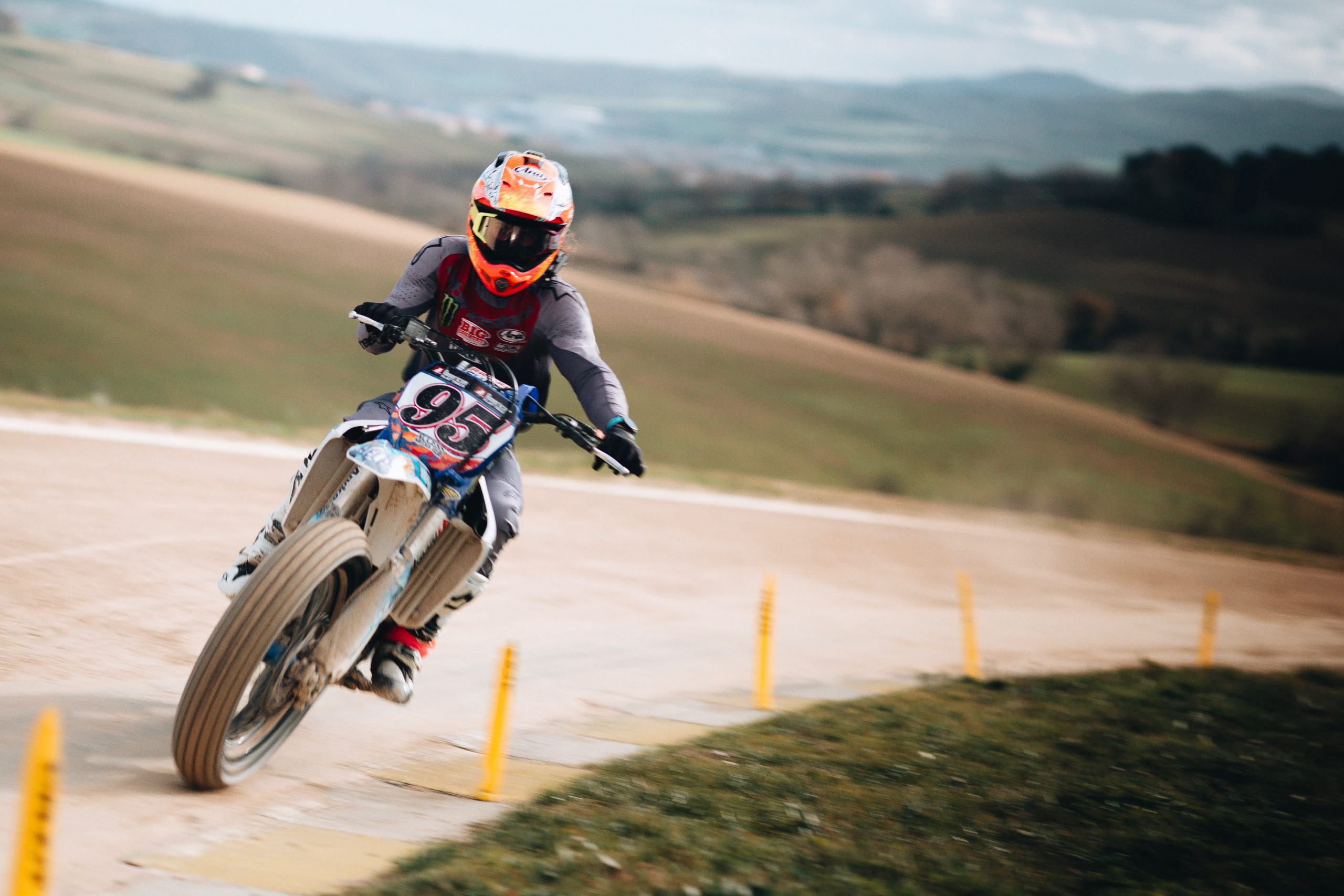
What’s kind of funny is that once the Americans lost the dirt advantage in Grand Prix, the Europeans started copying it. Valentino Rossi built a dirt ranch near Tavullia where he trains with his academy riders, and Marc Márquez has been a regular at the Superprestigio in Barcelona, an indoor flat track race that started in 2013. These guys grew up on asphalt and now they’re out on ovals working on throttle control and getting comfortable with the rear stepping out, which is something American kids used to pick up at the county fair without thinking about it.
 Credit: Ultimate Motorcycling
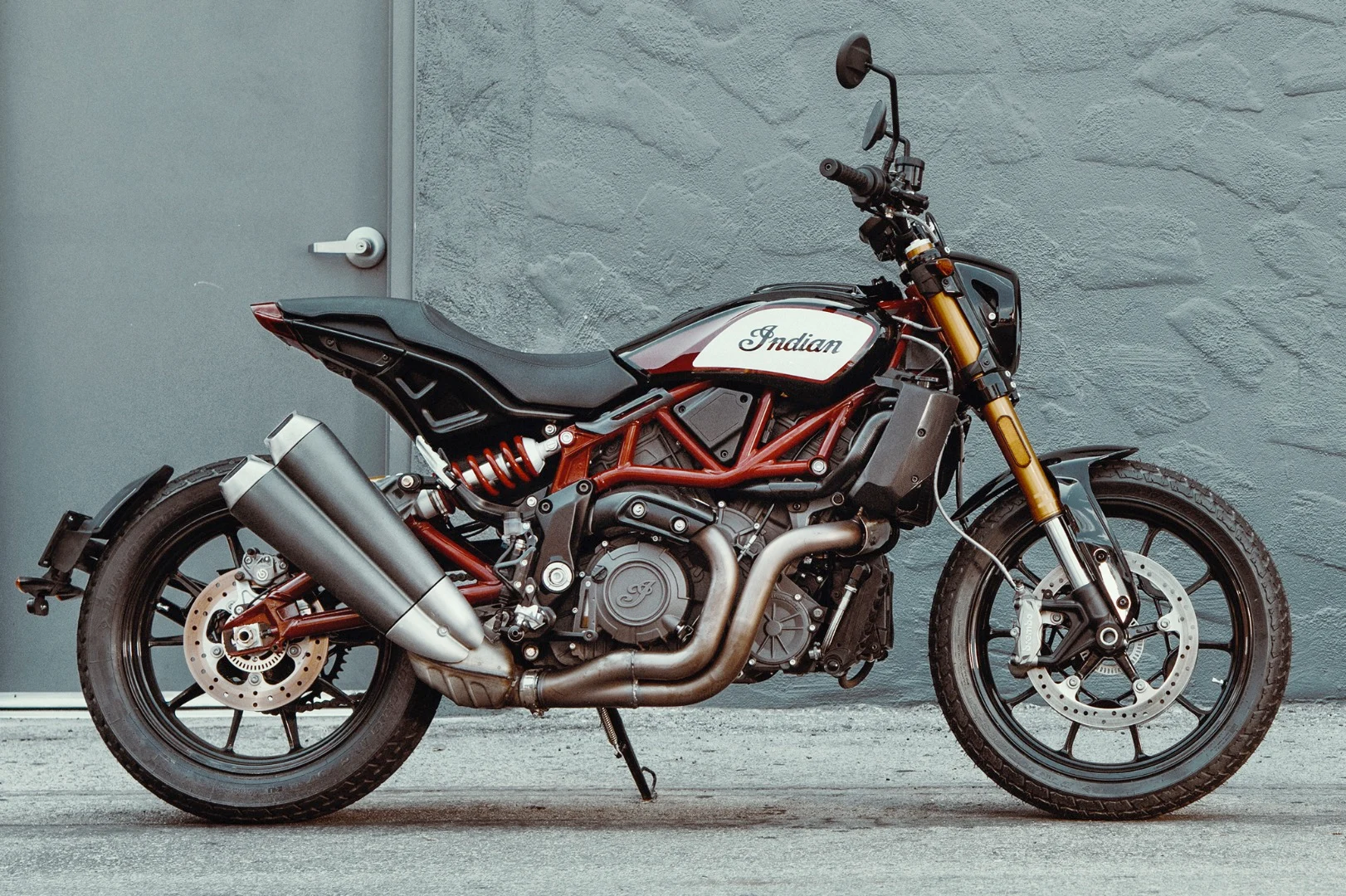
It’s also back in showrooms. Indian put out the FTR 1200 street bike in 2019 and it borrows heavily from the FTR750 race bike, and you see tracker styling all over production motorcycles now. AFT has a Singles class for younger riders on lighter bikes, the crowds at the miles are big again and the racing is really close. I’m biased, I know. I still think flat track is about as honest as motorcycle racing gets, because when you’re on a dusty cushion at Springfield there’s no traction control to save you and it’s the same deal it was a hundred years ago.