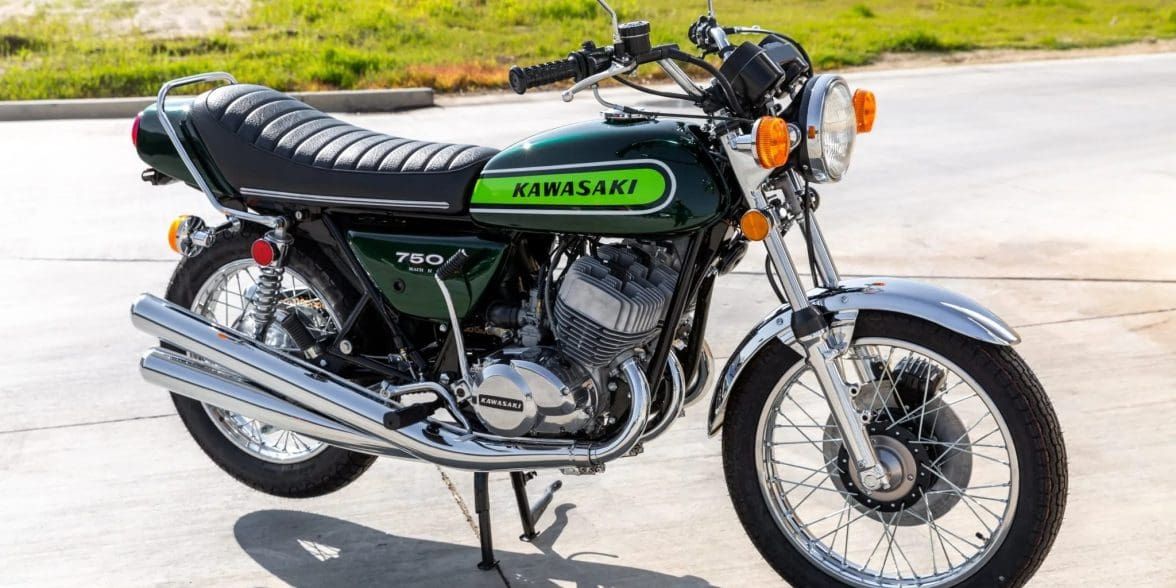
Kawasaki’s 1972 brochure for the H2 opened with a line no legal department would approve today. It said the company had “pulled a fast one on the competition,” then named Suzuki, Triumph, BSA and Honda as bikes the new 750cc Mach IV could outrun. It wasn’t empty bragging, either. On the drag strip the H2 ran the quarter mile in the low 12s, which made it the quickest-accelerating production motorcycle you could buy at the time. It was also a handful. Down low the engine felt almost lazy, and then somewhere in the middle of the rev range all three cylinders came on together and the front wheel started heading for the sky. That’s where the “widowmaker” name came from, although the story really begins with a smaller Kawasaki from 1969.
The Mach III Set the Stage
 Credit: Old Bike Barn
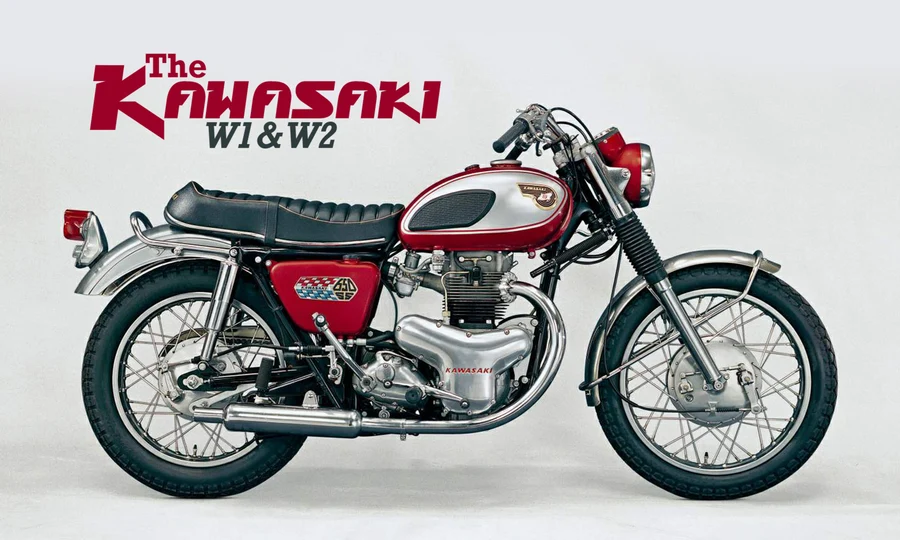
At the end of the 1960s Kawasaki was still the new kid in the American market. Its first big bike, the 624cc W1 twin, borrowed so much from BSA’s A10 that it did little for the brand’s image, so the engineers started over. They worked on the new bike in secret under the code name Blue Streak, and the brief was pretty simple: make it the fastest thing on the road in a straight line.
 Credit: Hans Agren
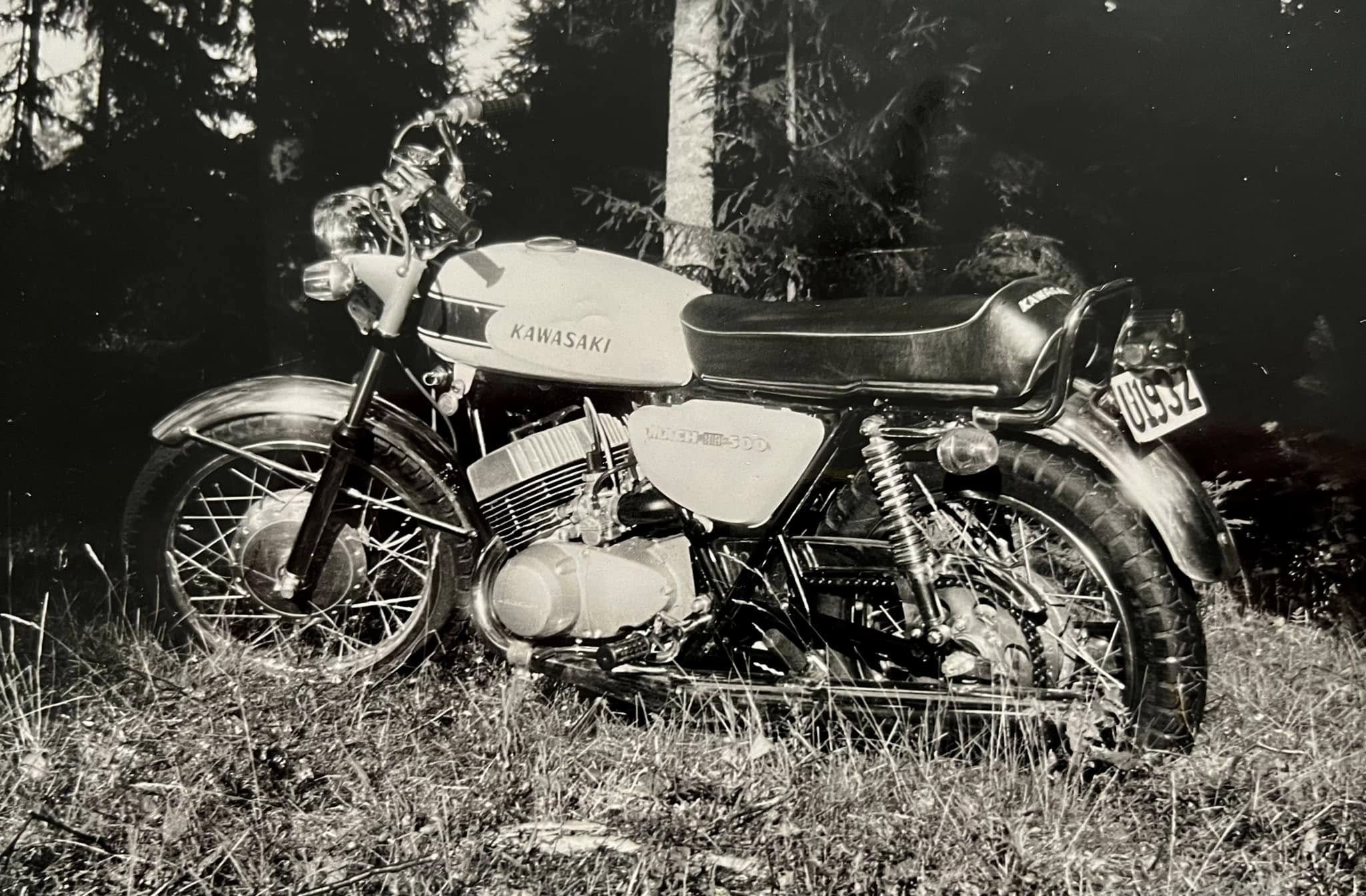
That project became the H1 Mach III, a 498cc two-stroke triple with about 60 hp in a light frame. When Cycle World tested one in 1969 it ran the quarter mile in 13.20 seconds and topped out at 192 km/h (119 mph), and plenty of muscle car owners at stoplights found out what that meant. What made it tricky was the delivery. Below roughly 5,000 rpm not much happened, and above it the power came in a rush that could lift the front wheel with no warning at all. Critics said the H1 was dangerous for riders without much experience, and Kawasaki’s response was to build a bigger one.
750cc, Three Cylinders and No Apologies
 Credit: Bike EXIF
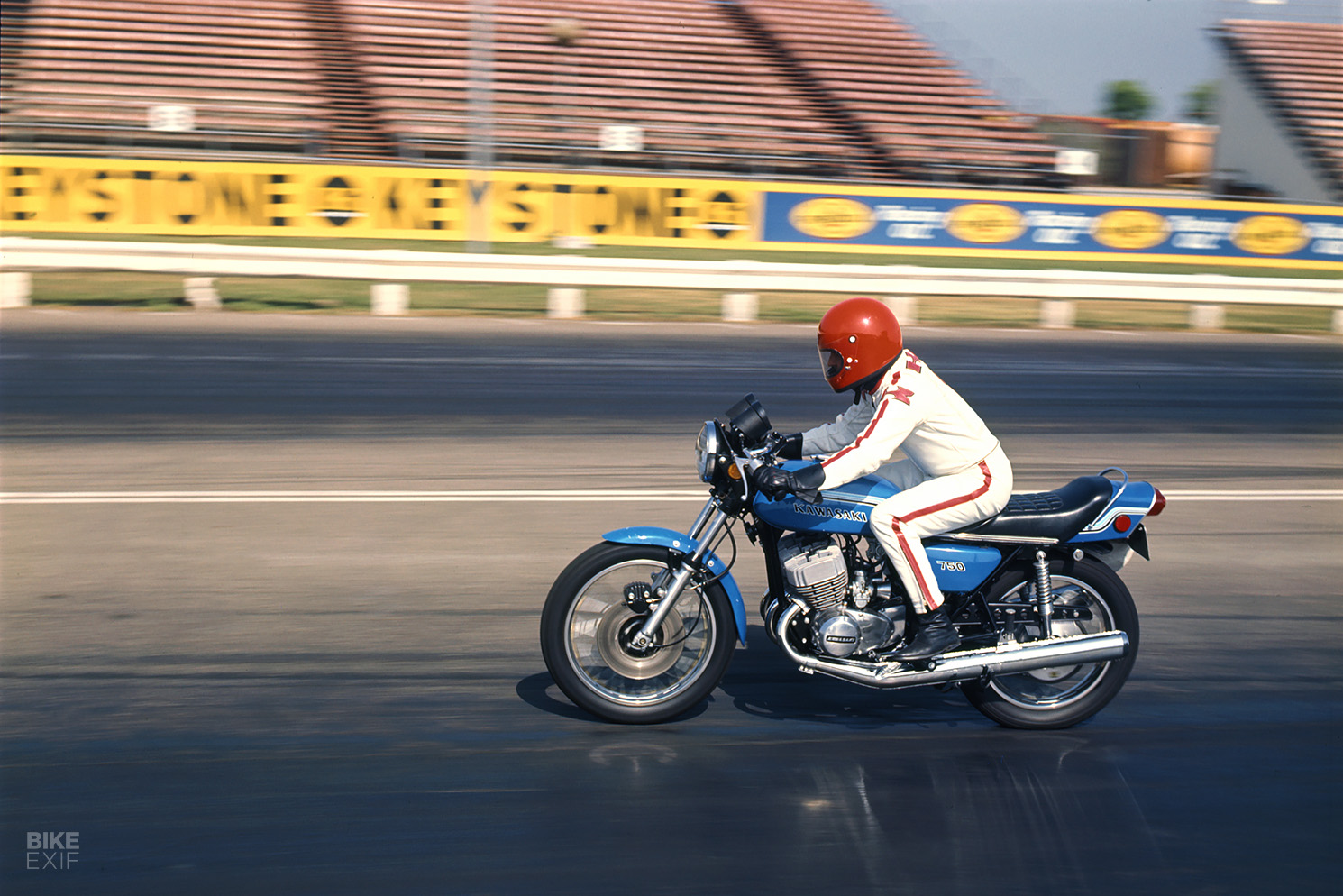
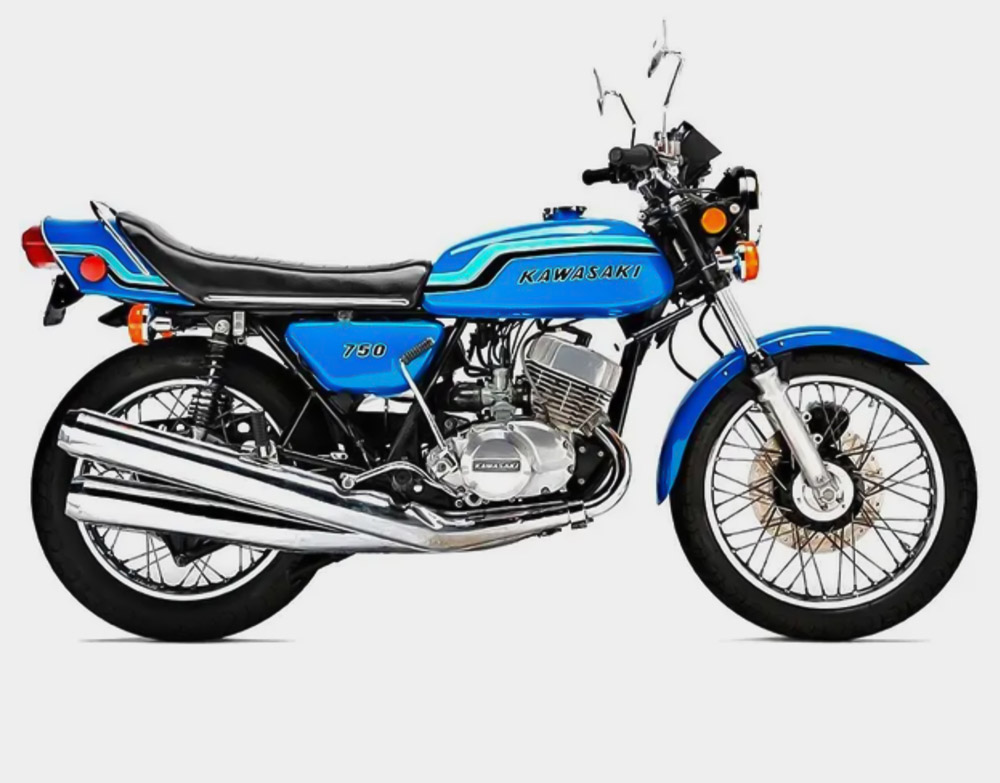
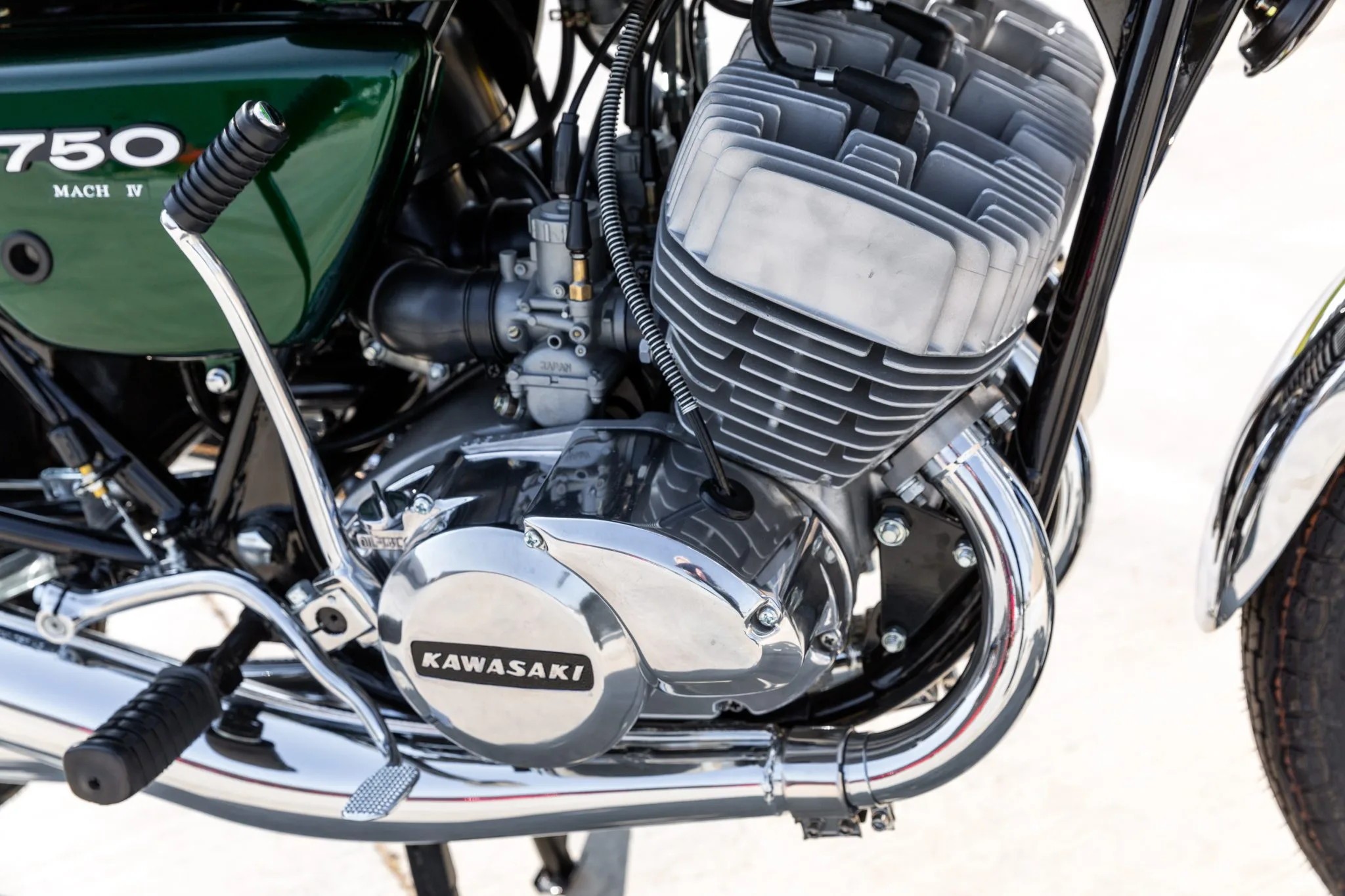
The H2 Mach IV was announced in September 1971 and sold as a 1972 model. Boring out the 500 would have been the easy route, but Kawasaki designed a new engine instead, a 748cc air-cooled triple with a 71 x 63 mm bore and stroke and three 30 mm Mikuni carbs. Other manufacturers were switching to disc and reed valves around then, while Kawasaki stayed with piston-port induction because it kept the engine simple and compact. It was rated at 74 hp at 6,800 rpm and 77 Nm (57 lb-ft) at 6,500 rpm, with a five-speed gearbox behind it.
 Credit: Gallery Aldering
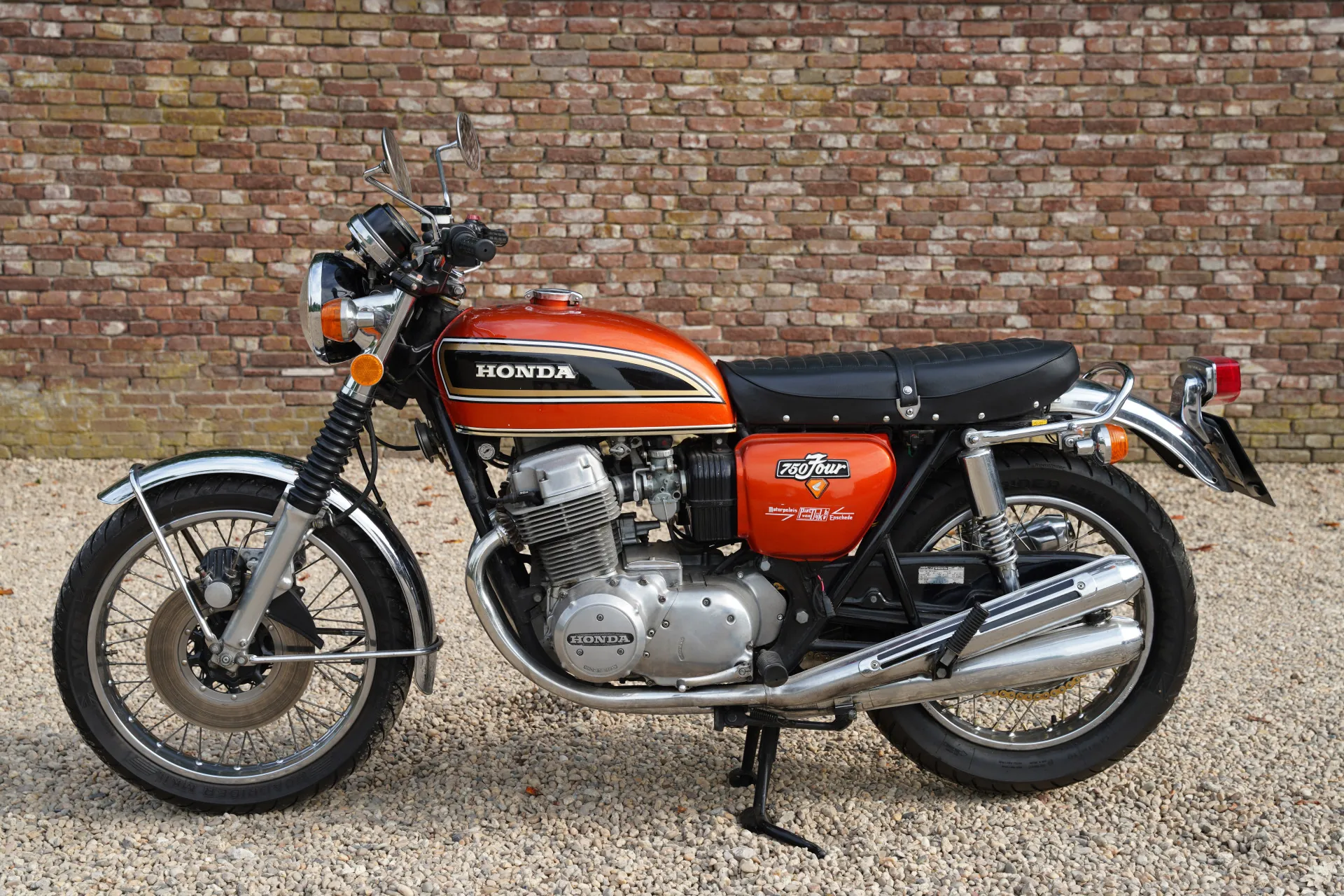
Three years earlier Honda had shown the world the CB750 Four, a smooth and well-mannered bike that proved a big Japanese machine could be refined. The H2 had none of that. Its top speed was around 190 km/h (120 mph), quick enough, but acceleration was what people bought it for, and magazine testers got it into the low 12s at the drag strip. For brakes it had a single 296 mm disc up front and a drum at the back.
Anything that wasn’t speed got very little attention. The triple burned through its 17-liter (4.5-gallon) tank in a hurry if you rode it the way it wanted to be ridden, and it left a cloud of blue smoke every time you launched it hard. Most owners were fine with that, because pulling away from a light on a Mach IV in 1972 was about as loud as an announcement could get.
Why Riders Were Scared of It
 Credit: Cycle News
Most of the fear came from the way a big, aggressively tuned two-stroke makes power. The engine relies a lot on its expansion chambers, and when the revs reach the range where the exhaust tuning works, output jumps very steeply over a short stretch of the tach. On the H2 that meant an easy cruise could turn into a wheelie with a small twist of the throttle, and a lot of riders learned it in second gear on public roads.
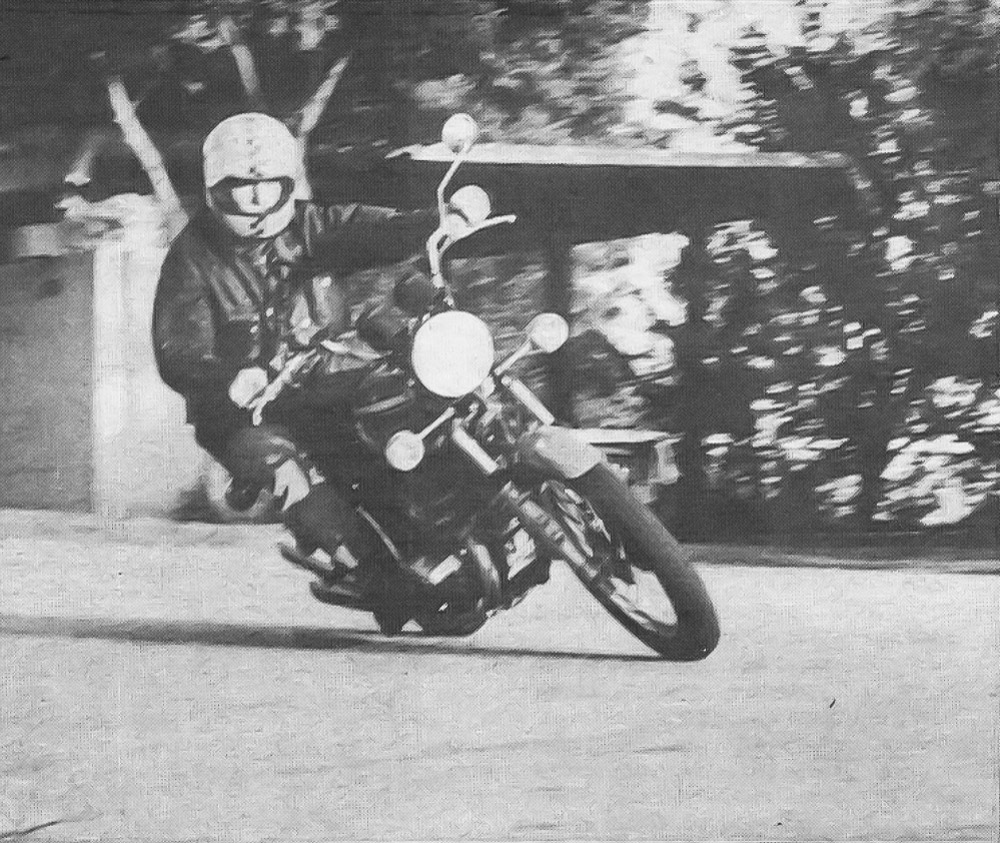
The chassis didn’t help. The front end was light, the wheelbase short and the frame flexed when you leaned on it, so the bike felt nervous in fast corners, and one front disc had a lot of work to do on a motorcycle that could reach 190 km/h. Put an inexperienced rider on top of all that and it’s easy to see how the H2 inherited the “widowmaker” nickname from the Mach III and kept it.
 Credit: Cycle News
The legend isn’t the whole story, though. Motorcyclist magazine has called the widowmaker reputation a myth, and by the standards of the time the H2 actually handled better than the Mach III, well enough to be the production bike to beat on racetracks. A Cycle News test from 1972 came away surprised by how well it went around corners and how comfortable it was on longer trips. Kawasaki kept working on it too, and the 1974 and 1975 bikes were steadier and better balanced than the early ones. None of that changed what people said about it, and the nickname has stuck for more than 50 years.
The H2R and Kawasaki’s Racing Push
 Credit: Bonhams Cars
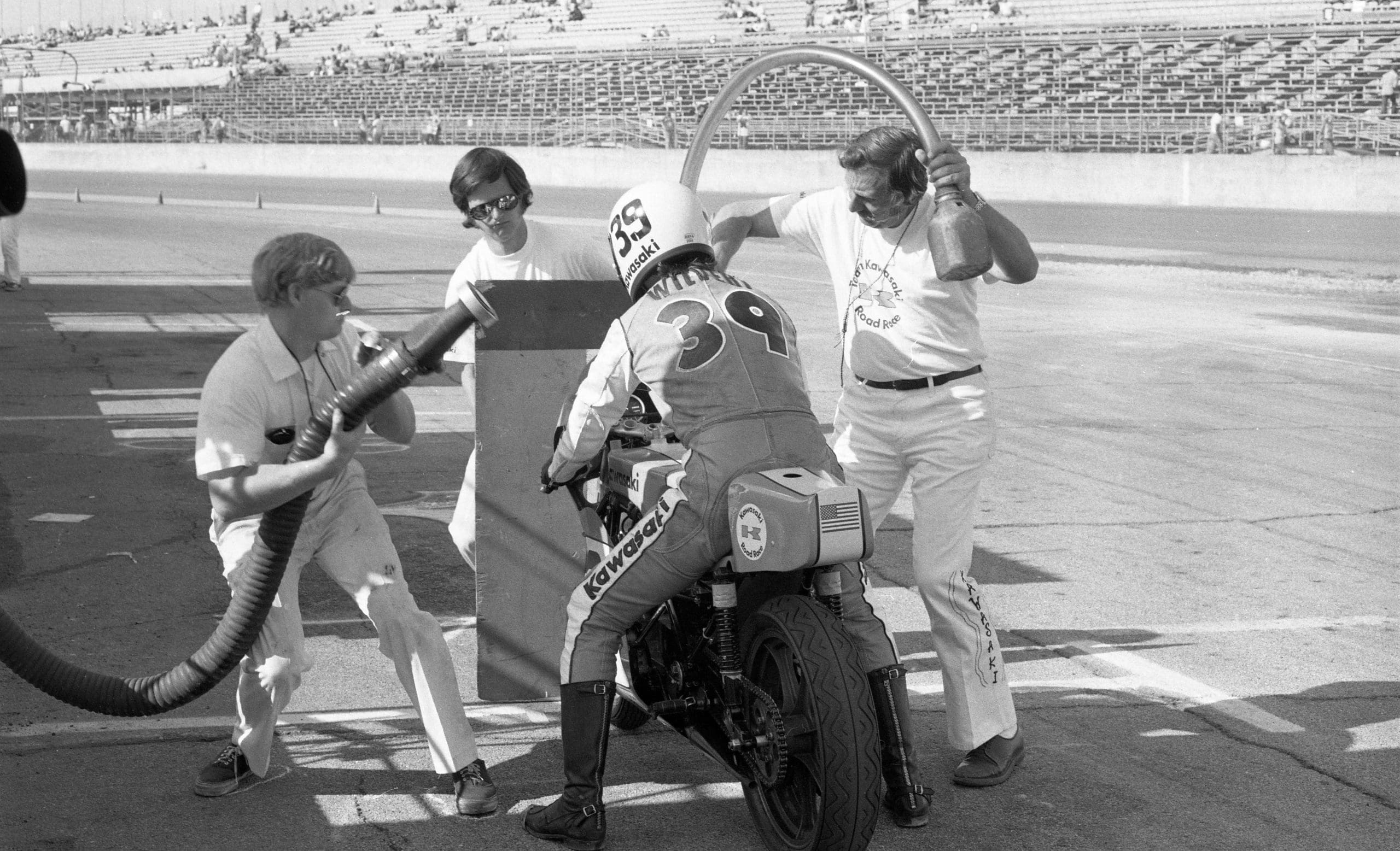
Racing was the obvious way to sell a bike like this, so Kawasaki built the H2R for Formula 750. The race version kept the 748cc triple layout and made somewhere between 100 and 110 hp, more than the chains and tires of the day could handle. At its first race, the 1972 Daytona 200, Yvon Duhamel, Gary Nixon and Paul Smart all dropped out with chain and tire failures.
 Credit: Bonhams Cars
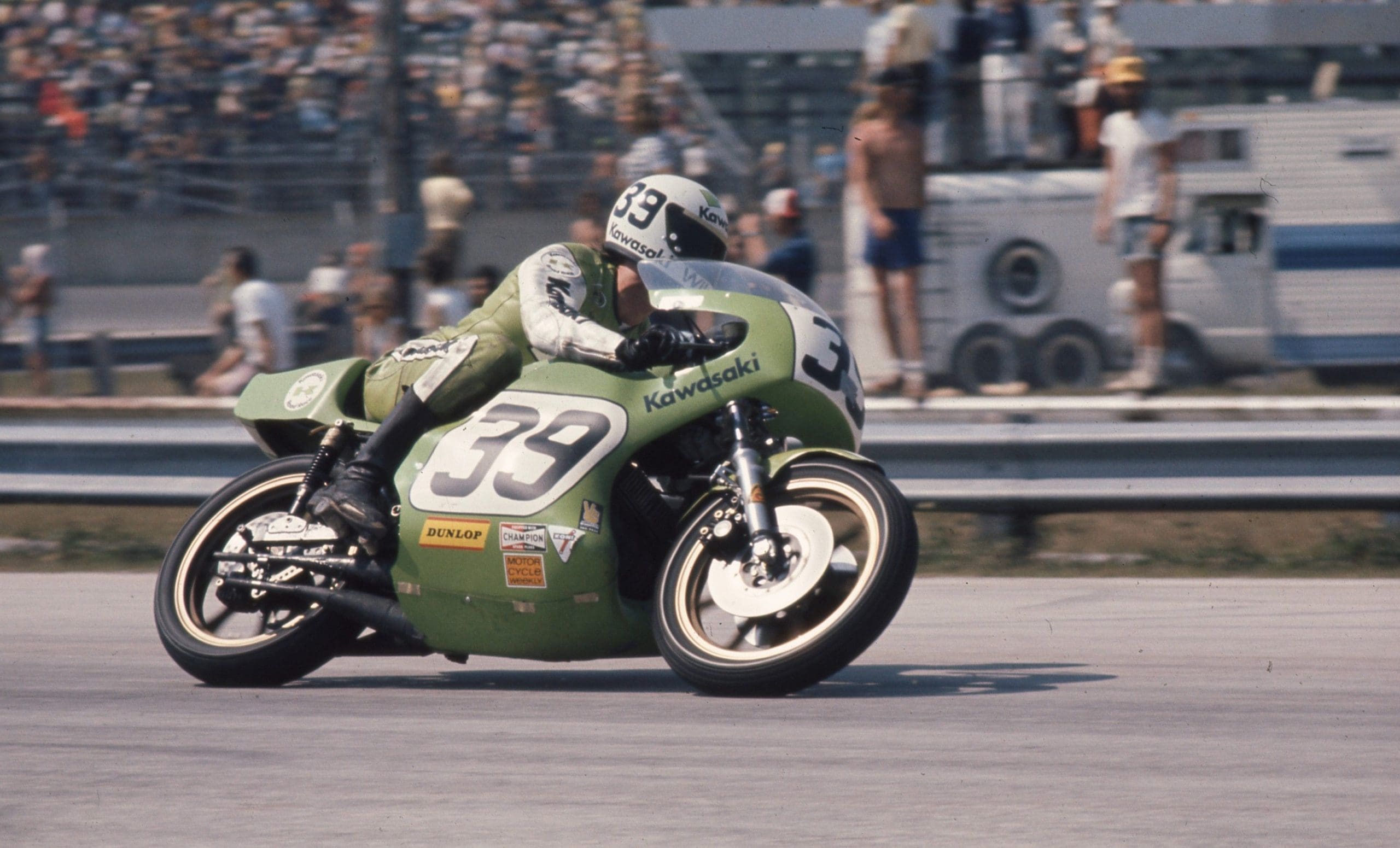
Kawasaki took over the team directly in 1973 and gave it a bigger budget, and the results followed. At the Ontario finale that year Duhamel, Nixon and Art Baumann took the top three spots, and Nixon (the same Gary Nixon who won two Grand National titles for Triumph on the dirt ovals) finished third in the AMA Grand National standings. The AMA Motorcycle Hall of Fame describes Duhamel as one of the very few riders who could tame the H2R. The water-cooled KR750 replaced it in 1975, but the street H2 got one more moment that year when Duhamel won the production class at Pocono on one, the last time a two-stroke won a production class at an AMA road race.
The End of the Two-Stroke Triple and Its Legacy Today
 Credit: Autoevolution
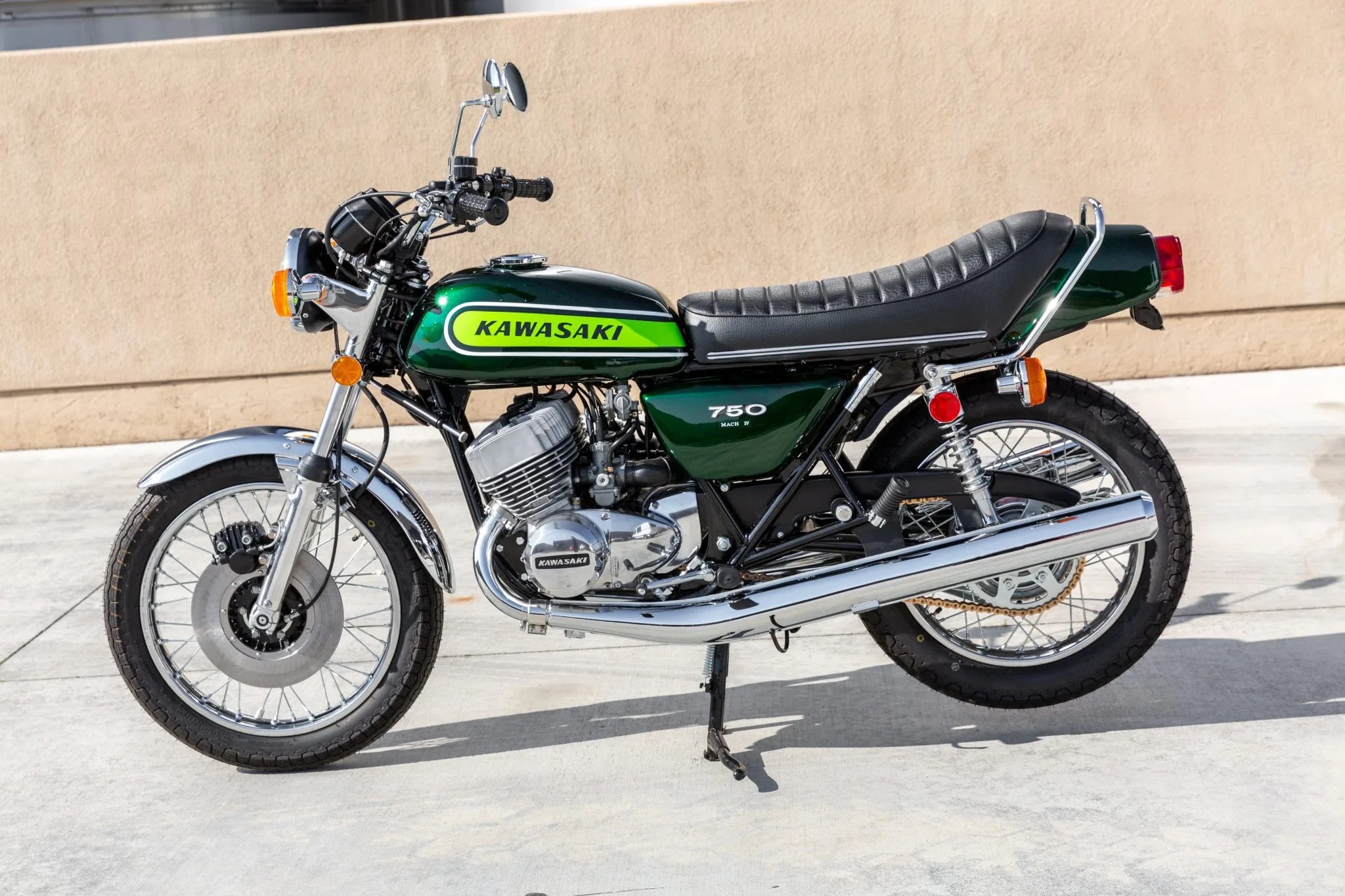
Timing worked against the H2. The 1973 oil crisis made a thirsty bike a lot harder to justify, and between the US Clean Air Act and tougher emissions rules in California, big road-going two-strokes were running out of time. Kawasaki had also moved on, with the four-cylinder Z1 taking over as flagship in 1973. The H2 stayed in production until 1975, and if it had made it to 1976 it probably would have been renamed the KH750 to match Kawasaki’s new model codes.
 Credit: Autoevolution
These days the Mach IV is a proper collector bike. A 1972 example went for AU$23,000 (about US$16,000) at a Shannons auction in 2017, and good bikes often show up in European listings priced between £15,000 and £20,000 (roughly US$20,000 to US$27,000). Kawasaki clearly remembers it too, because when it launched its supercharged hyperbike for 2015, it gave it the H2 name.