
If you’ve ever spent a weekend in the pits at a national enduro, you recognize the diesel soundtrack, a Cummins clattering next to a toy hauler while somebody’s Power Stroke warms up two spots down. What you won’t hear is a diesel motorcycle, and unless a Marine recon unit took a wrong turn, you probably never will.
People have tried to change that for decades, and one of them had a Pentagon contract behind him. Three of those efforts got bikes into riders’ hands, and the way each came apart explains why diesel ended up at the front of the trailer instead of inside it.
India’s Diesel Bullet, the Royal Enfield Taurus
 Credit: r/indianbikes
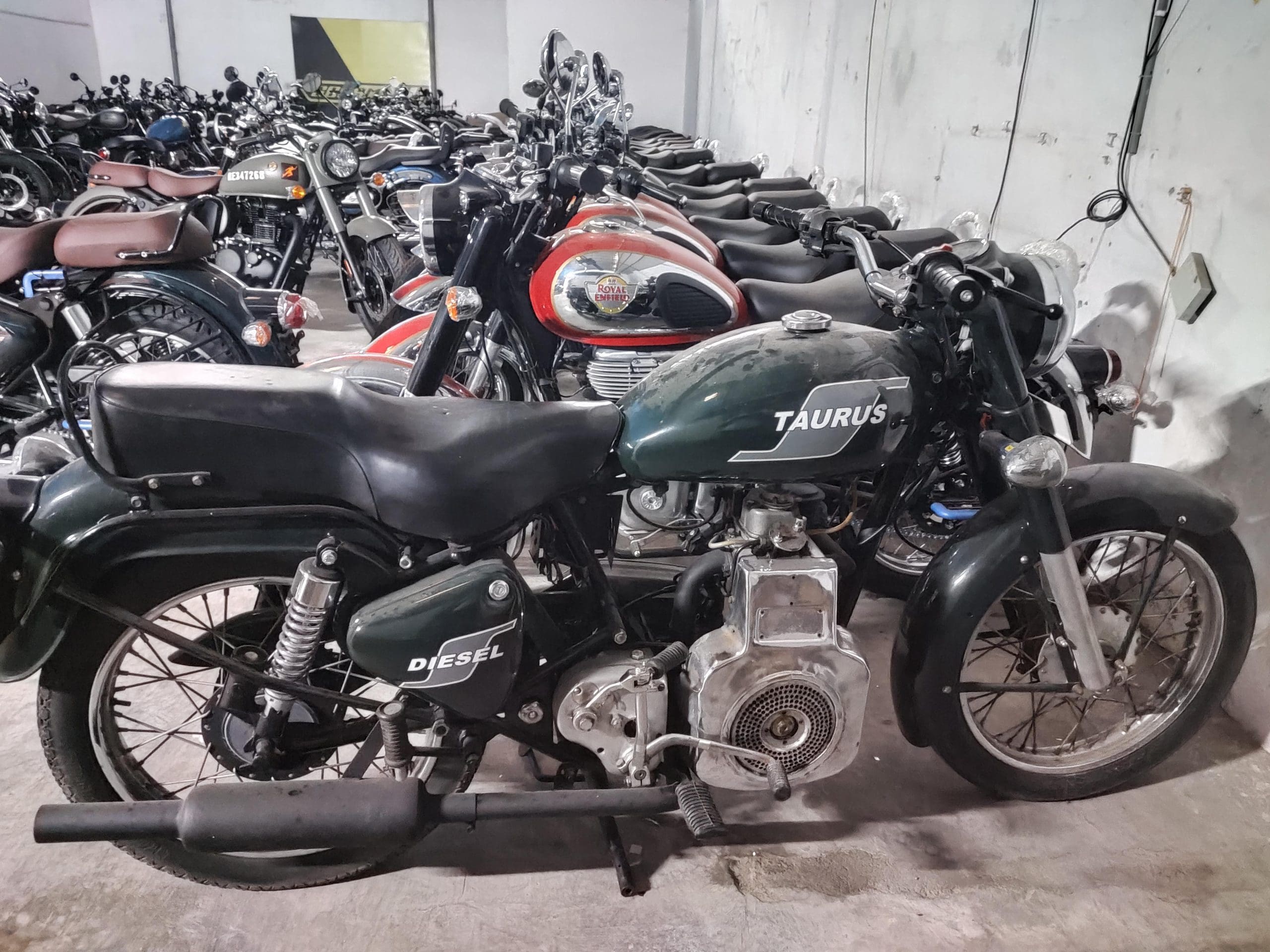
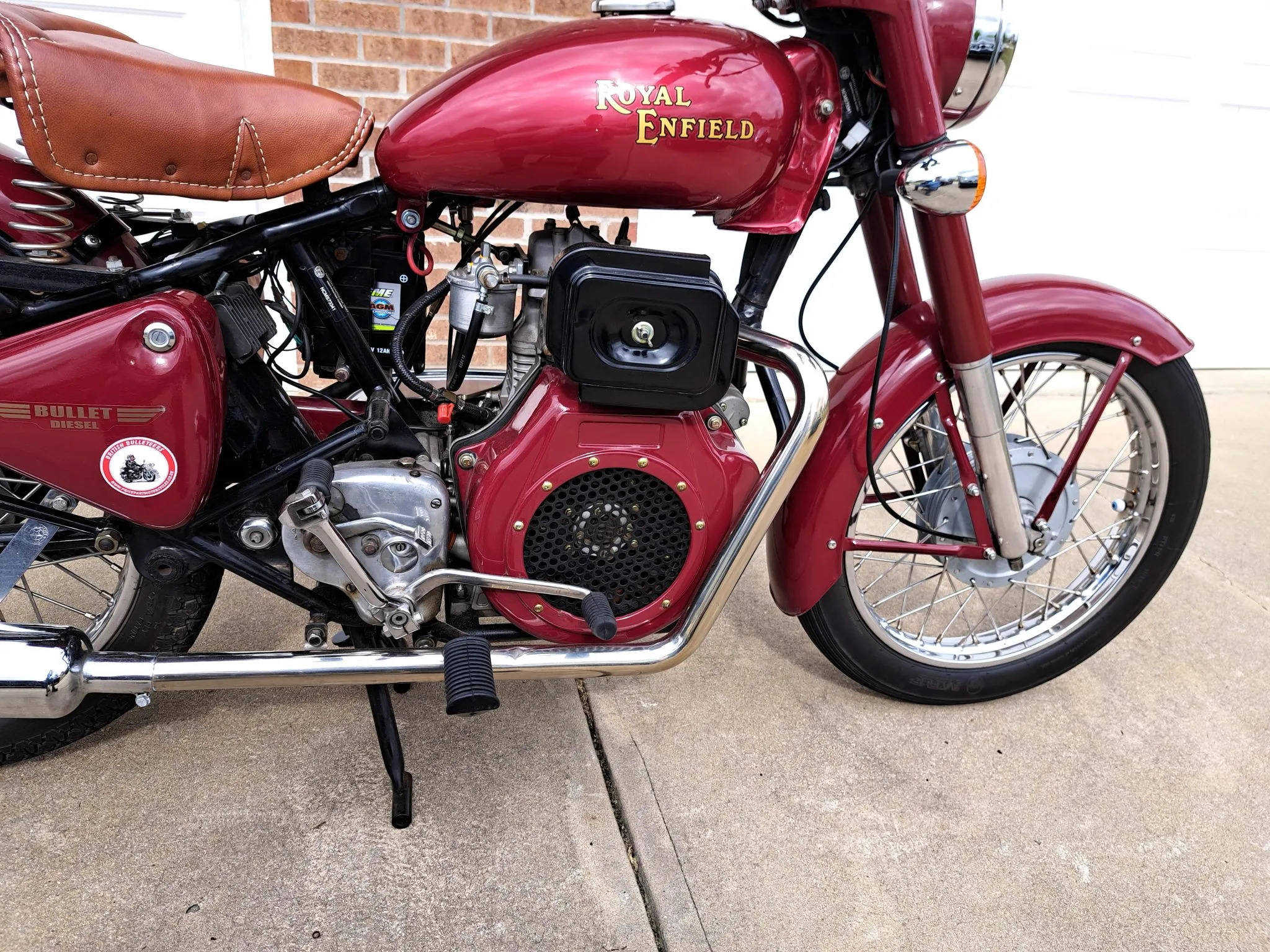
Long before Royal Enfield put its name on one, mechanics around India were pulling the gasoline engines out of Bullets and dropping in small industrial diesels, because diesel was cheaper at the pump and rural riders covered long distances. Royal Enfield eventually noticed and built a factory version, the Taurus, which became the only diesel motorcycle India ever mass-produced.
 Credit: Bring a Trailer
It was a 325cc air-cooled Greaves Lombardini single made 6.5 hp and 11 lb-ft through a four-speed gearbox and ran out of breath around 40 mph (65 km/h), which bothered nobody, because the Taurus was known for 165 to 200 mpg (70 to 85 km/l). Through the 1990s it was a familiar sight among rural riders and fleet operators, usually trailing a cloud of black smoke.
All that smoke caught up with it when India tightened its emission standards near the end of the decade, and Royal Enfield pulled the Taurus around 2000, after a production run no diesel motorcycle has matched since.
The Marines’ Jet-Fuel KLR650
 Credit: Silodrome
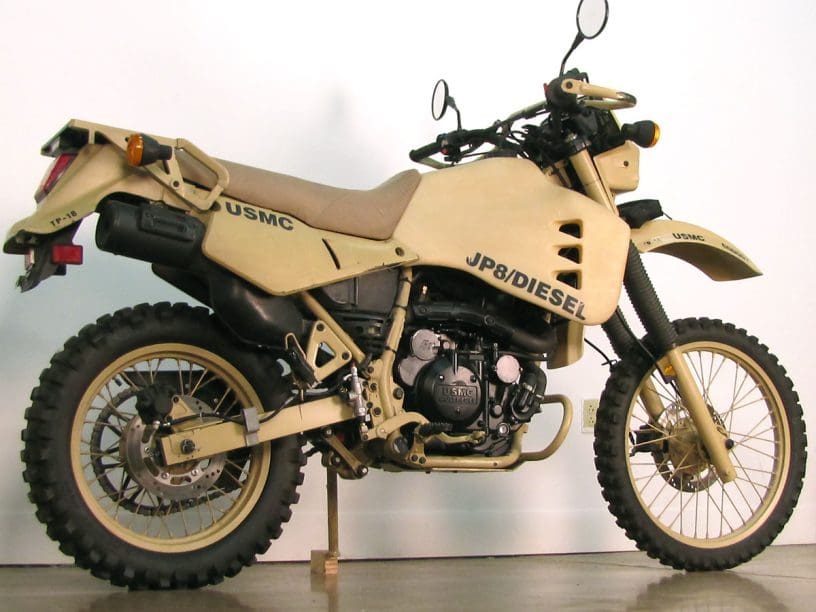
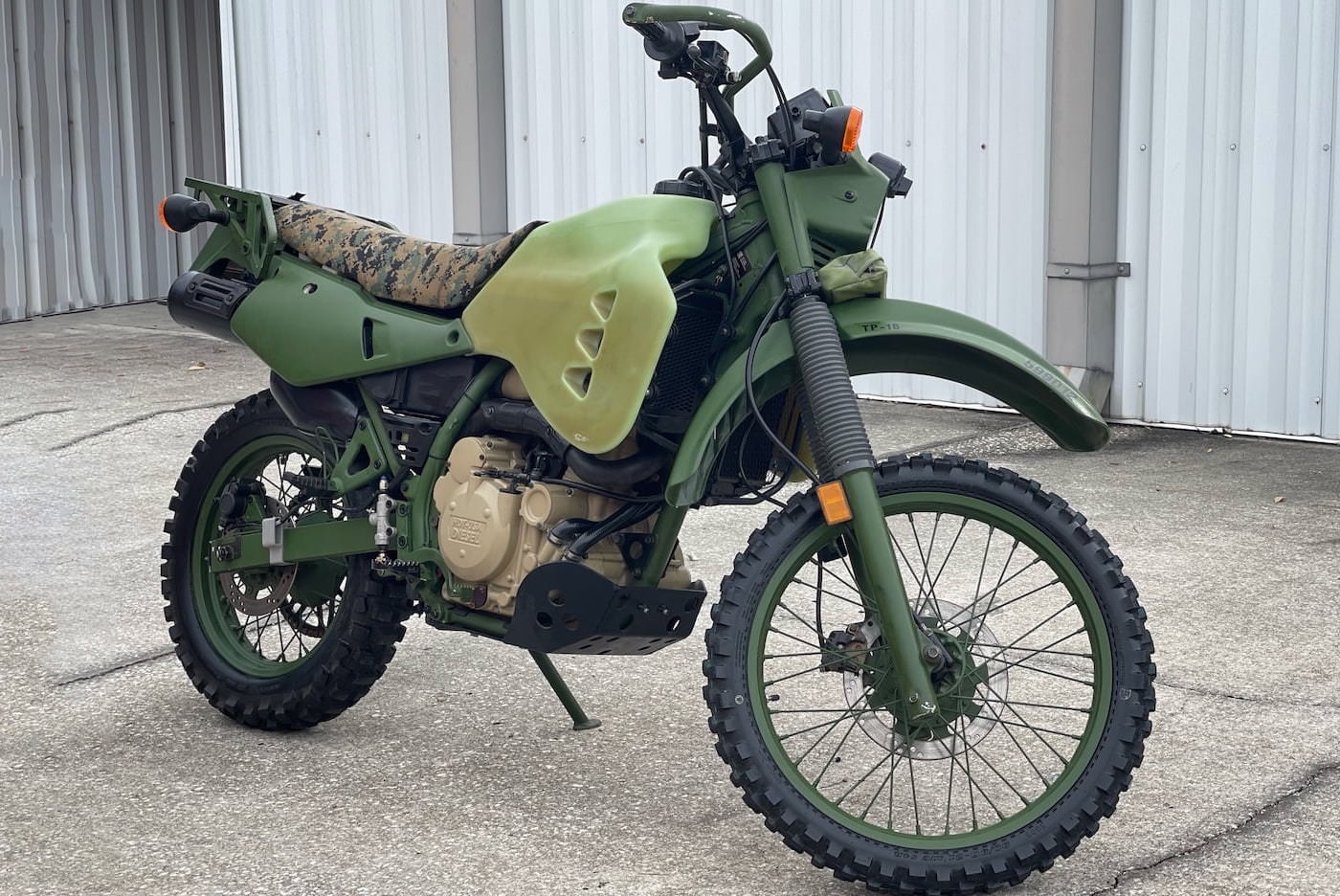
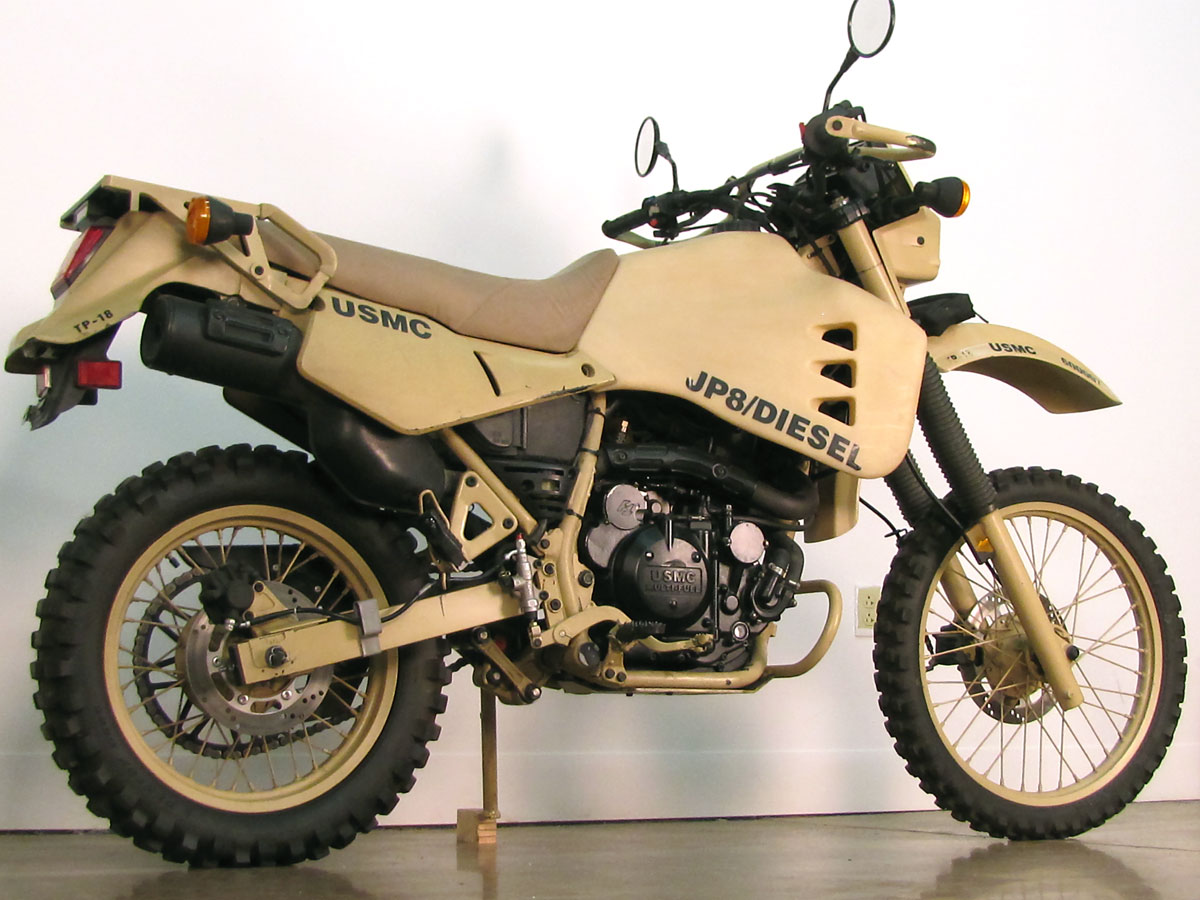
When the Marines rolled into Iraq in 2003, some rode gasoline Kawasaki KLR650s, and Gunnery Sergeant Bryon Schmidt was one of two who rode a motorcycle all the way to Baghdad from Kuwait. The bikes were tough, but a 1997 Defense Department directive had already called for a single battlefield fuel, the kerosene-based JP-8, across all air and ground equipment. Jack Heric, who ran the program, put it bluntly to Cycle World in 2008: “Our only choice was to get rid of them or make them diesel.”
 Credit: National Motorcycle Museum
Out of nearly 40 proposals, the Corps picked Hayes Diversified Technologies, a small family-run contractor in Hesperia, California. Working with England’s Cranfield University, founder Fred Hayes built a 611cc liquid-cooled single that kept only the Kawasaki’s transmission and electrical system, a new engine “from the ground up,” as he put it. The M1030M1 made around 30 horsepower and 33 lb-ft and weighed 369 lb (167 kg) dry, just 32 lb (15 kg) more than a civilian KLR.
Marines got their first diesel bikes in November 2006, along with a bonus nobody had asked for, since riders averaged 90 to 110 mpg (38 to 47 km/l). Two years earlier, Hayes had ridden an early version across the Bonneville salt in lousy weather to a diesel record of just over 85 mph (137 km/h), a run WBW covered at the time. A civilian model was promised for 2009, and anyone who saved up for one is still waiting.
A Smart Car Engine in an Adventure Bike
 Credit: The Autopian
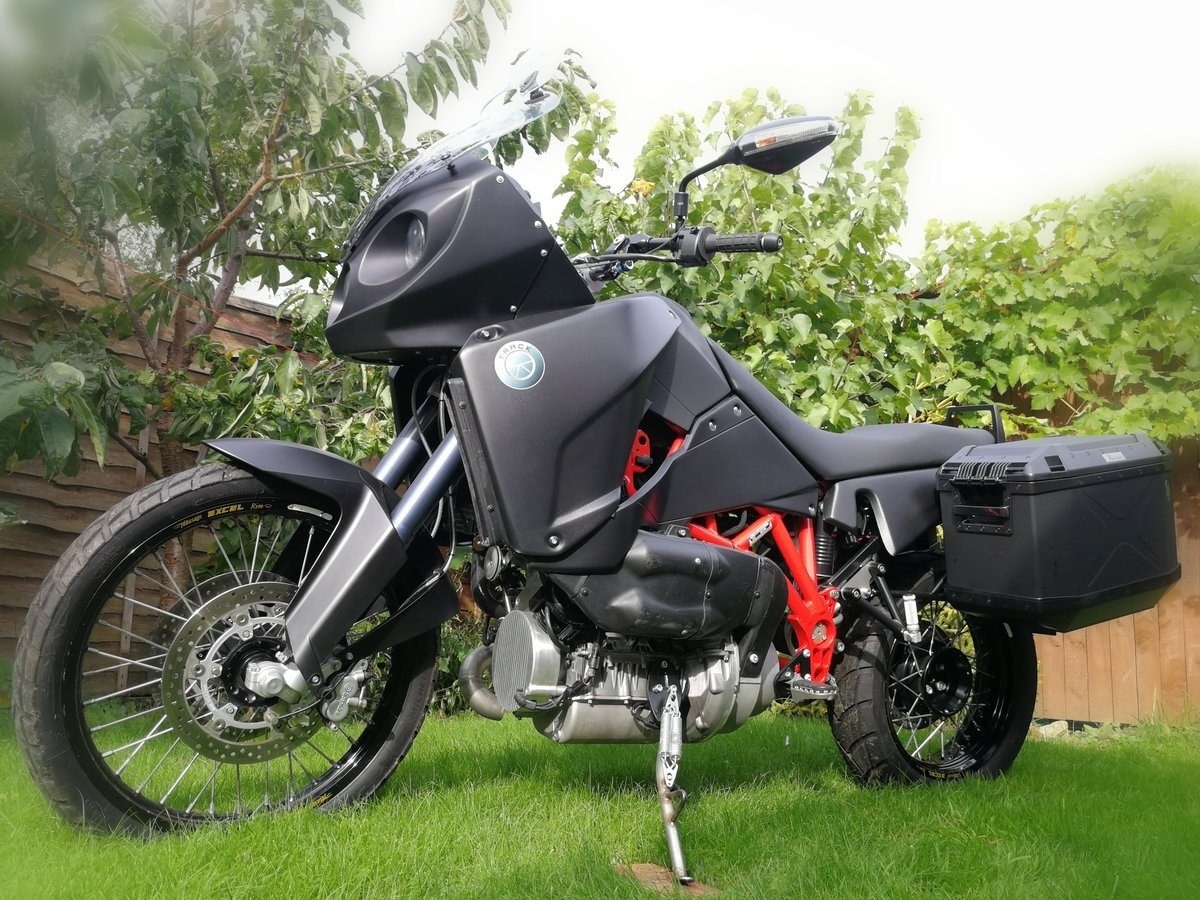
Erik Vegt came to diesel from desert rallying, where he’d spent years building bikes with oversized tanks for events that punish anyone who runs dry. In 2006 his Dutch company, EVA Products, started work on the Track T-800CDI around the 799cc common-rail turbodiesel triple Mercedes-Benz developed for the Smart city car and paired it with a CVT and shaft drive.
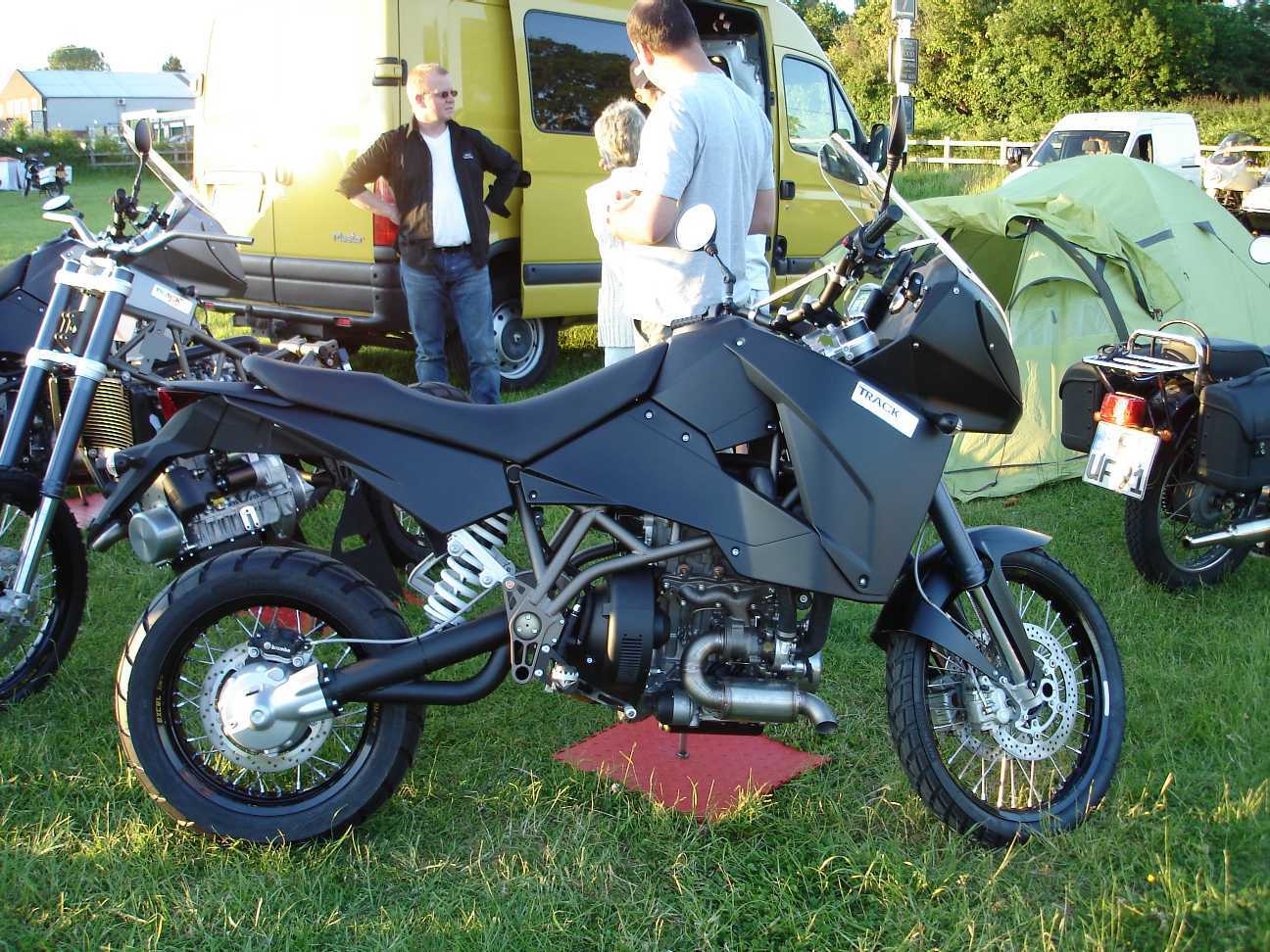 Credit: Dieselbike.net
Motorcycle News rode a production bike in 2009 and listed 45 hp and 485 lb (220 kg) with fluids but no fuel, while EVA claimed up to 112 mpg (47.6 km/l) at 55 mph (89 km/h). What sank it was the £15,000 price in Britain, a big ask for a bike sold on saving money, and in 2012 EVA announced it was winding production down.