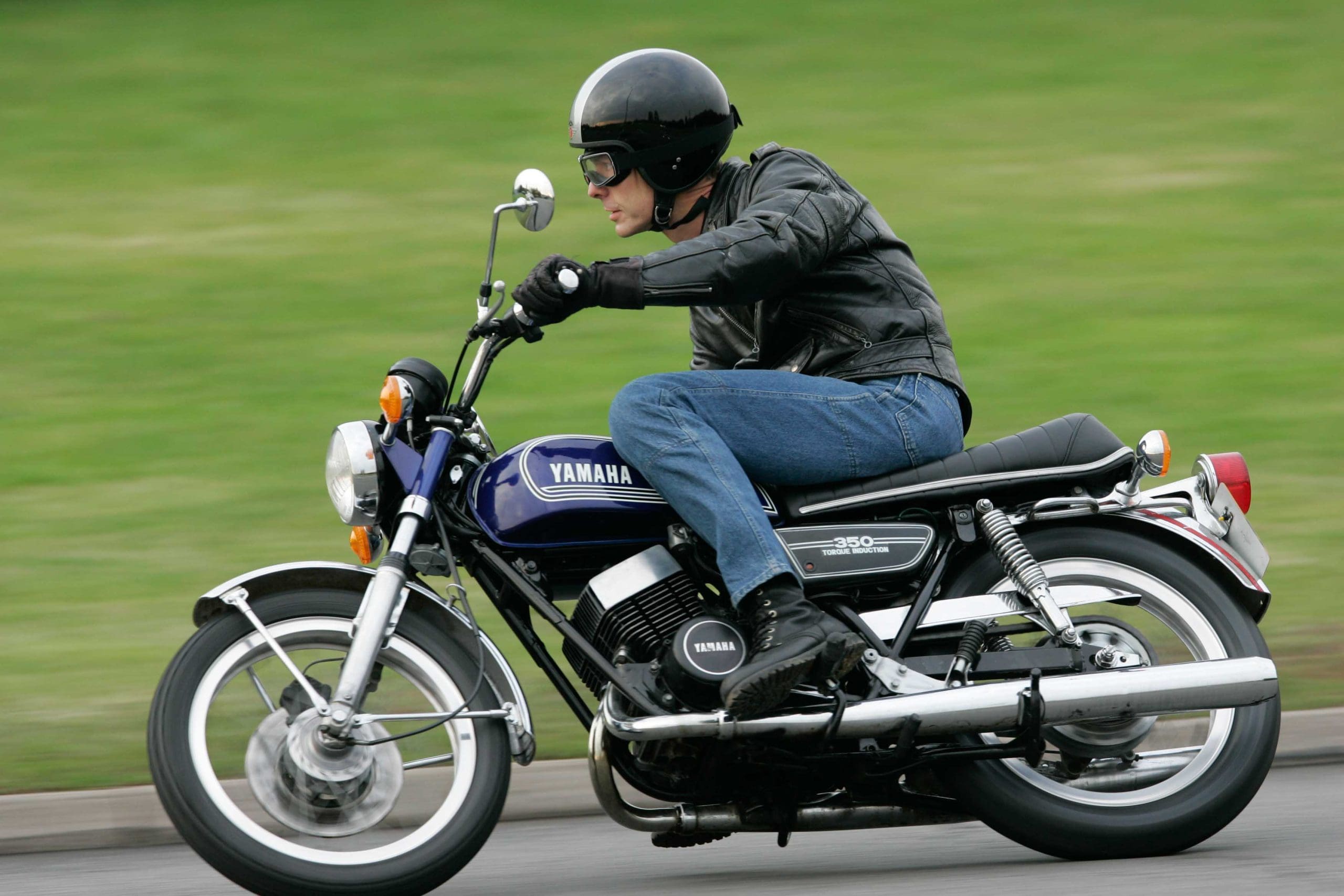
There are motorcycles you remember because they were beautiful. Others stick with you because they were fast, or because they scared the hell out of you, or because somebody you knew had one and spent an unreasonable amount of time explaining why his was better than everybody else’s. The Yamaha RD350 somehow manages all three, which goes a long way toward explaining why a motorcycle Yamaha built to be affordable and practical has become such a desirable collector bike.
The RD350 was never supposed to be a precious motorcycle. That was part of the appeal. Yamaha built it to be fast without being expensive, simple without being crude and competitive without requiring a factory racing budget or a last name the service manager recognized. You could ride one to work on Monday, take it to the track on Saturday and, if something expensive happened to the engine, fix it without taking out a second mortgage.
That made the RD350 dangerous in the best possible way. In America and Britain, it became the little two-stroke that embarrassed much larger motorcycles. In India, where Escorts Group built the bike under license as the Rajdoot 350, it became something bigger still: arguably India’s first genuine sporting motorcycle and, eventually, a cult object. Those two stories don’t overlap much, but they don’t have to. They’re both evidence of the same thing. Yamaha built a motorcycle that was cheap enough to be abused and good enough to be remembered.
Before There Was an RD, There Was Racing
 Credit: Bring a Trailer
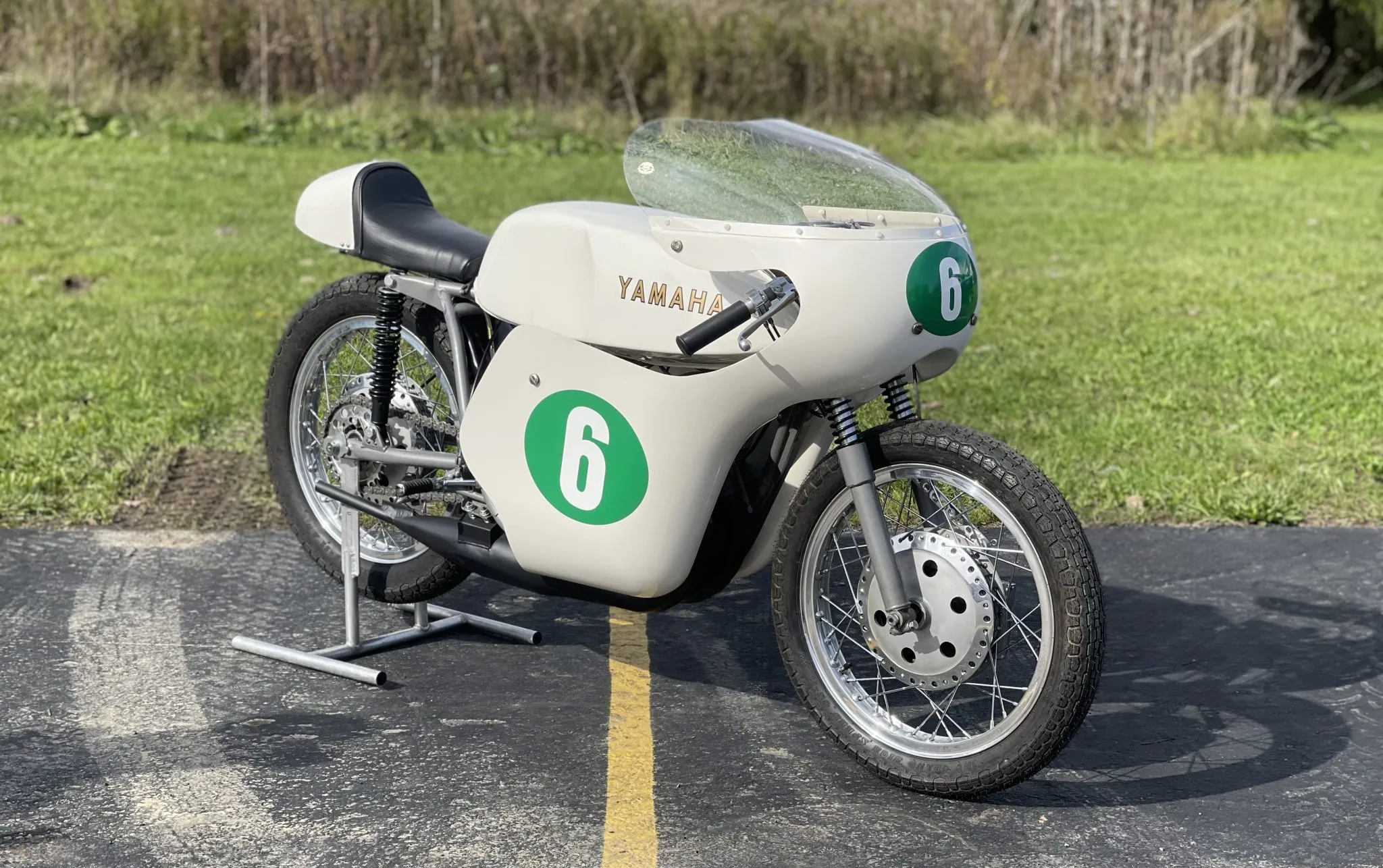
The RD350 didn’t arrive out of nowhere. Yamaha had been working its way toward a fast 350cc road-going twin for years, and the company’s 250cc YD-series twins had grown into the 305cc YM1 in the early 1960s and then the 348cc YR1 in 1967. The YR1 was already a fairly serious piece of hardware, and Yamaha didn’t waste much time finding out what it could do on a racetrack.
At Daytona in 1967, Yamaha-backed YR350s finished 18th and 19th with Tony Murphy and Mike Duff. A year later, Yvon DuHamel and Art Baumann pushed those bikes all the way to second and third. Calvin Rayborn’s Harley-Davidson KR750 still took the win, but the writing was getting easier to read. Yamaha’s little twins were becoming a problem for motorcycles with considerably more displacement.
 Credit: Bring a Trailer
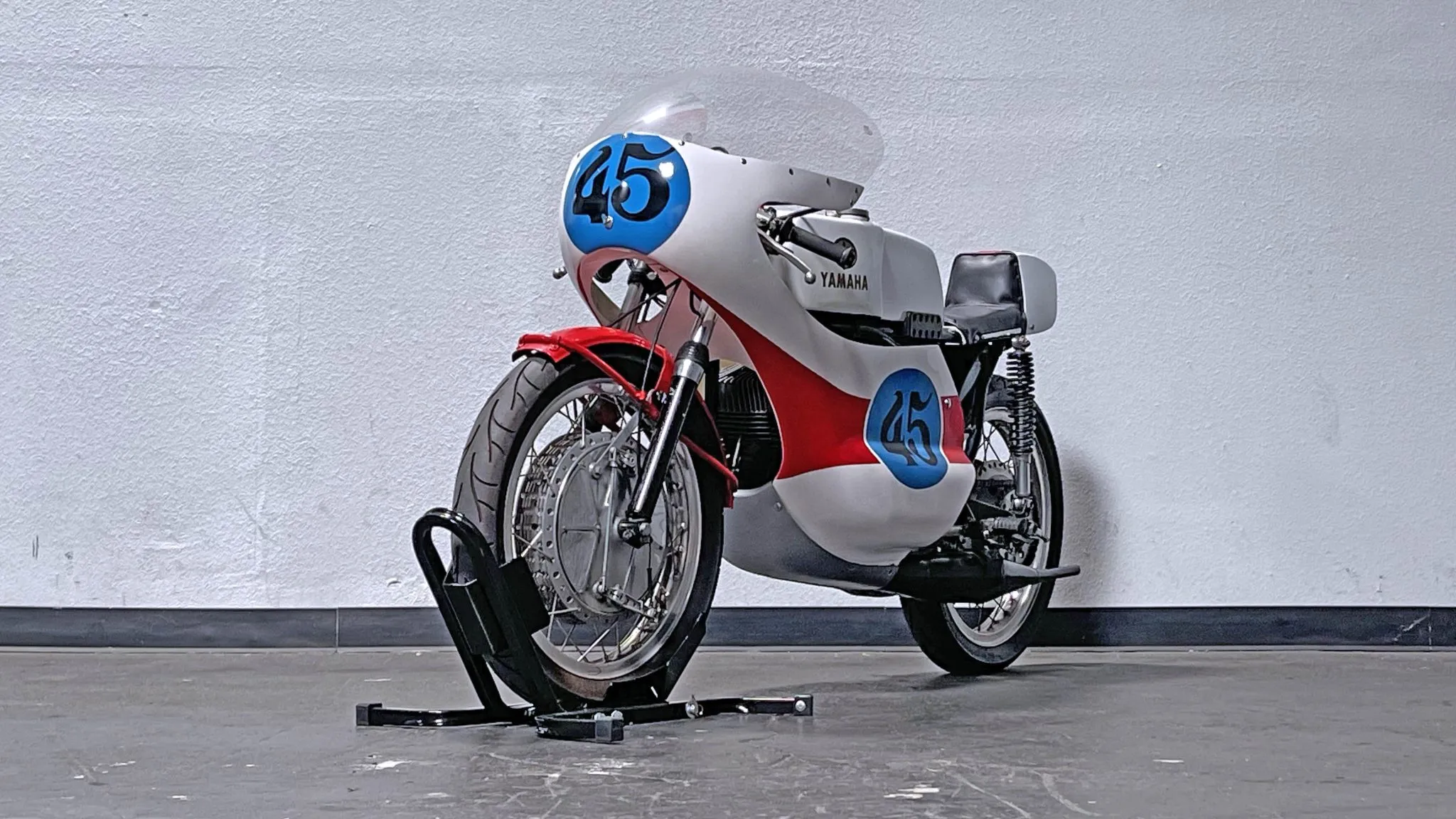
Then Yamaha went one step further. In 1969, it offered the TR2 350 production racer to ordinary customers, at least ordinary customers with the money to buy one. It made roughly 55 horsepower and gave private racers access to hardware that previously required considerably more factory involvement. Yamaha wasn’t merely building motorcycles that happened to race. It was building motorcycles with racing already baked into the design.
By 1972 and 1973, Yamaha’s 350cc twins had taken over Daytona. The four-strokes would eventually come back, but not until the rules changed in 1985. That matters because the RD350 wasn’t some commuter bike that accidentally discovered speed. The racing department was already pushing Yamaha’s engineers in that direction, and the little street bike was benefiting from work that had been happening at considerably higher speeds.
Yamaha Figured Out How to Make One Engine Do Almost Everything
 Credit: HotCars
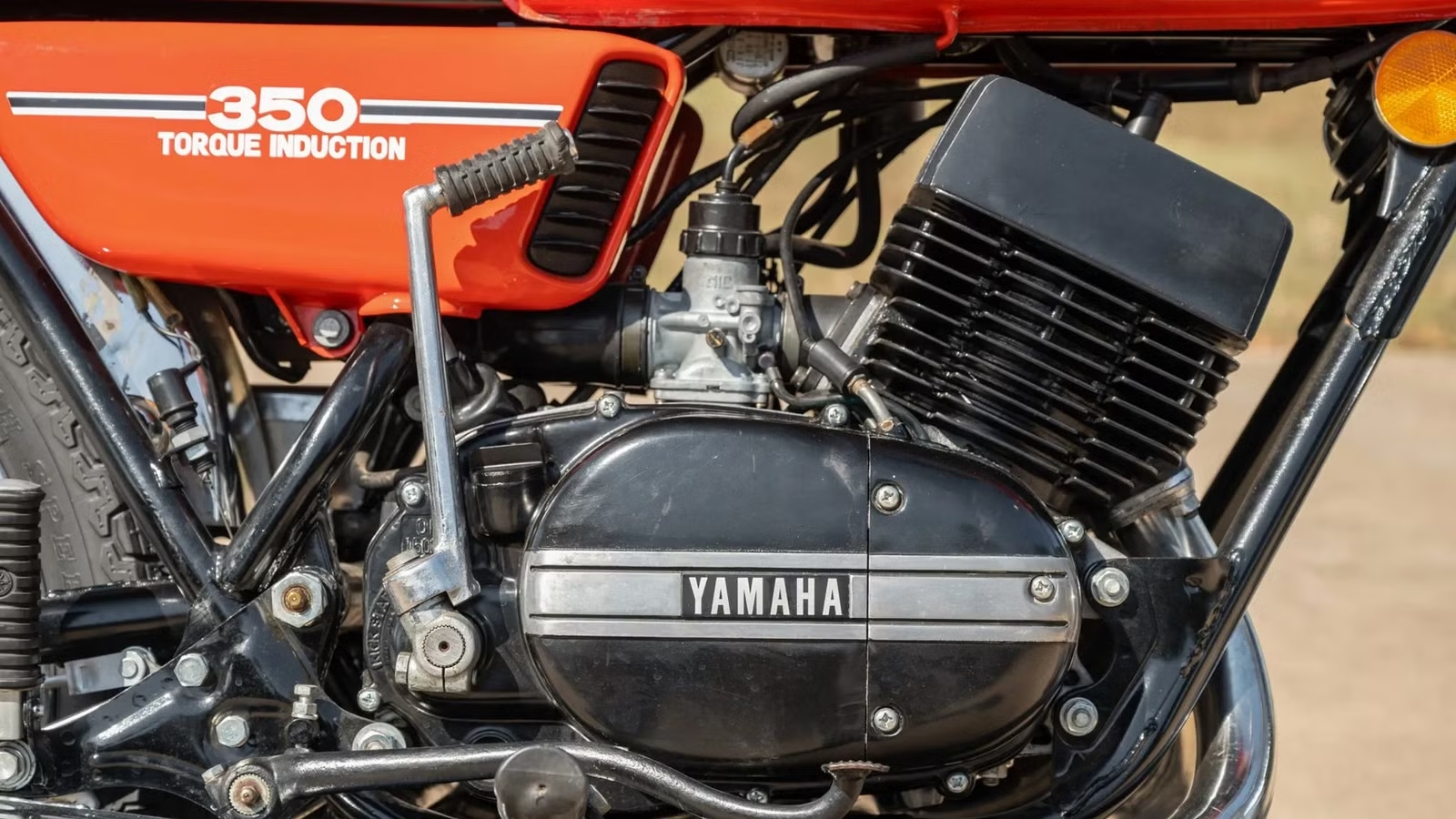
There was another trick to the RD350, and it had less to do with horsepower than with manufacturing. Yamaha wanted the 250 and 350 twins to share as much hardware as possible, so the company redesigned the engines around a common 54mm stroke and used horizontally split crankcases. That arrangement allowed the crankshaft, transmission shafts and kickstarter mechanism to be assembled into the upper case, simplifying production.
The 250 used a 54 x 54mm bore and stroke. The 350 stretched the bore to 64mm while keeping the same 54mm stroke. Much of the surrounding architecture could be shared, including crankcases, gearboxes and stud patterns. It was an efficient way to produce two different motorcycles without effectively building two completely different engines.
 Credit: Iconic Motorbikes Auctions
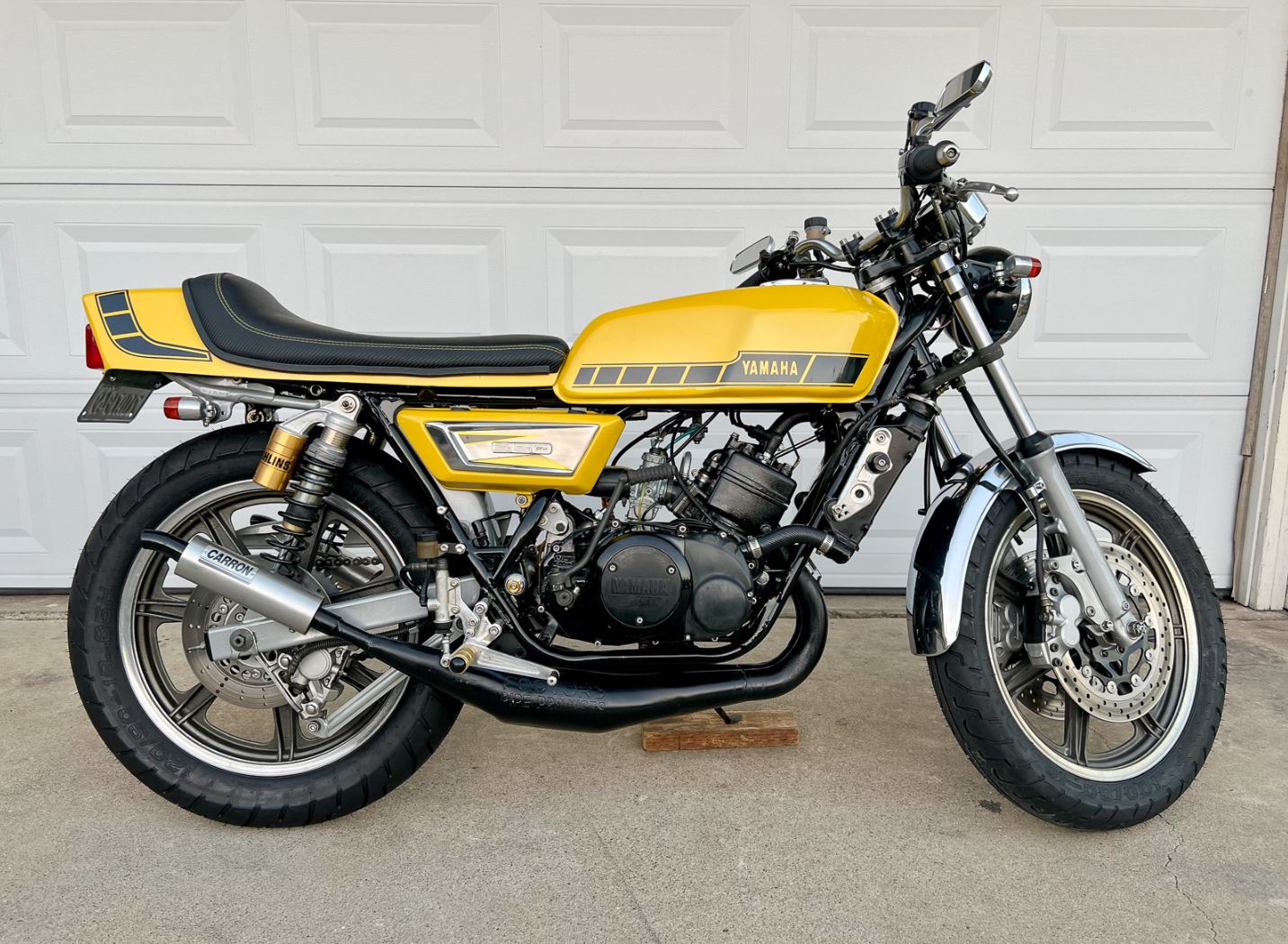
The first production motorcycle to use the basic platform was the R5. Yamaha then added reed-valve induction, borrowing an idea that had already proven itself in the company’s DT off-road engines. For 1973, the R5 evolved into the RD250 and RD350.
This is where the motorcycle’s personality starts to make sense. It wasn’t inexpensive because Yamaha had somehow discovered a magical way to make horsepower for free. It was affordable because the company was very good at making a lot of motorcycles out of a relatively small number of parts. The engineering was clever, but it was also practical, and that combination helped put serious performance within reach of ordinary riders.
The Motorcycle That Let You Go Racing on a Budget
 Credit: Period Paper
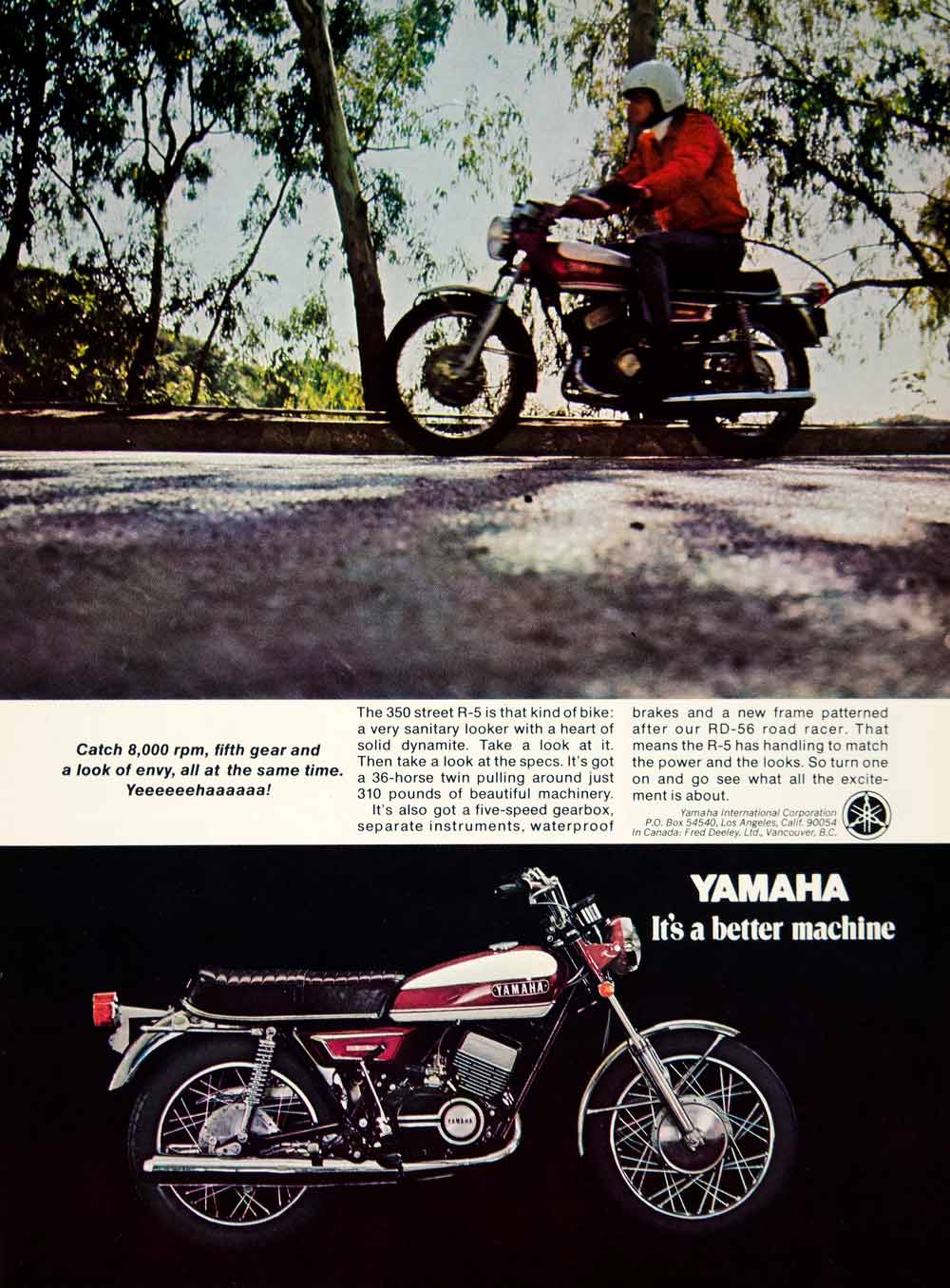
The RD350’s affordability was one of its greatest weapons. Yamaha’s Autolube oil-injection system meant you didn’t have to carry around a measuring cup and a can of two-stroke oil every time you filled the tank. You could simply put gasoline in it and ride. For a motorcycle that could be ridden hard enough to become a very expensive collection of metal shrapnel, that was a useful convenience.
The same basic bike also made an excellent production racer. A close-ratio TZ gearbox could be fitted to an RD, with the race transmission’s second through sixth gears dropping into the street-bike gearbox. Suddenly, a motorcycle that cost ordinary money could be turned into a remarkably serious track machine without requiring an engineering department in the garage.
And when you broke something, parts were cheap enough that the whole exercise remained vaguely rational. Replacement crankcases were reportedly around $105, while a cylinder block was about $140 through a Yamaha dealer. Those prices helped private racers keep going when a more exotic motorcycle might have been parked for the season.
 Credit: Hagerty UK
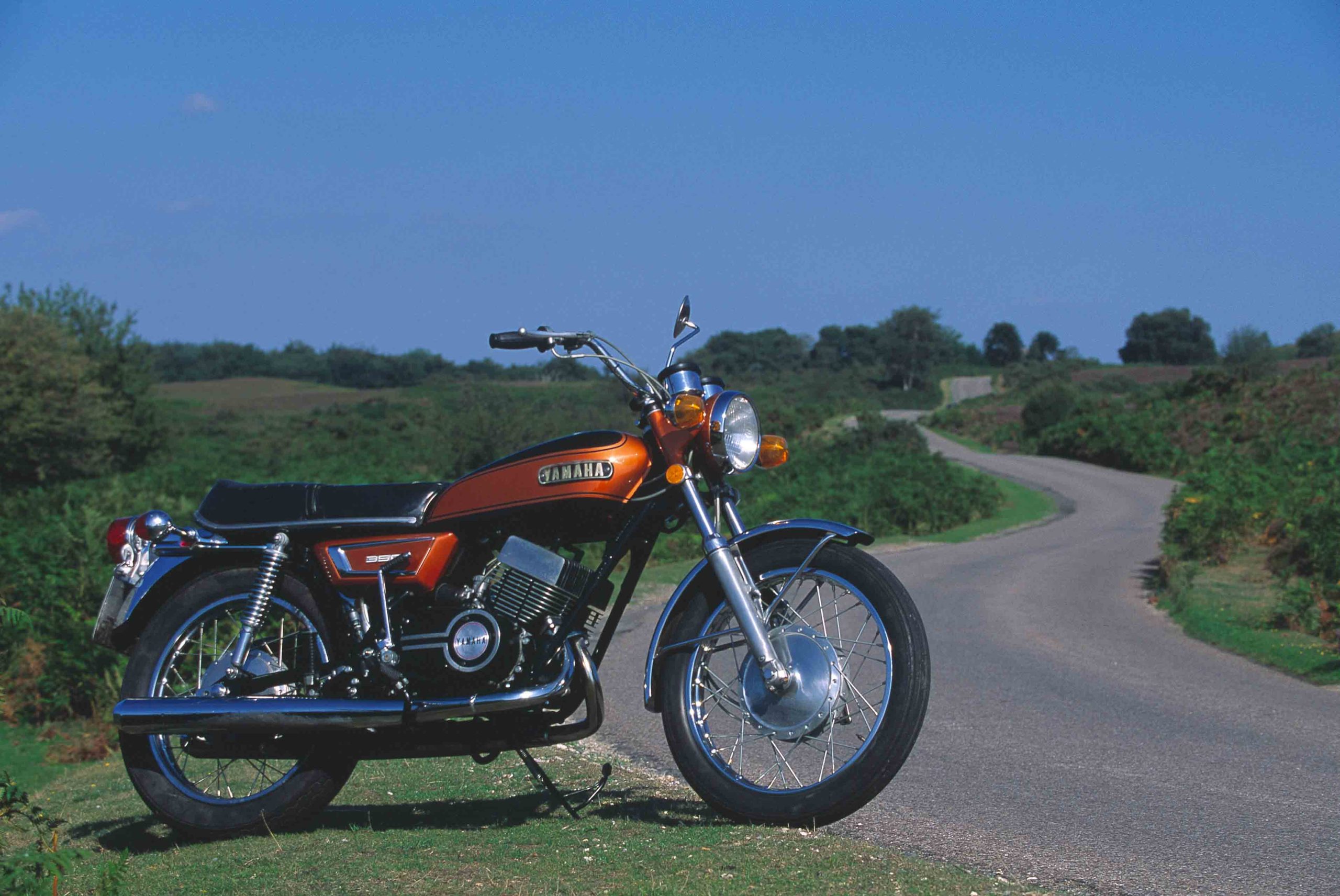
The RD even encouraged its own riding techniques. Stock exhaust pipes sat low enough that aggressive cornering could put them in danger, so racers developed the hanging-off style partly to keep the pipes away from the pavement. Get it wrong and an exhaust pipe could touch down, upset the motorcycle and unload the rear wheel. The bike’s reputation for abrupt consequences even produced the joking nickname “Rapid Death,” a play on the RD initials that was funny right up until you realized how quickly a 350cc two-stroke could get you into a corner you had no business entering at that speed.
The engine’s race pedigree went deeper still. The RD350’s 64 x 54mm bore and stroke, along with its rod and crank forgings, carried over into the 1974 TZ750A. That was the 185-mph, four-cylinder racer that dominated Daytona from 1974 through 1982. The connection says a lot about what Yamaha had managed to put into an inexpensive street motorcycle. The RD wasn’t pretending to be a race bike, but a surprising amount of its mechanical thinking came from the same world.
Then India Got Its Own RD
 Credit: Cartoq
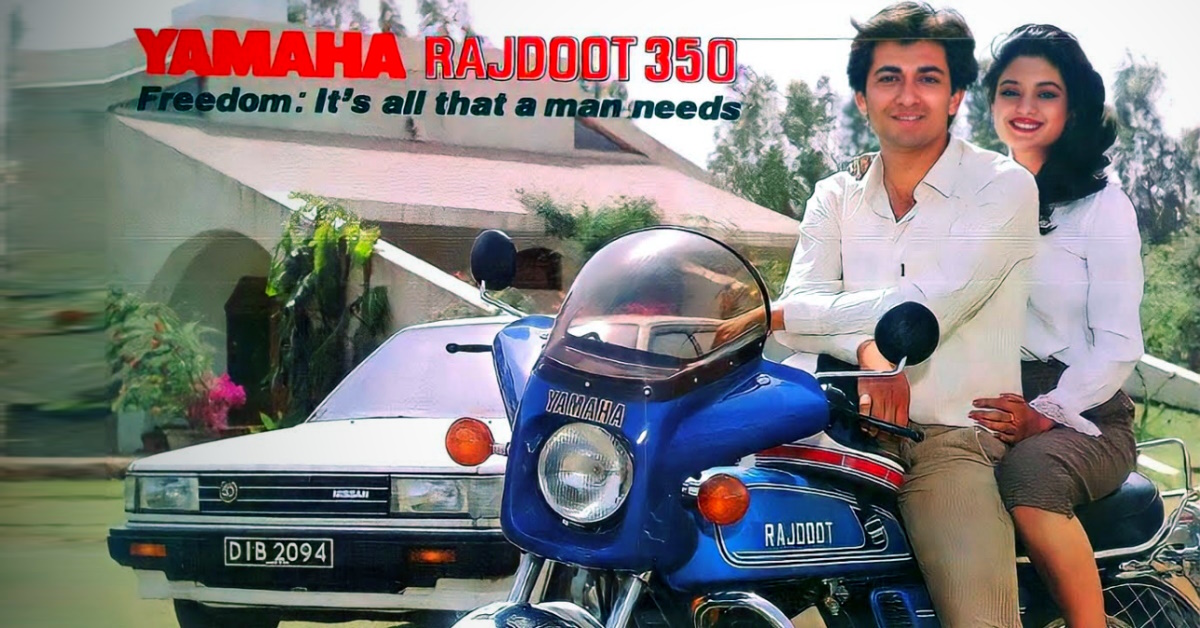
The RD350’s second life began in a very different place. In 1983, India’s Escorts Group began producing a licensed version of the RD350B. It was called the Rajdoot 350, and although it carried the RD’s basic DNA, it wasn’t simply a Japanese RD with an Indian serial number.
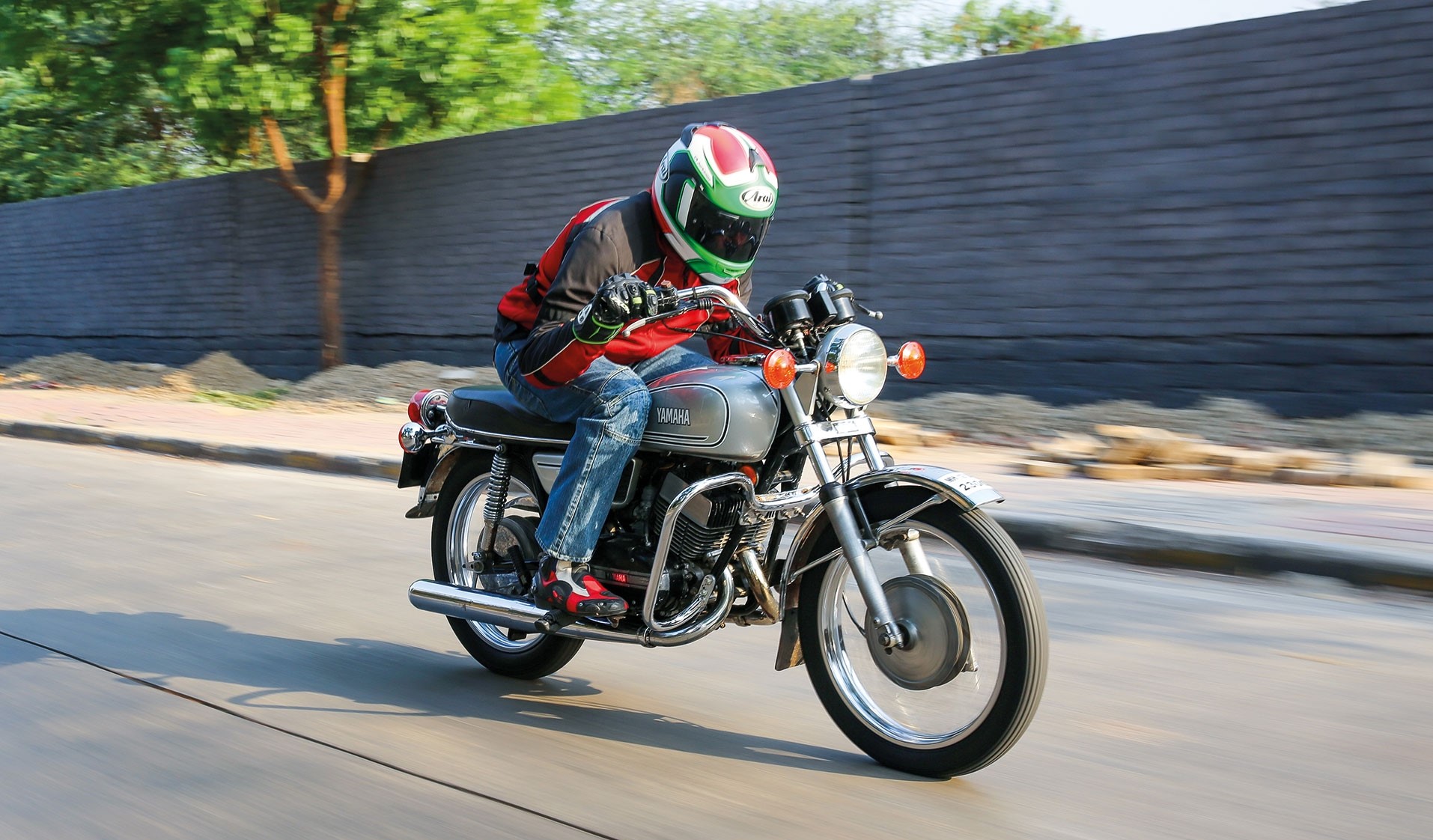
The engine was detuned to make the motorcycle more economical, with output dropping to as little as 27 hp on some versions. The front disc brake disappeared in favor of a drum. India needed a motorcycle that made economic sense, not a two-stroke road-racing fantasy. Even so, the Rajdoot retained the basic character that made the Yamaha interesting: two cylinders, 350cc and considerably more sporting intent than most motorcycles available in the Indian market at the time.
 Credit: EVO India
Roughly 7,000 were built before production ended around 1990. Then, for a while, nobody cared. That’s one of the stranger parts of the story. A motorcycle that would eventually become a collector’s item was once cheap enough to be treated like old junk. Original examples that had sold for around 18,000 rupees could be found for a fraction of that price by the late 1990s. Some were neglected, some were dismantled and some were simply scrapped.
That’s usually how this works. The motorcycle becomes unfashionable, the owners stop caring and perfectly good examples disappear. Then somebody wakes up and realizes there aren’t many left.
India’s RD enthusiasts never completely forgot. Owners’ clubs continued to keep the bikes running, trading parts and knowledge long after factory support had effectively become a historical footnote. The Rajdoot 350 became more than an old motorcycle. It became one of those machines that people who owned one understood in a way that people who didn’t probably never would.
Why Everybody Wants an RD350 Now
 Credit: Ronald Brown via Hagerty
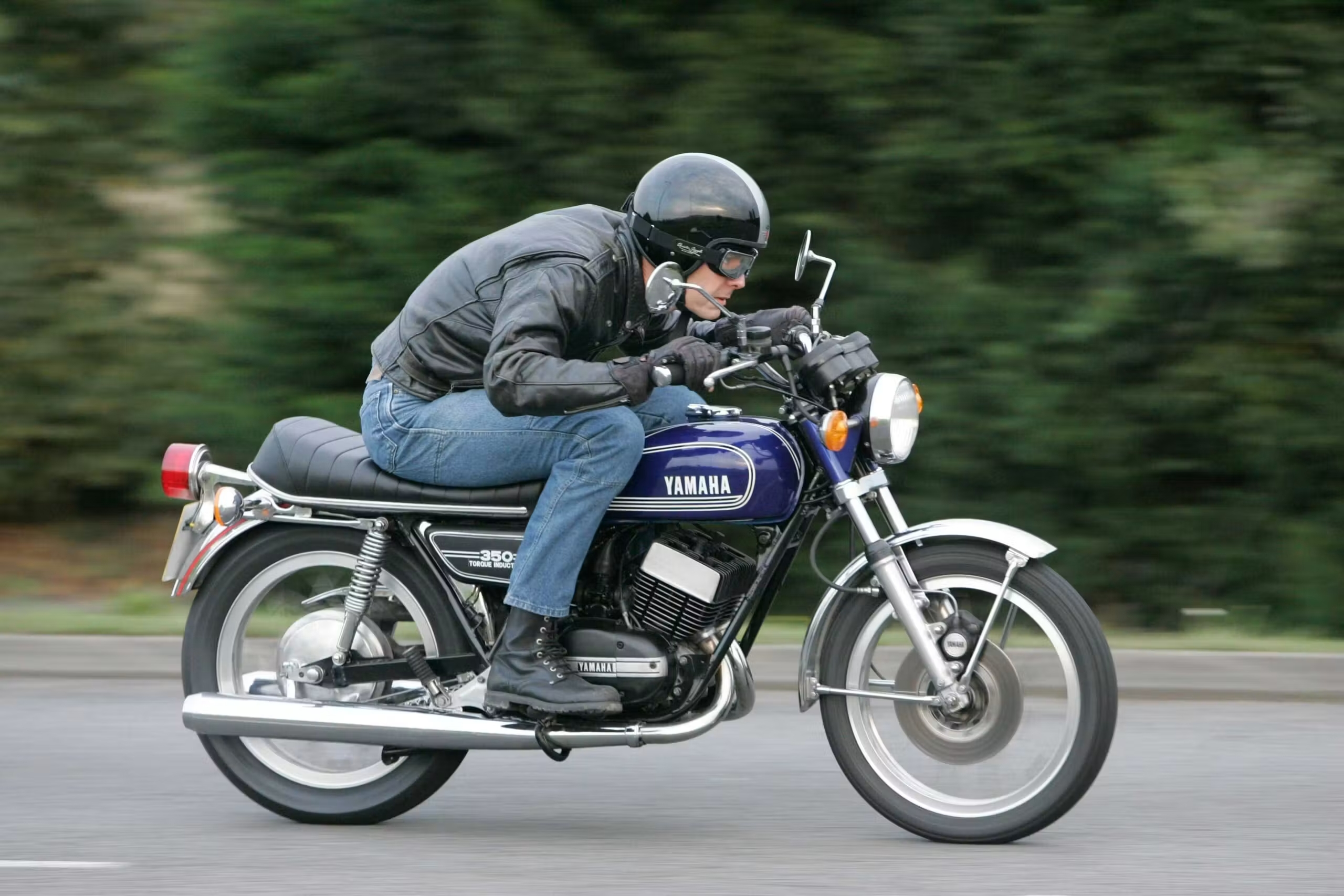
The irony is almost too perfect. Yamaha built the RD350 to be cheap, accessible and replaceable, and none of those words describe the surviving examples today. There are two reasons. The first is obvious: two-stroke street motorcycles have nearly disappeared. Modern emissions regulations made the simple, smoky and wonderfully inefficient two-stroke a difficult proposition for manufacturers. The fewer legal examples that remain, the more interesting the survivors become.
The second reason is more unusual. The RD350 has two separate enthusiast communities that arrived at essentially the same conclusion from completely different directions. In the United States and Britain, it’s remembered as the giant-killer, the little Yamaha that could embarrass motorcycles twice its size. In India, the Rajdoot version occupies a completely different place in motorcycle history, as one of the country’s earliest genuinely sporting machines.
 Credit: Ronald Brown via Hagerty
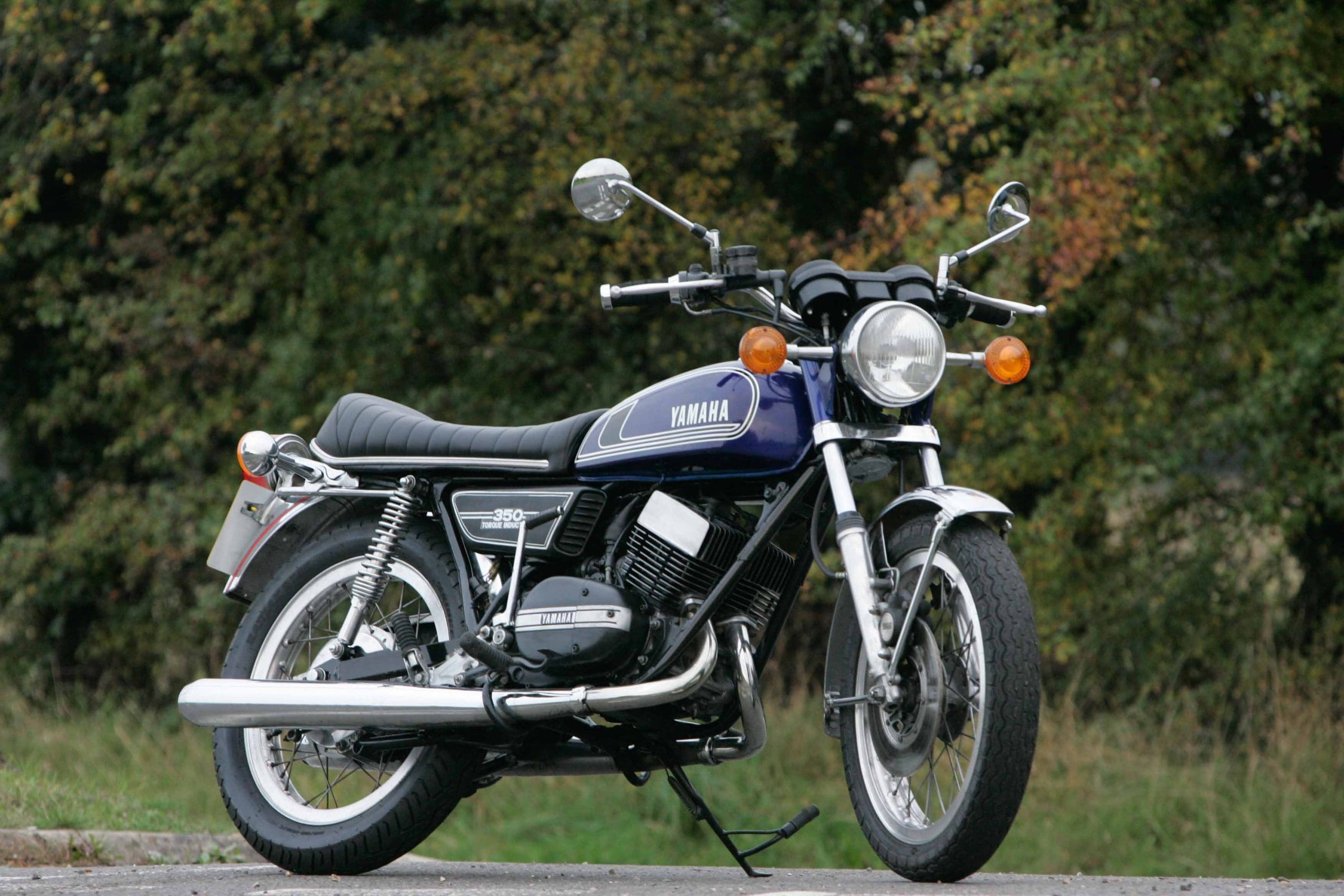
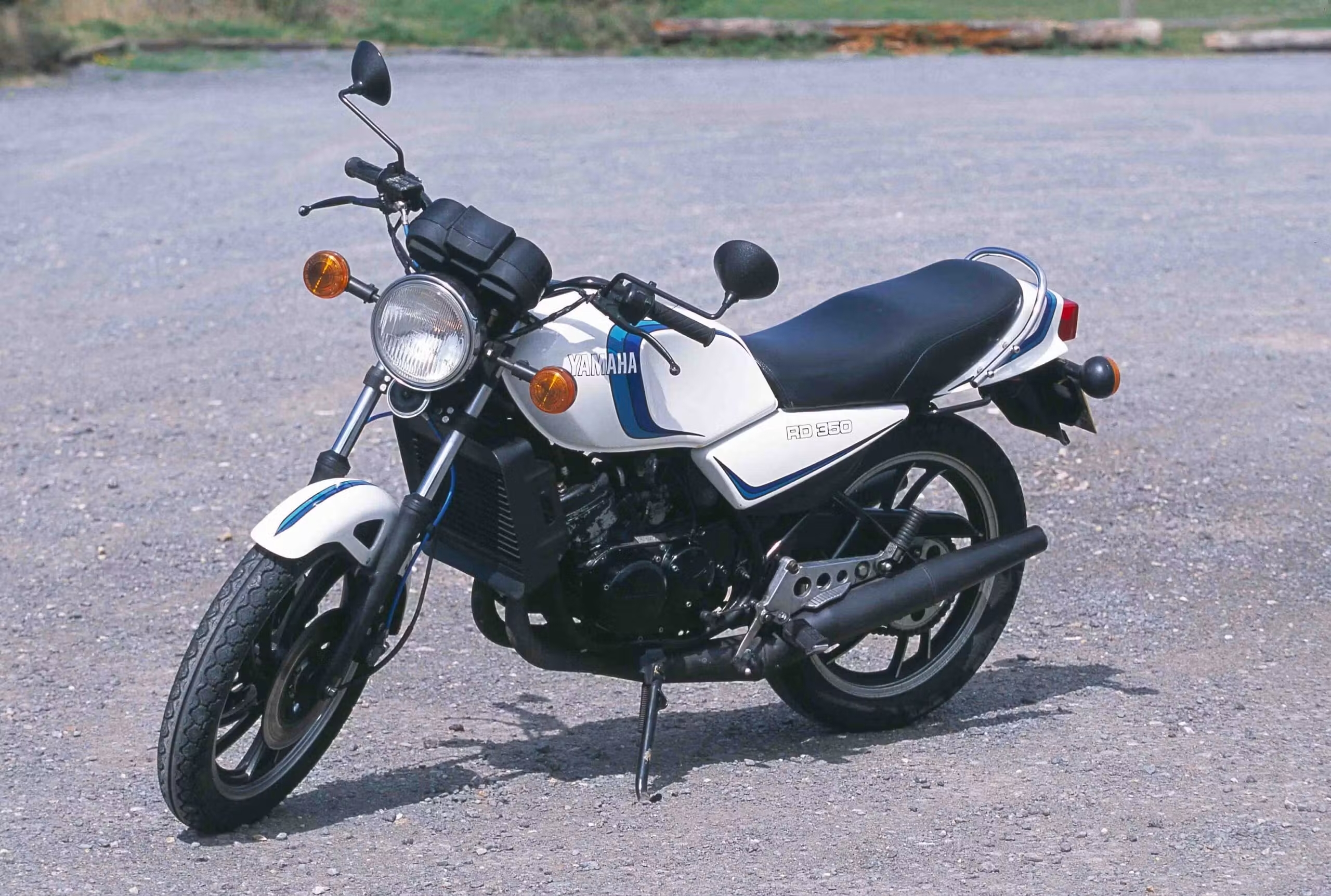
Both groups want good ones, and that has consequences. A 1974 RD350 sold new for around $908. Today, American auction results for original or properly restored examples can range from roughly $3,000 to well beyond $9,000 depending on condition, originality and specification. In India, restored Rajdoot 350s can command many times their original selling price.
The 1976 RD400 that followed made the original 350 look even more like the end of an era. Its engine grew to 64 x 62mm, giving it more low-end torque, but the writing was already on the wall for air-cooled street two-strokes in America. The RD350 had arrived at exactly the right moment, and then the moment disappeared.
What keeps the bikes alive now is almost as interesting as what made them popular in the first place. Specialist restorers and aftermarket suppliers have filled many of the gaps left by Yamaha. Owners trade knowledge as much as parts. There are still people who know how these engines are supposed to sound, how they are supposed to pull and, perhaps most importantly, how they are supposed to feel when the tachometer reaches the part of the dial where the motorcycle stops being transportation and starts being an event.
 Credit: Hagerty
That’s why the RD350 matters. It wasn’t the biggest motorcycle of its era, the most expensive, the most sophisticated or even necessarily the fastest thing Yamaha built. It was something more useful: it was attainable. A teenager could dream about one. A club racer could afford one. A commuter could ride one every day. An Indian enthusiast could grow up believing that a 350cc two-stroke was what a real sporting motorcycle was supposed to be.
Half a century later, people on two continents are willing to pay serious money to get that feeling back. Not bad for a motorcycle Yamaha designed to be cheap.