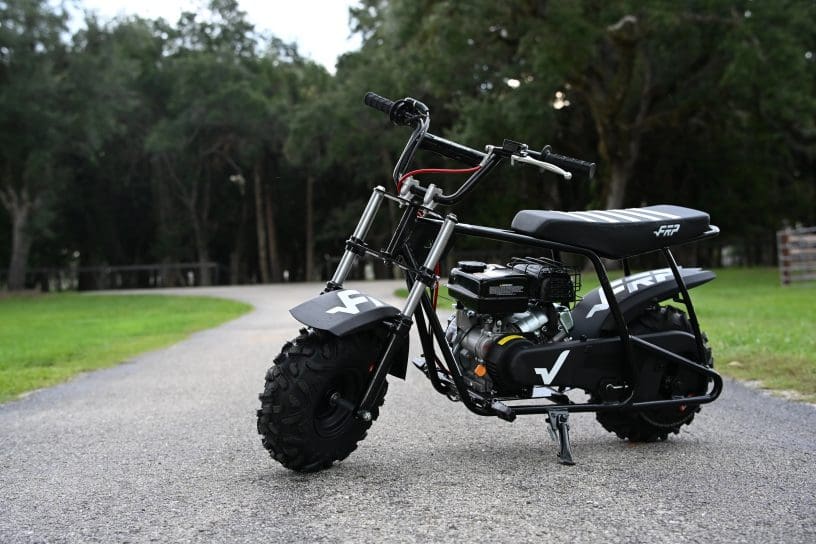
With a 99cc four-stroke engine and a frame that can take a Predator 212 later on, FRP’s entry-level mini bike makes sense for teen riders and for adults who like to wrench.
A lot of riders got their first taste of throttle on a mini bike, years before they owned a real motorcycle. The mini bike boom of the 1960s and 1970s put Rupp and Taco machines in backyards all over America, and the basic recipe has barely changed since. It’s a small engine in a tube frame on fat little tires, and at those speeds it feels a lot faster than it is.
The FRP GMB100 mini bike sticks close to that formula and adds a modern four-stroke engine and a rear disc brake to it. It’s the entry model in FRP’s GMB100 series, sized for teens 13 and older riding with adult supervision as well as adults up to 100 kg (220 lb). If you’re shopping for a first gas mini bike, here are five reasons it deserves a spot on the list.
1. A Four-Stroke Engine That Skips the Premix
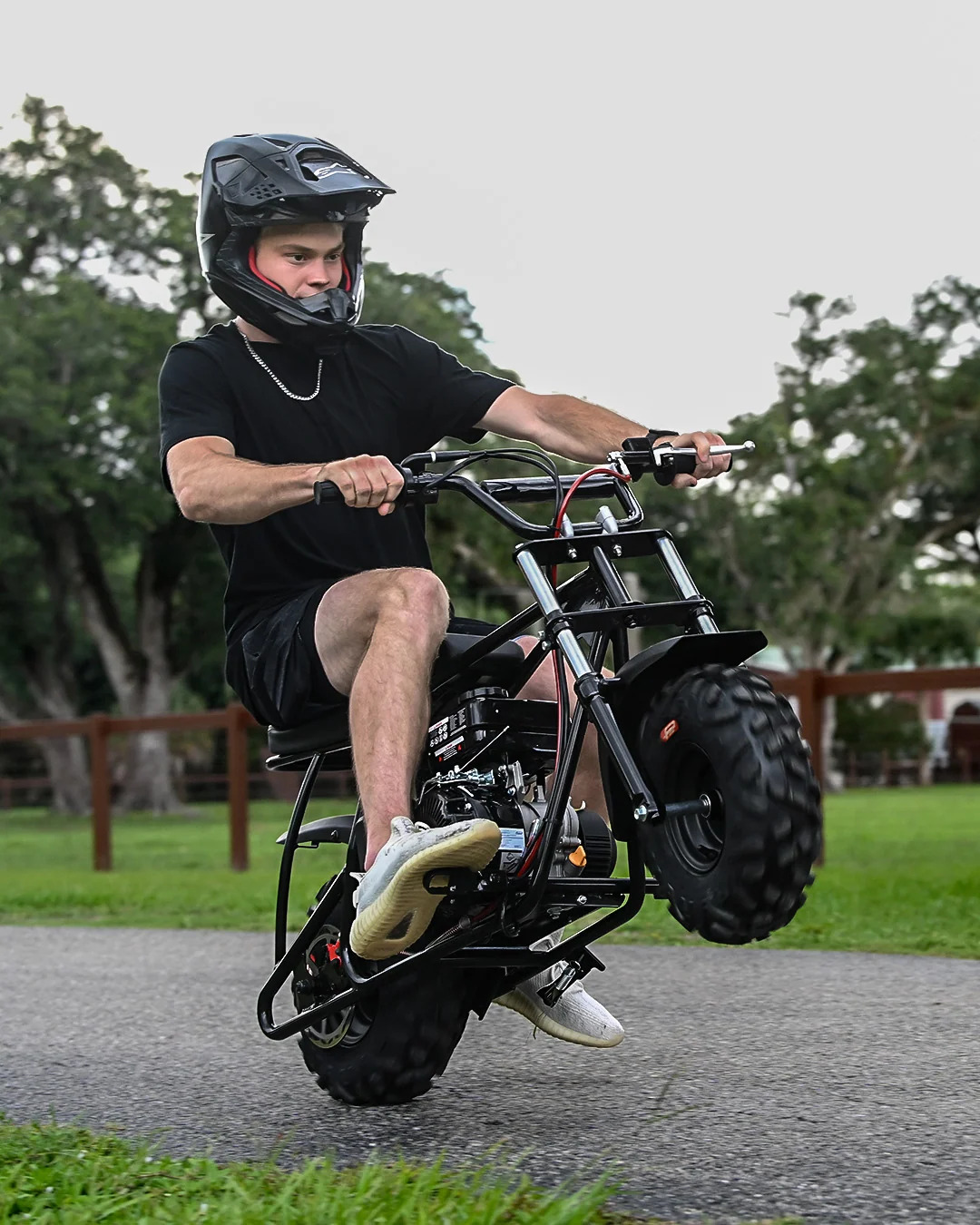
Power comes from an EPA-approved 99cc single-cylinder OHV four-stroke with a recoil pull start. Because it’s a four-stroke, the oil lives in the crankcase and the gas goes straight into the tank, so nobody has to measure two-stroke oil into every fill-up. The bike ships without oil, which means the first job is adding about 0.35 liters (11.8 fl oz) of SAE 15W-40, with 10W-30 listed by FRP as an alternative. After that it runs on regular unleaded pump gas.
FRP rates the GMB100 at a top speed of 45 km/h (28 mph), which is plenty on a rigid frame with 6-inch rims. The 1.38-liter (0.36-gallon) tank is good for up to 48 km (30 miles) by FRP’s numbers, enough for an afternoon of loops around a property or a campground. When the tank runs dry, you top it off from a gas can instead of waiting on a charger.
2. A Size That Works for Teens and Adults
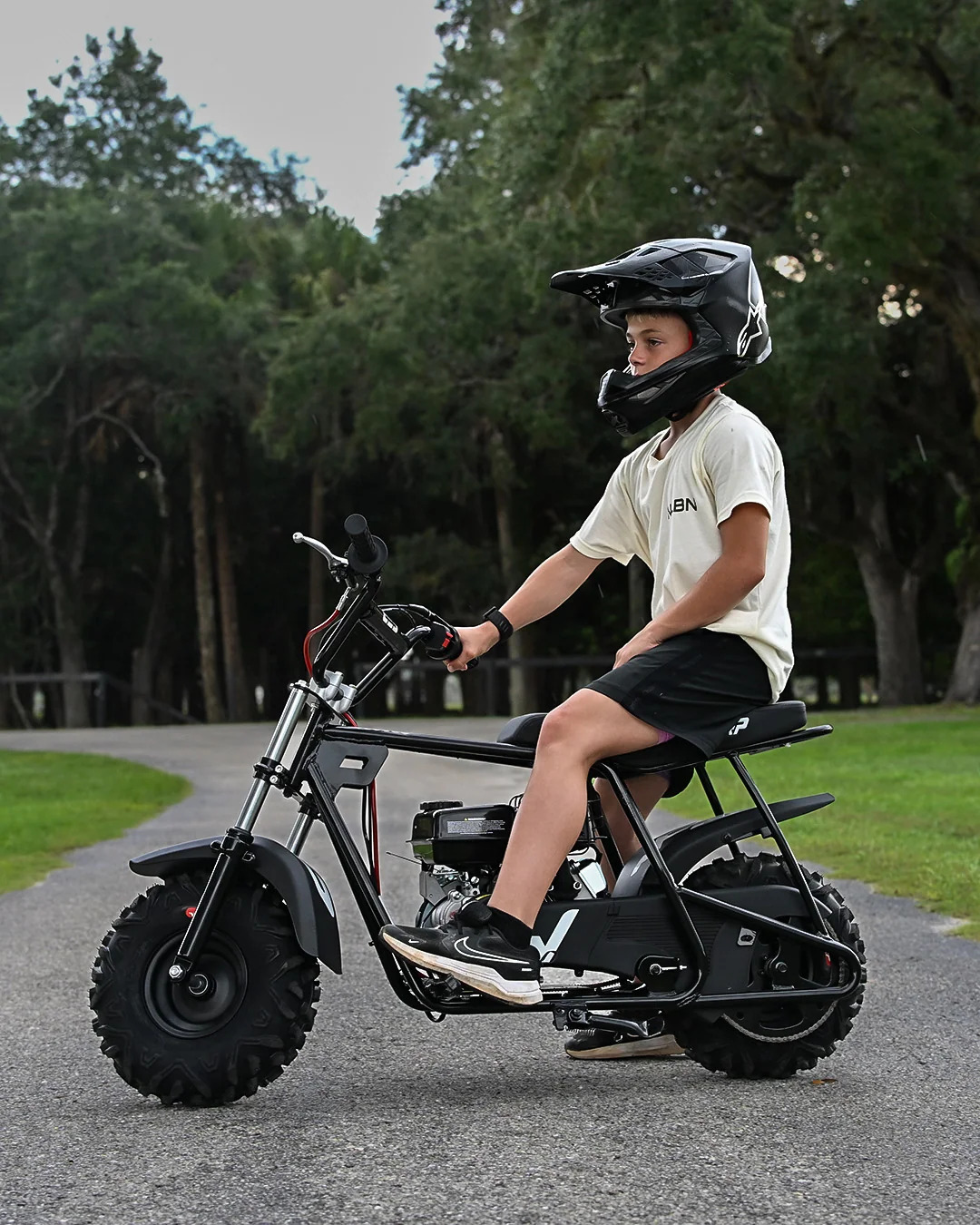
Seat height is about 58 cm (23 in), low enough that most teens and shorter adults can put a foot down at a stop. That matters, because the basic fit check for any mini bike is simple: the rider should be able to reach the controls, plant at least one foot securely and hold the bike upright without strain. At 36 kg (79.5 lb), the GMB100 is also light enough to pick back up after a tip-over without calling for help.
The frame is 22 mm tubular steel with no suspension at either end, so the 145/70-6 tires do all the cushioning. They’re about 14 cm (5.5 in) wide and run at around 0.7 bar (10 psi), which soaks up more than you might expect on grass and packed dirt. Rocky trails and deep ruts are another story, and that’s the terrain FRP built the front-suspension GMB100P for.
3. A Real Brake and the Right Safety Basics
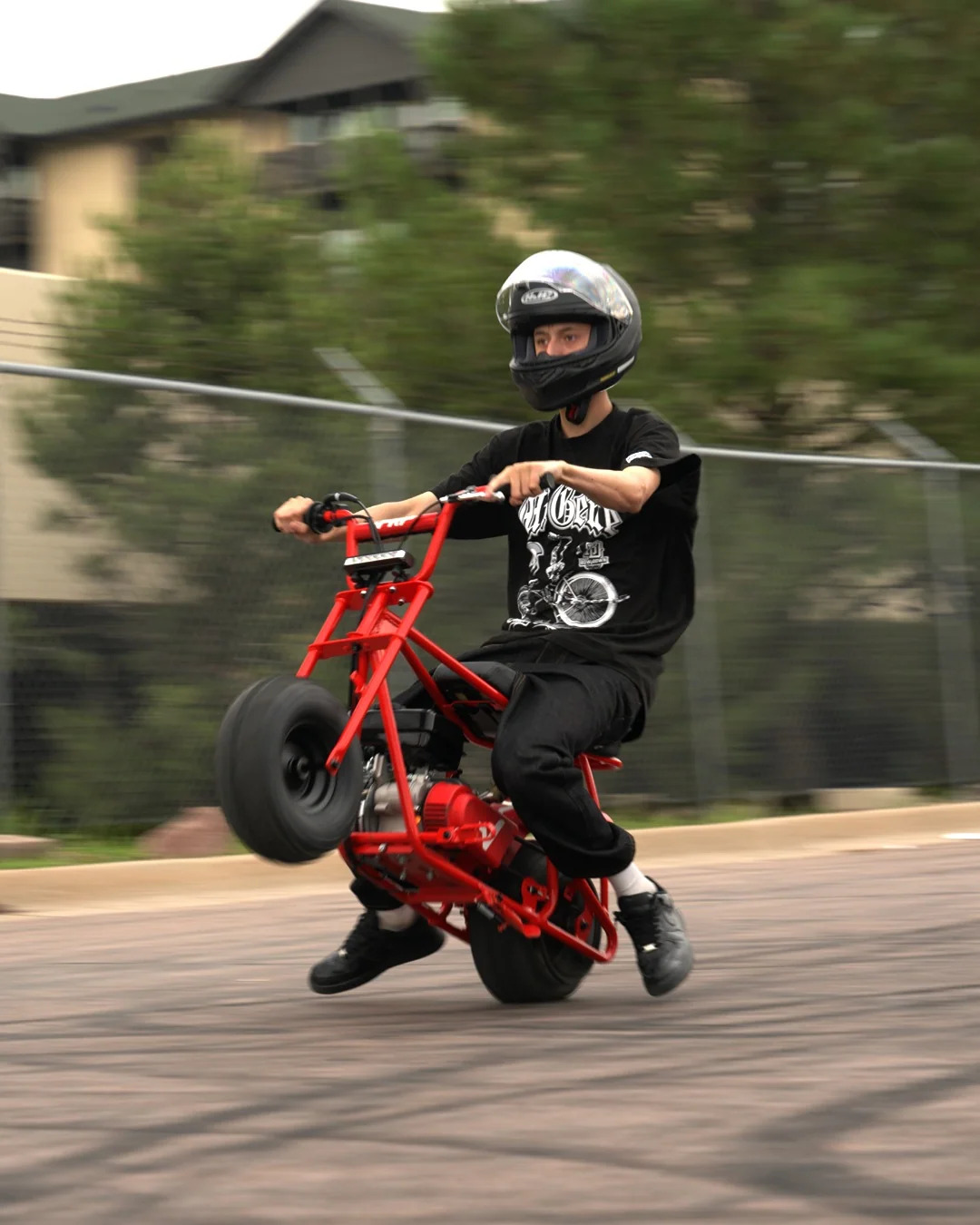
against the rear tire. The GMB100 uses a rear disc brake instead, so stopping feels more consistent and is easier to control at the lever. FRP also fits an engine kill switch and a full chain cover, two details that count for a lot when a younger rider is still learning where hands and feet belong.
Hardware only goes so far, though. Even at 45 km/h (28 mph), a fall onto hardpack hurts, so every ride should start with a helmet, eye protection, gloves and over-the-ankle boots, plus long sleeves and pants. FRP sells the GMB100 in bundles that cover part of that list. The Starter Kit adds an LED light and a neck gaiter, while the Complete Bundle also throws in goggles and gloves. Neither includes a helmet, so budget for a properly fitted one before the first pull of the cord.
4. Most of the Assembly Is Done Before It Arrives
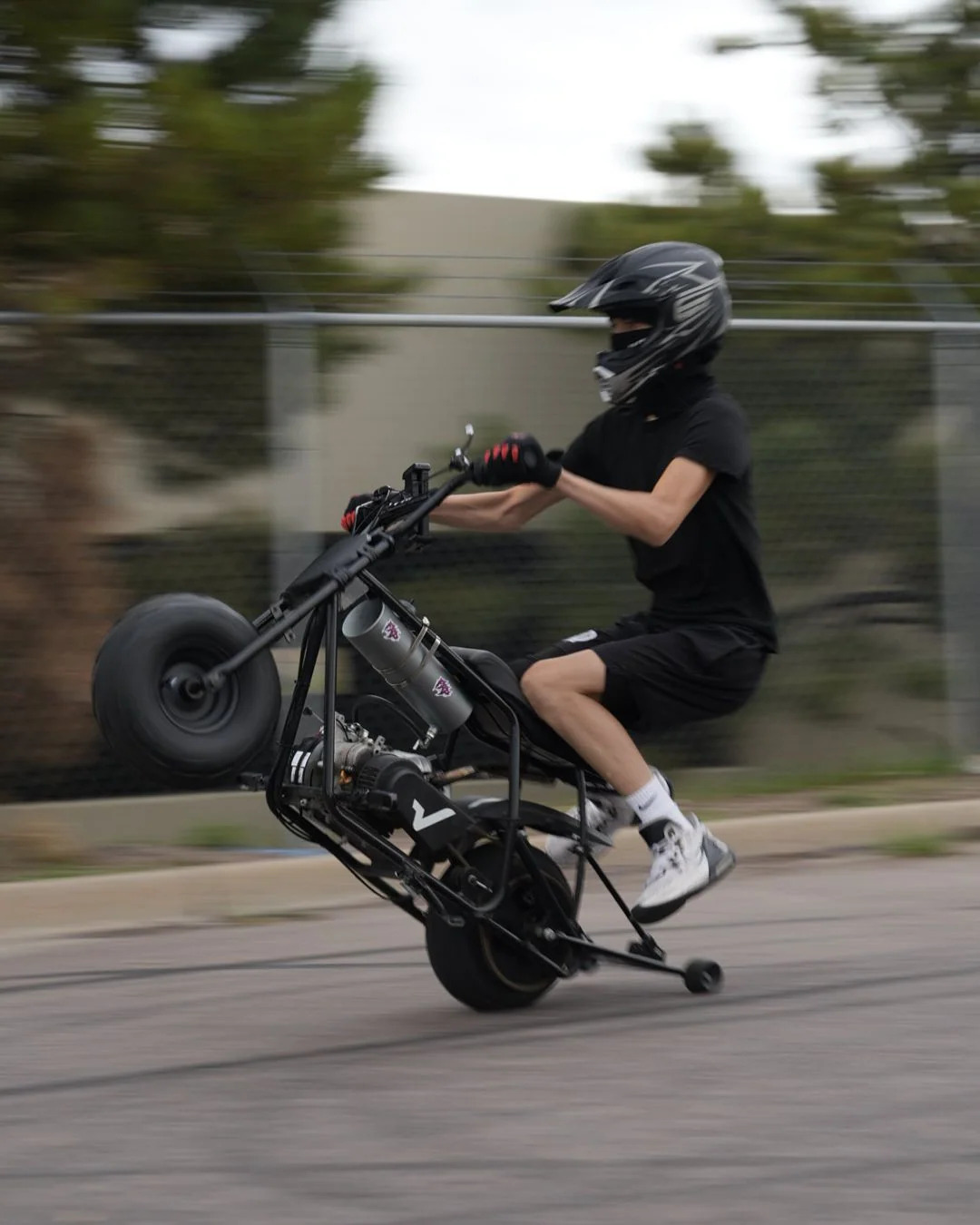
FRP ships the GMB100 about 85% pre-assembled. What’s left is installing the front fork, front wheel, front fender and handlebar, which takes roughly 20 minutes for an experienced adult. FRP also posts an assembly guide on the product page for anyone who would rather follow along step by step.
Before the first start, add the engine oil, fill the tank, set the tire pressure and make sure the throttle, brake lever and kill switch all work freely. If any control sticks or binds, the bike stays parked until it’s sorted out. It’s the same pre-ride routine experienced riders run on full-size motorcycles, and a mini bike is a good place for a new rider to build the habit.
5. Room to Grow with the Rider
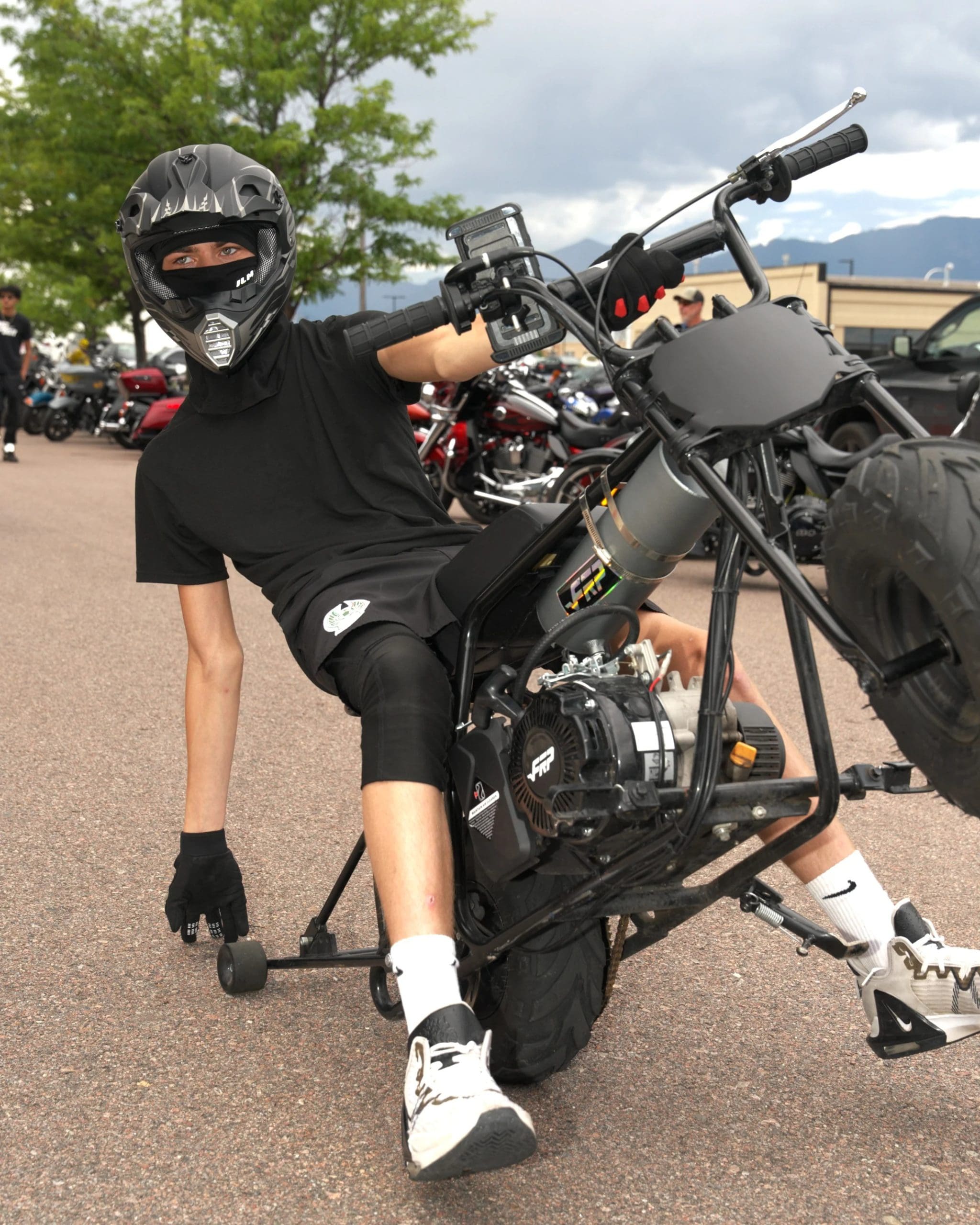
For riders who like to wrench, the frame is the real draw. FRP describes it as Predator 212 compatible, a nod to the 212cc Harbor Freight engine that has become a popular swap among mini bike builders. FRP is clear that the swap is an aftermarket modification and not a stock configuration, so it’s best treated as a future project rather than a bolt-on. The company also sells upgrade parts developed with ParkerPro, including a torque converter and a 420 chain, clutch and sprocket kit.
Tires are the other easy change. The standard SunF knobbies suit dirt and grass, and FRP also offers a smooth street tread for riders who spend more time on paved lots or campground roads. Street tires don’t make the bike street legal, though. The GMB100 is built for off-road and private property use only.
Where the GMB100 Fits in FRP’s Lineup
The GMB100 is the simplest of FRP’s three 99cc gas mini bikes. The GMB100P adds a front suspension fork and hydraulic brakes for rougher trails, and the GMB100U adds a front cargo rack and rear tow bar for camping and utility work. All three are built on the same 99cc platform, so the choice comes down to where the bike will spend most of its time.
One limitation to know up front is that the GMB100 isn’t available in California. For everyone else, it’s a sensible first gas mini bike that a new rider can learn on now and a builder can turn into a project later.