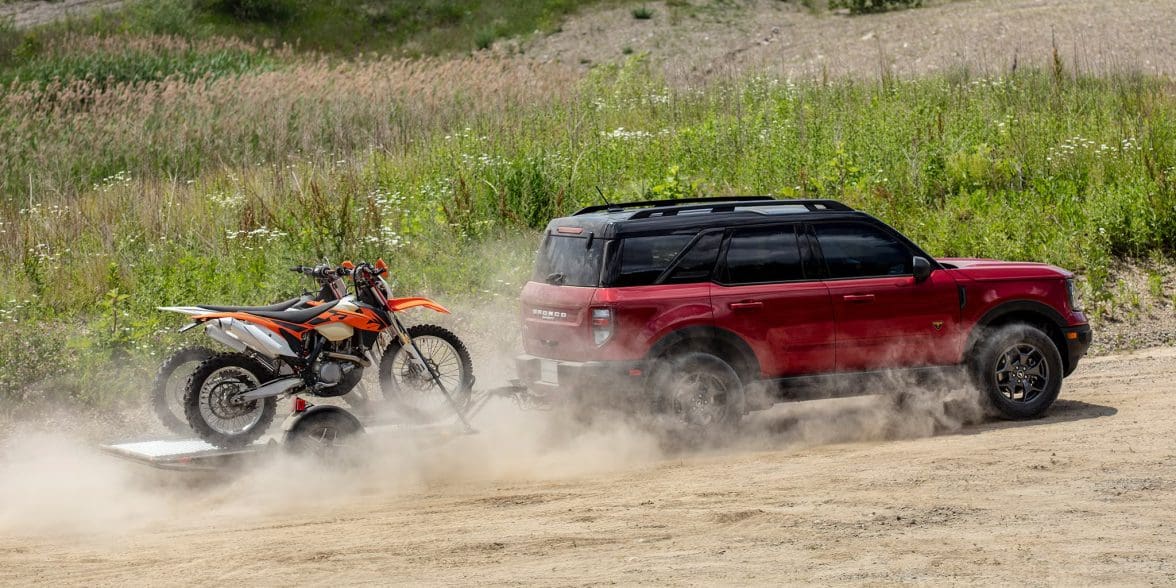
If you ride off-road, getting to the good stuff usually means loading your bike onto a trailer and driving there. The best riding rarely happens at the end of a paved road, and that makes your tow vehicle just as important as the bike itself. Not every SUV with a hitch ball is actually up to the job.
Towing capacity is part of it, but it is not the whole story. Getting to a remote trailhead on a rutted forest road with weight behind you is a different challenge than pulling a boat to the lake on a Sunday. The right rig needs to handle both.
Quick weight reference before we get into it: a Honda CRF450R sits around 240 lbs. A KTM 890 Adventure R is closer to 450. Add a basic open trailer and a single-bike setup typically comes in somewhere between 600 and 1,200 lbs. Every SUV here handles that with room to spare. Running two bikes is fine on most of them. If you are hauling three bikes with gear and an enclosed trailer, that changes the conversation and the choice.
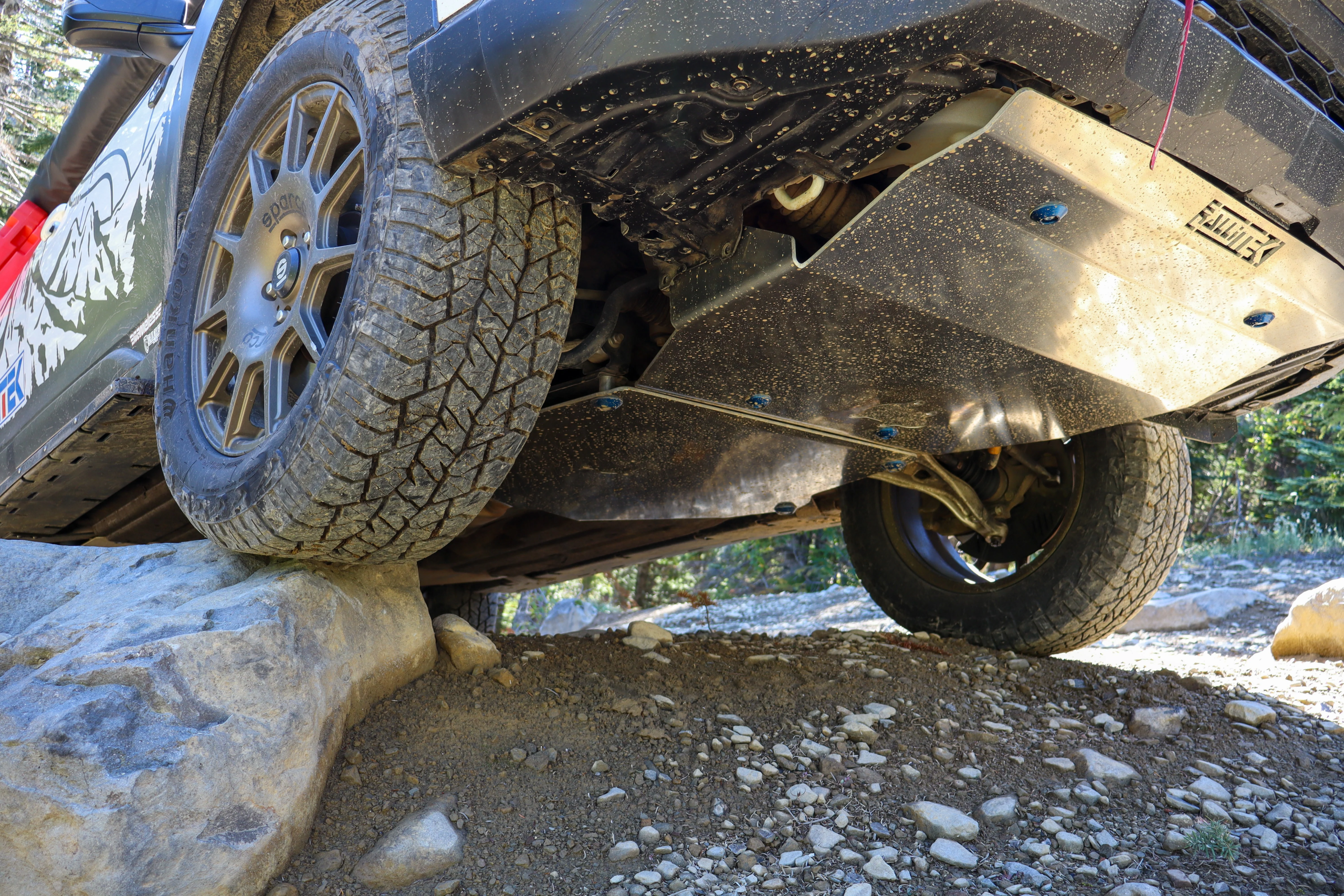
What to Look for Before You Hook Up a Trailer
 Credit: RalliTEK
Towing Capacity vs. What It Feels Like on a Dirt Road
Tow ratings are real numbers measured under controlled conditions, and they are useful up to a point. Past that point they stop telling you much. What they cannot tell you is how a particular vehicle feels when you are on a dirt switchback with a loaded trailer pushing from behind or how much work the steering takes when the surface goes loose. Some SUVs manage all of that without asking much of you. Others keep you more occupied than you would like.
For one or two bikes on a trailer, every vehicle on this list is well within its limits technically. The differences show up in feel, not capacity, and that is a harder thing to shop for on paper.
AWD vs. 4WD vs. 4×4
The three terms show up constantly in SUV marketing, and they do not mean the same thing, though manufacturers are not always eager to spell out the differences.
AWD is always on. The system distributes power between axles on its own without any input from you. It works well on gravel, wet roads and the kind of mild off-road terrain most people actually encounter. For getting to a trailhead on a well-maintained dirt road, it is usually enough.
4WD and 4×4 are typically part-time systems that you engage yourself when conditions call for them. The important part is the low-range gearbox that comes with them, which multiplies torque and lets the vehicle crawl through terrain that would stop an AWD system cold. If your rides involve real climbing, deep ruts or technical access roads with a trailer attached, that low-range gear goes from optional to essential pretty quickly.
The Five Best SUVs for the Job
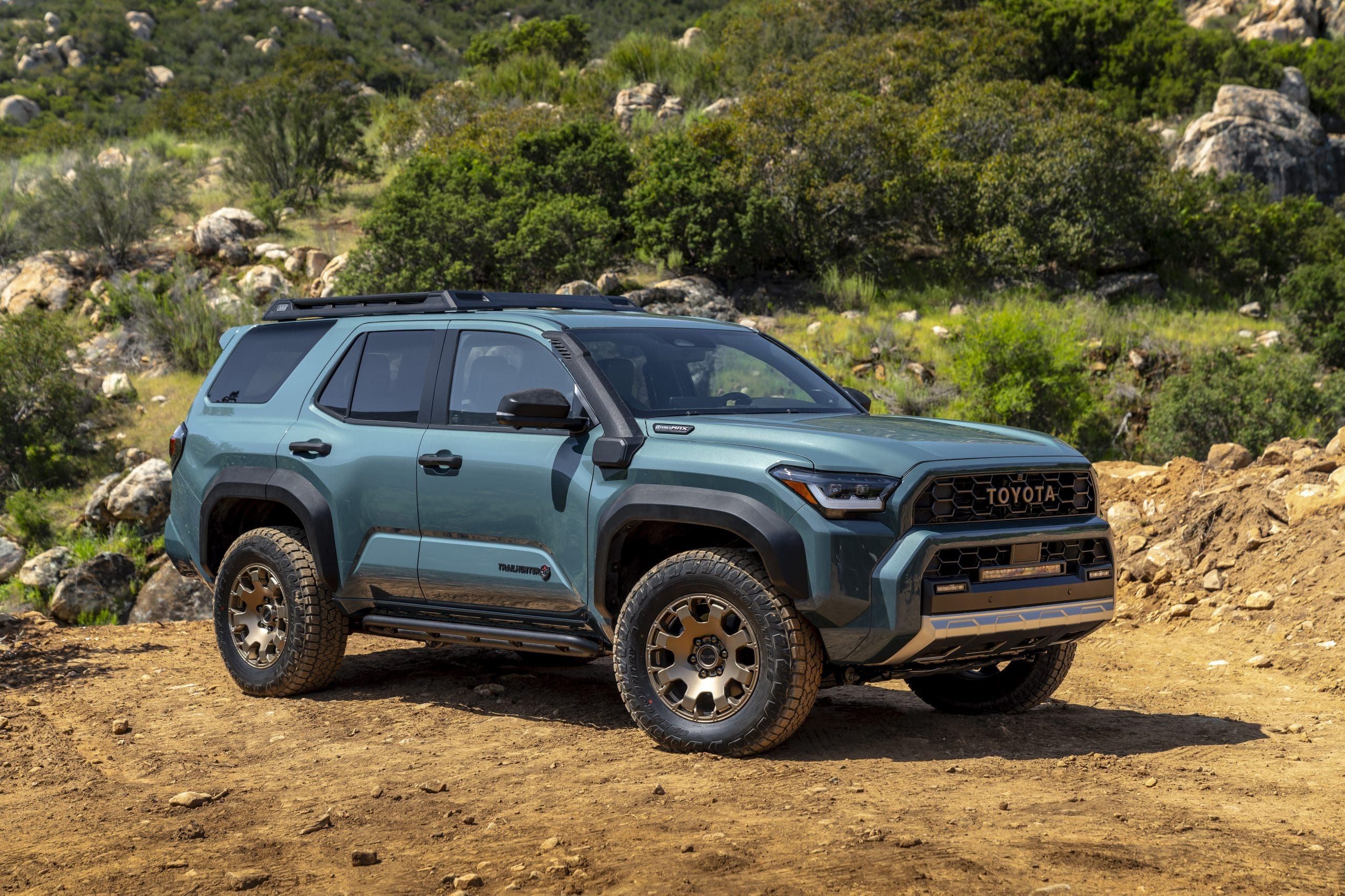
1. 2026 Toyota 4Runner
Starting MSRP: $40,500-$41,000 | Drivetrain: 4WD standard on most trims | Towing: up to 6,000 lbs
 Credit: Toyota
Toyota finally redesigned the 4Runner after fourteen years with the same basic platform, and the new one is noticeably better in every way. The base engine is a turbocharged 2.4-liter four-cylinder with 278 hp and 317 lb-ft of torque. If you want the hybrid, power goes to 326 hp and 465 lb-ft, which makes a noticeable difference when you are climbing with weight behind you.
The truck keeps showing up on lists like this one because of its body-on-frame construction, a proper locking rear differential on the off-road trims, and a reliability record that holds up at high mileage. Crawl Control and Multi-Terrain Select are on the TRD Off-Road and Trailhunter trims. They sound like features you would never use until you are on a steep, loose grade with a trailer and suddenly very glad they exist.
Highway driving is not the 4Runner’s strong suit, and it never has been. That is fine. You are not buying it for that reason. Check out wBW’s guide to the best enduro motorcycles to get a sense of where these bikes actually get ridden. The 4Runner will get you to those places.
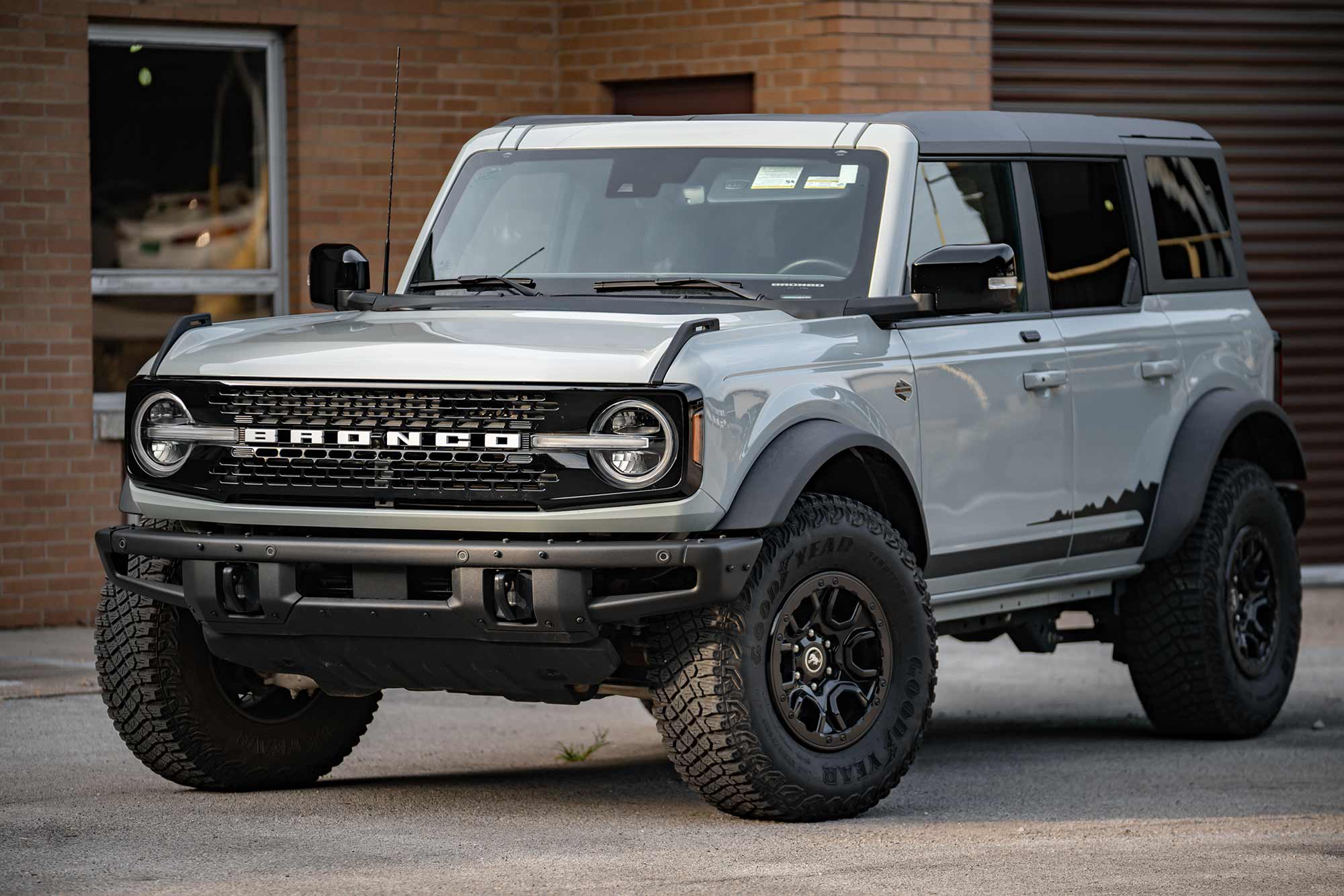
2. 2026 Ford Bronco
Starting MSRP: $40,495–$42,900 | Drivetrain: 4WD standard | Towing: up to 3,500 lbs
 Credit: Ford
Cheapest on the list and the most single-minded about off-road performance. Every trim comes with a two-speed transfer case, high and low range included; no need to spend extra to get it. The standard engine is the 2.3-liter EcoBoost at 300 hp. The 2.7-liter twin-turbo V6 at 330 hp is available if you want more pull.
A towing capacity of 3,500 lbs is the number that gives some buyers pause, and it is worth taking seriously. One dirt bike and a basic open trailer are nowhere near the limit. A heavier adventure bike in an enclosed trailer gets you closer than you might expect. The Raptor bumps to 4,500 lbs, but you are paying significantly more for it.
The Bronco’s real argument is not the spec sheet anyway. Removable doors, a fold-down windshield, real ground clearance and a character that actually fits the places you are going make it the choice for riders who want the truck to be part of the experience rather than just the vehicle that gets them there.
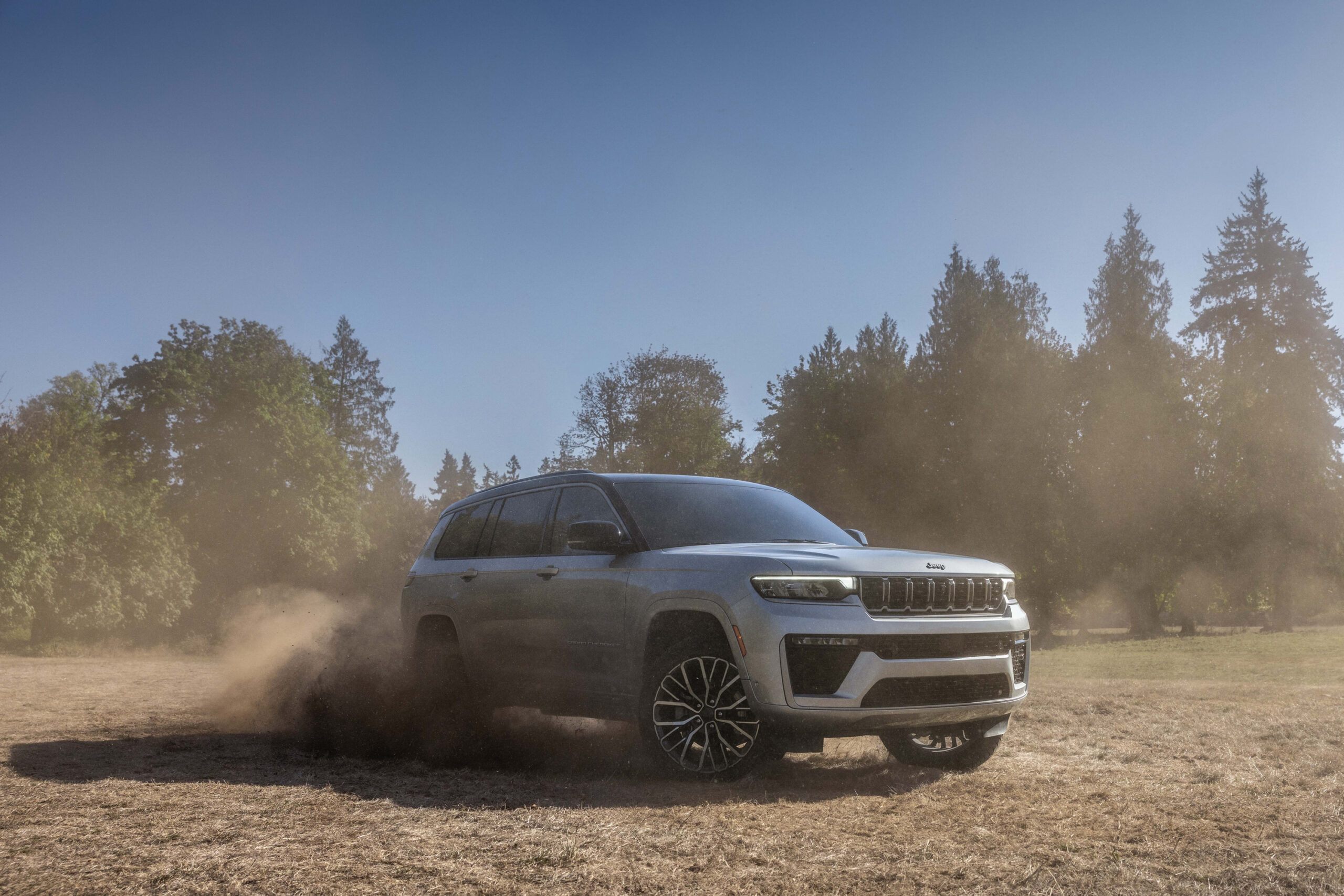
3. 2026 Jeep Grand Cherokee
Starting MSRP: $40,000-$41,000 | Drivetrain: 4WD available | Towing: up to 6,200 lbs
 Credit: Stellantis
Most comfortable to live with day to day, which matters more than people admit when this thing also needs to handle school runs and grocery trips the rest of the week. The Grand Cherokee is quiet and composed on the road and does not feel like a compromise on a normal Tuesday. It also tows more than the Bronco or the 4Runner.
The base 3.6-liter V6 makes 293 hp and gets the job done for most setups. If you regularly tow heavier loads or face significant elevation changes, the 2.0 Hurricane 4 Turbo engine with its 332 lb-ft of torque is the right choice. Quadra-Drive II with a rear electronic limited-slip differential is available, and it is a real system, not badge engineering. Selec-Terrain covers sand, mud, rock and snow.
If this SUV also needs to serve as the family vehicle the other six days of the week, the Grand Cherokee handles that dual role better than anything else here.
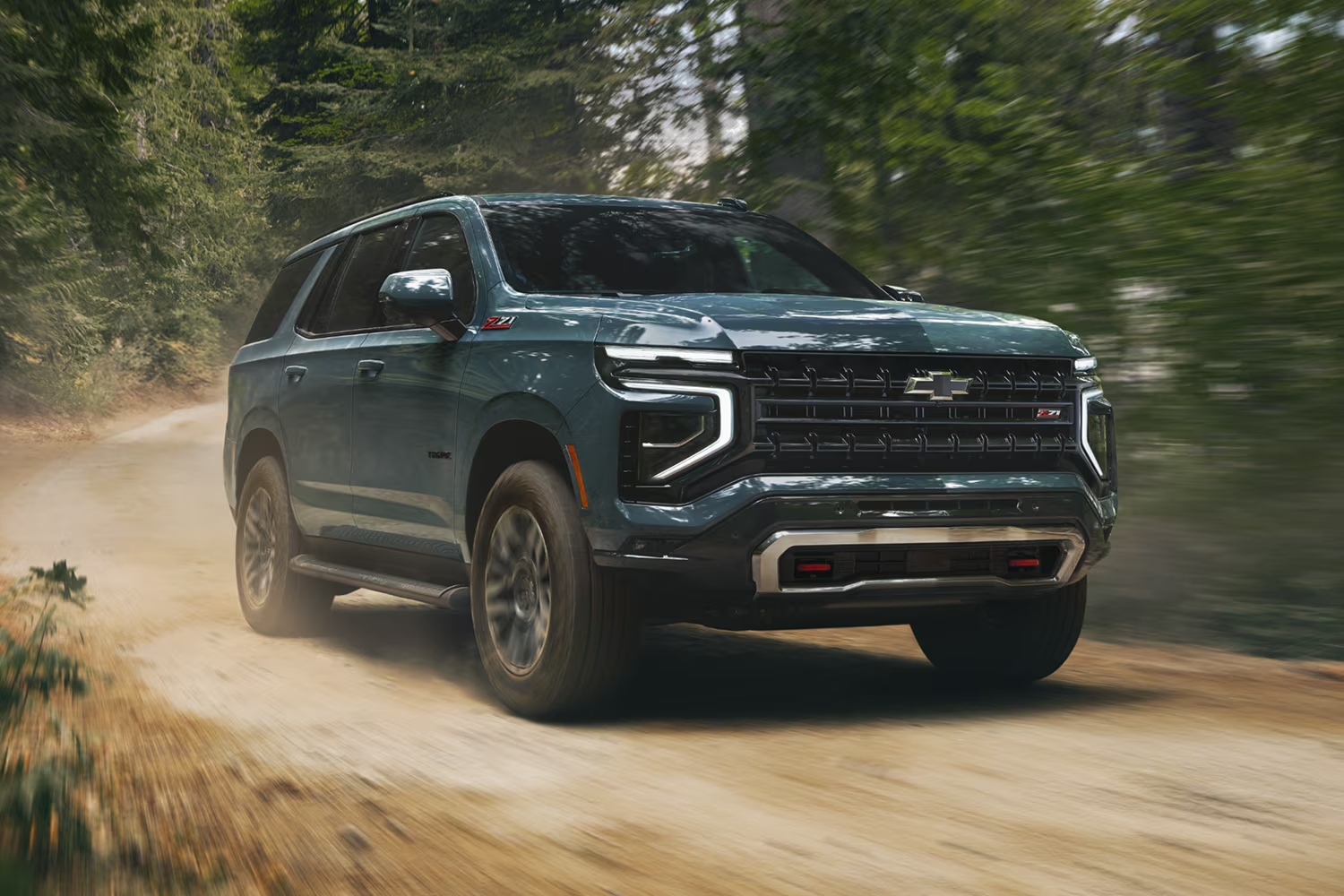
4. 2026 Chevrolet Tahoe
Starting MSRP: $58,000-$62,195 | Drivetrain: 4WD available | Towing: up to 8,400 lbs
 Credit: Chevrolet
One reason the Tahoe is on this list: it has up to 8,400 lbs of tow capacity when properly equipped and with the 5.3-liter V8. If you are running two bikes, using a bigger trailer, or just want a serious margin, nothing else here is in the same range. The V8 pulls that load easily, and the 10-speed automatic does a good job managing it on grades.
What you are trading for that capacity is size. The Tahoe is a large vehicle in a way that is obvious the moment the road narrows. On the freeway with a trailer it is composed and planted. On a tight forest track with no shoulder, it takes more attention and more patience than the mid-size options. The Z71 package adds off-road suspension tuning, skid plates and all-terrain tires, which helps with rough terrain but does nothing about the footprint. Be honest with yourself about where your trailheads actually are before you buy one.
5. 2026 Land Rover Defender 110
Starting MSRP: $63,500-$65,350 | Drivetrain: 4WD standard | Towing: up to 8,201 lbs
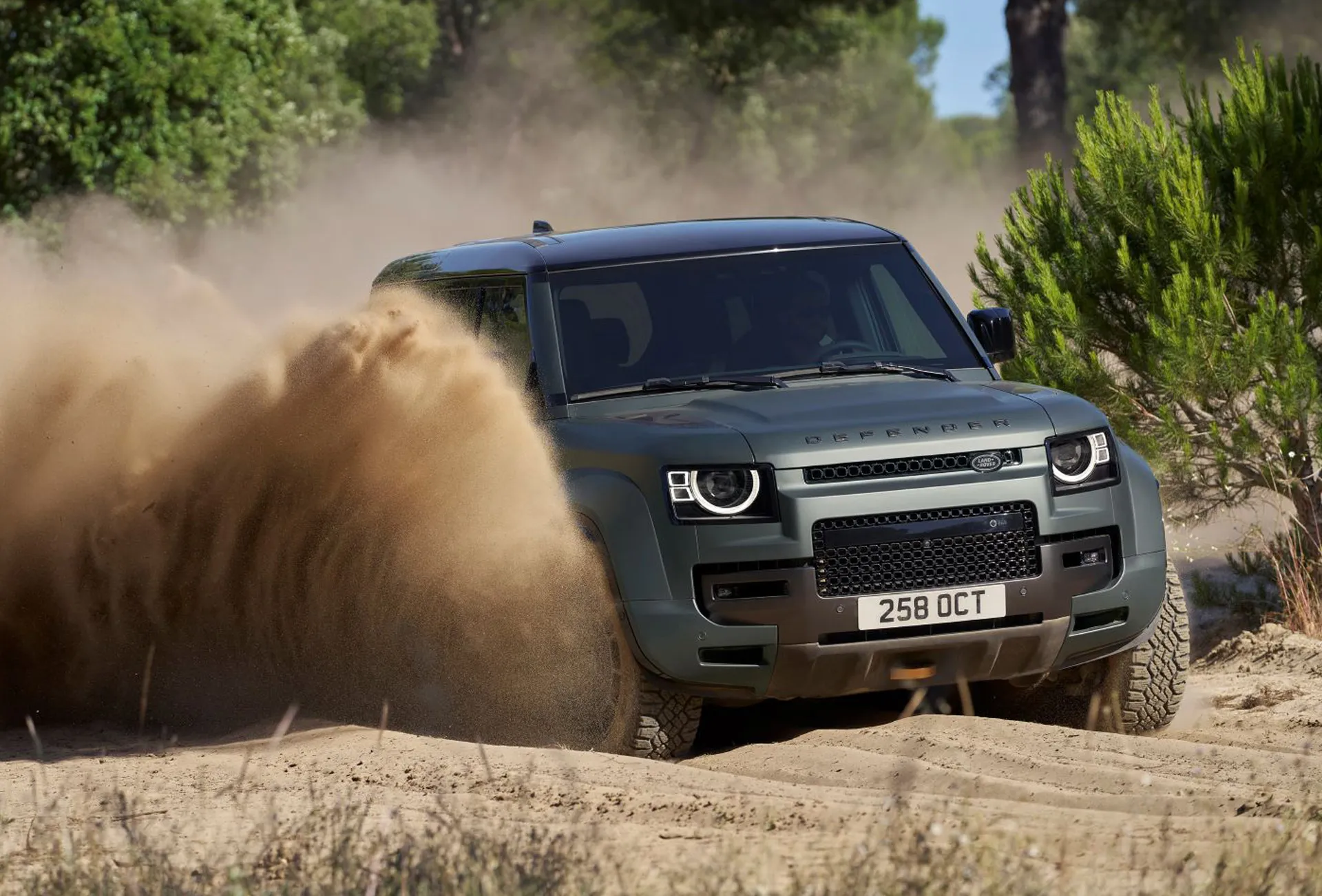
The Defender is the most expensive option here, and the price is not hard to justify once you spend time with one. The base 2.0-liter turbo four-cylinder makes 296 hp, and most buyers will want to move up to the 3.0-liter mild-hybrid six at 395 hp, which has the low-end pull to make towing genuinely effortless rather than just adequate. The tow rating tops out at 8,201 lbs depending on configuration.
Terrain Response 2 does the heavy thinking for you in difficult conditions, reading the surface and adjusting the drivetrain, throttle response and brakes without you having to think much about it. Wade sensing and adjustable air suspension round out a package that is legitimately hard to beat in mixed conditions.
The thing that actually sets the Defender apart from the Bronco and similar trucks is what happens after the trailhead. A day of rough forest roads does not turn the drive home into a punishment. You get the off-road capability without the on-road compromise, and for a lot of riders that is exactly the trade they want to make.
The Cost Side: What You Will Actually Pay to Run This Setup
 Credit: Pexels
Running a capable 4WD SUV costs more than most buyers account for upfront, and insurance is one of the bigger surprises. A full-size truck-based SUV with a high sticker price and expensive replacement parts is going to carry a higher premium than a crossover, but what surprises people is how much the specific model matters. Two SUVs at similar prices can end up in very different insurance brackets depending on repair costs and claims history for that particular vehicle.
Worth checking insurance rates by car before you sign anything rather than after. A few hundred dollars per year is real money over a five-year ownership period, and it is easy enough to look up in advance.
Your off-road bike adds another line item. Bikes that get trailered regularly to remote locations can fall into different coverage categories than a standard motorcycle policy, and adventure or enduro bikes sometimes come with premiums that surprise first-time buyers. Budget for both before you pull the trigger on either purchase.
Size, Weight and the Part Nobody Talks About
 Credit: Bronco6G
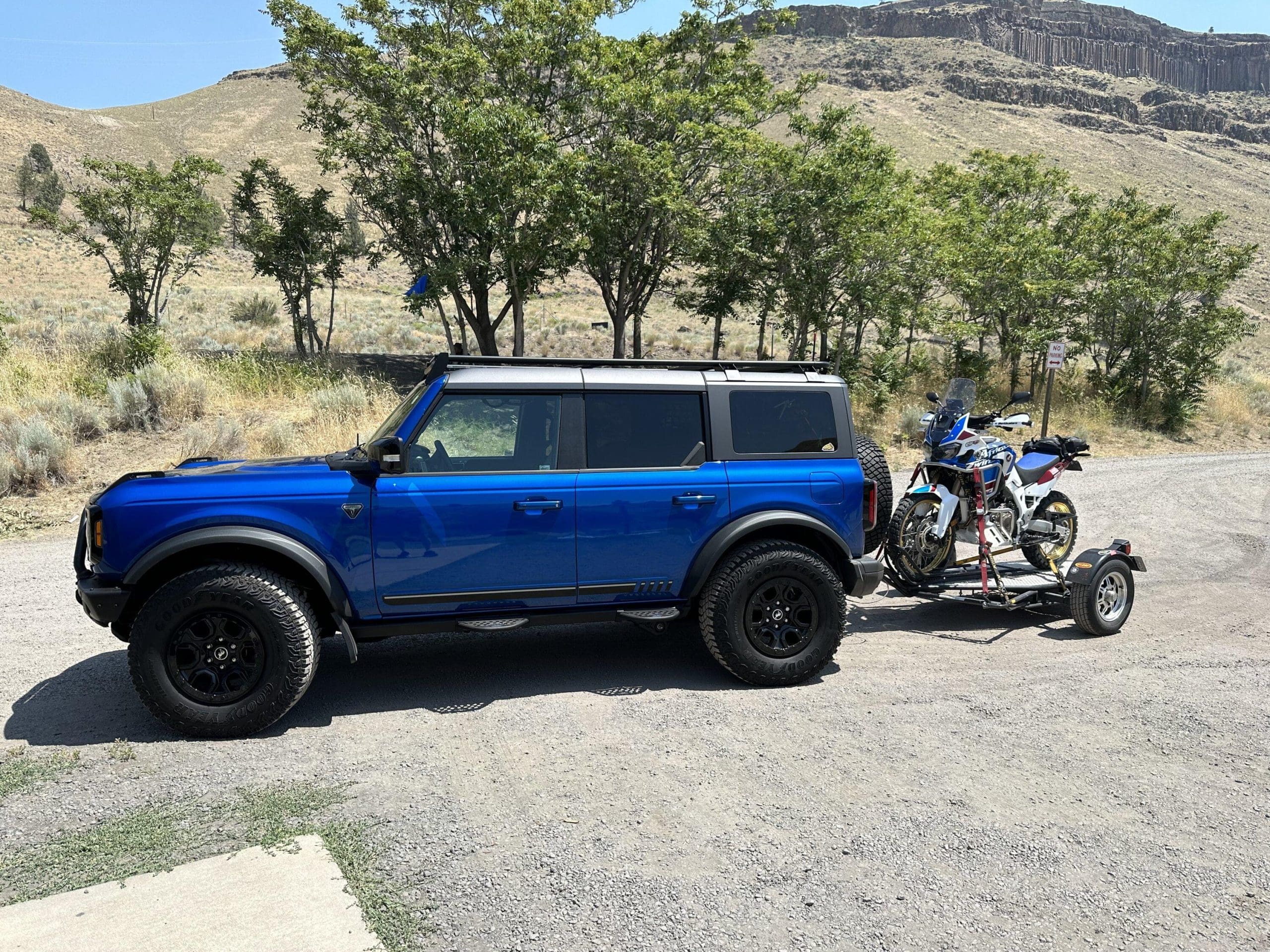
Nobody puts this in the brochure, but there is a real difference between towing a loaded trailer to a wide-open campsite and backing one down a narrow forest road at the end of a long riding day when you are exhausted and the light is going. Full-size SUVs handle the first situation with ease. The second one is a different conversation altogether.
The mid-size options on this list, the 4Runner, Bronco and Grand Cherokee, are easier to place in tight spots and feel less like work on technical access roads. For most riders hauling one or two bikes, the tow ratings are more than enough, and the smaller footprint is a genuine advantage on the roads that actually lead to good riding.
Trailer choice matters too. An open single-axle trailer is lighter and far easier to maneuver than an enclosed setup. Most riders doing day trips with a single bike do not need anything more than that. If you are building out a more serious rig with two bikes and overnight gear, an enclosed trailer starts to make sense, but go in knowing it will add weight, cut into your fuel economy, and make every tight turnaround a bit more of an event.