

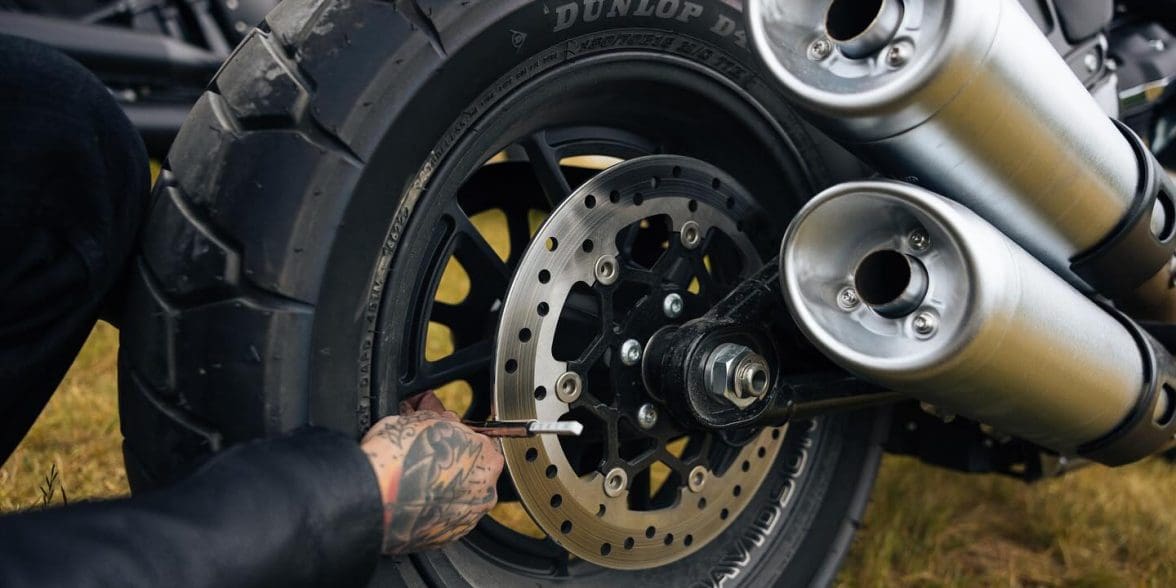
For years I checked my tire pressure by pressing my thumb into the sidewall. Firm enough, good enough. It’s embarrassing to admit now, but I’d bet a lot of riders reading this have done the same thing, or still do.
The problem with that method isn’t just that it’s inaccurate. It’s that you can run dangerously low and the tire still feels firm to your thumb. You’re not measuring anything, you’re just confirming that rubber is present.
What Underinflation Actually Feels Like
 Credit: Rents.MA
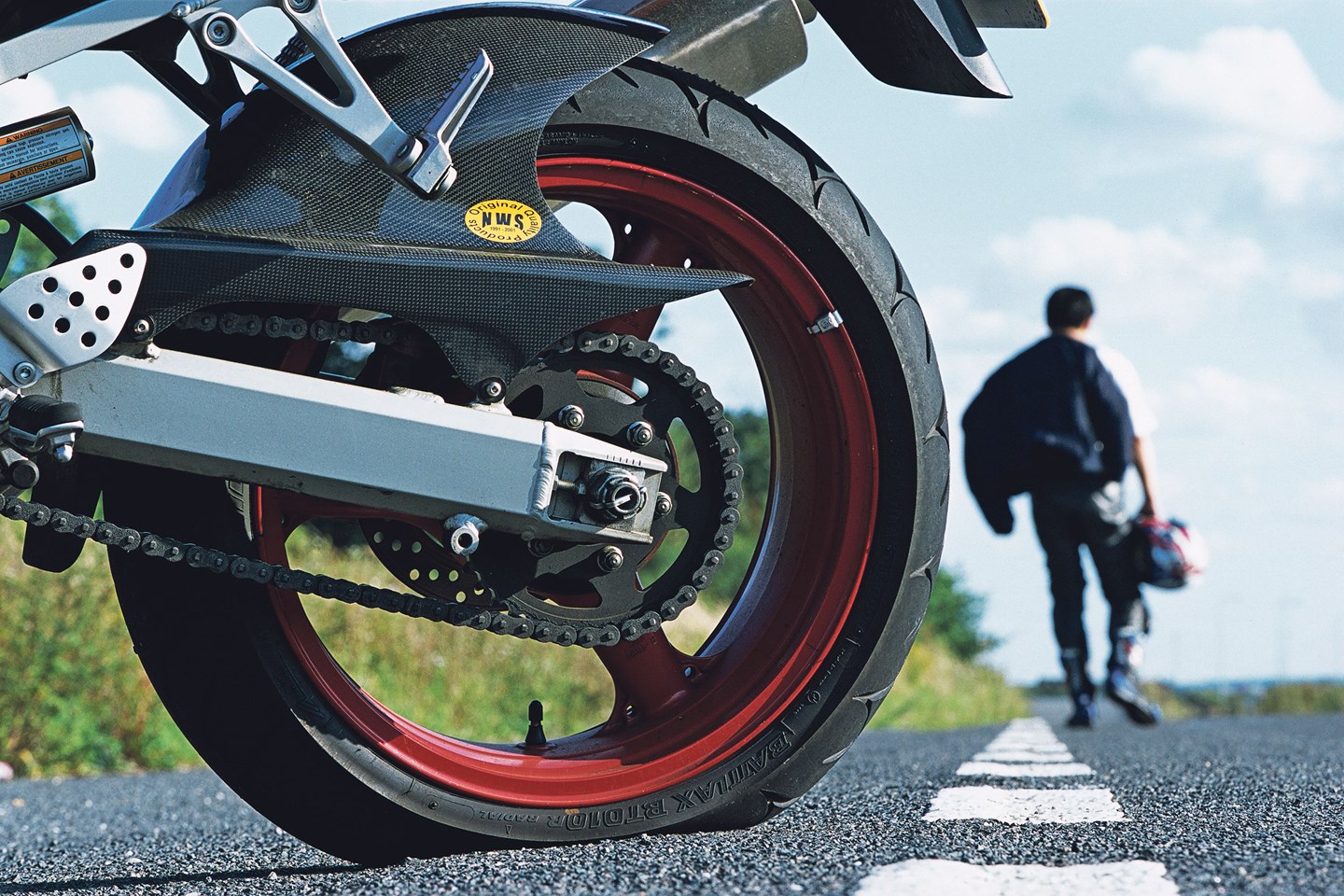
Nobody warns you about what underinflation actually feels like from the saddle, which is part of why it’s so easy to miss. It doesn’t feel like danger. It feels like the road is a bit slippery, or the bike is being weird today, or you’re just not riding your best. The handling gets vague around the edges. Braking feels adequate but not quite confidence-inspiring. You make a hundred small unconscious adjustments and you keep going, because nothing obviously bad happens.
What’s actually going on is that the tire is flexing more than it should be. That extra flex generates heat, and heat degrades the rubber’s ability to maintain its shape under load. The contact patch, which on a motorcycle is roughly the size of your palm on each end, starts to distort instead of holding firm. Physics doesn’t care that you didn’t realize this was happening.
Overinflation is less common but it’s not harmless either. Too much air and the tire becomes rigid, the contact patch shrinks, and the bike starts skipping over surface texture instead of gripping it. In the dry you might not notice much. In the wet it’s a different story. And if you hit a pothole or debris at speed, a tire that’s running hard is far more likely to fail catastrophically than one that’s properly inflated. Two tires. Contact patches the size of your hands. That’s what’s keeping you attached to the road.
Finding Your Number
 Credit: Harley Davidson
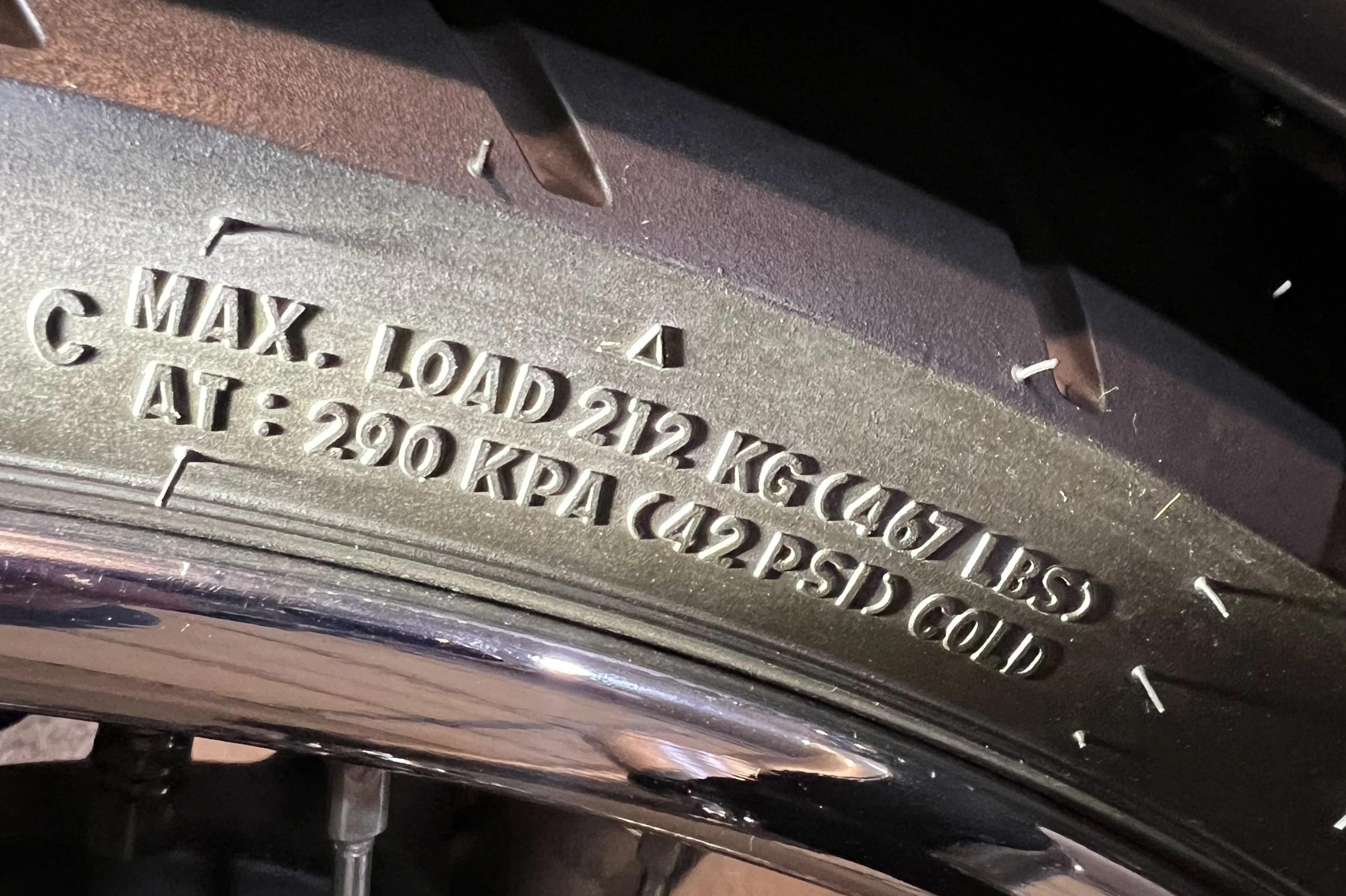
Finding the right pressure for your bike takes about thirty seconds. There’s a sticker on your swing arm, or a page in your owner’s manual, and that’s your number. Whatever the internet says about what sport bikes or cruisers “typically run” is just noise until you know your specific spec. Start there.
Two-up riding or heavy luggage means adding 3 to 5 PSI to the rear. The weight pushes down on the tire and drops your actual running pressure below what the gauge showed when you were unloaded. A lot of riders find out the hard way that a bike handling strangely on a loaded trip is often just a pressure problem with an easy fix.
Why Your Current Setup Probably Isn’t Working
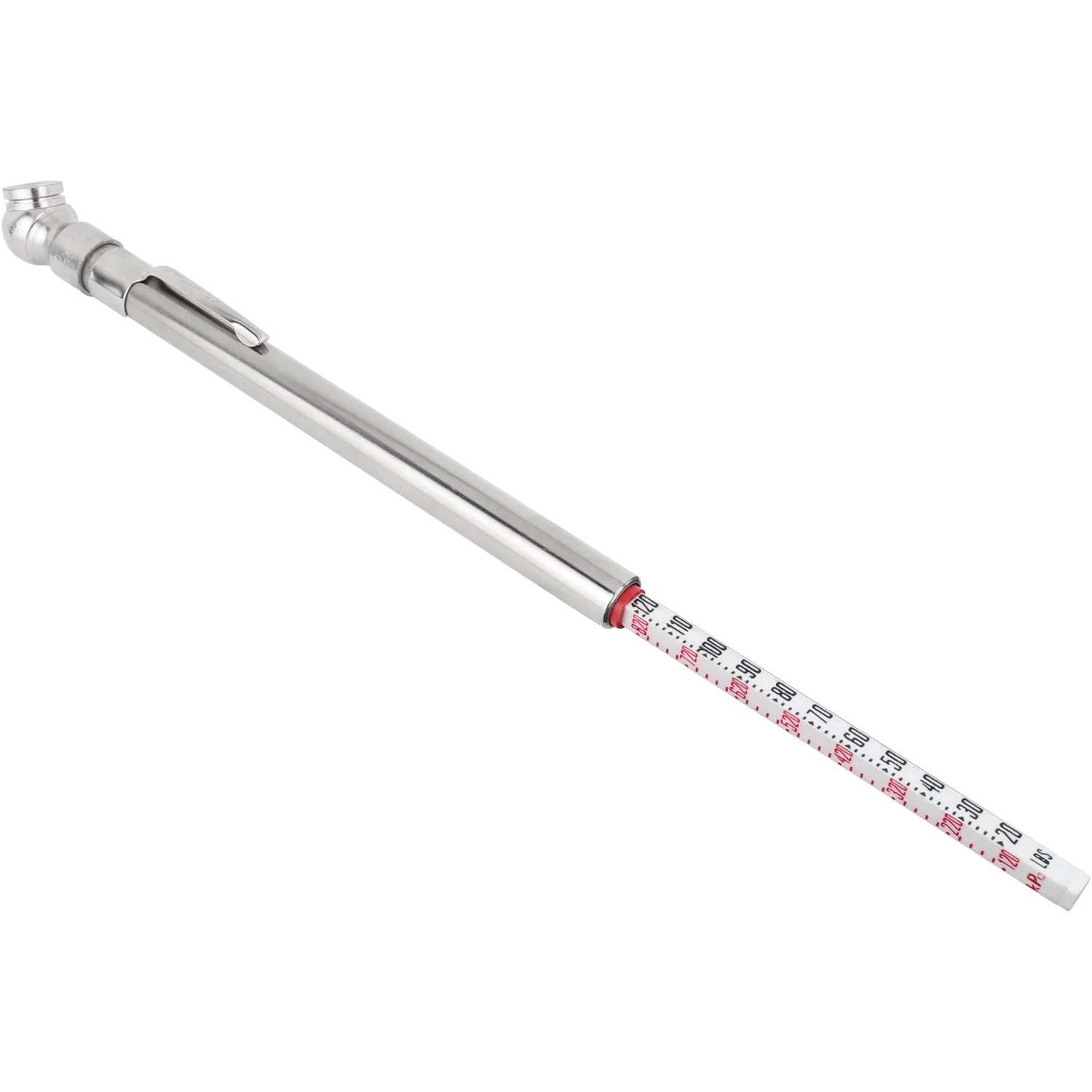
Here’s where most people’s systems break down. They have a cheap pencil gauge somewhere in the garage, they check the pressure, they find they’re low, and then they have to go find a gas station with a working air pump. Gas station pumps are frequently miscalibrated and nearly impossible to use accurately with motorcycle valve stems. You end up eyeballing it, which puts you right back where you started.
A portable tire inflator with a built-in digital gauge just eliminates all of that. Wolfbox makes one that’s worth keeping in your kit. It’s small, genuinely accurate, shuts off automatically when it hits your target so you can’t overshoot, and runs off a USB rechargeable battery so you can use it on the road. The whole check-and-inflate process takes maybe two minutes in your driveway. That’s the version of this task you’ll actually do regularly, as opposed to the gas station version which you’ll keep putting off.
How to Do It Right
 Credit: Motorcyclist Magazine
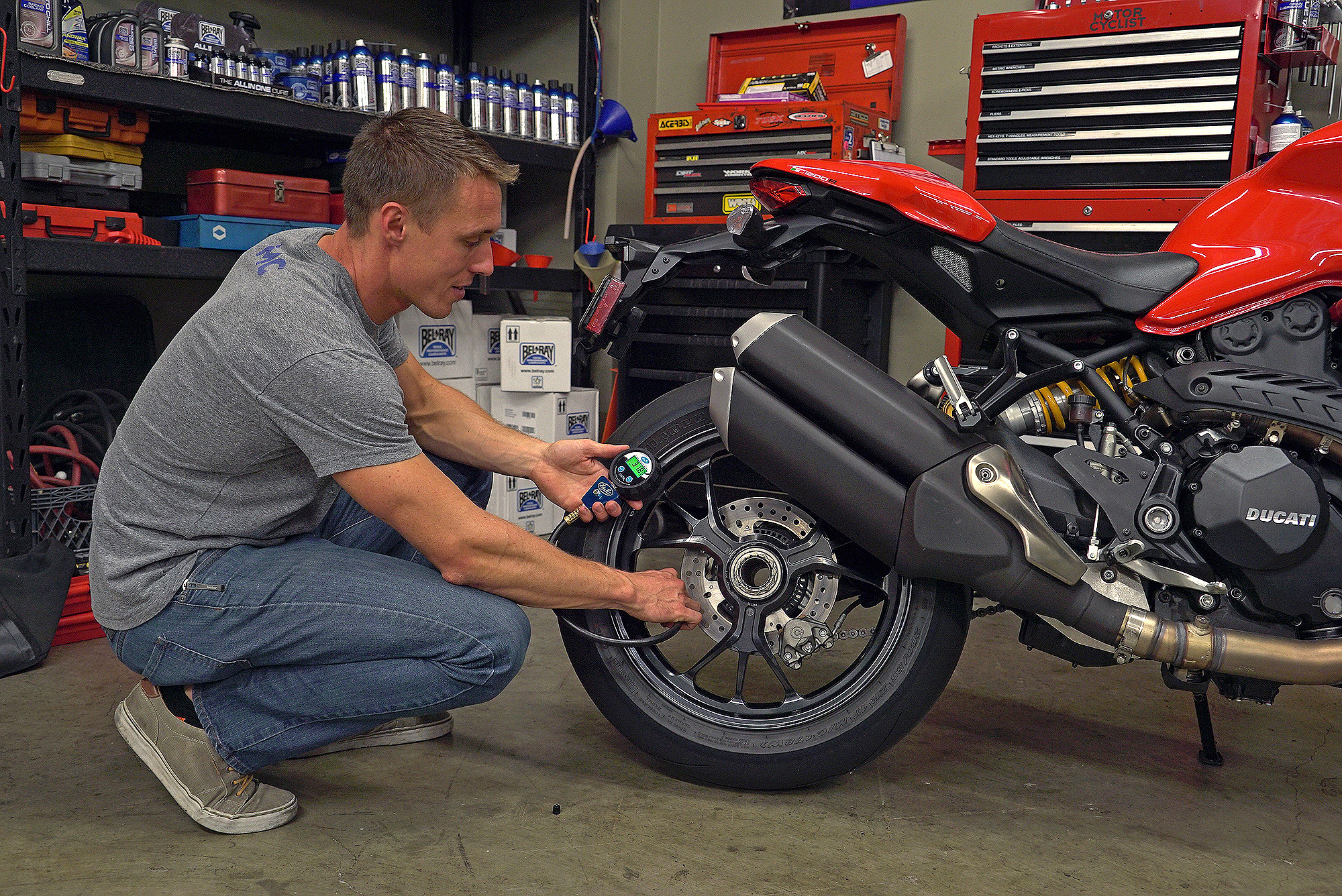
A few things that matter when you’re actually doing this but this applies to cold tires only. Three hours minimum since you last rode. Riding heats the air inside and raises the pressure, so a post-ride reading is going to look higher than reality. This trips people up constantly. They check after a short ride, everything looks fine, they move on. Meanwhile the cold pressure is a few PSI low and has been for weeks.
Get a proper seal on the valve stem before you read anything. A loose nozzle bleeds air out while you’re checking and gives you a falsely low number, which then leads you to add air you didn’t need. Don’t skip the rear. It’s awkward to reach and people skip it. The rear carries most of the weight and it’s usually the one that needs attention.
And if the bike has been parked for more than a week or two, just check both regardless of what they were at. Tires lose pressure sitting still. That’s normal and it’s not a sign anything is wrong, it just means you need to top them up.
It Saves Your Tires Too
 Credit: r/Motorcycle
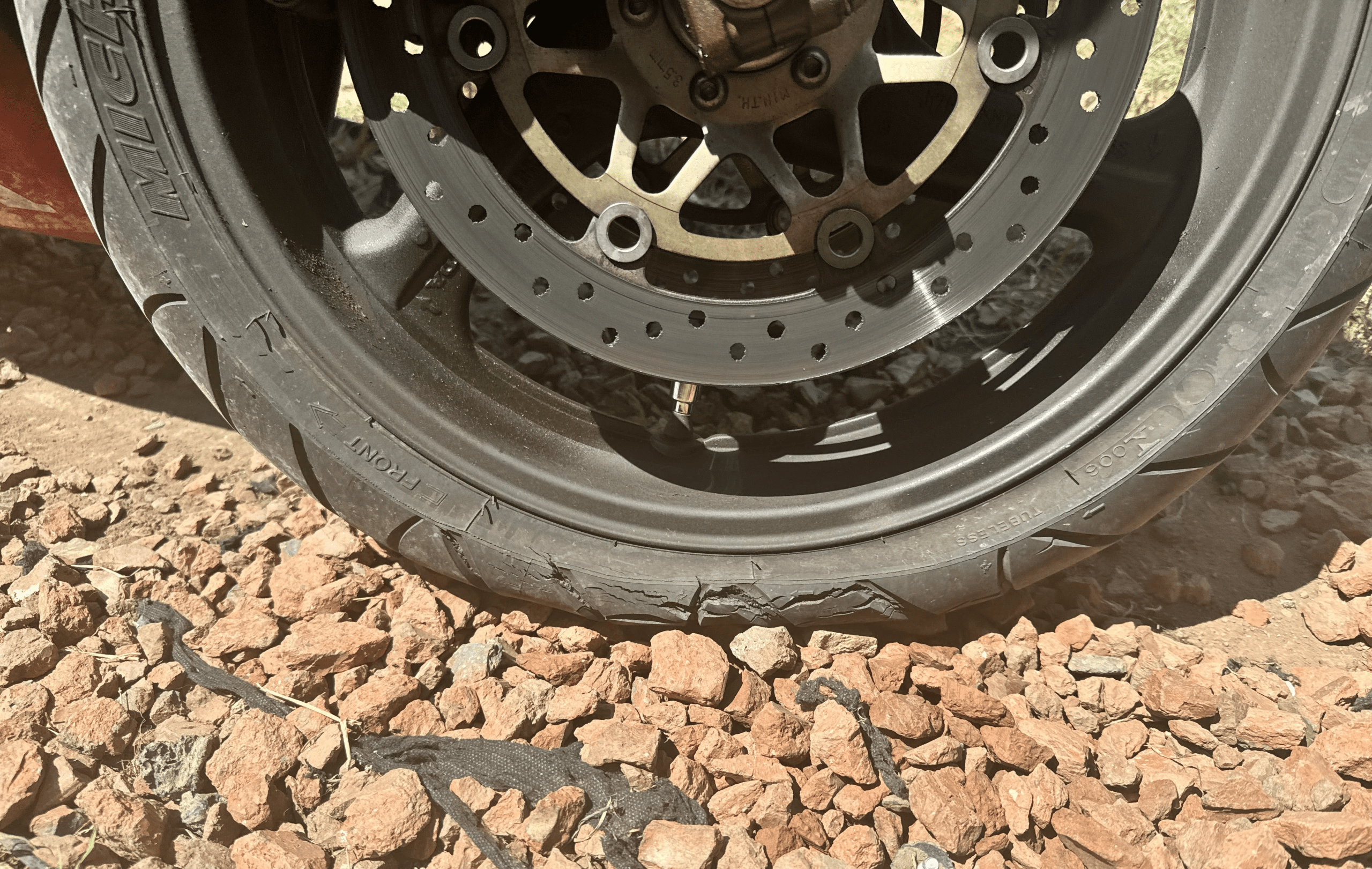
There’s a financial argument for this too, though it’s not the main one. Chronically underinflated tires wear from the edges in while the center stays relatively intact, so you end up scrapping a tire that still looks okay if you don’t know what you’re looking at. Rear tires on a motorcycle aren’t cheap. Keeping the pressure right extends that life in a meaningful way, and a decent portable inflator pays for itself in saved rubber faster than you’d expect.
But the real reason to care about this is simpler and harder to argue with. Riding is already a game of managing variables you can’t control. Road conditions, other drivers, weather, all of it. Tire pressure is one of the few variables you can actually eliminate. Two minutes in the driveway before you ride and that’s one less thing that can quietly work against you out there. It’s worth the two minutes