Between 1958 and 1974, one small factory in the Italian town of Cascina Costa won the premier class of motorcycle Grand Prix racing seventeen years running. No other manufacturer has come close to that streak before or since. Mike Hailwood’s four consecutive 500cc World Championships sat right in the middle of it, the peak years of a partnership between one extraordinarily gifted rider and one relentlessly ambitious company. Neither the man nor the factory ever quite reached those heights again once they went their separate ways.
Building a Dynasty

MV Agusta came out of an aviation family. Count Domenico Agusta took over his father’s aircraft manufacturing business in 1927, then founded the motorcycle side of the company, Meccanica Verghera, in 1945. Success came almost immediately once the world championship began in 1949, with riders like Carlo Ubbiali and later John Surtees carrying the factory to a string of titles through the 1950s.
Count Agusta ran the racing program the way he ran everything else, with total control and total secrecy. He refused to release technical data on his machines and forbade staff from discussing them outside the factory, a policy so strict that much of what historians know about MV’s early race bikes today comes only from machines sold at auction decades later.

Whatever his methods, they worked. Between 1958 and 1974, MV Agusta won the 500cc World Championship every single year, a run that would eventually span three different eras of riders and seventeen consecutive seasons. By the time it was over, the factory had claimed 37 rider’s world championships and more than 3,000 race wins across every class it entered, a record no other manufacturer in the sport’s history has approached.

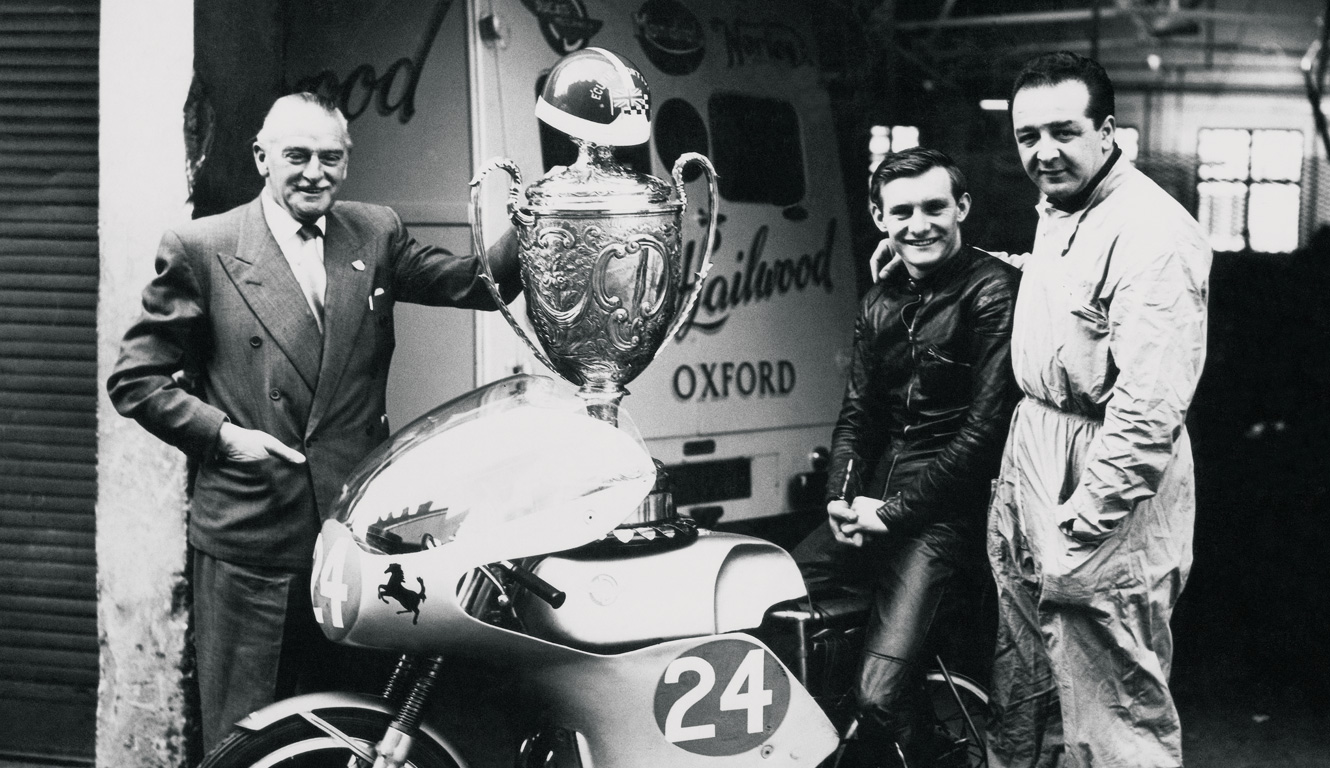
Mike Hailwood entered that world already accomplished. In 1961, riding for Honda and Norton, he became the first rider to win three Isle of Man TT races in a single week, then took the 250cc World Championship for good measure. That same year, Count Agusta gave him a one-off ride on the factory 500, and Hailwood won it. The full contract for 1962 followed almost as a formality.
Four Years, Four Titles

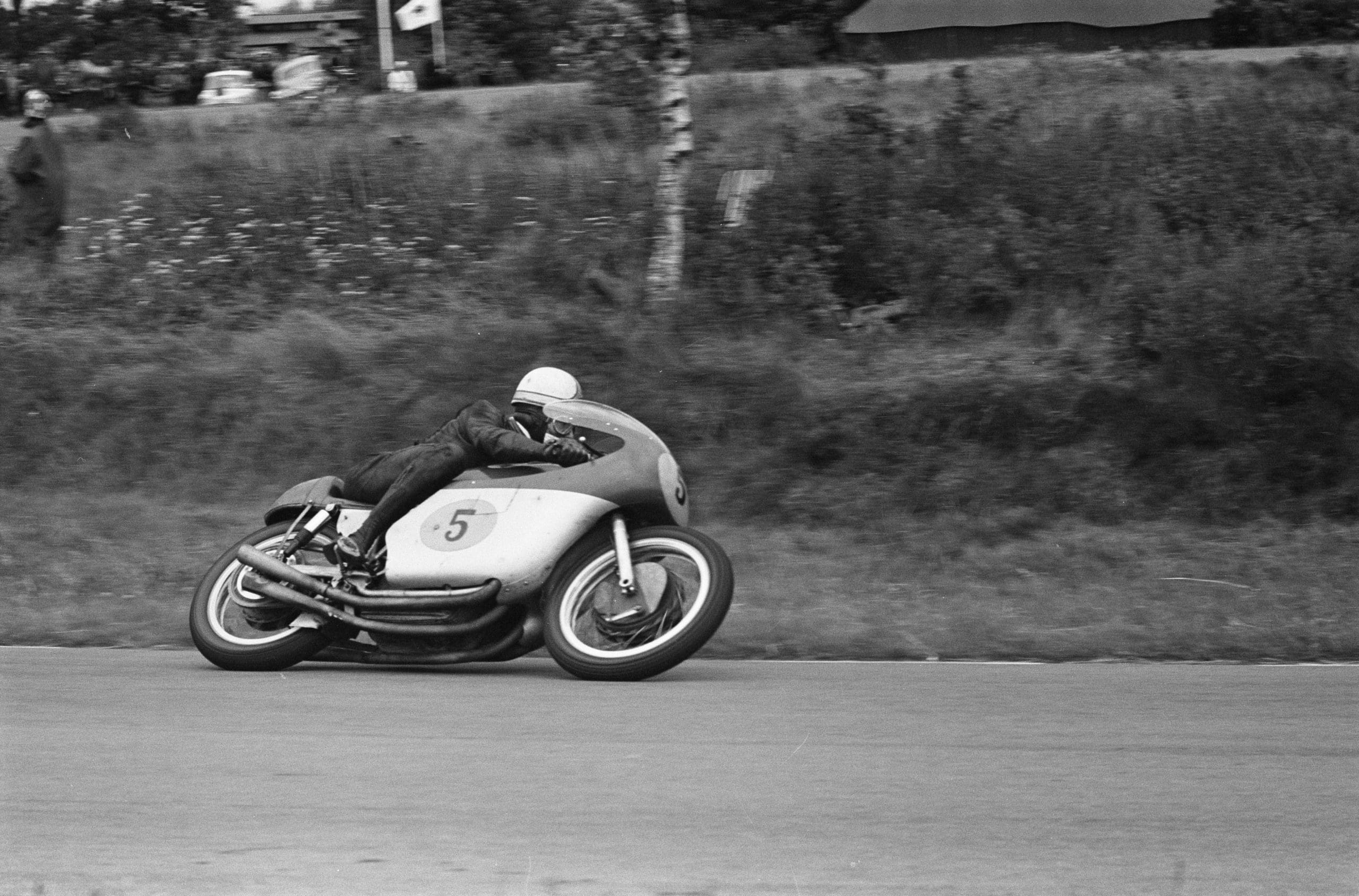
What followed was the most dominant individual stretch in the class’s history to that point. Hailwood won the 500cc title in 1962, then again in 1963, 1964, and 1965, the first rider ever to take four in a row. Across those seasons he failed to finish or missed only a handful of races out of nearly thirty held.
February 1964 produced one of the stranger doubles in racing history. During preparations for that year’s United States Grand Prix at Daytona, Hailwood set a new one-hour speed record on the MV 500, averaging 144.8 mph and beating a mark that had stood since 1957. He then went out that same day and won the championship race itself.
Three Wins, One Weekend
His most remarkable feat came the previous August, though, at the Sachsenring in East Germany. Over one Grand Prix weekend in 1963, Hailwood won the 350cc race on Saturday aboard an MV, then came back on Sunday to win both the 500cc race on another MV and the 250cc race on a completely different machine, an MZ two-stroke built by the host country’s own factory.
Local fans found themselves cheering a British rider to victory on their own manufacturer’s bike, beating Honda’s Jim Redman to the line in the process, on a machine with no connection to MV Agusta at all. It remains one of the rarest feats in the sport’s history.
A Reluctant Split

The partnership frayed well before it ended. By 1965, with Giacomo Agostini signed on as his new teammate, Hailwood was already showing his frustration with what colleagues described as Count Agusta’s autocratic style, and he took a 250cc ride from Honda on the side even while still winning MV’s premier class. His relationship with Agostini himself stayed warm despite the competition between them. After one hard-fought race that year left the young Italian frustrated with his own result, Hailwood took him out that same evening to lift his spirits, an early sign of a friendship that would outlast their rivalry entirely.

The full break came in 1966, when Hailwood left for Honda’s new multi-cylinder machines outright. He won the 250cc and 350cc titles that year, an impressive haul by any measure. But the 500cc crown, the one he had owned for four straight years, went to the rider who replaced him at MV Agusta. Giacomo Agostini took over Hailwood’s old bike and beat him to the title Hailwood had left behind.
The Dynasty Fades

Agostini carried MV Agusta’s momentum forward, extending that 500cc streak to seventeen straight years by 1974. He alone would go on to win fourteen of the factory’s thirty-seven world titles by the time his own career wound down, more than any other rider who ever wore MV’s colors. Honda, meanwhile, withdrew from Grand Prix racing entirely after 1967, driven out by new FIM rules restricting cylinder counts and gearbox ratios, the same rule change that had already pushed Honda’s engineers toward building road bikes like the CB750 instead.
Count Agusta died in 1971, and with him went the singular will that had driven the factory for a quarter century. MV Agusta won its last Grand Prix in 1976 and was out of racing entirely within a few years after that.
One Last Ride


Hailwood had already moved on to car racing by then, competing in Formula One across two separate stretches of the 1960s and 1970s. He was never a title contender on four wheels, managing just two podiums across fifty career starts, but he showed the same character that had defined him on bikes. At the 1973 South African Grand Prix, he ran back into a burning car to help pull driver Clay Regazzoni free, earning Britain’s George Medal for bravery.
By 1978, though, he was pulled back to bikes for good. At 38 years old and eleven years removed from Grand Prix racing, Hailwood entered that year’s Isle of Man TT on a Ducati prepared by a small British tuning shop, not a factory effort in any real sense. Nobody expected much from him.
The Comeback Nobody Saw Coming


He led from the first lap and won the Formula One TT by nearly two minutes, his thirteenth TT victory and one of the most celebrated comebacks in motorsport history. He came back again in 1979, this time on a factory Suzuki two-stroke, a machine as different from an MV Agusta four as any bike he had ever ridden, and won the Senior TT for his fourteenth and final win around the Mountain course. He retired from racing for good afterward.
Hailwood died on 21 March 1981 in a road accident near his home in Warwickshire, driving with his two children to buy fish and chips when a truck turned into their path. His nine-year-old daughter Michelle was killed instantly. He died in hospital two days later, at 40 years old. John Surtees and Giacomo Agostini, his old teammate and rival, both carried his coffin.