

Ladies and gentlefolk, we’re back swinging!
This week, we’ve scoured the ‘net for the biggest, juiciest morsels, and alternated all of that with a few bits of Powersports eye candy. The topics are big, so it’s a shorter list this week – but we couldn’t NOT talk about all this movement, so here we go:
- For the first time ever, Big Red has recorded losses connected to an environment that’s no longer hospitable to EVs. Since nearly 40% of the global bike market is Honda motorcycles, we dive today into what Honda’ s losses mean for our global motorcycle markets.
- MV Agusta has lifted the cover on the results of their partnership with German tuner ABT Sportsline, and the limited edition Brutale 1000 ABT comes just in time to complement the shiny new Brutale 800 Nero Carbonio.
- Got an eye on motorcycle gear and merch from the wrong side of the American border? We have the newest tariff updates, including whether or not it’s become easier – or harder – to get your hands on that sweet new MOTONE Shōgun Leather Jacket.
Let’s start with changes for Honda Motor Co., shall we?
First-Time Flops: Honda Records Historic Losses in EV Strategy Reassessment
High-Profile EV Projects Drop from the Top of Honda’s To-Do List, Leaving Room for Hybrid Tech
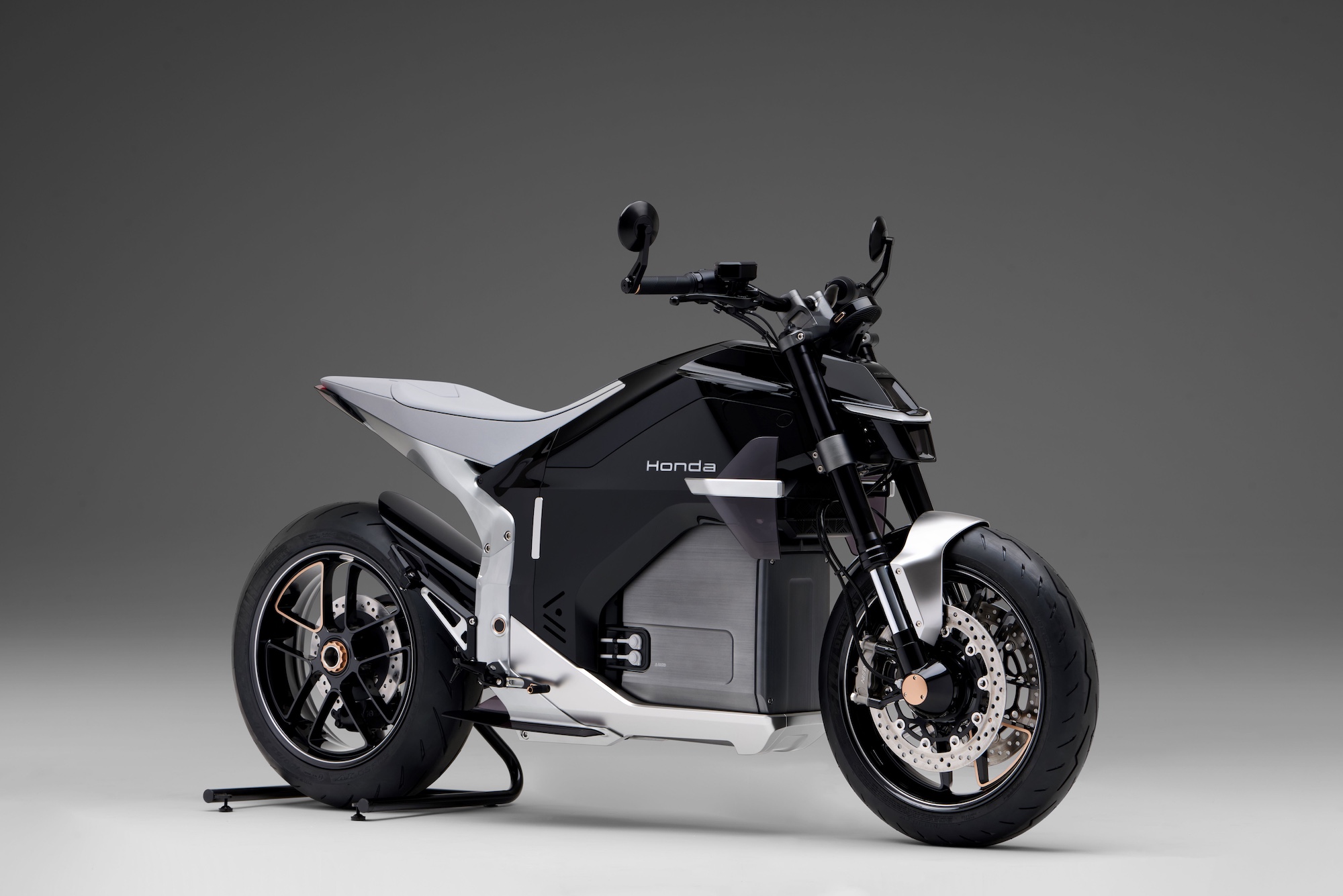
We’re about to get into news relating to the auto sector of Honda’s report, but hang in there, because the results will likely carry over into the motorcycle sector.
In a move that has sent ripples through the Tokyo Stock Exchange, Honda Motor Co. dropped a rather abysmal set of 2026 fiscal forecasts. The results showed a staggering downward trend away from electrification for Honda’s near future. Since Honda has been a major supporter of EV technology and the manufacturing of electric vehicles, the damage is considerable; Honda has canceled three major projects – the Honda 0 SUV, the Honda 0 Saloon, and the Acura RSX – and is officially bracing for a loss spiking as high as ¥2.5 trillion (roughly $16.5 billion USD).
The move was, according to Honda’s press release, made mainly due to a “significant decline” in EV demand, unfavorable U.S. tariff shifts, and a loss of competitiveness. Still more painful is the unfortunate reality that Honda’s pulling the plug means that all the money spent on factories, tooling, design, and parts agreements for those three massive electric vehicle programs has had to be written off.
Honda’s Executive Officers – including the President and Vice President – have even stated that they will voluntarily return up to 30% of their compensation as the balance sheets attempt to stabilize. 🥺
SUMMARY: Instead of making a profit or even breaking even while staying the course, Honda has chosen to completely abandon premium electrification for the near future, causing the company as a whole (including the car side, motorcycle side, and financing) to sink deep into the red for this year.
Honda’s Residual Hop Toward Reliability
The new “fixed-cost structure” now in place proves that Honda will move forward from this chapter with a thirst for reliability. For Honda, this looks like support toward reliable, high-performance ICE and hybrid machines rather than experimental electric moonshots and premium electric machines that look pretty but don’t bring in the green. Included in this trend will be a demand for leaner, meaner engineering, with the focus likely also swiveling toward parts sharing and platform consolidation.
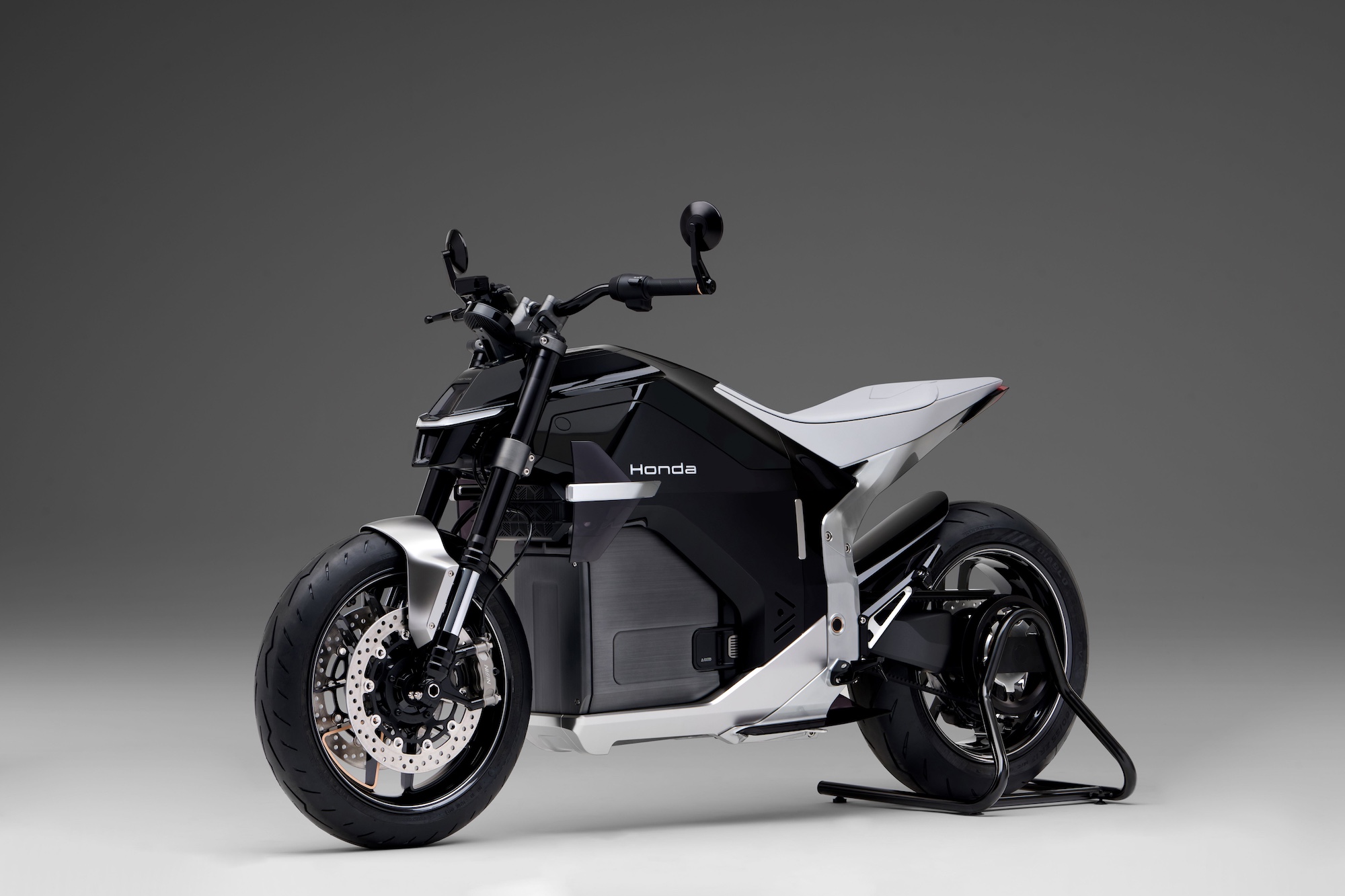
What do Honda’s Losses Mean for Honda Motorcyclists?
While Honda’s announcement was necessary to warn company investors that previous profit predictions have been chucked out the proverbial window, there’s a silver lining to all of this – especially if you weren’t a fan of the premium electric vehicle segment in the first place.
Despite only holding approximately 17% and 15% of the company’s revenue (via FinancialContent), Honda’s motorcycle and financial services businesses remain profitable. Honda’s renewed focus on “next-generation hybrid models” for its regional business will likely trickle down into the powersports sector.
We’re also told that, starting in 2027, Honda will begin revealing its next-gen hybrid models, likely building on the successes they had with their PCX HYBRID Twin (via Honda) and – this being our own prediction – putting Honda closer in competition to the Kawasaki Z7 and Ninja7 hybrid range.
The bottom line? Honda’s gilt EV dream isn’t dead, but it’s far from the current priority. Every aspect of this new fiscal report shows favorable winds for Honda to return to its roots. Long-time Honda fans rejoice, because high-performance, cost-competitive machines that built the brand’s reputation in the first place are that much more likely to go BOOM. 💥
Carbon Eye Candy: MV Agusta Unveils Brutale 800 “Nero Carbonio” and Ultra-Limited Brutale1000 ABT
Dual Dynamic Varese Love Letter Includes a Double Shot of High-Gloss Aggression and German Tuning
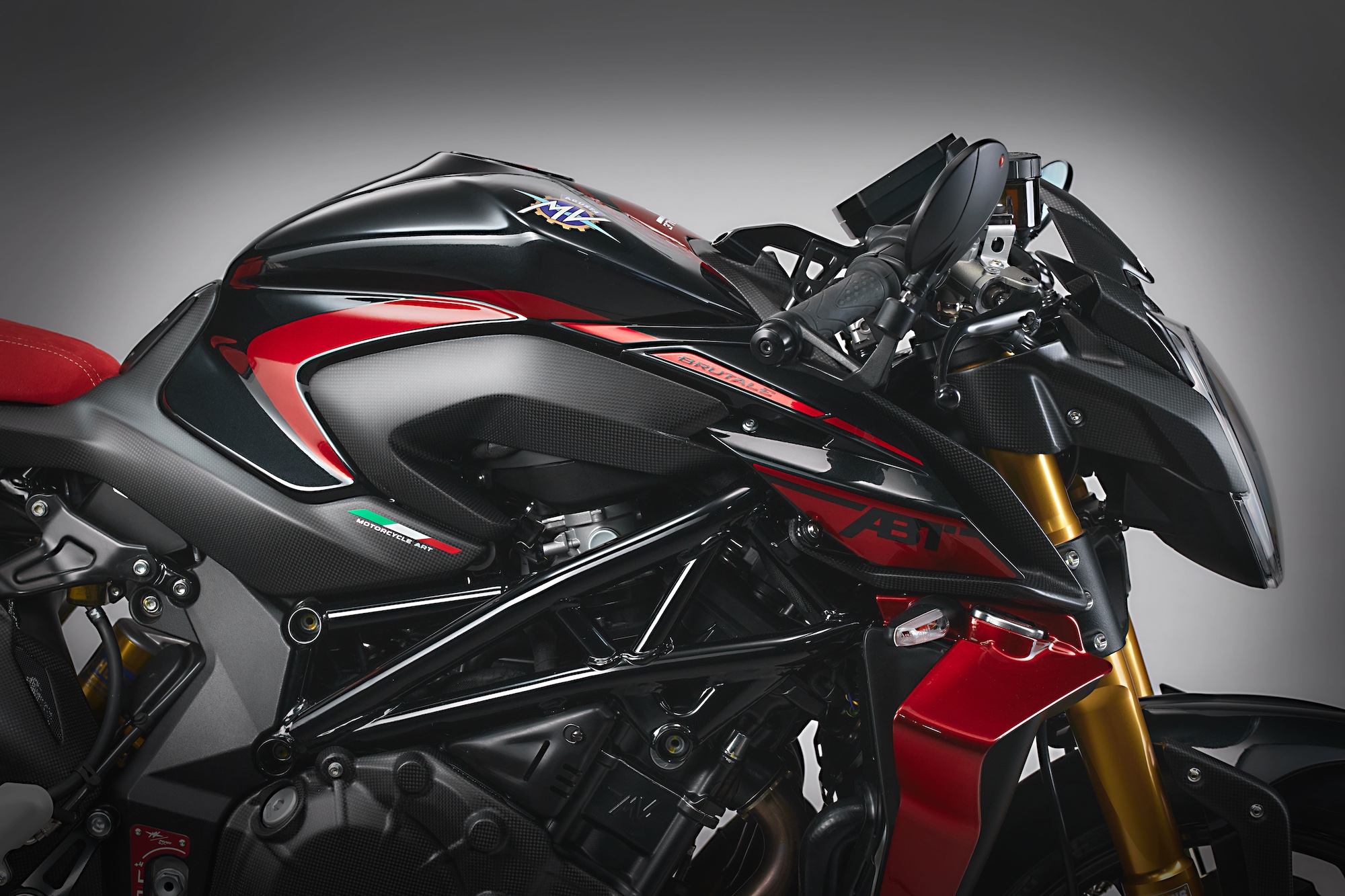 A view of MV Agusta’s new Brutale 1000 ABT. Media sourced from ABT Sportsline and MV Agusta.
If there is one brand that understands luxury motorcycle aesthetics, it’s MV Agusta – and this week, the Varese-based manufacturer lifted the veil from a new visual direction for their middleweight brawler, the Brutale.
Prior to this, we had been treated to new livery for MV Agusta’s 2026 Brutale 800. The new Nero Carbonio scheme showed off a multi-layer process featuring an additional clear coat that brought words like “luster” to the front of the bike’s visuals. Featuring an MSRP starting at €13,100 in Italy and a swanky new 5-year warranty, the 2027 Brutale 800 Nero Carbonio’s global availability – with specific focus on European markets – was met with MV Agusta’s return to the Solder family.
All great stuff, the €500 increase for the special livery considered… but now we have an even more bougie beast afoot, and it’s all MV’s fault.
I mean, LOOK at this new Brutale 1000:
Meet the limited-run, ultra-premium bike with tuxedo-with-a-switchblade vibes, MV Agusta’s own 2027 Brutale 1000 ABT.
Created in partnership with German tuning company ABT Sportsline, MV’s recent coverage tells us that the Brutale 1000 ABT bridges the gap between boutique street bike and racetrack hooner. To be clear, MV has never been cheap, nor should they be when they promote Italian luxury riding for their entire range.
Still. We can say with certainty that this new Brutale 1000 ABT is withheld for those in our good markets who find 113 horses a bit too polite and have grana to spare.
Only 130 units have been scheduled for production of the 2027 Brutale 1000 ABT globally, with Agusta’s Nero Carbonio Metallizzato paired with Rosso Fuoco (Fire Red) for the ultimate finish. Cool components include a “Turbofan” carbon fiber rear wheel as well as a staggering 19 distinct carbon fiber components, including the airbox cover, dashboard harness cover, and redesigned underseat panels.
In Italy, the new 2027 Brutale 1000 ABT carries a €13,390 premium price hike over the standard RR, retailing for an eye-watering €40,990. Their philosophy is that your eyes were watering from the sheer sexiness of the bike anyway, so why not charge what the thing is worth, right?
For the U.S. market, expect pricing to land right around the $50,000 mark, and that’s not counting your age (older is better), your inclination (males are more expensive), or your location (Midwest US) affecting your insurance rates (at worst, you’re looking at paying over $5000 a year).
But hey, mazel and all that.
Here’s a further list of specs and components comparing the 2026 Brutale 800 Nero Carbonion and the suave new 2027 Brutale 1000 ABT, which is set for a release to the public in Q4 of 2026:
| Feature | Brutale 800 Nero Carbonio | Brutale 1000 ABT (Limited) |
| Engine | 798cc Triple | 998cc Inline-Four |
| Output | 113 HP / 85 Nm | 201 HP (208 HP w/ Race Kit) |
| Suspension | Marzocchi / Sachs (Manual) | Öhlins Electronic (Nix EC / TTX) |
| Weight (Dry) | ~385 lbs | ~410 lbs (Race Kit) |
| Exclusivity | Standard Production | 130 Units Worldwide |
| Price (Est. USD) | ~$15,500 | ~$50,000 |
By the way, the recent inclusion of a 5-year factory warranty on the 800 suggests Varese is getting serious about reliability, so we’ll be excited to see what this means for the brand as a whole moving forward.
Industry Insider: Tariffs Continue to Affect Powersports Industry Goods Market
Welcome to the Death of the “Flat-Fee” Loophole
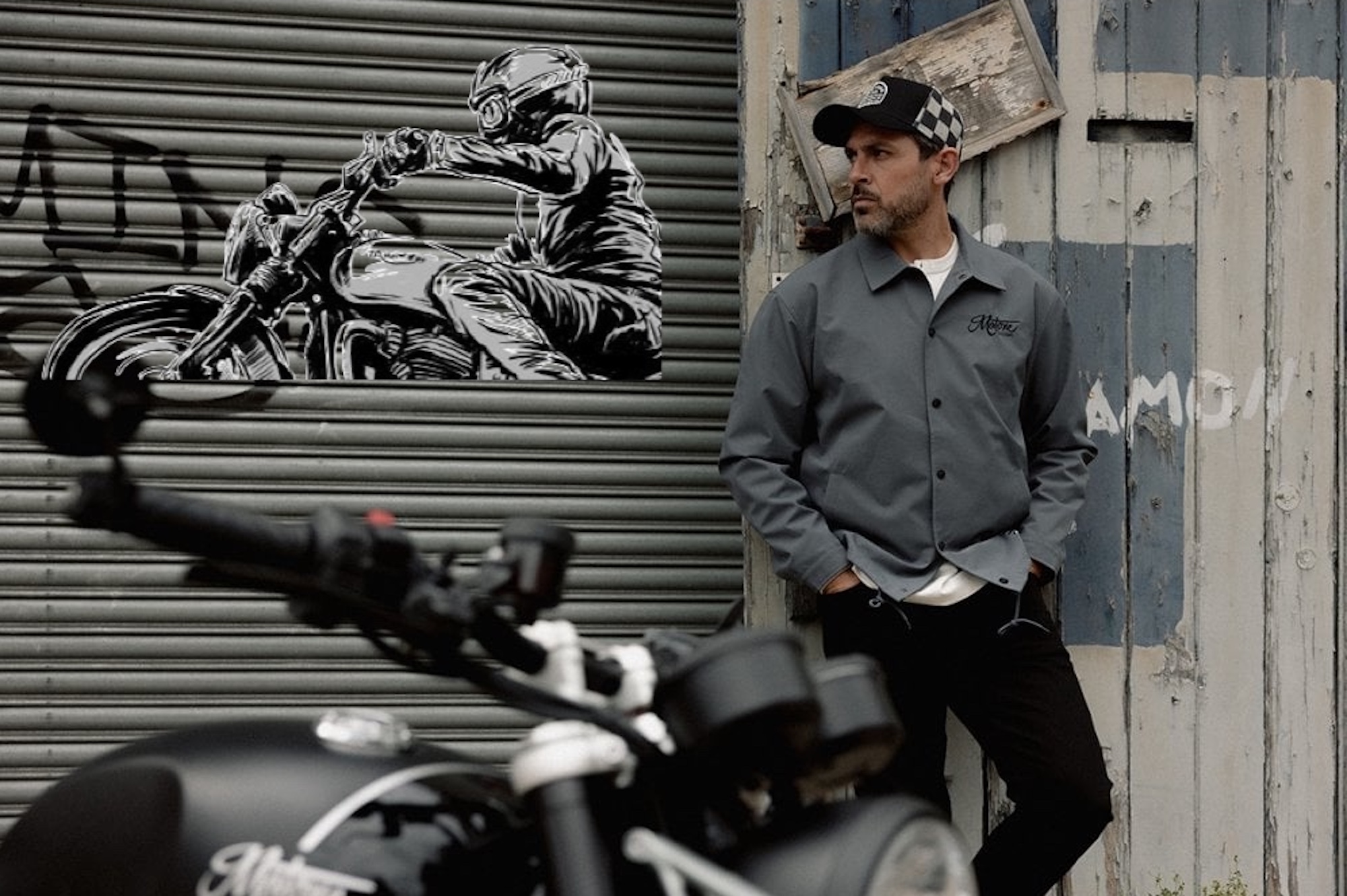
Shopping for a new lid or eyeing that new leather jacket from the UK, but don’t want to get hit with a tariff surprise? We’re doing the same over here, and we’re sick of the visible and invisible duty/processing fees… so we dug around for the most recent tariff updates so you don’t have to.
At the very least, nothing will catch you off guard, yeah?
The Economic Realities of Legal Tariff Whiplash
Here’s what we know so far: As of May 2026, the powersports landscape is being affected by a veritable trifecta of Supreme Court rulings, suspended tax loopholes, and shifting trade mandates. The biggest headline of the year dropped on February 20th of this year, when the U.S. Supreme Court ruled 6 to 3 that sweeping global tariffs imposed under the International Emergency Economic Powers Act (IEEPA) were unlawful.
Summary: The executive branch had overextended its authority in imposing tariffs that shouldn’t be enforceable.
While this sounds like a win for American riders’ wallets, the reality is a little more complex. As of April 20, 2026, U.S. Customs and Border Protection (CBP) enacted the CAPE Process and began accepting refund requests for IEEPA tariffs paid on certain entries. Many riders have been asking if this means they’ll get a refund on the duties they previously paid, but the CAPE Process mainly benefits large importers and manufacturers, so don’t expect a check in the mail for your last pair of gloves just yet. (via FedEx)
All Americans are also still subject to paying a 10% levy on imported stuffs. Despite the ruling, a “temporary”10% global import surcharge remains in place for many goods as the administration appeals a similar (May 7) ruling from the Court of International Trade (CIT) regarding Section 122 surcharges.
UPDATE: Despite the U.S. Court of International Trade (CIT) issuing an opinion and judgment eight days ago (May 7th) that the 10% Section 122 tariffs declared by the administration on February 20, 2026, are “invalid as contrary to law,” the Court declined to issue a broad “universal” injunction covering all importers and entries that are or will be subject to Section 122 tariffs (via People For Bikes). Two importers were chosen to have their duties refunded to them, but no one else. Boo.

R.I.P. to the End of the $800 Loophole (De Minimis Suspension/Exemption)
For years, savvy riders saved hundreds by ordering gear from overseas retailers like Motostorm or FC-Moto. They did this by staying under the $800 de minimis exemption to avoid import duties. This is older news, but we’re here to confirm that the $800 de minimis exemption for all international shipments to the U.S. is dead.
Riders are now subject to duties, taxes, and brokerage fees for every commercial import without the possibility of a flat fee. If you order a $400 helmet from Europe, you are now liable for HTS-coded duties (often 6% to 20% depending on materials) plus processing fees, effectively killing the previous savings for individual riders.
Some companies are helping with this new cost burden by charging less for their products, enacting their own flat rate price for multiple products or simply being upfront with price hikes and duty/courier costs pre-purchase, so not everything’s dark and dreary – but remember, there’s nothing wrong with contacting a gear manufacturer to see what they can do for you.
We are in the Powersports industry, after all, riders supporting riders and all that. 🙂
Motorcycles vs. Parts: The Section 232 & 301 Split
Wondering about motorcycle parts and materials as well? There’s a section for that – literally.
Section 232 (Steel and Aluminum) and Section 301 (Chinese Trade) tariffs continue to push back and forth, but we have something to celebrate: A revised April 6 proclamation removed some finished units from the derivative-product list – and yes, this means that most finished motorcycles are not subject to the additional Section 232 metals tariffs. (via UPS)
In fine form (riders supporting riders and all that), we are here to share that April 6’s revised proclamation was only possible because of the insane lobbying by our own MIC, or Motorcycle Industry Council (via White & Case LLP).
You rock, MIC!
While we have relief from the finished-bike sector, replacement items like gaskets, brake components, and exhaust systems remain largely subject to a 25% tariff. Gear is tough, too – particularly if that gear has been made in China (a massive portion of the globe’s available motorcycle gear is made in China, with many sourcing materials from elsewhere and either completing part or all of the product’s assembly in China).
All gear manufactured in China remains under the Section 301 four-year “necessity” review. This is a weird review put in place to determine every four years if gear should be kept, modified, or scrapped. Because this review is still ongoing as of May 2026, the terribly high prices riders have seen at the checkout counter since the trade war began are still unmoving… at least for this area of our industry.
How Motorcycle OEMs are Reacting
Thanks to all of the above and then some, OEMs and manufacturers are no longer “absorbing” the costs of tariffs, but have labeled the extra charges differently for the consumer. For example, KTM / Husqvarna has continued the practice of adding an Import Duty Surcharge to specific models like the 390-series, which often sees a ~$700 add-on at the dealership level. (via Viking Bags).
By contrast, Yammie stated in early 2026 that pricing strategies were being changed to protect margins against the 10% weakening of the USD against the Euro, which acts as a further hidden charge, on top of the actual tariff annoyances.
As for American motorcycle manufacturers, we happen to know that Harley-Davidson received a temporary breather as the EU extended its suspension of retaliatory tariffs on American bikes until August 6th of this year, thereby avoiding an immediate – and potentially fatal – price spike for Milwaukee iron in Europe. (via Reuters)
With the hidden price of riding currently marked at a five-year high, maintenance and gear are the areas where riders will continue to feel the pinch the most.
Saving funds will, for the near future, mean checking out domestic inventory already on showroom floors or the used market.
Additional Sources for this article:
- U.S. Customs and Border Protection – CAPE Refund Guidance (search list)
- Supreme Court Ruling: IEEPA Authority (Feb 2026)
- PeopleForBikes: 2026 Trade and Tariff Updates
- Powersports Business: Section 232 Revisions (April 2026)
- UPS/FedEx International: Suspension of De Minimis Exemption