

I guess I’ve become the de facto KBC reviewer.
As soon as we posted our recent take on the KBC VR-3, the emails started pouring in, asking about the KBC VR-2 “Mirage”.
We originally thought that the VR-2 was similar enough to the original VR-1 that it wouldn’t be worth the effort of an extra review, but due to popular demand, as it were, well, here we are.
We were also hesitant about reviewing a VR-2 at this time because it’s been on the market for a couple of years at least and it’s our understanding that a replacement is in the works.
I’m betting we’ll see a new helmet (the VR-4?) at the 2007 Indianapolis Dealer Powersports Expo coming up in February.
Many of you wrote to tell us that we reviewed the “wrong” helmet when we featured the VR-3 Stealth.
The “VR-3 is now classified as a ‘sport touring helmet’ and the VR-2 is their top of the line ‘racing’ helmet” wrote visitor J.B.
And he mentioned “The VR-2 helmet is a completely different animal” according to his conversations with a KBC representative.
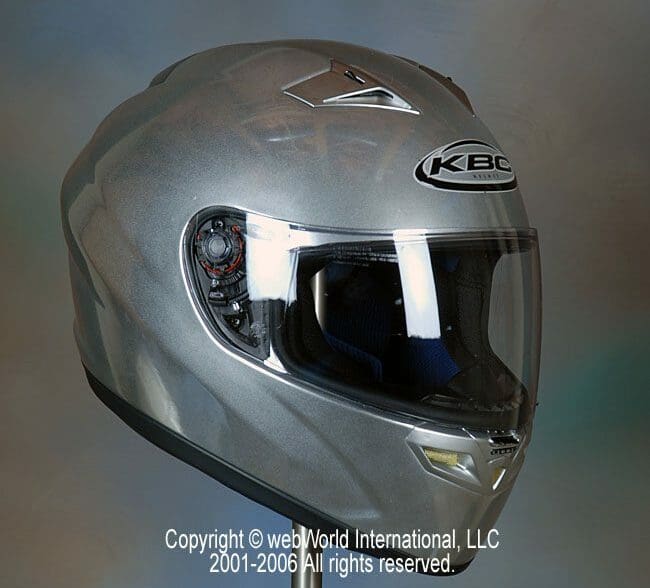
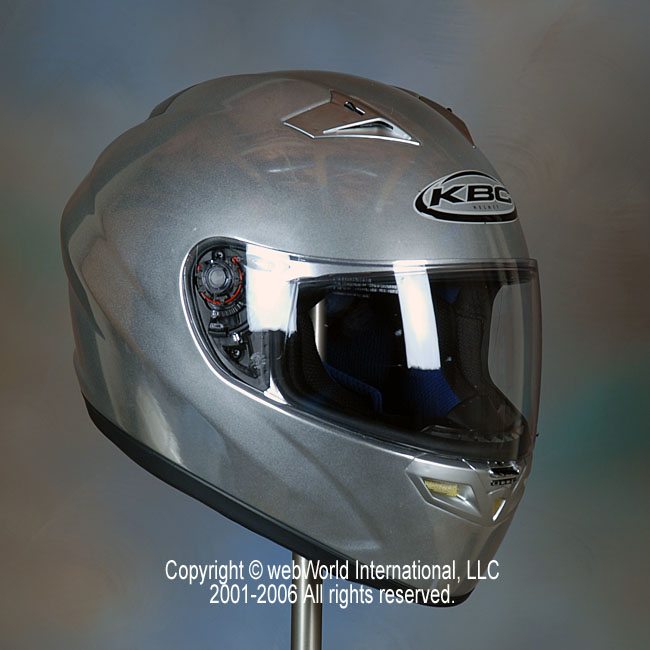
So we ordered up a KBC VR-2 in the “Billet” silver color, which is probably one of the worst colors imaginable for a motorcycle helmet.
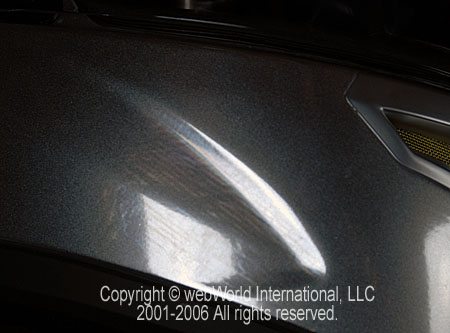
The Billet paint on our VR-2 looks like it was applied with a can of Krylon spray in some local farmer’s garage, complete with runs, drips and errors.
The weird color isn’t helped by the imperfect surface preparation, which allowed the sanding marks and dust to show through the finish. Poor surface preparation and quality control was also a problem with our VR-3 , so my only conclusion is that it is endemic to all KBC helmets.
Color aside, does the VR-2 meet our expectations for what KBC claims is their “top of the range Professional Racing Helmet” that are “designed specifically for ultra high performance race use”? Let’s see…
Internal Shape and Fit
I’ll start here because the first thing I noticed — other than the paint — is that the VR-2 apparently runs at least one size smaller than expected. We ordered a size XL but this helmet fits just like a size large, so bear this in mind if you’re planning on ordering a VR-2.
This must be a common problem with KBC helmets, because we reported that the VR-3 also feels about one-half to one size small.
One possible explanation for the smaller fit of the VR-2 is because the VR-3 is supposed to be KBC’s “sport touring” helmet, while the VR-2 is their race helmet?
KBC claims that the VR-2 uses a “totally new fitment platform for ultimate wearer comfort”.
I’m not sure what this is supposed to mean because I don’t really notice any difference in the way the VR-2 fits when compared to similar helmets, other than the KBC’s smaller-than-expected sizing.
The VR-2 is a tight fit on my size XL round-shaped head, but I will admit that the helmet feels more comfortable than I imagined it would. The internal shape feels relatively neutral, round-ish on top and slightly too tight on the sides.
The tight side fit does cause some pain on the sides of my face after wearing the helmet for about 1/2 hour or so.
The real problem though, at least for me, is that the shell seems one size too small also.
Normally the motorcycle helmet manufacturers use two shell sizes, a smaller shell for helmets from the smallest sizes up to medium or large, and a larger shell for helmets in size large and above.
A few of the manufacturers of very expensive helmets may even have three or more shell sizes, which allows a more precisely tailored fit.
But it sure seems like KBC is using a smaller shell for this size XL helmet, and this is confirmed in their product literature, which states that the VR-2 Mirage has “reduced overall shell dimensions”. I’m not sure why you think this is a better feature, KBC?
The reason I believe KBC’s claim is because the helmet just feels like it’s too small. There is very little room for my chin and nose inside the VR-2, unlike most size XL helmets I’ve worn and even when compared to the KBC VR-3.
My chin sticks out from underneath the VR-2 and my nose brushes up against the back of the chin bar. A secondary result of the crowded interior is that there is no escape for my moist breath.
As soon as I put on the helmet, my eyeglasses and sunglasses start to fog up, which is very unusual.
On the positive side, the snug fit means that the noise levels are lower than they might be if there were more room around the edges. More on that in a bit…
By the way, for more information on choosing and fitting a motorcycle helmet, see the wBWMotorcycle Helmet FAQ page, which also includes a discussion on head shapes.
Helmet Weight
Our size XL VR-2 weighs in at 1652 grams (3 lbs., 10-1/4 oz.), which is merely one gram shy of the 1653 gram (size XL) KBC VR-3. So much for light weight racing helmets…
However, like the VR-3, this weight range puts the VR-2 in good company, bracketed with relatively light weight helmets like the Arai Profile (1658g) and the Shoei X-Eleven (1635g).
Even with the smaller shell size, the VR-2 feels slightly top-heavy to me, but overall I have no problems with the weight and the way the mass is distributed.
For more information, see the wBW Motorcycle Helmet Weights page for a chart comparing the VR-2 with the other helmets we’ve reviewed.
Face Shield
The VR-2 includes what appears to be the same face shield that is used on the VR-3.
But the face shield on our VR-2 does not fit correctly; it doesn’t seal against the gasket surrounding the eye port and, in fact, doesn’t even come close to touching the gasket anywhere along the seal.
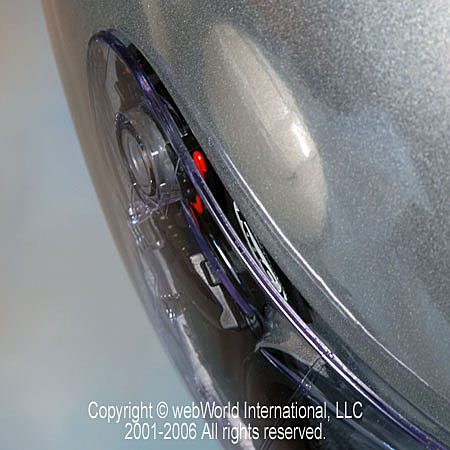
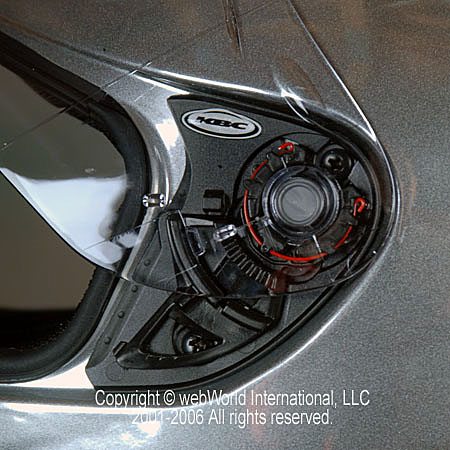
The face shield also has about a 2 mm gap on either side at the rotating mechanism (see photo directly below).
If you recall, the VR-3 we reviewed had a problem where the face shield would hang up on the three-dimensional KBC logo when the visor was raised.
The VR-2 doesn’t have this problem, but the gap between the face shield and the eye port gasket is probably what allows the visor to clear the logo.
The face shield also doesn’t completely close — there’s no “snap” when it’s shut. So overall I give poor marks to the quality of the mechanism on this example.
The VR-2’s face shield removal mechanism (see photo directly below) is as balky as the one used on the VR-3. It’s difficult to tell when the face shield is released and there is no positive feel when it is replaced.
Although I have not experienced any problems with the face shield coming loose while riding, it doesn’t give me much confidence and it’s surprisingly balky for a “race” level helmet.
Noise Levels
The KBC VR-2 is relatively quiet when compared to the average helmet. In this particular case, it is partly due to the tight fit of the helmet, which keeps the padding tight against the ear, eliminating most of the noise.
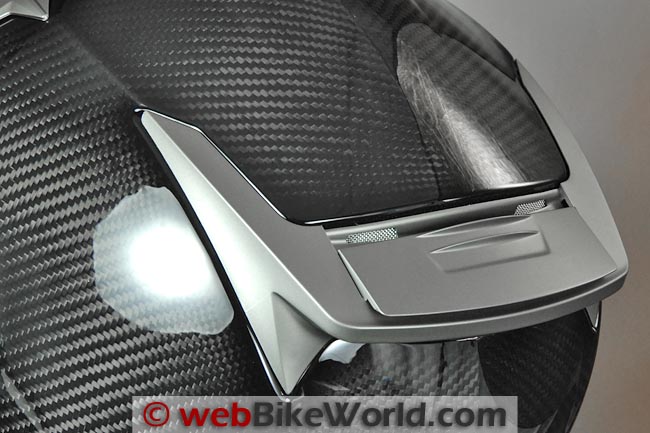
The top vents do have a noticeable but tame whistling noise if the wind is blowing at an angle to the rider or if the rider’s head moves from side to side.
The VR-2 becomes noticeably quieter as the angle of attack becomes more acute, like when riding a sportbike in the head-down position. However, the back of the helmet picks up some turbulence in this position and the noise induced by this turbulence increases.
But overall, the VR-2 seems relatively quiet. The helmet includes a small built-in chin curtain, which also probably helps reduce some of the noise.
Remember that we always wear correctly fitted, high quality earplugs and an extra helmet liner when riding, and we strongly recommend that you always wear hearing protection also.
See the wBW Earplugs and Hearing Protection page for more information on choosing and wearing earplugs.
Your experience with noise levels may be different, depending upon many factors, including your head shape, motorcycle configuration, prevailing winds and more.
Ventilation
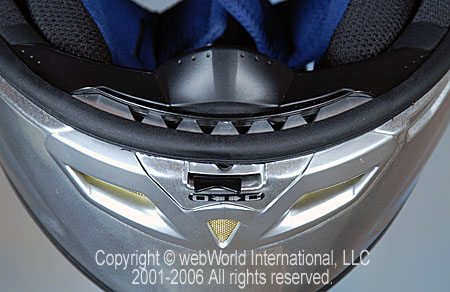
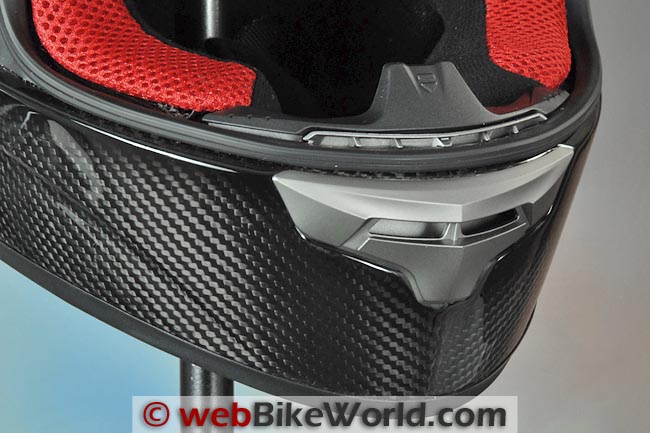
The VR-3 has a basic venting system with a small chin vent and smaller top vent. The dual chin vents direct the air through a screen mesh and up through a saw-tooth opening behind the visor (yellow arrow in the photo above).
This air is directed up in front of the breath guard and up on to the back of the visor.
The problem with this design is that the combined opening volume is very small. I can barely feel any air at all coming through the chin vent.
Unfortunately, there are no air channels cut through the chin bar that could direct the air on to the rider’s face.
The on/of switch (white arrow, photo above) moves the sliding cover under the teeth only about 5 mm from left to right to open and close the air flow, which just isn’t enough to make a difference.
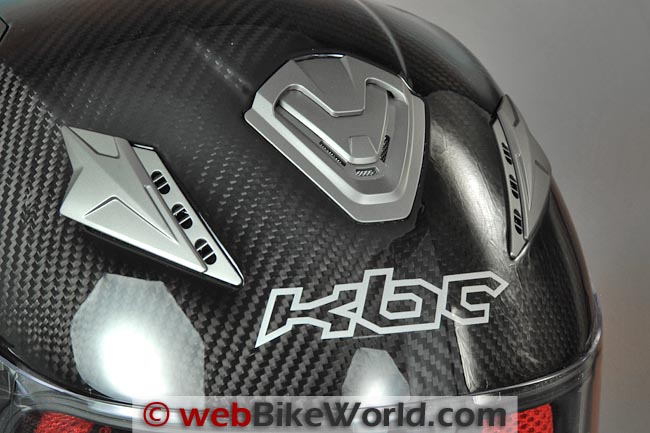
Visible sanding marks due to poor paint preparation.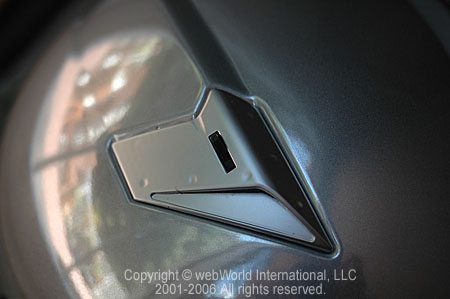 Top vent with wide gap around edge.
Miscellaneous
The VR-2 is both DOT and Snell approved in the U.S. Like the VR-3, KBC claims that the VR-2 “Meets or exceeds all major worldwide safety standards and tests.
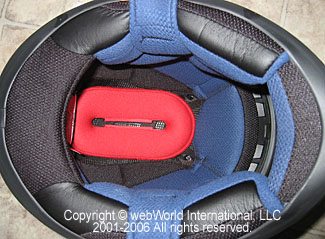
The helmet uses a D-ring attachment system and has a separate snap for securing the loose end of the chin strap. Again like the VR-3 (and I’m using some of the same words here because the VR-2 is nearly identical), the liner is nicely made and it’s comfortable.
The VR-2 shell is made from “Tri-Composite Aramid Epoxy Shell (Bag Moulded)”. KBC
Conclusion
I guess it’s obvious that I’m not very impressed with the KBC VR-2. We have now reviewed the FFR, the VR-1, the VR-3 and now the VR-2 and our feeling is that KBC quality is not up to the levels of HJC, much less Shoei or Arai.
The VR-1 was a standout in its day, offering a level of comfort and safety standard certification that rivaled the big players.
But that was then and this is now, and our feeling is that KBC needs to kick it up a level or two in this current hyper-competitive market.
Owner Comments and Feedback
See details on submitting comments.
From “K.T.” (November 2009): “I recently bought a matte black VR2 retailed at $230 USD, on closeout sale for $120 USD. Fit was good, XL, quality good, but replaced clear visor with smoked visor, required changing hinge pivot assemblies.
Helmet works well, but much noisier than my VR1 was. Need to wear hearing protection for normal riding, not just for the loud exhaust. I am satisfied with the helmet other than the noise. Thanks for your article.”
From “JDLM” (October 2009): “Thanks for an excellent and detailed review of this helmet. It prompted me to look more carefully before my purchase but ultimately decided to buy one, great fit, great graphics and brilliant value for money.
On the subject of visor fit, it may be worthwhile checking that you have the updated base plates, as I noticed your photos have the original ones with the red circlip spring the updated ones have a metallic gold/silver spring and an entirely different ratchet arrangement which does not fit the first generation visor.
I only discovered the problem when I bought a dark visor and it had the same problem you describe. For further information call RaceVisors.co.uk as they sorted me out with one phone call.”
From “B.H.”: “I agree that the sizing on that helmet is too small. My thinking is that it is smaller because it is a “race” helmet. I tried one on in medium and noticed it was way tighter than the medium Force RR that I also tried on. I ended up with the RR.
I just wanted to let you know about the visor problem that was mentioned in the review is actually due to user error.
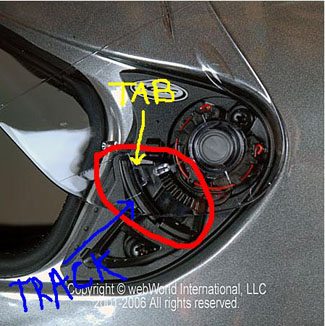
I had the same problem with it at first until I realized the you have to make sure that they lower bottom tab of the face shield is secure into the lower visor track on the helmet.
Otherwise it is just as described. It will not seal and there is no click when you shut it. When you install the face shield you have to make sure that the tab gets “clicked” into that lower track.
It take a little push on the bottom of the visor and you will hear a little click sound. Then all is snug and well. I have attached a copy of the picture that you used in the review with the visor tab circled that I am talking about. I hope this helps.
Your site is great and thanks for the info, but it is little errors and peoples different preferences that remind me that to really check it out you need to get out to the store and see it for yourself.”