

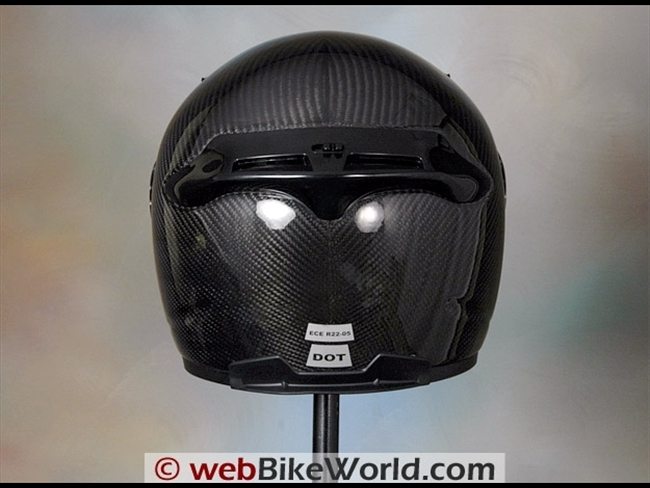
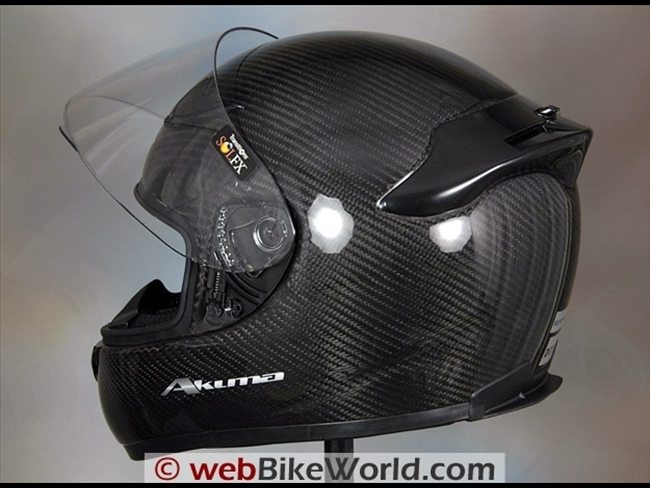
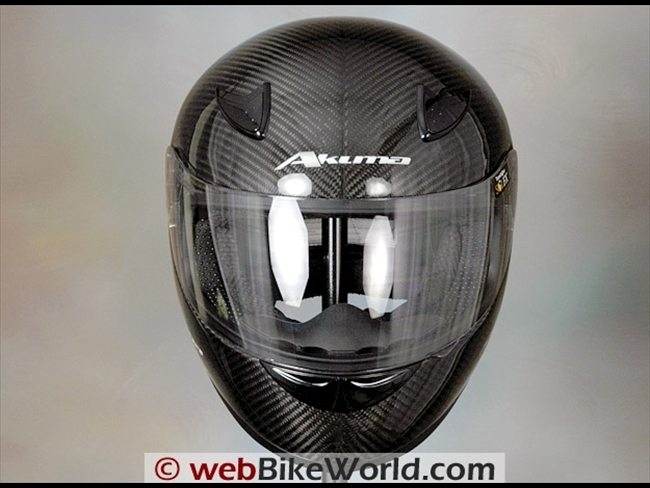
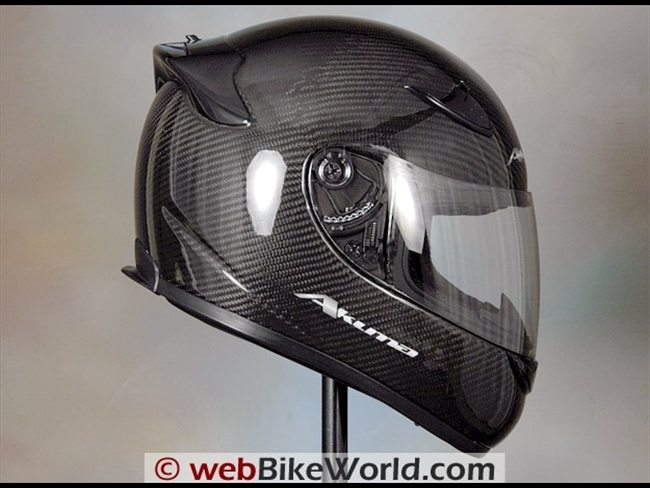
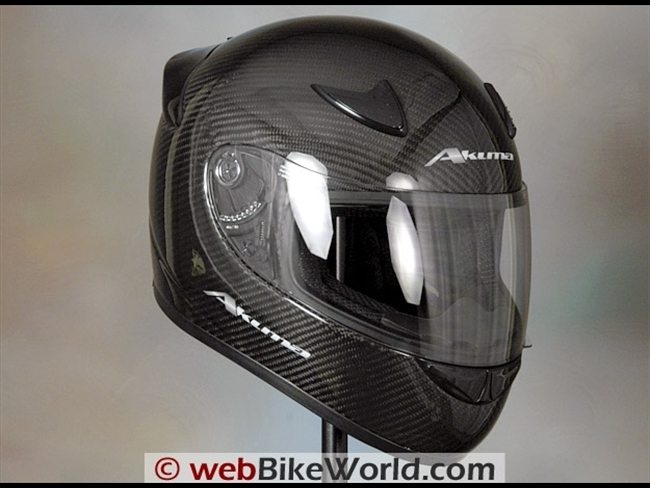
Ultra-light carbon fiber helmet is comfortable, has good air flow and is relatively quiet.
The Akuma Phantom II is designed as a no-nonsense “Made For Racing” (MFR) design.
Another first: the Akuma Phantom II is the first motorcycle helmet to have a genuine Transitions SOLFX brand photochromic visor installed as standard equipment
Akuma has now firmly established its reputation as an innovator in motorcycle helmet design.
This reputation comes from products ranging from the Akuma Ghost Rider (review) to the Stealth (review) helmets.
Those helmets include integrated LED rear lights, LED flashlight and rechargeable power systems.
And, don’t forget the Akuma AEGIS hydrophobic visor that literally repels dirt and the Akuma Gemini, the first electrochromic visor for motorcycle helmets.
There’s always something new coming out of the Akuma “Skunk Works”, including the brand-new Akuma Phantom II MFR helmet shown here.
Which, among other things, is the lightest weight helmet of its size we’ve ever reviewed!
The Phantom II is a featherweight 1367 grams in the size XL shown here, and for those of you who think weight doesn’t matter, believe me — once you wear a helmet this light, anything else feels like tying a cinder block to your head!
It’s amazing how different it feels to turn your head side to side without the momentum that results from extra mass of helmets weighing up to 500 grams more. It’s a completely different feeling when riding.
Yet the shell feels about as stiff or stiffer than any other full-face helmet I’ve handled. Subjective, yes, but confidence boosting for sure.
World’s First Transitions SOLFX Photochromic Face Shield!
And as if making an ultra-light helmet wasn’t enough, the Phantom II has another trick up its sleeve: it comes with a Shield Transitions SOLFX photochromic visor!
Shield Tech has partnered with Transitions Optical to create photochromic visors, and the visor you see in these photos is the first and only photochromic visor carrying the famous Transitions SOLFX label.
Transitions Optical is the company that first successfully commercialized plastic photochromic lenses for eyeglasses and sunglasses, and they’re probably the most well-known photochromic lens manufacturer in the world.
You sometimes see photochromic lens manufacturers claiming that their products “work like a Transitions lens” — but the Shield Transitions SOLFX visor IS a Transitions lens!
The Transitions SOLFX label on a photochromic lens — which you can see on the Akuma Transitions visor — means you’re getting the highest level of quality and performance and fast tint and clearing times.
The visor darkens based on the amount of UV light and the ambient temperature, going from nearly clear at about 95% light transmission down to full dark in around 30 seconds, depending on conditions. Full dark back to full clear takes a bit longer.
Transitions lenses were the first to receive the American Optometric Association Seal of Acceptance and the World Council of Optometry Global Seal of Acceptance for UV Absorbers and Blockers.
Also, they provide 100% UV light protection at any level of tint; they’re rated at UV400 (i.e., UV protection to 400 nanometers wavelength).
The Phantom II comes with the Shield Transitions SOLFX visor, or it can be ordered with theAkuma AEGIS hydrophobic visor or a plain ol’ smoke tint visor, and the other visors can be purchased as optional accessories also.
Besides the Akuma Phantom II MFR (Made For Racing), more surprises are coming soon, and you’ll be the first to read about it on webBikeWorld, so stay tuned! In the meantime, let’s put the Phantom II through the wringer!
Akuma Phantom II Paint, Graphics and Overall Quality
The Phantom II was designed as an uncompromised race helmet, according to Akuma, so function trumps fashion.
The helmet comes in any color you want…as long as it’s carbon fiber gray, to paraphrase Henry Ford (who, I’m sure, would have loved carbon fiber!).
Evaluating a carbon fiber helmet is like doing the same for a basic white or black helmet — there’s not much to say about graphics and colors.
The carbon fiber on the Phantom II has an excellent finish with a clear coat that Akuma says includes a UV inhibitor to help prevent sun damage.
Shine a strong light on the helmet (I always keep a Gordon LED flashlight on the desk) and the carbon fiber weave looks thick and precise.
The weave or the fibers seem thicker than other types of carbon fiber I’ve come across, some of which is designed more for show than go.
The fitments on the Phantom II are also highly functional, absent of any frills that might add weight. The unique dual-opening chin vents and top vents are minimalistic in their design but they work well, have a sold feel and are easy to use.
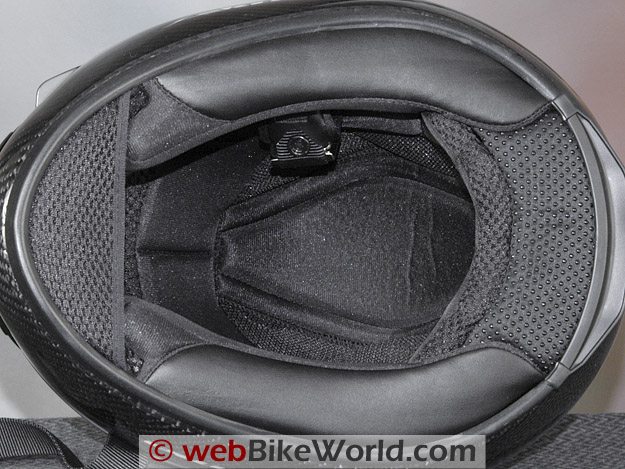
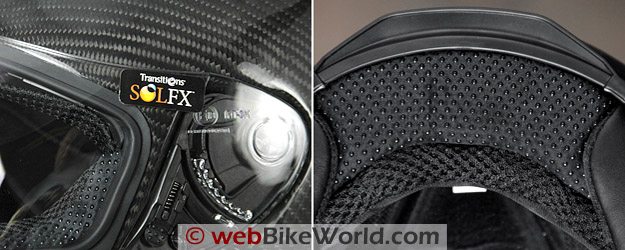
The liner also gets special mention; it features little “grip tabs” on the surface at the rear and in the chin bar.
These consist of tiny dots designed to provide better grip for carrying the helmet (see the close-up photo below); a pretty cool feature that looks different and adds some interest to the liner.
The liner is fully removable and perfectly applied in this example. It’s comfortable and features a special “slick” fabric on the sides and top to add comfort for racing — and riding.
Score: I’ll give the Akuma Phantom II an “Excellent” rating for overall quality, surface finish and clear coat and excellent overall fit and finish. See the ratings descriptions in the summary table at the end of this page.
Akuma Phantom II Helmet Fit. Internal Shape and Comfort
The Phantom II has a fairly neutral fit, which seems to be about the norm for race helmets like theArai Corsair V (review).
The Phantom II tends just a shade to round, which is just fine with me, so we’re placing it in the “Slight Round” category in our revised helmet fit chart (below).
This size XL fits about 1/2 size small, a characteristic that was also confirmed with Akuma.
It does have what we consider to be a shorter than normal front-to-back internal distance, and the tip of my nose just touches the top part of the inside of the chin bar.
I think this may be due, in part, to what feels like thicker than normal padding on the back of the chin bar, in addition to the “grip tabs” lining. It’s not bothersome, but something to mention.
The stiff helmet shell and the shape of the helmet shell, which is slightly tapered towards the bottom, makes it slightly more difficult than normal to slide the helmet over my admittedly bulb-shaped head, but the stiffness gives me a definite feeling of solidity that I would not want to give up.

I’d say the Phantom II in size XL should fit about a 59.5 to 60.5 neutral to round head shape, which is slightly less than what is mostly considered normal for a size XL.
I can fit a pair of wire-framed sunglasses on to my head when wearing the helmet, but of course this will vary, depending upon your head shape and eyeglass type.
The Phantom II is comfortable, with no pressure points or other discomfort that I’ve noticed.
The sizing could be a bit larger for my tastes, and the liner material, while comfortable, doesn’t feel as plush as some others I’ve tried, but the smooth finish on the fabric is better than that scratchy-feeling material used in some helmets.
As always, make sure you try the helmet on before buying, and try a variety of sizes. The smallest size that fits comfortably is usually the safest.
For more information on choosing and fitting a motorcycle helmet, please see the wBWMotorcycle Helmet FAQ page, which also includes a discussion on head shapes.
Score: I’ll give the Akuma Phantom II a “Very Good” rating for conformance to fit and liner comfort.
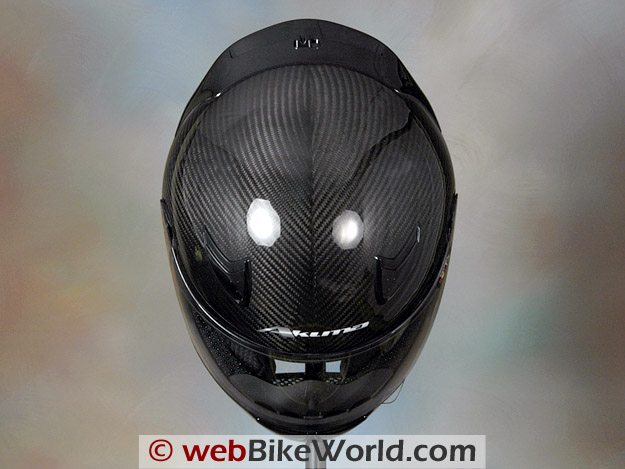
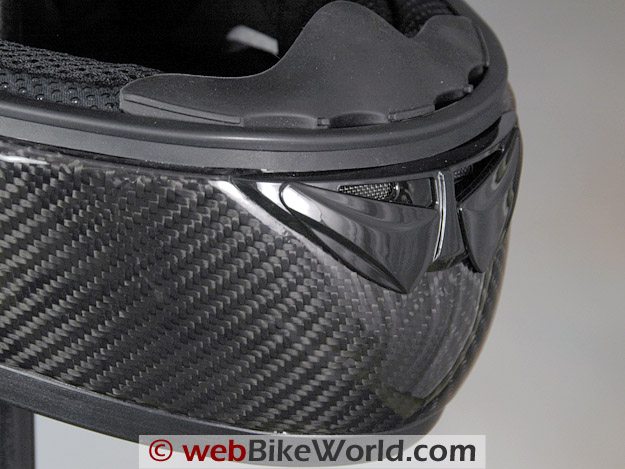
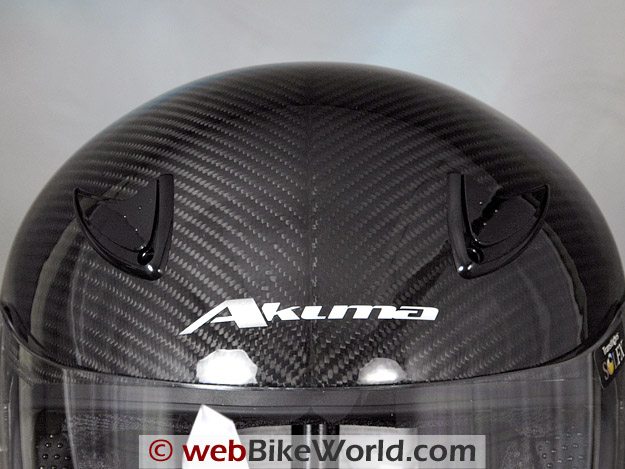
Akuma Phantom II individually operating top vents have small nubs for grip. Chin vents also operate independently and provide a direct path for air to flow on to the back of the visor.
Akuma Phantom II Ventilation
Helmet manufacturers (sometimes) go to great lengths trying to re-invent the perfect helmet ventilation system, but usually, simpler is better.
That’s certainly the case here; the venting system on the Phantom II is straightforward but fairly effective.
The chin vent has two covers with slight indentations that allows them to be pushed down to uncover the screened vent, which directs air on to the back of the visor.
The chin bar does not include a direct vent passage for ventilation, but the twin chin vents are placed high up on the chin bar, minimizing the distance the air has to travel and also eliminating any convoluted channels to direct the air.
Open the vents and the air can be felt coming up the front of the visor and on to your face.
The weather is too warm to evaluate the visor’s anti-fog capabilities, but my guess is that the chin vents should do a very good job of destroying any fogging that might build up on the inside of the visor.
The visor has an initial position for defogging also, and I’ll describe the rest of the visor capabilities in a separate section below.
The twin top vents also open independently and they too have sliding covers that are easy to use. They feature three raised dots on top that provide grip and feel.
Slide the covers back and the vent holes underneath become completely uncovered, directing air in a straight shot through a hole in the EPS liner to the top of the rider’s head.
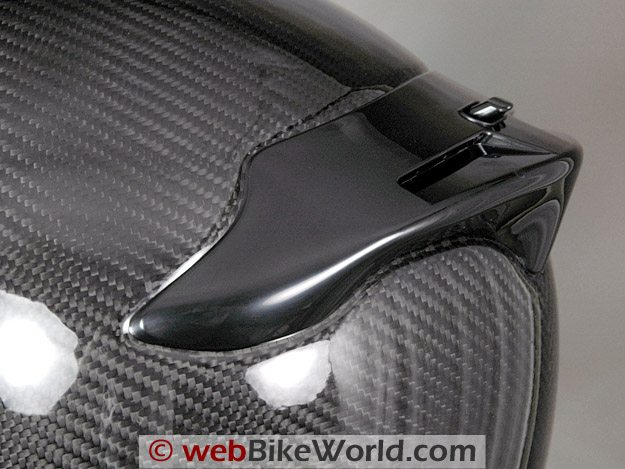
The large rear exhaust vent is incorporated into the one-piece spoiler. It has a slider switch that moves a piece of plastic underneath the horizontal vent openings in the rear; slide left to close and right to open.
I always leave rear exhaust vents open anyway, but the option is yours.
The EPS liner has two large exhaust vent holes in the rear, so the ventilation effectively sweeps over the top of the rider’s head and out the back. In the hot summer riding weather we’ve been experiencing, I don’t feel a direct flow of air on my head, probably due to the relatively thick mesh used in the liner.
But the combination of the chin vents and the top vent/exhaust system works very well to keep my head from getting too hot.
Score: I’ll give the Phantom II an “Excellent” score for ventilation.
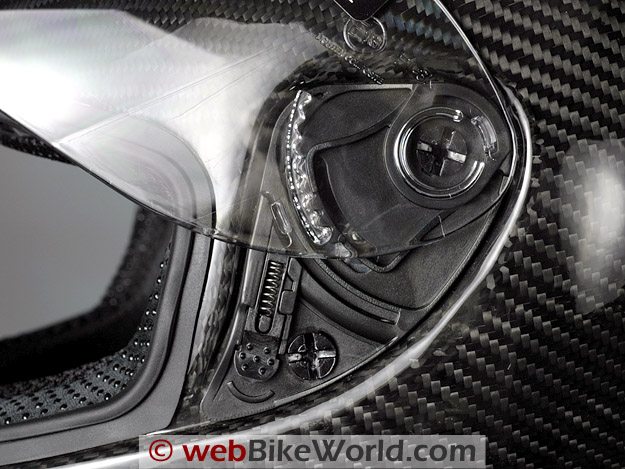
Transitions SOLFX label (L). Nubs on liner provide an anti-slip surface for holding the helmetHelmet Weight
One of the most noticeable and outstanding features of the Phantom II is its almost unbelievable light weight.
This is the lightest size L or XL helmet we’ve ever reviewed.
It’s currently bested only by two helmets we have listed on our Motorcycle Helmet Weights pagethat were evaluated in owner reports, for which we can not confirm the weights.
So in effect, the Akuma Phantom II is the lightest helmet we’ve ever reviewed to date!
This is outstanding, and for anyone who doesn’t think weight is important, just compare the Phantom II to your current helmet and you’ll never want to go back.
It’s a hugely liberating feel to reduce the rotating mass on your head by 25-30%.
The reduced mass is most noticeable when doing over-the-shoulder traffic checks or in turbulent wind conditions; the momentum that can be felt as a helmet gets heavier is just not there.
This, combined with the simple but aerodynamic shell shape, helps to noticeably reduce my fatigue and neck ache.
The size XL Phantom II shown here weighs in at 1367 grams, or just a gnat’s hair over 3.0 pounds even, at 3.0 lbs. and 1/8 oz.
For comparison purposes, some of the Phantom II’s current neighbors on the wBW Motorcycle Helmet Weights page include the OGK FF-4 (L) 1409 grams; the Nitro N1200-VX (XL) 1426 grams; the Airoh S4 (Enduro, XL) at 1445 grams and the SCHUBERTH J1 (XL) at 1480 grams.
Note that some of those neighbors are open-face helmets, which are usually much lighter than their full-face counterparts.
Note also that the Akuma Phantom II comes in near the very bottom at number 3 in our current list of 118 helmet weights, with #1 and #2 having unconfirmed weights and #118 being the heaviest at 1960 grams, or 4 lbs. 5-1/8 oz.
See the wBW Motorcycle Helmet Weights page for the entire matrix and graph comparing the weights of all of the open-face, full-face and flip-up helmets we’ve reviewed.
Score: The Akuma Phantom II gets an “Outstanding” rating for its light weight and balance.
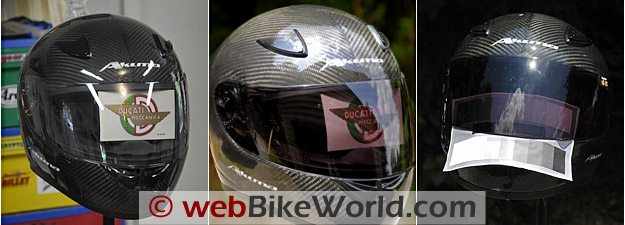 The Shield Transitions SOLFX visor goes from 95% light transmission (L) to full dark (R).
Face Shield and Photochromic Transformation
The Shield Transitions SOLFX visor is another very nice feature of the new Akuma Phantom II; it is installed as standard equipment.
This system was described in the Background section at the beginning of the article, so I’ll focus on its operation and use in this section.
The SOLFX label is used by Transitions Optical for their outdoor “sunwear”, or sunglasses. There’s lots more information about the technology used in this product on the SOLFX mini-site.
But even if the Akuma Phantom II face shield did not have the Transitions SOLFX photochromic feature, it would still be an excellent motorcycle helmet face shield.
It is very rigid, so it doesn’t flex when moving it up and down through the six very firm and very distinguishable detents.
Each lift of the face shield snaps it open at a very defined position, including the initial opening that can be used for defogging or ventilation — the position that almost every other manufacturer can’t get right and which more than a few have apparently given up on even trying to get right.
In fact, we think this is the most secure feeling, firmest face shield we’ve used on any helmet.
That is, the combination of the face shield stiffness and the rotating mechanism just seem to be a cut above anything else we’ve tried. Since this has always been a pet peeve in our helmet reviews, this praise is noteworthy.
The face shield on the Phantom II also has a different removal procedure than most other helmets. Most helmets require that the face shield is lifted all the way up before it can be removed.
The Phantom II face shield can not be removed at the uppermost position, and that is by design. The face shield must be set in the penultimate raised position, then the spring-loaded lever can be pulled down and the face shield pops off the side of the helmet.
This design is intended to prevent the face shield from flying off the helmet unexpectedly during a race, according to Akuma, so it functions as a safety precaution.
In practice, the face shield is very easy to remove and re-install, and the procedure is demonstrated in our video below.
The optical qualities of the Shield Transitions SOLFX photochromic face shield are excellent.
The eye port has what I think is about average sight lines to perhaps just slightly less than normal in side-to-side and up/down periphery, but this may be due to the slightly smaller than normal fit for me.
Score: I’ll rate the face shield clarity, operation and visibility of the face shield as “Outstanding”.
Noise Levels
The Akuma Phantom II is really a no-nonsense, no compromise design, which is very focused on light weight.
So when compared to similar helmets, it’s actually relatively quiet and not as loud as the Arai Corsair V (review) or the Shoei X-11 (review),, for example.
The top vents add some whistling noises at certain angles of attack, and in fact they can be made to give up a rather funny sounding “scream” noise as the head is turned side-to-side.
It literally sounds like there’s a little sprite in there, screaming down the hole. It’s kind of fun to make him (or her) scream, and since it only happens under certain conditions, I guess it’s not that bad.
Both Burn and I have noticed that the helmet has a bit of a gap at the rear, just under the ears.
There’s a low section of padding added to the very rear of the helmet at the bottom, and I think if this was larger or thicker, it would block more of the wind noise that comes from up under the back of the helmet.
I can stick my thumb up there and decrease the sound levels fairly dramatically. This greatly decreases the transmitted noise levels to a point where the helmet is relatively very quiet.
So perhaps a bit more work on this part of the liner may be in order, although depending upon your head shape, you may or may not notice the effect.
Note that our helmet evaluations are a combined effort of several riders over time on different types of motorcycles with and without windscreens.
Evaluators wear correctly fitted, high quality ear plugs (even when evaluating motorcycle intercom systems).
Always protect your hearing when riding a motorcycle. See the wBW Earplug Reviews for more information on choosing and wearing earplugs.
Note also that perceived noise levels will vary, depending on the individual.
Noise can be caused by many factors, including helmet fit, the type of motorcycle and windscreen, wind speed and direction and even the rider’s clothing.
For more information on helmet noise, visit the wBW Motorcycle Helmet Noise page.
Score: I’ll give the Akuma Phantom II a “Good” rating for noise control.
Miscellaneous
The Phantom II uses a double D-ring system for attachment. The snap for the extra length is placed pretty far up under the chin on the left-hand side, above the D-rings, which makes it more difficult than it should be to secure the loose end.
Also, we found the padding under the chin strap to be too thin and too short for good comfort, although again this may be due to the sizing issue or the helmet fit.
The Phantom II is labeled as meeting both DOT and ECE safety standards.
Since the Shield Transitions SOLFX face shield is clear when it’s not exposed to UV radiation, and because it has variable tinting, depending upon ambient conditions, it apparently meets (or sneaks by) the ECE 22.05 or BS4110:1979 standards, which require a minimum light transmission of 50%.
Conclusion
The Akuma Phantom II helmet shows what can be done when attention is paid to weight.
The combination of light weight and the standard photochromic face shield, along with the high quality fit and finish, make this one a standout.
The Akuma Phantom II and the Shield Transitions SOLFX face shield is brand new to the market and is just now available for purchase.
| wBW Review: Akuma Phantom II Helmet | |
|---|---|
| Manufacturer: Akuma Helmets | List Price (2009): $479.95 |
| Colors: Carbon fiber | Made In: Taiwan |
| Sizes: S-2XL Shell Sizes: Unknown | Review Date: July 2009 |
|
Rating Scale is subjective: Unacceptable, Poor, Neutral, Very Good, Excellent, Outstanding.
|
|
Owner Comments and Feedback
See details on submitting comments.
From “T.R.” (February 2012): “I’ve been using my Phantom II on a daily basis now for well over a year. I’m happy to report it remains one of my favorite helmets.
It has stood up to the test of time with only minimal wear. The bottom of the neck curtain is showing some small cracks in the vinyl due to repeated contact with my ‘Stich jacket collar but other than that the helmet appears new.
Comfort remains excellent. I remain convinced that the weight savings of this helmet vs. almost any other out there is its best feature.
The difference in all-day comfort between a 3.0 lb. helmet and a 3.75+ lb. helmet is unreal. I simply will never again be able to tolerate a heavier helmet.
A very close second in terms of must have features remains the SOLFX transitions face shield. I’m so spoiled by that thing now I can’t imagine why more vendors don’t offer it. It simply works great and I’ve had no issues with scratching so far.
Also, it still “transitions” as fast and as dark as when new. I’m going to buy a spare just in case they stop making them but so far the original is rock solid.”
From “H.B.” (5/10): “I ordered this helmet from RevZilla based on very favorable reviews on webBikeWorld and customer reviews there. Unfortunately only one of these was accurate (the one giving it two stars and calling it flimsy).
First shock came when opening the box–the top part of comfort liner was hanging out below the front of the EPS liner under the brow line.
Okay, I thought–somebody forgot to install it? Even the back side clips were not fastened. That was easy to fix, but upon further examination I found two more serious problems:
On one of the chin vents, the wire mesh is missing-it covers just about 20% of the opening. The other one is okay.
On one of the top vents the EPS liner hole does not line up to the opening in the shell vent.
The hole in the EPS liner is barely visible, so I would say that the obstruction of the vent is 99%. Not good for the helmet that got rated excellent for ventilation on wBW!
The minor observation is that generally, the finish of the helmet looks rather flimsy.
There are noticeable imperfections in the shell around the edge of the face shield, and imperfections in the finish of the shell close to the lower edge of the helmet. All in all, the sloppiest helmet I have owned thus far.
Having said that, the helmet fits well (apart from the nose touching the front-but I was expecting, and willing to live with that), and the visor is excellent-all everybody said it would be.
Still, with so many problems found on just one helmet, I can’t but wonder what good will this helmet do me in a 100mph crash on the track? Not that I’m looking forward to that.
This is the second helmet I bought in the period of last two years, based on the reviews on wBW. The first one was OGK FF5, and I’m much happier with that one, apart from the fact that (unfortunately) Akuma fits my head shape better.”
Editor’s Note: RevZilla has a liberal return policy; I suggest contacting them for a refund.
From “C.M.” (3/10): “Best helmet ever !! Got it 2 weeks ago rode twice love everything about the helmet !! Fit and finish is dead on the shield is amazing I will never go to a regular visor!!
Went ridding last weekend when we stopped for lunch my ridding buddies noticed the shield was clear but while ridding the shield was dark, they couldn’t believe it !! This is a very comfortable light helmet !! Thanks guys for the great info on this 1 of a kind !!!”
From “M.S.” (8/09): “I deal with a stiff neck every day and it’s aggravated after riding. So, I went in search of the lightest helmet I could find. Of course, it also had to fit properly and be comfortable. But any other bells and whistles were secondary to being light weight.
I ordered the Shark RSR-2 (review), the HJC FS-15 Carbon (review), and the Akuma Phantom II – all in size medium.
I compared the helmet weights on my bathroom scale with my current Scorpion EXO-700 (review), also size medium. The display on my scale is digital and graduated in 0.2 lb. increments, so the weight differences that follow are not precise but show the general trend.
The HJC was 0.4 lbs light than the Scorpion. The Shark was 0.2 lbs lighter than the HJC. And, the Akuma was 0.2 lbs lighter than the Shark.
The fit of the Shark helmet is more narrow than the HJC or Akuma and there was too much pressure on my cheeks. The Shark helmet also felt like a fishbowl on my head.
The shape of the HJC was a better fit for me but it was a 1/2 size too big. Finally, the Akuma has a similar shape to the HJC, but fit my head perfectly. Therefore, I chose the Akuma based on the fit and weight.
After riding with the Akuma for the past week, the weight difference is definitely noticeable and my neck is much happier.
The aerodynamics of the helmet are also noticeable and I never feel like the helmet is being pushed around by the wind, even when looking over my shoulder.
However, one negative aspect that I notice is that I hear much more wind noise with the Akuma. I guess that’s the price that must be paid for extremely light weight. And, not really an issue when wearing ear plugs. Overall, I love this helmet.
The carbon fiber finish is excellent and the visor sets a new standard.”
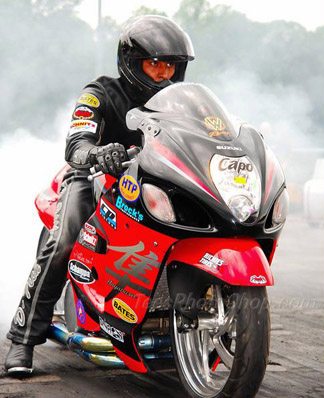
From “Capo” (7/09): “My name is Ashon “Capo” Dickerson and I had the opportunity to test the new Carbon Fiber Helmet out on the drag strip.
On first viewing of the helmet, I fell in love with the look and how lightweight it was.
The way the shield transitions from light to dark blew me away.
When I tested out the helmet on the quarter mile it surprised me how quiet the inside of the helmet was at180mph.
The helmet is very comfortable and is by far hands down the best all around helmet that I have rode in. It is very aerodynamic and the brow line visibility is perfect.
I am pleased to say that I am the first rider to put this helmet in the winners circle.
5 stars for the Akuma Phantom II Carbon Fiber.”
From “P.P.” (7/09): “I like the reviews WebBikeWorld authors. They have been a very valuable resource for me.
This Phantom II sounds like a real winner in many categories. I think it is a great innovation that falls well into the “I can’t believe it has not been tried before” category.
Unfortunately, the photochromatic visor has some caveats. I have worn eyeglasses for a goodly portion of my life and have used photochromatic lenses in them from time to time, so I have a few cautions to offer from my experiences.
Anyone considering purchasing one should be aware of the time it takes to go clear once the sun turns the visor dark. For most situations, this is not a problem.
There are a few times when the lights go out quickly and one should have a plan in place for when it happens.
1) Tunnels
2) Wide bridges
3) Parking garages
4) tree tunnels (when you go from something like an open agricultural field into a wooded area)
All of these situations can impart a startling and perhaps dangerous loss of vision. No, it won’t be complete… but vision will be impaired by varying degrees, depending on the contrast.
One should be able to foresee the situation developing and make preparations.
Slow down, back off from the vehicle in front of you, mark the location of vehicles around you… perhaps be prepared to raise the visor. Your eye adjusts to most changes in 3-5 seconds.
The time constant for photochromatics is 5-8 times as long.
Finally, a purchaser can not discount tunnels and such simply because there are not around their hometown. The one time you go on a long trip, there will be one or more of the caution zones above.
The very unfamiliarity of how dark a tunnel can be when in sunglasses can exacerbate the problem.
I don’t want to call photochromatic lenses dangerous. I think its a great idea and I can’t wait for it to get more widespread. I’m simply imparting that there are some considerations for which one needs to be prepared.
Keep the knowledge that suddenly dark areas can cause a short spike in risk and keep a lookout for them. Have a plan in place and you’ll never be surprised. Then the photochromes will be no more dangerous than truck blast… startling, but not dangerous when you know what to expect.
Now if someone could come up with a visor that darkens under a low electric potential, like the newer autodarkening welder’s masks….. THAT would be something.
I hope this is worthwhile for your readers.”
Editor’s Reply: I guess you missed our review of the Akuma Gemini electrochromatic visor that darkens or lightens instantly with battery power!
From “K.H.” (7/09): “Just read your review of the new Akuma Phantom helmet and I have to say the review is very well done. I just bought this helmet and have put in about 360 miles on it already.
Like your review says, once you wear this helmet everything else seems like a ton of bricks on your head. It just cuts through the wind at speed with no buffeting at all and it seems to stay in place even at speeds over 100mph.
This is probably due to the large wing on the back.
The helmet is very comfortable and I really like the smooth liner. The carbon fiber is perfectly laid out on the helmet and really pops out in the sunlight and goes with my black GXXR perfectly and with my CF pipes.
I haven’t noticed the whistling noise you mentioned but I ride a sportbike and it may be different if you ride a taller bike. I would like the nose guard to be a little smaller though but I’m splitting hairs here.
Now for the visor. WHOOOOOOOA NELLY!!!!! It’s about time. This visor is the best visor, in my opinion, on the market. It goes from completely clear to a dark smoke in no time flat and adjusts meaning the tint gets lighter as it gets darker outside.
It’s also from Transitions so you know you are getting the best tinting tech available, owners of Transitions glasses can testify to this. Removing the visor was confusing at first as I didn’t read the instructions and was used to putting the visor all the way up.
Yes, one click down and pull on the lever and its pops right off. To put it back on, you just have to slightly push it in. I would be very interested in knowing how Akuma could do this and not other manufacturers.
I have recently retired my Arai Corsair for this helmet as Arai simply does not compare with this helmet with regards to weight, aerodynamics and the visor and I paid $730 for my Arai and $498 after tax for the Phantom.
Just my opinion but I would suggest your readers give this one a good look before spending their money on other helmets, but be careful though. Once you wear this helmet you won’t want to wear anything else. Just my 2 cents.
Very satisfied customer.”