

R.T. fought the law and the law won. He learned some interesting lessons along the way. What went wrong? What could or should have been done differently? How would you have handled the situation? Let’s hear from both sides — motorcyclists and Police Officers!
More: Comments (Below) | wBW Reviews Home
Traffic Court
Yesterday I arrived in traffic court, where I decided to contest a fine for an “Obscured Tag”. That is, my motorcycle’s license plate was said to be not visible.
What surprised me was that despite the fact that I had photographic evidence in my favor, all it got me was a reduced fine.
While I am glad that my fine was reduced, I found myself leaving the court room discouraged, puzzled and insulted. And I am certain that the officer left there with an even bigger ego trip than he came in with.
What is the purpose of the State Statutes? I think the reason the State Statutes exist are to provide a set of rules to bring order on the streets. I believe they are needed for that purpose and that purpose only.
But my experience yesterday showed me that the complex verbiage of some of the laws might be intentionally written to confuse the average citizen, without regard to whether or not the text applies to an individual’s case.
In my case, I was fined for violating State Statute 316.605; in the remarks field, the Police Officer wrote “Obscured Tag”
So before I begin, let me explore the word “obscured” as defined by www.thefreedictionary.com:
-
Deficient in light; dark.
-
So faintly perceptible as to lack clear delineation; indistinct.
-
Out of sight; hidden.
-
Not readily noticed or seen; inconspicuous.
That out of the way, let me give a quick recap of how the day started…
The Judge first asks that you pay close attention to the cases preceding yours. This is so that you might have a better understanding of how to behave without him saying, basically, “LEARN HOW NOT TO INCRIMINATE YOURSELF!”
That’s a tip to you, readers — it is in all caps because it is very important! I witnessed how in case after case, people did just that.
In case after case, excuses where interpreted by the Judge as “DISTRACTIONS” and he attempted to sympathize.
I will give him credit for his acting in caring. I was not fooled.
The rest of the day featured a traffic lawyer representing other fines. If you are wondering if a lawyer is worth it, I can tell you that for big fines they are. He had access to summon logs and other paper work from the Police Officers.
However, for a measly $85 fine like mine, in which I had clear proof of the legibility of my tag, I didn’t need one. Even after not getting the charges against me dropped, I discovered that it is still cheaper to pay the fine than to hire a lawyer!
But not to deviate from the point I am making, lawyers are worth it and they are viewed in court as “Trained Professionals”. More on that later…
The most disgusting part of the day was to see people with wreck less driving violations get their cases dismissed because they had a lawyer or the officer did not show up. That didn’t sit well with me, I was there to contest a BS ticket, & my officer showed up. Despite that, after a few cases I felt confident there was no way I would loose… I had pictures… no one else had such evidence.
Finally my turn comes up and it goes by the book: You are first asked to plead: “Guilty, Not Guilty or No Contest”.
There is a reason for this — it is my honest opinion that in traffic court you are GUILTY until proven innocent. I say that with confidence because unless you have a lawyer, the Police Officer is the only “Trained Professional”, in the Judge’s view.
You are just a motorist trying to weasel out of the traffic violation you are guilty of. Since you are not a “Trained Professional”, your word is meaningless.
I was able to deduct that it is virtually IMPOSSIBLE to get a judgment in your favor unless you have clear evidence. And even if you do — like I did — you better also have a lawyer that is a “Trained Professional” at interpreting the complex verbiage of the law…in this case, the State Statutes.
Pleading “Guilty” is self explanatory, but “No Contest” means you are not admitting to the offense, but are given the chance to ask that point not be assessed. You either pay the fine, ordered to take the traffic school, and/or court costs may be imposed.
Pleading “Not Guilty” means you will be able to question the Police Officer, then address the Judge. That’s about it. Remember who the “Trained Professional” is here…and don’t get your hopes up.
Next, after your plea of Not Guilty (which I did) the Police Officer gets to speak first. They are very detailed; they name the time, the date, the road names and they specifically say they did everything as their training demands and they never admit to any mistakes on their part.
No big surprise, really — except that this is a huge advantage for them. Being the “Trained Professional” means that if there is a conflict in testimony, the officers get the benefit of the doubt.
During the traffic stop I had asked the Police Officer a few questions regarding the stop. He refused to answer, and my persistence was deemed irate behavior.
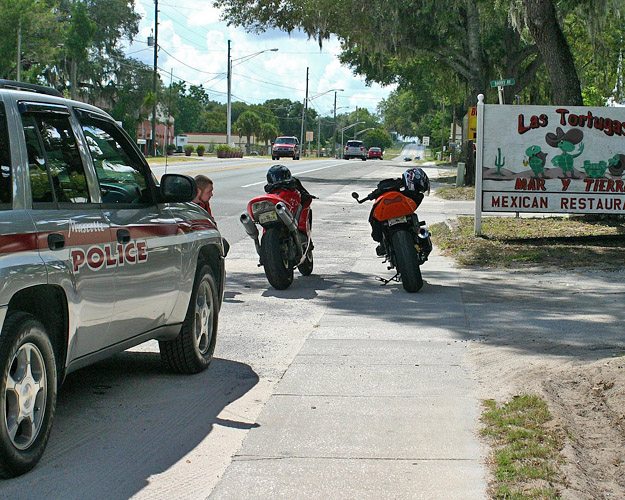
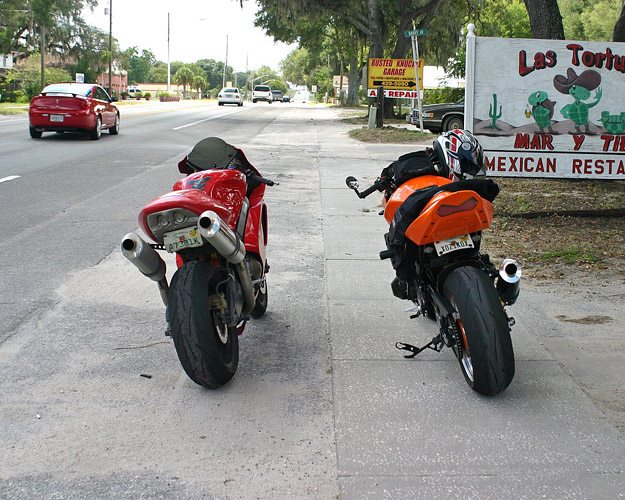
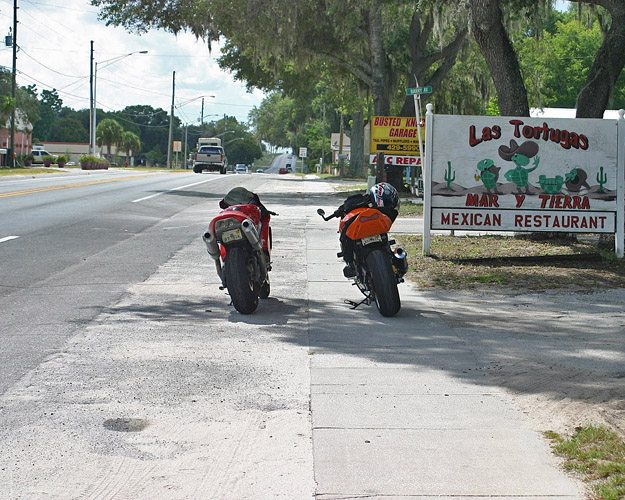
I must point out that I was holding a semi-professional SLR digital camera in my hand at the time (that I could probably shoot better that the officer could shoot his weapon). Answers to my questions would have provided me with information during the stop that would have facilitated me taking pictures to prove him wrong.
Nevertheless, I did all I could and as it turns out, the officer could not dispute my photographs in court…and you bet your hind ends he gets a chance to dispute them first.
After the officer speaks, you are given a chance to question the officer. I kept the questions brief — too many questions will result in the Judge interrupting you, especially since the Police Officers can lie because they are the “Trained Professional”. I know we can lie too…but guess who is allowed to and who isn’t?
After I was successful in getting the answers I needed out of the Police Officer, I proceeded. It was obvious that he lied on one of his answers, but I quickly dismissed it rather than jump to the bait to argue with him. Got to stay on your toes or these “Trained Professionals”, or they will quickly turn things against you.
After that the Judge gave me an opportunity to plead my case. I simply told the Judge that I had evidence for him to see that proved that my tag was legible, and that is why I was there.
The Judge asks the officer to look at the photos first. I watched intently as he looked through them and I saw his look of defeat when he realized how legible the photographs turned out and that I included his vehicle in on of the photos.
Now I was starting to feel pretty confident. The Judge then looked at the photos and hands them back. BUT, he isn’t convinced for some reason, so he asks for them back.
He takes another look and he hands them back. He then pauses and starts flipping through the State Statutes and he reads 316.605.
He asks for my photographs one more time and he looks at them and then looks at the book and goes back and forth like this as he carefully reads through every piece of verbiage in the statute.
The legibility of my tag by this time was no longer in question — what the Judge did was to make sure that even though my stop was for legibility of the tags, that my tag did not violate any other aspect stated in the Statute.
Finally, he nails me for my tag “Not being visible from 60 yards”. The photos were taken from as far away as 50 ft. and my bike was next to another that was NOT fined, because the tag was supposedly being properly displayed.
Nevertheless, the fact that neither tag was legible from 50 ft. was IRRELEVANT, because the other vehicle was not on trial!
“How you like them apples?” Needless to say I left with my intelligence insulted. Short of a lawyer (another “Trained Professional”), I could not have presented my case any better.
In the end, the Judge imposed a fine of $50.00, reduced from the original $85.00. I’m not sure why — I didn’t ask for leniency. I did ask for a chance to correct it, but he said I waved that right by pleading not guilty. And in the end, no instructions where provided to make the impossible happen — the impossible being the ability to read a motorcycle tag from 100 ft.
Is it really impossible? Absolutely! I have 20/20 vision, and the letters on the motorcycle tags are 25.9 mm tall and the size of the letters on a vision chart at 60 ft. is 27mm. In other words, for an officer to be able to see a properly mounted tag from 100 ft., he has to have better than 20/20 vision.
Should I note that both the “Trained Professionals” (The Judge and the Police Officer) both wore eyeglasses? That’s probably irrelevant — their eyes are trained to see better than 20/20.
Conclusion
In my honest opinion, if you plan to contest a fine, go in there only with the hope of getting your points removed and just pay the fine. That is, just plead “No Contest” and ask to withhold adjudication.
But here’s the trick, and my advice to you: When requesting a hearing, you have a chance to plead. In most states, the only way to get a court date is to plead “Not Guilty”. Do it and this will automatically require the Police Officer to court to testify against you. There’s a good chance that he or she will not show up, due to scheduling. If this happens, you’re in luck! Case dismissed!
But if the Police Officer is present, you will still get a chance to plead again in court. Now plead “No Contest” and ask to withhold adjudication . Your driving record will be reviewed, and based on that the Judge may or may not assess points… Good Luck!
Hopefully this serves everyone with useful information regarding traffic offenses; if so, I think my time and effort was worth the experience. However, the next time I get a B.S. ticket for my tag, I will just pay it. My time is worth more than trying to fighting another small fine.
ADDENDUM From R.T.: “To the readers I would like to point out that on both tags the letters of the tags in the pictures are in between the mounting screw holes.
Mine, the orange bike, has 7 letters that are clearly smaller than the bike on the left which has 6 letters.
This is a state issued tag. And as such even if mounted behind the rear tire, it’s impossible to see from beyond 50 ft.
What we need to pay close attention to here is the fact that I was fined for something that is impossible to achieve whether mounted properly or not.”
Date Published: June 2008
Note: For informational use only. All material and photographs are Copyright © webWorld International, LLC – 2000-2011. All rights reserved. See the webBikeWorld® Site Info page. NOTE: Product specifications, features and details may change or differ from our descriptions. Always check before purchasing. Read the Terms and Conditions!
Owner Comments and Feedback
Not all comments will be published (details). Comments may be edited for clarity prior to publication.
From “R.Z.” (12/10): “I feel that officers who are issuing tickets for such trivial violations should be supervised closer. The officer who issued a ticket for the obscured plate should observe the better officers who use such minor violations as PC to check for more serious violations such as Suspended/Revoked license or maybe insurance. If everything checks out issue a verbal or written warning and don’t waste the courts time and the taxpayers money.”
From “R.T.” (10/09): “The ONLY way to beat a traffic citation – guilty or not – is if the officer doesn’t appear in court. You assured that the officer wouldn’t dare miss your court date by snapping the photos and implying that you intended to fight the silly citation.
The thing to do is play it cool and be apologetic. Plead ignorance and even thank him for helping you abide by the law. Leave him with the impression that you intend to pay the fine and correct the problem as soon as you get home. Be down right humble. Take yourself off his ‘radar screen’ and do not feed his natural desire to show up in court, make you grovel, and show you who is boss.
Then do everything in your power to make it tough for him to be there at the same time. I call it, “throwing them a scheduling curve”, and it does work a good percent of the time. Here’s the skinny:
Cops hate court days with a passion. They will only make court appearances a day or two a week, on their own terms, and plan it in advance so they can screw as many victims at a time as possible. They, like everyone else, will have made their own plans for the other days in a particular week.
Therefore, always wait till the day before your court date and call to reschedule it. If you are crafty, and willing to fight fire with fire, this is very easy to pull off. Being involved in a last minute ‘accident’ leaves them totally defenseless.
Don’t make it a spectacular event. Slipping in the bath tub is as effective as a fiery crash if you tell them you are bedridden. You can even show up on the rescheduled date wearing a garage sale neck brace for sympathy points. The old ‘dying loved one in another state’ routine also works well. Keep in mind that anyone who loves you will want you to escape the travesty of this stupid ticket.
You’ll never be asked to verify your excuse for a traffic citation. That’s just how the system works. Trust me, they will not waste a single resource in pursuit of a lie over a ticket. However, if this bothers you just stick to the completely unverifiable ‘fell at home’ routine.
Remember, it is you and yours against the “system” which already gets plenty of your hard earned cash. Think of all those government employees who sit around and draw a big, fat paycheck at your expense. That $85 dollar “traffic tax” will buy your kid some nice school clothes or add to the college fund. The state should learn to spend wisely and stop thinking of ways to take more and more from peons like yourself. The time to protect your family’s welfare and beat a cop at his own game is BEFORE you both are in front of the judge. Only he can win a lying contest at that point.”
From “M.W.”: “Where are the mirrors on the red motorcycle?
My way of avoiding motorcycle tickets is simple. Until the police officer is “clearly” behind me, blue lights on, and attempting a pull over, I take evasive measures. If I am the only guy on the road or the officer wins the initial battle, I slow down, acknowledge him, and pull over only after I am certain it is in fact a law enforcement officer.
Unmarked traffic enforcement programs are stupid, revenue schemes, and pose a danger to the public. If it is an unmarked vehicle, I will slow down, acknowledge, then verify with dispatch using my intercom and cellular that an officer is attempting to pull me over.
Most times a pull over might have been attempted, I see the officer before he even pulls out. If possible, I take a few knee dragging turns and ditch him. If he gets out with his lights on in time, I just pull over and pay the ticket. In Florida, you can be a real knucklehead and still have a license.”
From “M.N.”: “Today I read “RT’s” amusing article about how he “got screwed” in the Florida court. I am a police officer in Texas and I thought I would give a “police perspective” to even out the balance for all the law-abiding, motor cycle-riding, readers.
I have been a police officer for 23 years and I have been riding since I was 8 years old. I am a motor cycle officer and our sole responsibility is to vigorously enforce traffic violations, so as to favorably alter the bad driving habits of violators, in an attempt to reduce accidents and fatalities. Additionally, our unit is activated to investigate fatality accidents to determine the causes, speed calculations, etc… Our main goal is simply to save lives.
As a Traffic officer, we frequently encounter sport-bike riders, most of who ride responsibly but some others that ride like knuckle-heads. The knuckle-heads I’m referring to are the ones who you see going mach 3 with their hair on fire, riding wheelies with one foot on the seat and weaving in and out of traffic. These guys are well know to “hide” their license plates behind their back tires and I often see them riding wheelies through toll road gates so that pictures can not be taken of their license plates. Conservatively, I would estimate that, given just a little head start, 40% of these bikers run from us. At least 2 to 3 times a week, it’s not uncommon to see a pack of bikes riding at well over 100 miles per hour on our highways.
So, as a result of these riders giving all the other riders a bad name, we target the ones who break minor traffic laws to check to see if the M/C is stolen, that the rider has a M/C license and all his other papers are in order.
The motorcyclists who have their plates properly positioned and are not breaking any laws, we don’t mess with. A large group of the sport-bike riders install after-market pipes that cause them to have to move their plates under the fenders or behind the tires. When I am on patrol, I look at the rear of EVERY sport-bike to see if they have done this. It is my opinion they do this “hiding” technique so that other motorist can’t get their L.P.s and report them for reckless driving and so that they can run from us with less chance of us getting their tag number.
As a result of the reckless driving of these guys, I, as well as a lot of other officers, have declared them traffic’s public enemy #1. For the readers who live in Texas, state law requires the following under the Transportation Code under section TRC 502.404 (c) and reads the following:
§ 502.404. OPERATION OF VEHICLE WITHOUT LICENSE PLATE OR REGISTRATION INSIGNIA.
(a) A person commits an offense if the person operates on a public highway during a registration period a passenger car or commercial motor vehicle that does not display two license plates, at the front and rear of the vehicle, that have been: (1) assigned by the department for the period; or (2) validated by a registration insignia issued by the department that establishes that the vehicle is registered for the period.
(b) A person commits an offense if the person operates on a public highway during a registration period a passenger car or commercial motor vehicle, other than a vehicle assigned license plates for the registration period, that does not properly display the registration insignia issued by the department that establishes that the license plates have been validated for the period.
(c) A person commits an offense if the person operates on a public highway during a registration period a road tractor, motorcycle[0], trailer, or semi-trailer that does not display a license plate, attached to the rear of the vehicle, that has been: (1) assigned by the department for the period; or (2) validated by a registration insignia issued by the department that establishes that the vehicle is registered for the period.
For all your readers out there who ‘Live to ride and ride to live” safely and responsibly, I appreciate you and I wish the best. Keep the rubber side down and stay safe!
For the knuckle-heads I’ve previously described, look out because it’s just a matter of time before we stop and arrest you for driving like idiots…
Just for the record; there are several times I stop these “hidden license plate” riders and give them verbal warnings to fix their plates. The reason for this is because we no longer have “repair option” citations and the fines are about $150.00. A lot of it is about attitude…”
From “PMG”: “Guilty! As a police officer in the state of Georgia you are guilty of having an improperly displayed license plate on the grounds that the state of issue is unreadable. The term that would be written on the citation is “obscured” — this is the same citation that I issue for people with large license plate covers professing their love of cats, colleges, etc. In those cases because it conceals the expiration and county information.
Now why would a police officer be so picky? Well if you didn’t flick him off as you passed, probably because the theft rate of sport motorcycles makes it an easy arrest if you simply run all sport bike tags. You are going to find one stolen eventually, so if your tag is obscured what are you trying to hide, lets find out.
As for traffic court, it has been said a number of times, no you’re not guilty, but the only thing the judge cares about is did you commit the cited infraction. Everything else is simply a factor for the fine.
Thank you for another enjoyable article.”
From “F.M.”: “Having been to traffic court on multiple occasions (I have not always had a sterling driving record), I know that you cannot “win.” Winning means that you came out better than you went in – and I’ve never gotten the courts to give me money or take points off that I already had. Nor have I ever convinced the insurance company to lower my rates because I beat (yet another) speeding ticket, reckless driving ticket, etc. At best, you can break even — assuming that you place a value of $0 on your time and aggravation, that you did not miss time at work, and that it cost you nothing to get to court and back home again.
Which brings me to the point: Why risk tickets for modifications that don’t increase the performance, comfort, safety, or resale value of the motorcycle? If I eventually get hauled into court for doing triple-digit speeds, I don’t need the judge looking at two pages of convictions for things like illegally loud mufflers, non-DOT mini turn signals, obscured tags from “fender eliminator” kits, or blacked-out windscreens. Do I really want the judge who is about to impose a sentence thinking that my history of petty violations shows a general disdain for the law?
I like having a rear fender. If I ride on a wet road, the fender keeps the tire from flinging muddy, greasy water all over the back of my jacket or backpack. It keeps the rest of my bike cleaner. It keeps my bike from kicking up gravel and breaking windshields. In an accident, it might be the thing that keeps me or my passenger from being chewed up by the tire. It’s not like the average sport bike fender weighs 20 lbs., so there’s no big weight savings to be had by pulling the fender and, besides, it’s not like shaving ounces off of my bike is going to make me a serious challenger to Valentino Rossi.
If you want to spend money on sport bike mods, spend it where it makes a difference: Aftermarket shocks and forks or re-valving of the stock components, camshafts, FI remapping, flow-porting heads, better (but DOT-approved) brighter headlights, headlight modulators, better seats, high-end clutch and brake levers, etc. Those things won’t get you tickets and will actually improve the bike.”
From “P.V.”: “I’ve been a police officer for ten years, a rider for twenty, and I’ve been to traffic court as both. With regard to the facts of the case, I don’t think I could add anything to the superb response by “R.S.” (below). I would make one suggestion to R.T. regarding future court appearances: if the barely concealed contempt for law enforcement displayed in his writing was equally apparent in his testimony, that’s probably best avoided in the future.”
From “D.D.”: “I believe those are Florida plates. (Editor’s Note: They are). Now I’m not a cop or lawyer. But every car, bike and trailer I’ve ever had came equipped with a light, either separate or part of the brake light assembly, to illuminate the plate. Neither of the bikes depicted seems to have OEM mounts for the plate.
I’ve personally never seen an undertail that I would even image to be legal. Perhaps one of you readers knows about this…But I see at least three things that are of I believe dubious legality on each bike and might cause a cop having a bad day to pull ’em over.
First, I think that the plate has to be mounted within 10 degrees of vertical and mounted as far aft as feasible. Second is the illumination issue. And third is the minimum distance (I’m sketchy on this. I’ve heard anywhere from 10 to 16 inches) between turn signal centers.
Never mind the fact that those pipes sure don’t seem stock… Don’t get me wrong…I sympathize with ya man. Getting tickets for little chicken crap stuff like this sucks. But, as soon as we start modifying anything we run the risk of attracting unwanted attention.
As to the whole court experience: I’ve gone to court twice. The first time was in the mid ’80’s when I got a speeding ticket, on my brand new super trick FJ600, crossing the GG bridge doing 70mph. I told the judge that I was following the manufacturers break-in guidelines. Showed him my owners manual and he smiled, told me to slow down and dismissed the ticket.
The second time was about five years ago. Same deal, different bridge. Told the judge that as it was early and still dark that I was trying to keep up with the flow of traffic so as to not get run down. That was actually true. The judge asked me If I’d ever gone fishing. I gave her a confused yes. She said “the fish you catch isn’t any better or worse than any other…It’s just the one to get caught”.
I guess the lesson is to be as inconspicuous as possible. And as the other writer said — the best way to insure justice is to stay out of the whole quagmire that is our legal system. The outcome really is a crapshoot.”
Editor’s Reply: I’m definitely gonna have to remember that one about the owner’s manual! 😉
From “L.W.M.” : “In regards to the conclusion drawn by the author of the article: “In my honest opinion, if you plan to contest a fine, go in there only with the hope of getting your points removed and just pay the fine.”
If everyone just pays the fine, you’re just feeding the machine. If you honestly feel you were unjustly accused, go to court and plead as much. If you don’t get satisfaction, start writing to your representatives. If the courts get backed up with people waiting to fight their BS tickets, I’ll bet you that the tickets won’t be handed out as easily. If enough letters show up on the representatives’ desks, you’ll see those dumb statutes changed. But, if you’re not willing to stand up and fight for what you believe to be right just to save a few bucks, you get what you deserve.”
From “JP”: “As a police officer for 23 years and a bike rider for 32 here are my comments. As other have stated, there is a huge difference in the quality of judges you will get on any given day. I’ve seen everything from judges dismissing every ticket as long as the defendant said “I’m sorry. I won’t do it again”, to judges that will always believe the defendant is guilty, regardless of evidence presented. In some cases, you don’t have to be good at law, you just have to get elected/appointed to be a judge.
In Illinois, traffic violations are considered “absolute liability offenses”. This means you either did it or you didn’t do it. Excuses, like “the speedometer was off”, “I wasn’t going as fast as the officer said I was”, “no one else was using their turn signal”, are just that, excuses. They are not proof that you didn’t do what the officer said.
So, your complaint that your friend’s bike wasn’t ticketed…….doesn’t matter. The judge was correct in saying you friend wasn’t on trial, you were. I would venture to say the officer didn’t think your friend’s bike was in violation. It is also common knowledge that police officers don’t have to look very hard to find violations. They are all around and easy to spot. The question some judges have is “Why would the officer make something up?”
If you truly caught the officer lying under oath, and you didn’t call him on it, shame on you. I have no use for officers lying while under oath and neither do the judges/officers I’ve worked with. As others have pointed out, the only person considered un-biased in their testimony is the officer. Proving the officer was lying will wreck their credibility and probably get your case dismissed without question.
Also, I learned a long time ago not to care about the outcome of a case. I’ll show up, testify honestly, and at that point, my job is done. I have no personal interest in the outcome. I don’t get a bonus if the case is won and I don’t lose money if the case is lost. I do get paid overtime to go to court if it isn’t my regular shift, but frankly, if I’ve been working the midnight shift, I’d rather be in bed.
You didn’t like the fact the judge ignored your evidence. Well, it is his job to evaluate that evidence and see how it applies to the case. It is what he/she is paid for and for the most part, they do just fine. However, every call they make will make someone happy and someone angry.
This time by making the call he did, he made you angry. I don’t know the details of the violation, but it is always a good idea to look up the particular section you were cited for and see the particulars of that law. You may discover you are completely in the wrong and that will save you the trouble of going to court and wasting your time.
If after you look up the section you still decide you want to go to court, that is your right and no police officer I know of will mind at all. Accept the fact you might not win and you’ll have a better day, regardless of the outcome.”
From “R.S.”: “I just read “R.T.’s Court Date” and I thought that I would offer some comments. I’m an attorney, and I spent several years as a pro tem judge, sitting on the traffic court bench at least 100 times in the county in which I used to live. I’m also a long-time motorcyclist, and like everyone else, I hate getting tickets.
The article doesn’t mention where this all took place, but judging by the color of the license plates on the motorcycles, I’m guessing that it took place in California. That is where I live also.
I’ve practiced law for over 20 years, and I’ve lived in several different cities in California, and I can tell you that traffic court can vary quite a bit from one county to another. You can’t generalize too much, even if you are just talking about California.
I’ve been in traffic courts in California where the judge is quite intelligent and well versed in the law, and goes by the book, and I’ve been in traffic courts where the judge is an idiot (sometimes just a young local volunteer attorney with no concept of what the state traffic code says) who did just about whatever they wanted to. Sometimes I’ve seen both in the same county. It’s a crapshoot.
During my lifetime (and I’m getting to be a graybeard), I’ve seen traffic court go from being a very serious place where justice was meted out in a very similar manner to how it is done in criminal court, to a place where many of the rights that you would expect when going to court have been eliminated.
In California, most traffic violations are now classified as “infractions” and that means that you have no right to a trial by jury. You still have a right to compel parties (usually the police) to give you the evidence you need to help you prepare your case for trial, but things are done in a very relaxed manner, and if the police are not cooperative, you often have little recourse.
If your judge in traffic court acts like Napoleon, there isn’t much you can do about this that will be of any significance. (As a new, inexperienced, attorney I once appealed a traffic court case , where I was the defendant, to the Appellate Court, and after putting the equivalent of many thousands of dollars worth of attorney time into it, the case was simply sent back to the original traffic court judge to do with as he pleased.)
While all of this erosion of our rights in traffic court annoys me, part of me says that it is our own darn fault, because none of this could have happened it we hadn’t allowed our elected representatives to do it, and it couldn’t continue if we as citizens made a fuss about it to our elected representatives. As I see it, you wouldn’t be entirely incorrect to consider a traffic fine to be a random tax that you have incurred. In fact, it might be more productive to consider a traffic fine that way.
I can tell you that often you *can* handle your own traffic court case without the help of an attorney, and that you *can* win, if it is a meritorious case.
Just using the popular Nolo Press Book “Fight Your Ticket & Win in California” can improve your odds significantly. But that book doesn’t tell you a few extremely important things:
-
If you go into traffic court and act like you are an attorney, you are going to look like an idiot, and it is unlikely that you are going to win your case.
-
If you go into traffic court with the belief that the law is the way that they portray it on television, you are unlikely to win your case. What do I mean by this? I mean that folks who watch TV, even just the news, not just drama shows, think that people can BS their way through a trial, and find some sort of cute technicality to have their case thrown out.
This doesn’t happen in traffic court. (It doesn’t happen as often as TV would lead you to believe that it does in other sorts of legal proceedings also, but that’s another story.) You either committed the infraction or you didn’t. The judge isn’t likely to consider anything other than this.
-
If you are the defendant (the person who got the ticket), you *never* think that you have done anything wrong. It’s called denial. It is very rare for someone to actually have a meritorious case in traffic court. And your friends and loved ones aren’t going to point out that you don’t have a case (not unless they are
masochists).
Oh, one other thing: Pleading guilty, in hope that the police officer won’t show up to trial, is not a good idea. First, in most places in California, the officer is paid time-and-a-half to show up for trial. So they almost always do. And the court can put you at the end of the calendar to give the officer time to show up, if they care to.
At the risk of offending, let me give you my take on what happened to “R.T.”:
I assume that R.T’s bike is the orange one (his article doesn’t say). The red bike has its license plate, as far as I can see, in the OEM position, under the taillight, oriented vertically so that it is easy to read.
The orange bike has the license plate placed far forward, practically in front of the rear tire. It is also mounted at an angle, making it harder to read. I’m sorry to say this, but fitting your license plate like this strikes me as asking for attention from the police. It looks like you have gone out of your way to make your license plate harder to read (whether this was your intention or not).
Once you got the attention of the police, the traffic court judge wasn’t really in a great position to be able to bail you out. (If I had been your traffic court judge, I probably would have wanted to bail you out, but it seems unlikely that I could have.)
The judge’s job is to determine if you were guilty of the infraction you were charged with. My guess is that he didn’t have your bike to look at personally. So he had to go by the pictures you offered, and the testimonial evidence.
I don’t know if there were other photographs offered other than the ones published. Going just off the photos that I have seen, it looks to me as if your license plate might be hard to read from 50 feet away, just as the police officer claimed. (I can almost make out the plate on the red bike in the top photo, but there isn’t a chance of making out the plate on the orange bike. You might actually have had a better case if you had taken pictures without your friend’s bike in the picture.)
The photos don’t contradict the police officer, and it appears that you didn’t offer any evidence that would dissuade the judge otherwise. (If I were in your position in court, I might have actually asked the judge to go out in the parking lot and see the bike for himself. If you had gotten me for your traffic court judge, I would have been happy to do so.)
While you may feel that it is a close call as to whether or not your license plate was legible from 50 feet away, the judge had to go by your photos, and the testimony of the officer, who is considered to be an impartial witness.
(You, on the other hand, are not considered to be an impartial witness…and to be honest, a defendant just about never is impartial with regard to their own case. It may be a fallacy that the officer is impartial, but on the other hand, he/she has his choice of countless clear violations to give citations for all day long. He/ she doesn’t want to make his/her own job harder by citing people for hard to prove violations. So, as a judge, you have to assume that the officer was trying hard to find clear-cut violations.)
Is there a huge subjective component to this entire process? There is no arguing that there is. Is the entire process set up the best way possible and is it as fair as possible? No way. Could the system be reformed? No doubt…and I wish that people cared enough to bug their representatives to do so.
Were you, R.T., screwed by the system? I’m afraid that I don’t think so. Even if you have never read the California Traffic Code, I’m sure that you know intrinsically that the police really like to be able to see your license plate, and see it well.
You had to go to a decent amount of trouble to relocate your license plate to where you did. No OEM motorcycle comes with its plate mounted anything like how you mounted yours. No OEM motorcycle mounts its plate ahead of the front tire, and no OEM motorcycle mounts its plate at more than the slightest angle off vertical. You had to have a sense that relocating your license plate might draw some attention from the police. This is no different than the folks who put huge ape-hangers on their bikes, or who put ear-splitting glass-pack mufflers on their bikes. Y
ou may be able to get away with this stuff for a while, but you have to know that you have painted a big target on your back. These modifications would come OEM if they were legal.
Also, let’s look at this in the scheme of things: This is an equipment violation, not a moving violation, correct? No points were put on your record as a result of this, and the judge was reasonable enough to reduce your fine. Your random tax was a lot less than it is for some of the rest of us. (Try living in a county where they use automated traffic cameras to give fines for moving violations to hundreds of folks a day. In my opinion that is a tax system gone
haywire.)
In the end, I think that you have to take some personal responsibility for your own actions. The system has its faults, sometimes they are huge faults, but you didn’t do what you should have to keep yourself out of the system.
Among attorneys, there is a saying: “Justice is the thing that the party who lost didn’t get.” The best way to get justice is to keep yourself out of the legal system entirely.”
Other WebBikeWorld News Posts