

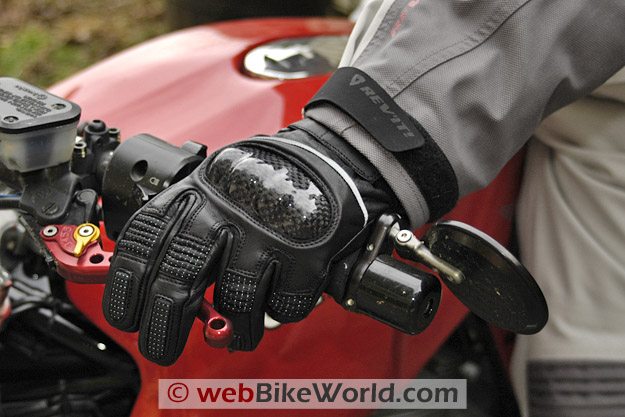
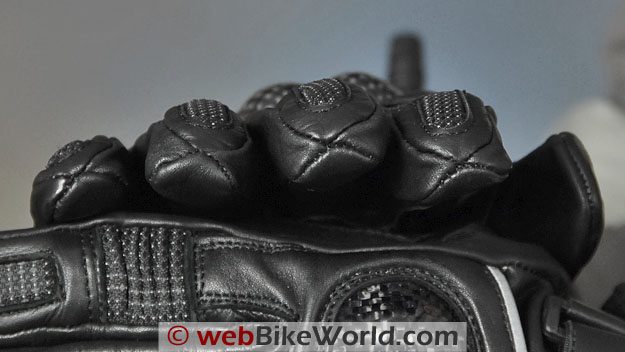
No more cold hands! Waterproof and comfortable with minimal bulk. The Firstgear Carbon heated gloves look and feel like “normal” leather motorcycle gloves, but light ’em up and feel the warmth! What started as as a simple look at a one or two different options for winter warmth has turned into a 9-part winter motorcycle glove marathon.
We originally called this a comparison but it’s turned out to be more of a survey covering a variety of solutions for cold-weather motorcycle riding. Obviously there are many more brands we could have evaluated, but we do think this report describes a variety of choices for a wide range of weather conditions and budgetary constraints.
The gloves in our survey range from the basic Fieldsheer Aqua Sport gloves designed for milder winters to the Firstgear Carbon heated gloves that are the subject of this penultimate installment. All of the gloves in the survey are claimed waterproof. One pair had a slight leak in the thumb, but the others passed our “bucket test” without a problem, including the Firstgear Carbon gloves.
That’s a very good thing indeed, considering the consequences of a leak in an electrically heated glove (don’t worry — it’s DC). That’s why they make fuses, I suppose… The question most webBikeWorld readers have though is very simple: Which glove is the warmest? This is especially important this winter, which has turned out to be one of the coldest on record here in the States.
OK, so heat is what you want? You got it. The Firstgear Carbon Heated gloves. Granted, comparing electrically heated gloves with the other non-heated gloves in this comparison may not seem fair. But when your breath freezes on the back of the visor and your neck feels like it’s wrapped in an icicle scarf, these are the gloves you want covering your mitts.
Firstgear Carbon Heated Gloves Electrics
We haven’t dissected a Firstgear Carbon glove, so we’re not sure of the exact layout of the wires or elements.
Firstgear told us the heating elements are in the back of the hand and down through the fingers, and each glove puts out 15 watts of heat at 12.8 Volts.
What we do know is that these babies will definitely keep your mitts warm! The Firstgear Carbon heated gloves are the first heated gloves we’ve tried that really do what they’re supposed to.
Designed to connect to a Firstgear heated jacket liner, the Carbon gloves can also be worn independently, which is how we evaluated this pair.
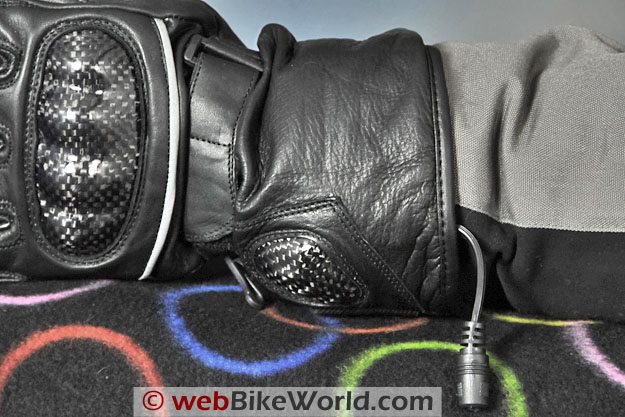
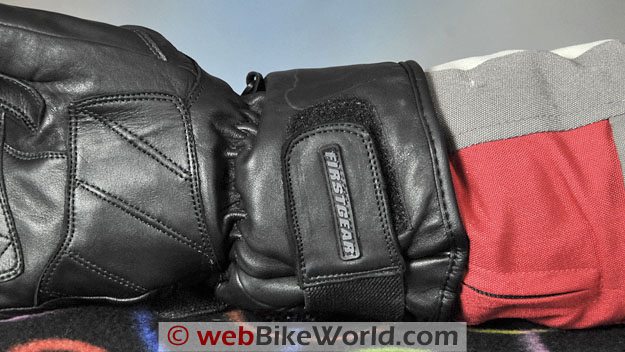
Each glove has a round coax connector (female) of the type commonly found on motorcycle heated clothing. The connectors are located on the inside of the gauntlet and which from up on top of the wrist.
Firstgear also provides a motorcycle battery harness with the Carbon gloves. The harness has round terminals for the battery and a 15-Amp blade-type inline fuse.
When all is said and done, we recommend using the Firstgear Carbon gloves with the Firstgear heated liner to avoid the wiring issues described below.
We haven’t tried the gloves with other brands of heated garments, but the coax connector will probably work; just make sure you carefully study the electrical requirements first.
An optional ($14.95) “Y” harness is required to use the gloves without connecting them to another heated garment. The Y harness connects the gloves to the wiring that goes to the motorcycle battery.
And unless you want the gloves to be “on” all the time — definitely not recommended — you’ll also need a controller like the Heat-Troller described below, which controls the electric flow to the gloves or turns it completely off if desired.
Take it from us — you want a controller and Firstgear recommends the use of a controller also.
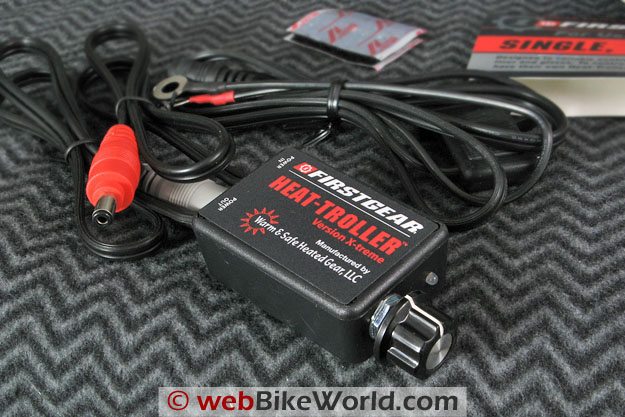
Optional Heat-Troller
We’ve discussed issues regarding the Heat-Troller previously on webBikeWorld.
We think it seems strange to have to buy the controller separately, which is analogous to buying a car and then having to purchase an engine as a separate option.
In the case of the Carbon gloves though, the absence of a controller as original equipment is understandable, because the gloves are primarily designed to connect to the Firstgear heated liner.
However, owners who wish to separately control both glove and liner temperature (you would, right?) will need either two Heat-Trollers or the dual Heat-Troller model. So the Heat-Troller is really a necessary option, if there is such a thing.
This is in no way an issue with or the fault of Warm & Safe, the manufacturers of the Heat-Troller.
We think the manufacturer of the heated garment should always provide a controller that will allow the rider to turned the heated garment on and off and to control the temperature. One of the reasons we like the Tourmaster Synergy vest (review) is that it comes with a built-in controller.
At time of publication, the Firstgear Carbon Heated gloves have a list price of $169.95 and the Heat-Troller lists for $69.95 from Firstgear ($89.95 from Warm & Safe, the manufacturer).
Add in the “Y” connector at $14.95 and we’re up to $239.90 + $14.95 = $254.85, a not insignificant sum. But what price warmth?
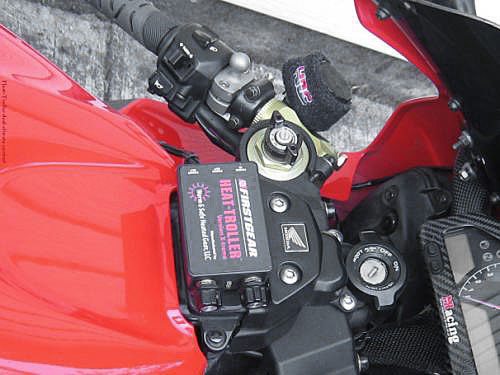
The Firstgear-labeled Heat-Troller feels like a robust unit, although it’s perhaps about 3 times larger than it should or could be in this age of miniaturization (but other types of Heat-Trollers are available, see below).
But one thing is surprising: The dial on the Heat-Troller does not have detents.
This is the first time we’ve used a Heat-Troller, so we assumed that a device with a dial that controls temperature and is used while wearing heavy winter gloves would surely have detents to provide feedback on the dial position? Apparently not.
The absence of detents also makes it difficult to place the Heat-Troller in a pocket, which we tried during the early stages of our trials.
The knob on the Heat-Troller moves too easily without detents, so put it in a pocket with gloved hands and the knob usually turns, changing the setting.
But even when the Heat-Troller is mounted on the handlebars or fairing, the absence of detents means that there’s no positive feedback on the settings. So you’ll have to either guess or take your eyes off the road to look down at it to see where it’s set.
Surely a series of detents, something like “Off, Low, Med, High and Roast” or similar would be of more value? How about it, Heat-Troller users — what say you?
Wiring Details
The primary disadvantage of heated gloves is having to deal with the wiring — one of the reasons we’re anxiously waiting for “the” breakthrough pair of battery heated gloves.
TThe actual labor involved in installing the wiring is relatively easy, but designing the layout takes some thought.
Dealing with wiring during everyday riding is usually a hassle, no matter what type or brand of electrically heated motorcycle garment is involved.
It’s something the rider becomes accustomed to and it makes ride preparation more complex than simply throwing on a pair of gloves, jumping on the bike and taking off.
But before you can ride and enjoy the warmth, you’ll need to install the wiring.
Most heated garments have connections for pants, liners, gloves, etc., but wiring any one of these independently and directly to the motorcycle battery usually results in compromises.
What you’re about to read is a very convoluted process for installing the wiring for the gloves to connect directly to the motorcycle battery rather than to another heated garment such as a jacket liner.
Again, we think it makes more sense to connect the gloves to the built-in wiring on the Firstgear heated liner rather than go this independent route.
Here We Go…
The Multistrada “mule” used for winter evaluations already has a short Tourmaster fused harness that is attached to the battery. It has a coax connector that is cable-tied to a frame tube on the left side of the bike.
This powers the Tourmaster Synergy vest, which has a controller that hangs out the bottom, so it’s a fairly straightforward procedure to get on the bike, plug in the vest, start the bike, adjust the temperature on the controller and go.
The Synergy controller hangs near the thigh and has push buttons for low, medium, high and off.
Although the Tourmaster-labeled battery harness was supplied with the Synergy vest package, it’s a standard coax harness and we experienced no problems using it with the Firstgear gloves thanks to worldwide electrical connector standards.
The basic harness routing for the gloves to be used independently of the Firstgear vest goes like this: battery harness, then a wire that runs up to the handlebars, then the Heat-Troller, then a Y harness connected to the Heat-Troller with the two opposite ends connected to the gloves.
The Heat-Troller has one wire going in and one going out and each wire is about 50 cm (20″) long.
Think of the Heat-Troller as a valve that flows electricity (or heat) to the gloves like a hose. So it must be plumbed in to the line somewhere between the harness that comes off the motorcycle battery and the gloves.
The biggest issue here is that the battery harness typically provided with motorcycle heated gear is short and provides only enough wire to run from the battery to one side of the bike, where the coax connector is usually secured with hook-and-loop tape.
The Firstgear labeled Heat-Troller harness is also short.
Since it’s usually mounted in front of the fuel tank somewhere on the handlebars or inside the fairing, it would have been better to have extra long wiring.
Warm & Safe, the manufacturer of the Heat-Troller, makes several different styles including a version designed for heated grips.
That unit has a knob that is mounted remotely from the control box, and it may have been a better option for us.
To mount our Firstgear Heat-Troller at the handlebars, we needed either a long battery harness or a single-wire battery harness extension with the coax connectors on either end.
Alternatively, the Heat-Troller could be connected to the short battery harness and the Heat-Troller could be mounted with double-sided tape or tape-backed Velcro down on the side of the bike.
Then you would reach down to operate the Heat-Troller.
We also tried connecting the Heat-Troller to the battery harness and placing the Heat-Troller in the left jacket pocket, but that didn’t work due to the Heat-Troller control knob (described in the Heat-Troller section above).
This all sounds very complicated but it isn’t really — it takes longer to describe it in words than it is.
The basic layout is this: battery harness, then Heat-Troller, then Y harness, then gloves. There are multiple ways this wiring can be installed.
The optional Firstgear Y harness we purchased is very long at about 1.3 m (about 50″), which means there’s a lot of extra wiring that must be coiled and secured up front.
We left enough of the Y harness up front to allow the rider to lift his or her hands to open the helmet visor or perform other tasks if necessary.
This is the only problem with using the heated gloves independent from the heated liner — you’ll end up with some extra wire artifacts up front, unless you route the wires up through the jacket, which is possible but which we chose not to do.
So here’s a recap of how it all works: After the rider is suited up and the gloves are on with the gauntlets over the jacket sleeve, get on the bike, perform all the pre-flight checks, start it up and then plug the gloves into the Y harness.
The Heat-Troller should not be turned on until after the bike is started. The very last step is to turn on the Heat-Troller.
Remember — this is a convoluted procedure only because the gloves are being used without connecting them to the Firstgear heated liner.
If you do this, remember that you’ll end up with extra lengths of wire between the gloves and the handlebars, which could be dangerous.
You’ll need the extra wire though to move your hands away from the controls to do things like lifting or wiping your visor, scratching your arm, etc.
Alternative: If the wires are run inside the jacket, the gauntlets should be worn under the sleeves, which results in a slightly more complicated procedure to put the clothing on, hook up the gloves, then button everything up while wearing the gloves.
If you’re wearing the Firstgear heated liner (and possibly others; we see no reason why the Carbon gloves wouldn’t work with other heated liners that utilized the same plug type, although we haven’t tried this), you could probably also connect the gloves as the last step.
Riding With the Firstgear Carbon Heated Gloves
After everything is installed and tested, it’s a real pleasure to click on the Heat-Troller, ramp it up and feel the Firstgear Carbon gloves pour out the heat.
The gloves distribute a nice, even heat just where it’s needed. Not enough to burn your hands, mind you — that would be both unnecessary and a potentially dangerous distraction.
They provide a nice even amount of warmth with enough power to keep our hands warm in the coldest temperatures we’d ever dare ride in.
In milder temperatures, like 40-degree F days (4.5 C), the usual procedure is to dial back the heat from Ahead Full to Back Two-Thirds. At 45 F (7 C), we have to lower the heat to about 1/3 on, then cycle it on and off if the gloves get too warm.
Again, this is warm, even heat that can be felt, but not something that 20 seconds after it is turned on that you feel a strong surge.
Of course, the amount of perceived heat also depends on ambient temperatures and wind conditions. But the Porelle liner does a good job at blocking the wind. It’s also breathable and waterproof, as our “bucket test” proved.
The bottom line here is that the wiring hassles described above makes it all worthwhile once you feel the warmth that the Firstgear Carbon heated gloves provide.
Firstgear Carbon Heated Glove Fit and Comfort
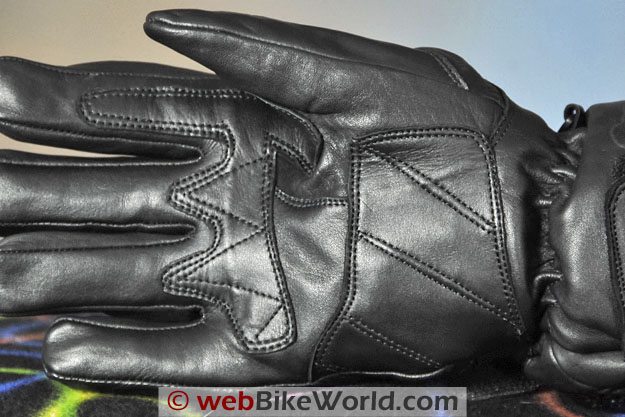
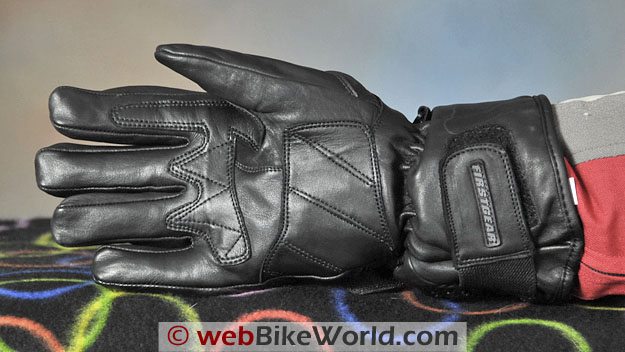
The Carbon gloves look and feel pretty much like your basic, all-around leather motorcycle glove.
They do have a slightly stiff feel, probably due to the internal wiring and the Porelle liner, but they’re generally comfortable.
One of the advantages of heated gloves is the absence of the thick insulation of non-heated gloves. This thick overstuffed feeling is one of the biggest complaints about heavy winter gloves, according to webBikeWorld visitors.
The Carbon gloves have a Thinsulate lining that doesn’t interfere with grip feel.
The liner material is soft and it feels like a thin micro-fleece. It’s fairly comfortable but it doesn’t seem to absorb or transfer moisture as well as it could, but it’s not bad otherwise.
The size large gloves shown here fit about 1/2 size larger than expected, which actually leaves just enough extra room in the fingertips for gripping the handlebars, but the “blade” shaped thumb is slightly longer than it should be.
Finger, Thumb and Overall Construction
The stitching and construction of the Carbon gloves is generally very good — not up to the standards maybe of the Held Freezer or Rev’it gloves in this comparison, but no obvious problems to report.
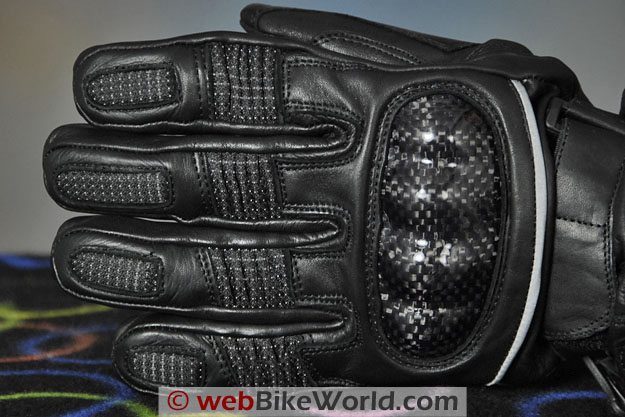
The fingertips use the “X” shape modified box section, which leaves enough room proportionally for the glove size.
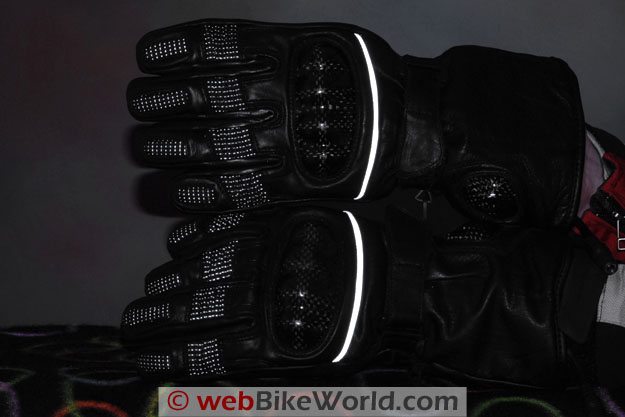
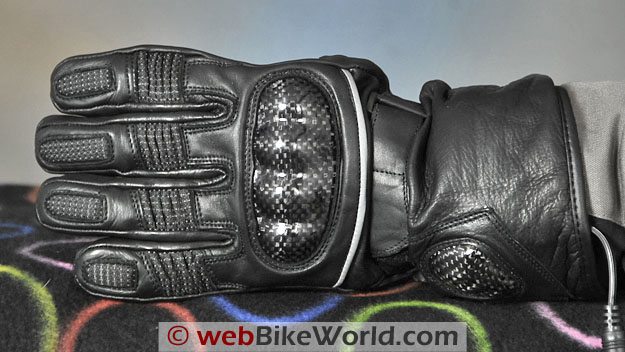
The backs of the fingers have reflective fabric sections with minimal padding underneath.
The Carbon name apparently comes from the large carbon fiber main knuckle protector, which floats on the back of the glove with a space underneath between the protector and the glove body. It provides enough room for the rider’s hand with no binding.
A separate section of carbon fiber is located towards the back of the wrist, over the scaphoid.
The leather was slightly stiff at first but seems to be breaking in over time and feels more supple.
There are no loose threads and the gloves exhibit very good overall quality.
Gauntlet
The gauntlet on the Carbon gloves is about 155 mm wide, which puts it around mid-pack in our comparison. The gauntlet is long enough though, which is important if the gloves are to be plugged in to an external harness.
We had problems getting the Carbon gloves to pass our “security test” at first.
To pass, a glove must remain securely on the hand when all of the straps are fastened and you try to pull the glove off with the other hand.
We’ve found that gloves with the wrist strap on the underside usually have less trouble with the test than when the strap is mounted above.
The Carbon gloves remain secure on some hands but not others because the topside strap can’t always be tightened enough to hold the glove.
Water Resistance
The Firstgear Carbon heated gloves passed the “bucket test”. The evaluator wears the gloves and puts his hand in a bucket of water for 5 minutes or longer, and if no moisture leaks in, the gloves pass.
Conclusion
The Firstgear Carbon heated gloves are a definite answer to cold hands.
If you can deal with the wiring hassles, the warmth and their waterproof capabilities make these the warmest gloves we’ve ever tried, and there’s probably no sane temperature where these gloves wouldn’t keep your hands nice and toasty.
More: 2008 Winter Motorcycle Gloves Home and Comparison Rating Chart
Owner Comments and Feedback
See details on submitting comments.
From “N.H.” (April 2015): “I’ve just read your review of the Firstgear heated gloves and have a short comment on the heat controller.
My Gerbings heat controller that I use with my jacket liner only has a detent for on/off. I’m not convinced of the need for any other indication. My controller hooks onto the belt on my jacket and is easy to reach.
Even with heavy gloves on it isn’t difficult to figure out where you’re at with it. I just keep turning it in small increments until I’m comfortable.”
From “T.S.” (March 2012): “I have a few good words to say about the Firstgear Carbon Heated Gloves. The review you wrote inspired me to purchase these gloves. It was a good decision. Here is my review.
I purchased the Firstgear Carbon Heated Gloves at the end of 2011, when the winter first began.
In Delaware, winter riding is not terribly challenging; 20 degrees is usually the coldest it gets. These gloves handle it with ease.
I use a Tourmaster Synergy heated jacket liner under a Tourmaster Accelerator 3/4 jacket. The gloves work great with this liner, as it has a three-position controller switch — high, medium, or low — and the gloves heat in lock-step with the liner.
Since I’ve begun wearing these gloves, my hands have not been cold.
The warming effect is not dramatic, but you’ll just notice that your hands are no longer cold.
Initially, I thought the price of the gloves to be a bit excessive at $169 but, after using them for an entire winter, I now feel the cost was justified. I can highly recommend this product. The price only hurts once, but your hands will be warm forever.”
From “B.L.” (December 2011): “Thank you for your excellent job at reviewing so much different gear. I know where to go when I am looking for a good review of a product that I’m looking for.
I was recently looking for information on the Firstgear Carbon Gloves, not for purchase, but for information.
I have owned a pair of these gloves for a few years now, I think three years, and have been using them with my Gerbings Heated Jacket Liner (review). Both products have served me well over the years.
However I have noticed these past couple of days that my left glove would turn off and the cold would come in. It’s been in the low 20’s (F) in the morning this week up here in New Hampshire and the left hand was getting fairly cold without the heat.
In the search for the gloves I came across the review and completely agreed with your findings, I even use the Firstgear Heat Troller with the jacket and gloves.
I think my issue with the gloves is how I take them off. After I arrive to my destination, I usually take the gloves off then pull on the cord to disconnect them.
Yes, that is the bad part, pulling on the cord and not the plug itself. I probably have the same loose connection as C.B. (comment below) but it is my fault.
Unfortunately, Firstgear’s warranty is only a limited two year policy. I will end up using another female coax connector and replace the failed plug connection.
The combination of the gloves, the heated liner, my TourMaster 3/4 length jacket, Tourmaster overpants, and the Tourmaster Response 2.0 boots have let me continue enjoying my riding throughout most of the year.
I can comfortably ride in 20 F degree temps (without the snow) for my 40 mile commute to work, my legs are a little cold but the core remains toasty warm. Thank you for the many wonderful reviews.”
From “C.B.” (04/11): “I have 3 winters on my heated gloves and jacket liner, and it truly has been great. One problem has developed; an intermittent connection at the wire on the right hand glove. I believe the gloves have a lifetime warranty and would be fixed free.
But, I plan on cutting off the old, and soldering in the replacement connector myself. All in all, I am still very happy with my heated gloves and jacket liner.”
From “J.M.” (2/09): “I ended up buying the gloves you reviewed and thought id give you my experience and review as I’m using them on a snowmobile in temps about 6-20 degrees this past weekend.
Overall these heated gloves exceeded my expectations.
They were plenty warm, they were too warm at full power and i couldn’t go past the half way mark on the controller. This tells me that these gloves would work perfect at 0 degrees and lower .
There has been days where I’ve ridden at -15 below 0. Anyone wanting to use them on a snowmobile will not be disappointed at all. The controller worked well and did not change settings even with all the jumping and rough terrain riding.
I used a cigarette plug adapter to power them as the new Arctic Cats come stock with a cigarette lighter type plug.
Thanks for your initial review as it was very helpful in choosing the right heated glove.”
From “R.P.” (1/09): “Hi, I don’t have the Carbon gloves, just the heated rider gloves. Are they both expensive? Yes, mine ran around 220 bucks for a dual portable troller, the gloves and the Y cable. In my opinion it was well worth the money.
I see it like this, why freeze then be in pain from frostbite or just your hands getting cold and uncomfortable to unbearable when you don’t have too, that’s like driving your car in the winter without the heat on and the window rolled down. That’s just my thoughts.”
From “M.B.” (1/09): “I am writing in response to your story regarding the First Gear Carbon Heated Gloves. I ride a ’05 CBR 1000RR year round. I commute 45 miles one way nearly every day that is not icy/snowy.
I use the dual controller that I have hook-n-looped to the Honda HESD steering damper cover.
I use this in conjunction with the heated jacket. This set-up is about as idiot-proof as it gets: plug the gloves into the wires from the sleeves, plug the jacket into the wire from the bike and turn the knob, and go.
Now, I also have the heated pant liners which I use on a separate line with the dual Heat-Troller… this I admit to not actually using as much because with my First Gear insulated water-proof over pants keep my legs so warm that I often get over heated.
These pants have a insulated liner that can be removed, but I’m too lazy to do that, and find that 90% I stay warm enough with this ensemble that I don’t have to mess around with the other.
I simply don’t want to hassle with running the gloves on one line with the jacket on the other since I always use them together.
I don’t find the issue of lacking detents a realistic problem because of the continuous nature of the control device. Need more warmth, spin it up; getting too warm, then turn it down. After all what’s too warm, or too cold?
It’s subjective; it would vary on my mood, health, speed, time, day, ambient temp and weather conditions any way. If there were only low, medium, high, and roast like you suggested that would be too limiting in my book.
Once the prerequisite wiring is in place it’s no bother. And even doing the initial electrical wasn’t any worse than any other project of this nature. Everything needed is included when you buy the Heat-Troller.
Generally, I am very pleased with this set-up… it’s actually the best that I’ve used in twenty years of wearing heated garments.
My only real complaint is with the lack of finite placement of the soft fabric liner in the fingers.
This comfort liner can sometimes shift if you stick damp hands inside the gloves and for some reason have to pull your hands back out quickly.
As in situation where you forgot to do something and need a bare hand (usually because of the need for fine dexterity) and upon pulling your hand out of the glove the fingers of the liner pull into the palm area.
Then you have to make sure the liner aligns into the proper gloved leather finger.
This only happened twice when I first got them… and only an issue because I was in a hurry. Now I make sure that I pull my hands out of the glove more carefully, and haven’t had an issue since.
I can attest to the fact that these gloves (and jacket) are the warmest of any brand I’ve used to date. I’ve used them to ambient temps of 27-degrees F and was comfortable. They witness everything from stop-n-go city traffic, up to supra-legal freeway speeds.
I live a a region that receives a lot of rain, and I’ve not had a problem with wet hands yet. This is my third winter on this set-up.
I don’t have especially large hands, but I found the sizing ran at least a full size small. So, I would strongly encourage people to try them on first, or check on return policy of place of purchase.
I usually wear a Large (I’ve even used Medium on some makes like Spidi racing gloves), these gloves that I now have are XL. So sizing my be inconsistent. I’ve had no issues with loose threads, or seams coming unsewn. When/if, these wear out I’d buy ’em again.”
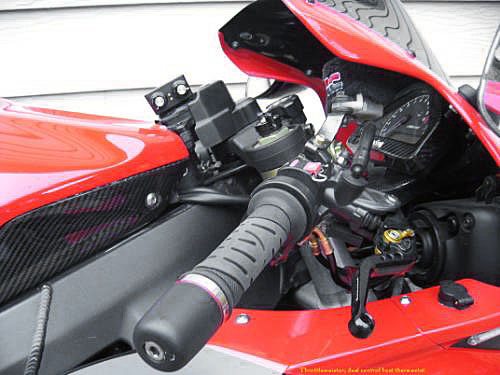
From “M.S.” (1/09): “For the extremely budget minded, a dimmer switch from an automobile (the one that dims the dash lights) works very well mounted to a fairing and sealed up protectively. They usually have detents and have a large detent for fully on.”
NOTE: webBikeWorld reader “M.N.” responds to the comments above: “(This) is bad advice and dangerous. IP dimmers are typically rated 2-5 Amps. Firstgear’s 90 W jacket at 12.8 V results in ~7 A… and that doesn’t even include adding in 15 W gloves!
A potential fire hazard (or at least, melting) exists if not properly fuse-protected.”
From “J.W.” (1/09): “I had a feeling I’d be emailing you directly after this review! It was nice to see it up there and also nice to see comments from other users and their experiences with the gloves.
The first thing I’d like to address is the wiring debacle. When I got ready to pony up the cash to purchase these, I also thought I was going to have to be tethered to the handlebars while rolling down the road, something I dreaded.
Another rider here at work wears only the gloves and no vest/liner. I went to him about it when he revealed one of those “Well why didn’t I think of that?” ideas.
He used one of the optional pouches for the Heat-Troller ($9.95 retail for the single controller pouch and $11.95 for the dual controller pouch) to clip to a belt/pocket and ran the Y-harness inside his jacket from his waist up through his sleeves.
He also sewed the wire harness to points inside of his jacket to keep it handy all winter long.
This leaves you with a setup similar to a vest or liner. If you’ll notice, the Y-Harness is unequal length so you can run it from either side of your waist. I’m 6’2″ with relatively long arms and there is plenty of wire to spare.
I also bought the Tourmaster vest last winter as the Firstgear stuff was back ordered in it’s first year.
When I bought the gloves along with the Heat-Troller and Y-harness I found that I could plug the Y-harness into the extra connector inside the vest that was originally put there for the heated pant liners.
I then cut the Tourmaster controller out of the loop and hardwired the vest so that I could plug in the Firstgear Heat-Troller. I used the Tourmaster elastic strap that the Tourmaster controller mounted on and attached my controller to that.
I’ll probably soon purchase the optional clip pouch my friend had.
Running the wires through the sleeves, neither I nor my rider friend at work have had any trouble fitting our sleeves inside of the gauntlet.
Perhaps your particular jacket/suit you wore during the test had longer sleeves and caused some bunching, but I personally haven’t had any problems with this set up.
A lot of people (myself included) look at the Firstgear heated gear catalog and immediately say “Why should I have to pay extra for this?” and “There are too many options. This is a hassle!” and on and on.
But when you look at it from a serious year-round rider’s perspective, you realize that 1) whatever it takes to make you comfortable (safe) on the bike, it’s worth it for reliable, high quality gear that works. And 2) rather than a complicated hassle, what you have before you are options.
Have a BMW that you don’t intend selling in this life or the next?
Get one of the dual permanent mount controllers and do a nice, clean install on your dash.
Do you have multiple bikes, or do you buy sell and trade so fast your friend’s aren’t even sure what’s in your garage?
Buy 1 or more battery harnesses and move them from bike to bike or have any of your bikes ready to go at a moment’s notice while you keep the portable Heat-Troller attached to your vest/liner/gloves.
I hope this information helps. Thanks again for the writeup.”
From “B.R.” (1/09): “I have been using a Heat-Troller with a Warm N Safe jacket liner for 4 years now and I would disagree with any need for detents or other visible settings. Here’s the deal –
When using the gear, you turn it on and if the temp isn’t to your liking you turn the knob up or down as required until you get the the temp that you like.
You would never really want to use with the controller in a pocket as with the variability of riding in cold weather you want to be able to easily access and adjust the temp – IE:
You’ll likely need it higher up when riding on a heavily shaded road, but when you pop out into a long stretch of sunny road you’ll likely want to reduce the Heat-Troller setting.
After a few uses, you get very good at “guestimating” how much you need to turn the knob to get where you want to be.
When I first started using it, I did tend to look at the frequency of the flashing LED on the Heat-Troller to get an idea of how “high” it was, but as I said above I quickly learned that wasn’t necessary – just go by how you feel and adjust accordingly from there.
I mount my Heat-Troller directly on the top of my fuel tank (with a strip of Velcro) so it is easily accessible with either hand while riding.
If I am running with my tank bag, then it gets mounted up on that again so it is always easily accessible for adjustment with either hand as needed. Works the charm.
Just used mine this morning for a 150 mile ride through central Florida – it was 37 degrees when we left, and had warmed up to 50 by the time we got back home.
I also use and highly recommend heated grips, though if I lived and wanted to ride all the time up “north” I’d likely switch to heated gloves.”
From “C.B.” (1/09): “For a couple of months I have had the heated gloves, jacket liner and dual heat-controller and they are working out very well for me. I have ridden in mid 20’s F and was comfortable.
What I think First Gear could improve on:
-
Larger diameter on the gauntlet cuff.
-
Somehow improve the wire or wiring hook-up between the glove and jacket.
-
Use better marking on the knobs as to which control knob goes to which output.
-
Softer/more flexible Wiring in the hook-up wire and wire sheathing.
I’m still working out what is the best controller location and wiring routes.”