Seventy Years Ago: The “Kompressor” BMW Scores a 1-2 Victory in the Tourist Trophy
“Asking me about the most impressive experience in my racing career, you will make my mind wander back to the year 1939 on that classic island in the Irish Sea, where the world-famous Tourist Trophy has been held for almost a century against the toughest competition you can imagine in international motorsport.”
These were the words in 1948 of Georg “Schorsch” Meier in thinking back of his “most wonderful victory”, which now lies 70 years in the past and has long become a legend – for Georg Meier was the first non-English rider to win the Senior Tourist Trophy on his BMW compressor machine.
This outstanding victory marked the climax of a long development. BMW had started to test compressor technology in motorcycle racing back in the late ’20s and Ernst Henne’s world records in 1929 had clearly proven that BMW’s supercharged engines were able to offer the very best in power and performance.
Even though this new technology was not yet absolutely reliable at the time, with BMW deciding to still use naturally aspirated engines in some races, the Company’s compressor engines already scored their first success on the road back in 1929: Hans Soenius in the 500-cc and Josef Stelzer in the 750-cc class brought home the first championships with supercharged engines in that year.
The second generation of BMW’s supercharged works motorcycles then made its appearance in 1935, now featuring a modern, welded tubular frame destined to enter series production just a year later in the BMW R 5 and R 6.
Now equipped with two overhead camshafts driven in each case by a side shaft, the engine was a brand-new development, just like the foot-shift four-speed transmission.
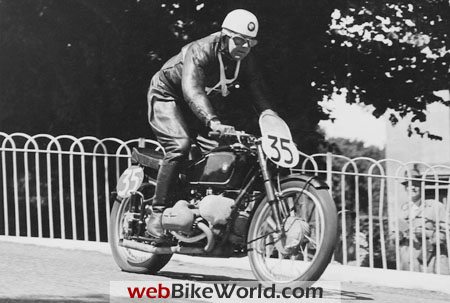 Jock West at the Tourist Trophy, 1939
1937/1938: Success on the Race Track
With Karl Gall and Ludwig “Wiggerl” Kraus standing out as the most successful riders in the early years, Otto Ley joined the BMW works team in the following season.
It was also in the 1937 season that BMW’s machines were upgraded by fitting the rear wheel suspension already tested and proven in six-day races, thus setting off the last disadvantages versus the international competition.
As a result, Gall and Ley soon became the most successful riders in the 500-cc class, and Jock West became the first English rider on the BMW Works Team, surprising everybody through his outstanding win in the Ulster Grand Prix in Northern Ireland.
And had Karl Gall not been forced to retire while leading the European Grand Prix in Berne, Switzerland, BMW would also have won the European Championship decided for the last time this year in a single race.
BMW’s compressor machines scored their greatest success on the track in 1938, when off-road rider Georg Meier entered his first season on the tarmac, winning the German, Belgian and Italian Grand Prix as well as the Dutch Tourist Trophy and bringing home victory in Hockenheim, Nuremberg and in the Eilenriede Race. This, clearly, meant both the European and the German Championships.
But there were also bad days in 1938 – for example on the Isle of Man. BMW had sent three motorcycles to the Senior TT on the Isle of Man, with Georg Meier, English rider Jock West and Austrian Karl Gall on the starter grid.
Gall suffered a severe accident in practice and Georg Meier was forced to retire on the very first lap due to a defective spark plug. The only good news was Jock West bringing home fifth place for BMW, improving his position over the previous year by one place in the final list of results.
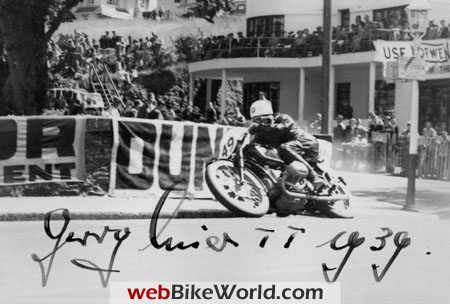 Schorsch Meier at the 1939 Tourist Trophy on the BMW Kompressor
Going For It: Careful Preparation for Racing in 1939
To quote Georg Meier, “this did not discourage us in any way in our plans to enter this challenging race with the same works team also in the years to come. So together with BMW’s small Racing Department we arrived in Douglas in good time, since the official practice sessions started fourteen days before the race.”
“Early in the morning, at the break of dawn, we were already out there on the roughly 60-kilometre-long island track where people claimed that ‘only an English rider was able to win the race’.”
“And believe me, the circuit with all its substantial challenges really demanded the utmost of the rider. The big advantage was that early in the morning the roads were absolutely empty, apart from the riders themselves, a few officials and the mechanics working untiringly on their jobs – the big crowd and all the spectators were not there yet.”
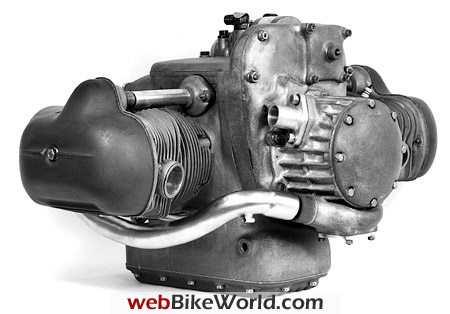
Still, BMW’s compressor machines from Germany were the subject of close scrutiny and observation – which is no surprise, considering that the Type 255 BMW RS 500 was not be underestimated: Displacing 492 cc, these outstanding machines developed 60 horsepower at 7,000 rpm thanks to their mechanical supercharger.
To keep the rider in control, properly handling all this power at such high speeds, the engines featured side shafts leading into the two cylinder heads where two overhead camshafts in each cylinder head controlled the gas cycle.
Benefiting from low weight of just 138 kg or 304 lb, the compressor BMW had a top speed of more than 220 km/h or 136 mph, provided the rider was consistently crouching down over the machine.
So within just a few hours after practice, the TT Magazine presented exact studies of the three riders and the speed recorded in each case.
Terrible News: Karl Gall’s Accident.
The 1939 TT was a tragic event for Karl Gall, before the race had even started:
On 2 June 1939 Gall once again suffered a severe fall in practice on the jump over Ballaugh Bridge.
And this time he was so badly injured that he died eleven days later. Once again, therefore, the Tourist Trophy had proven its reputation of being the toughest road race in the world.
Despite this tragedy, BMW decided to remain in the race. “But I was really under great mental stress at the start, with each rider setting out in thirty-second intervals,” states Georg Meier in retrospect, looking back at 16 June 1939.
Meier nevertheless rode a fantastic race, setting up a new lap record in the very first lap and leading the race ahead of his 42 competitors right from the start.
In lap two he improved his own record once again, becoming faster and faster as the race continued:
“I was able to complete the seven laps without any significant incidents and I received good news from the pits every time, so that I knew exactly what was going on. Filling up the tank twice in about 17 seconds, which allowed me to change my glasses and have a refreshing drink, went very well. And then, after 2 hours and 57 minutes, I at last saw the man with the black-and-white chequered flag waving me in as the winner.”
“What I really wanted to do most at that point was literally kiss and hug my wonderful machine with its white-and-blue colors on the tank which, apart from all those flies on the wind deflector, still looked brand new, without the slightest trace of oil or any signs of the incredible race we had just been through.”
Meier’s average speed was exactly 143.723 km/h or 89.108 mph, again a sensation.
As the next rider to cross the finish line, Jock West came in two minutes later on his compressor BMW, giving the Company a perfect one-two victory, especially as he was more than half a minute ahead of rider number three F.L. Frith on a Norton.
Zoomified image of the BMW Kompressor engine. Scroll and magnify!
Beaten Only By the Rules
Now, at the very latest, the BMW compressor machine was regarded as unbeatable.So when after World War II German riders were initially banned from international racing, they simply continued racing their compressor motorcycles in national events. And in most cases BMW finished right at the top, with Georg Meier on his compressor machine (which he had hidden in a barn during the War) bringing home all German championships from 1948–1950.
During these four years the works racing machines saw a number of modifications before the last national race with compressor motorcycles took place on the Grenzlandring Circuit in September 1950.
From now on German manufacturers and riders were once again able to enter international sports events, but here supercharged engines had been banned since 1945. So in response BMW converted some of the compressor machines to natural aspiration technology.
As a result of this ongoing development and modifications in the post-war years, hardly any of the works racing machines still in existence today are now in their pre-war condition.
Even the works machine on display in the BMW Museum features the modifications made for the last few races. And while BMW knew the
whereabouts of a racing machine in pre-war trim, the famous owner of this motorcycle enjoyed the machine himself regularly at racing events and for years would not even consider selling it: John Surtees, the only racing driver to win both the Formula 1 and the Motorcycle World Championship.
He had bought the BMW in disassembled form in the early ’80s, restoring this unique machine in a painstaking process and with a clear focus on the original. But in the meantime this unique machine has returned to its first “home” and is regularly entered in historical events.
Source: BMW press release. Date: June 2009.
Owner Comments and Feedback
See details on submitting comments.