

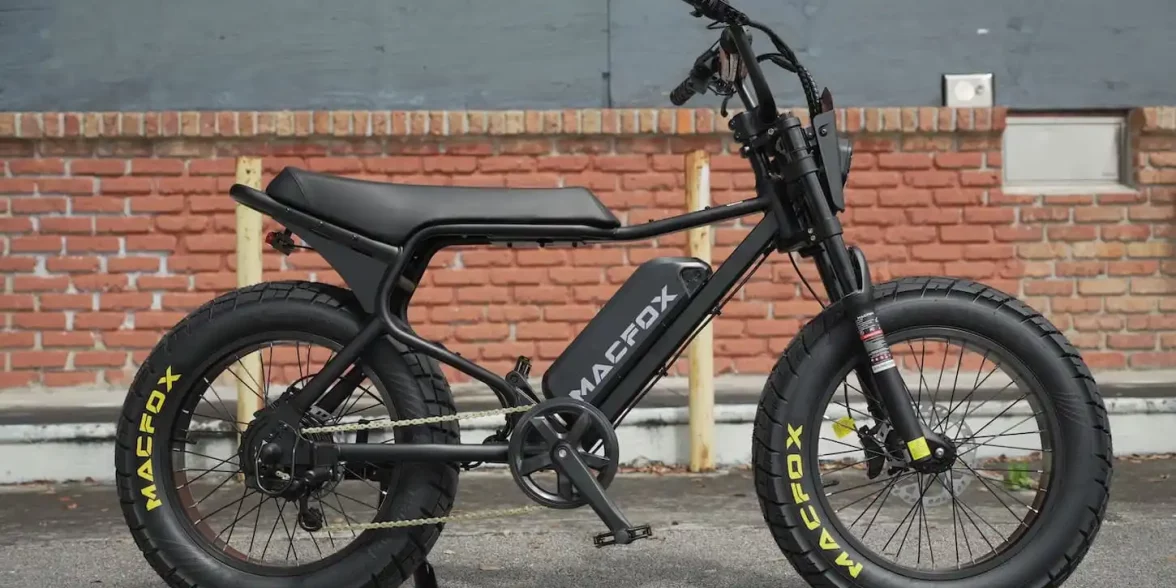
Back in 2024, webBikeWorld reviewed the Macfox X1S. At the time, nobody really knew who Macfox was because they had exactly two bikes to their name, a tiny social media following and virtually zero footprint online. Still, the X1S made a pretty compelling argument for a $999 bike. It was comfortable, incredibly easy to ride and nailed that vintage moped look. It wasn’t perfect though. Quality control was pretty hit or miss, and calling their customer service a work in progress would be putting it gently.
Fast forward to 2026, and it looks like a completely different company. Their catalog is now five models deep, all spinning variations on that original moped blueprint. You have the smaller frame M16, the baseline X1S, the X7 and X7L we are looking at today, a full suspension X2 and a limited run X1S x Bs.zay collab. More importantly, the whole lineup now boasts UL 2849 system specs alongside UL 2271 battery certifications, and they are all locked down to a street legal Class 2 limit of 20 mph. The tech press has definitely noticed. Electrek spent some time on the X7 in May 2026, describing it as a fully legal, UL certified ride with the actual presence of a real electric moped. Autoevolution tested the taller X7L and walked away singing the praises of its brakes, frame and price point.
The X1S itself is a good example of that growth. The bike on sale today is not the same one we reviewed in 2024. Macfox has revised it repeatedly since launch, fitting more responsive brakes, separating the throttle from the dashboard, adding upgraded brake pads and switching to puncture-resistant tires.It features higher-quality tires with superior puncture resistance, although these are not standard puncture-proof tires found on the market. The price has climbed alongside the spec sheet, moving from $999 at launch to $1,399 today. The cheap and cheerful commuter we tested has quietly grown into a more polished, more expensive machine.
If you want to see exactly how much this brand has grown, the X7 is the best yardstick in the garage. Let us break it down.
Review Summary
For readers who want the short version, here is how the Macfox X7 stacks up on paper and in published third-party testing:
- The Stance: The Stance: The X7 essentially takes the new X1S bones and widens everything for better stability. The most obvious upgrade is the rubber, specifically a 20×4.5-inch tire up front and a massive 20×5.0-inch tire out back. That is about as wide as it gets for this style of bike. The X7 upgrade is based on the frame of the new X1S model, rather than that of the older X1S.
- The Guts: Power comes from a 500W rear hub motor that maxes out at a 750W peak. It utilizes a dead simple single speed setup and a basic thumb throttle. Top speed hits a hard stop at 20 mph to stay Class 2 legal.
- The Range: A 624Wh battery promises roughly 35 miles of lab tested riding. If you throw down for the optional second battery, that target climbs to 70 miles.
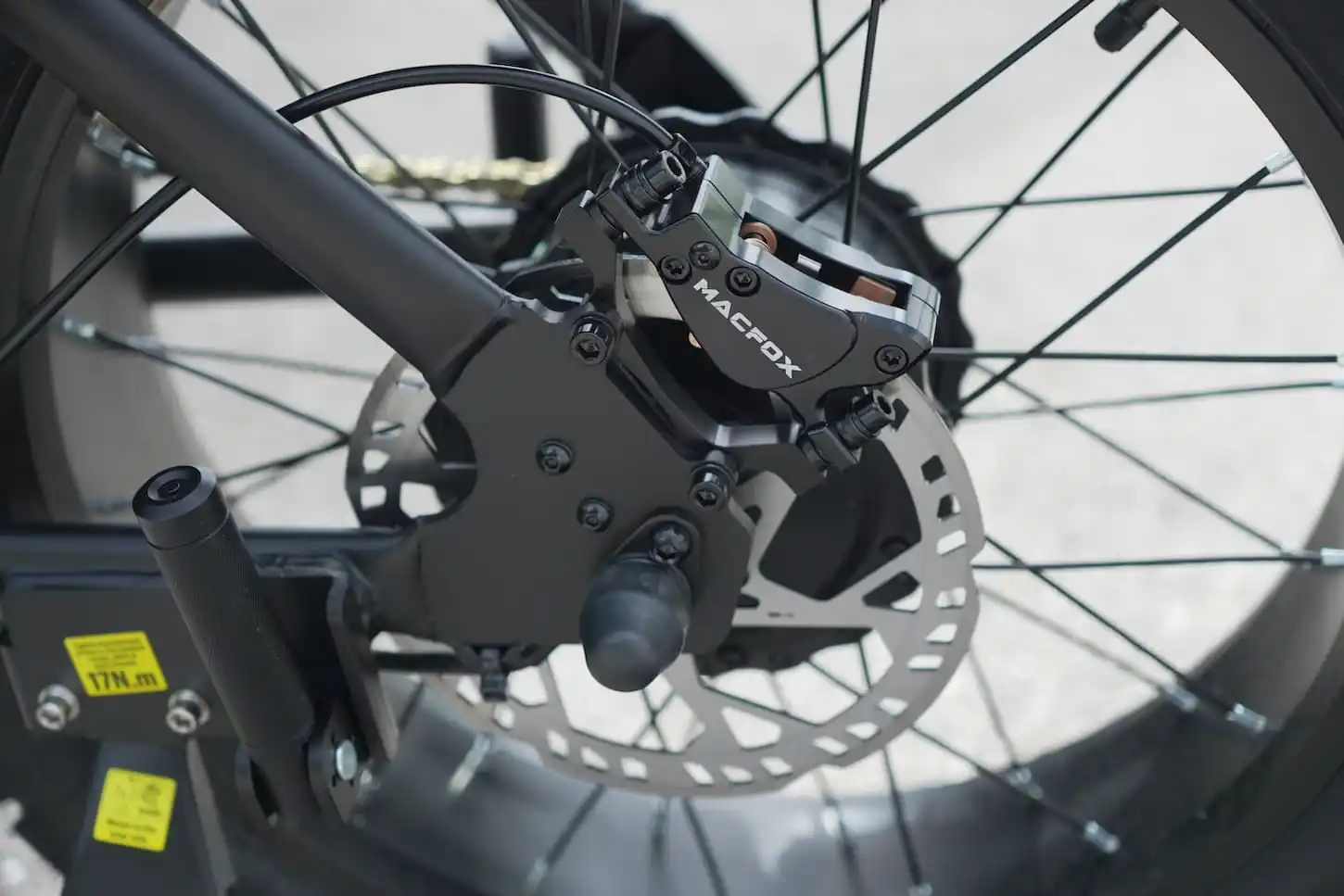
- The Fixes: Macfox completely swapped out the two worst parts of the 2024 X1S, which were the weak mechanical brakes and the useless rigid fork. The X7 now sports hydraulic discs on both wheels and an adjustable hydraulic hybrid spring fork.
- The Price: The Price: Retail starts at $1,599 across the Macfox electric lineup. Yeah, that is a steep climb from the old $999 entry point, but you get a lot more hardware for your money and the bike now comes in two distinct frame sizes. The starting price for Macfox’s new e-bike series is $1,099 (for the M16 model, with a promotional price of $1,049), whereas the new X1S starts at $1,399 (with a promotional price of $1,299).
 Credit: Electrek
Macfox X7 Specifications
| Attribute | Specification |
| Manufacturer Website | Macfox Bike |
| MSRP | From $1,599 USD |
| Style | Moped-style fat tire ebike |
| Motor | 500W rear hub (750W peak) |
| Battery | 624Wh (48V 13Ah), removable |
| Range | 35 miles single / up to 70 miles dual pack |
| Charge Time | 5-6 hours |
| Top Speed | 20 mph (Class 2 legal) |
| Throttle | Adjustable thumb throttle |
| Gearing | Single speed |
| Brakes | Hydraulic disc, front and rear |
| Suspension | Adjustable hydraulic hybrid spring front fork |
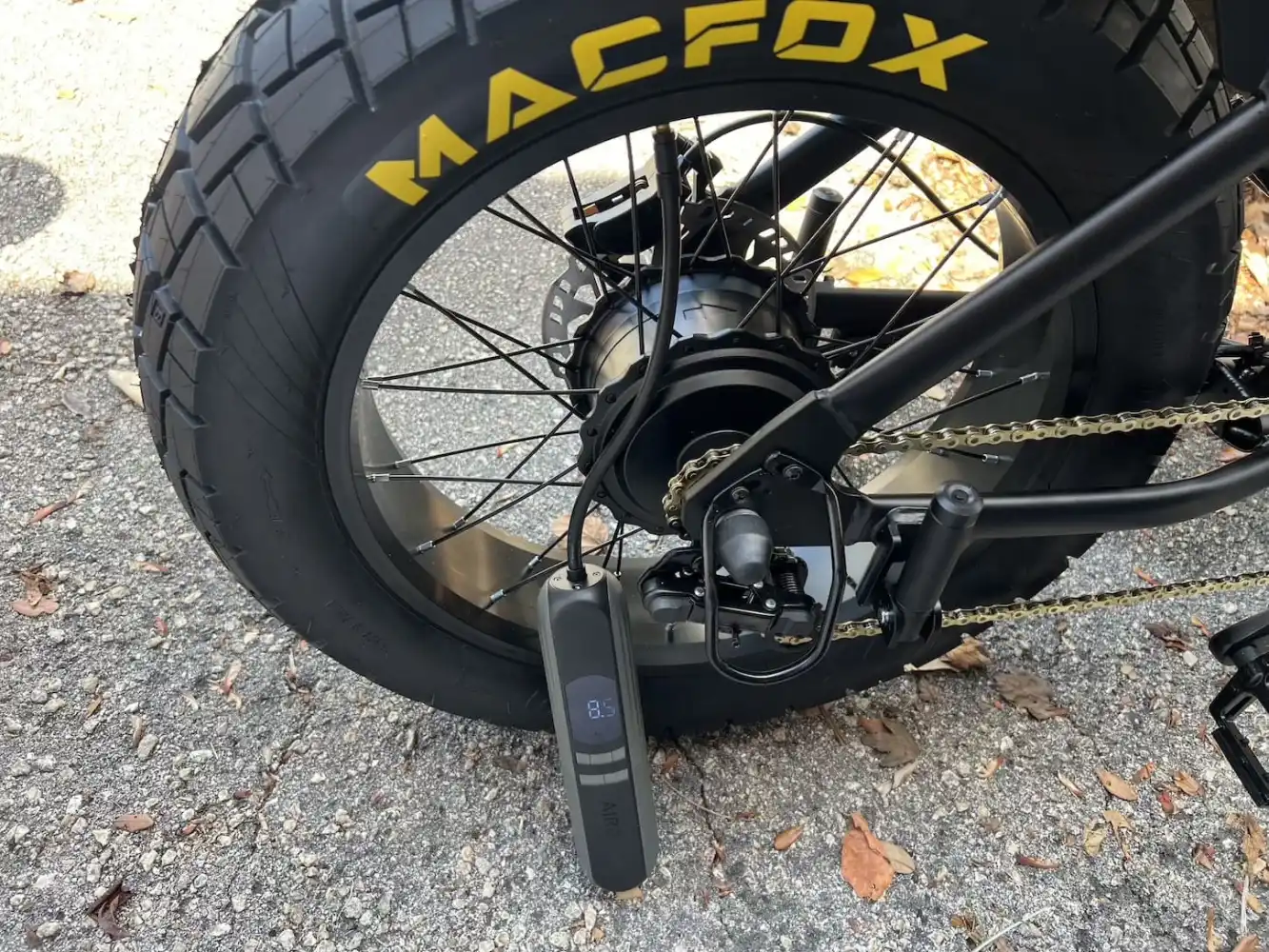
| Tires | 20×4.5 in front / 20×5.0 in rear |
| Frame | High-strength carbon steel |
| Weight | 87 lb |
| Payload | 330 lb |
| Seat Height | 30 in (X7) / 31.5 in (X7L) |
| Lighting | LED headlight and taillight |
| Certification | UL 2849 system, UL 2271 battery (single pack) |
What Changed From the X1S
 Credit: Electrek
To really understand the X7, you just have to look at everything we complained about in our 2024 X1S review. It genuinely feels like Macfox took a highlighter to that feedback and went to work. Just keep one thing in mind: some of those improvements, including the separated throttle, also reached the current X1S over the past two years. The X7 is not a patched-up version of the old 2024 bike. It starts from that newer, better-sorted X1S platform and then layers its own hardware on top, namely the wider staggered tires, the hydraulic brakes, the adjustable fork and the larger battery.
Take the brakes, for example. The old X1S ran on mechanical discs. They made sense if you were trying to keep a bike under a thousand bucks, but they felt mushy and never gave you much confidence when you needed to stop fast. The X7 switches over to full hydraulics at both ends, and their latest manufacturing batch includes reworked, quieter pads. Autoevolution actually listed the braking power as one of the best features on the X7L they rode, so this is a real performance bump rather than just marketing fluff.
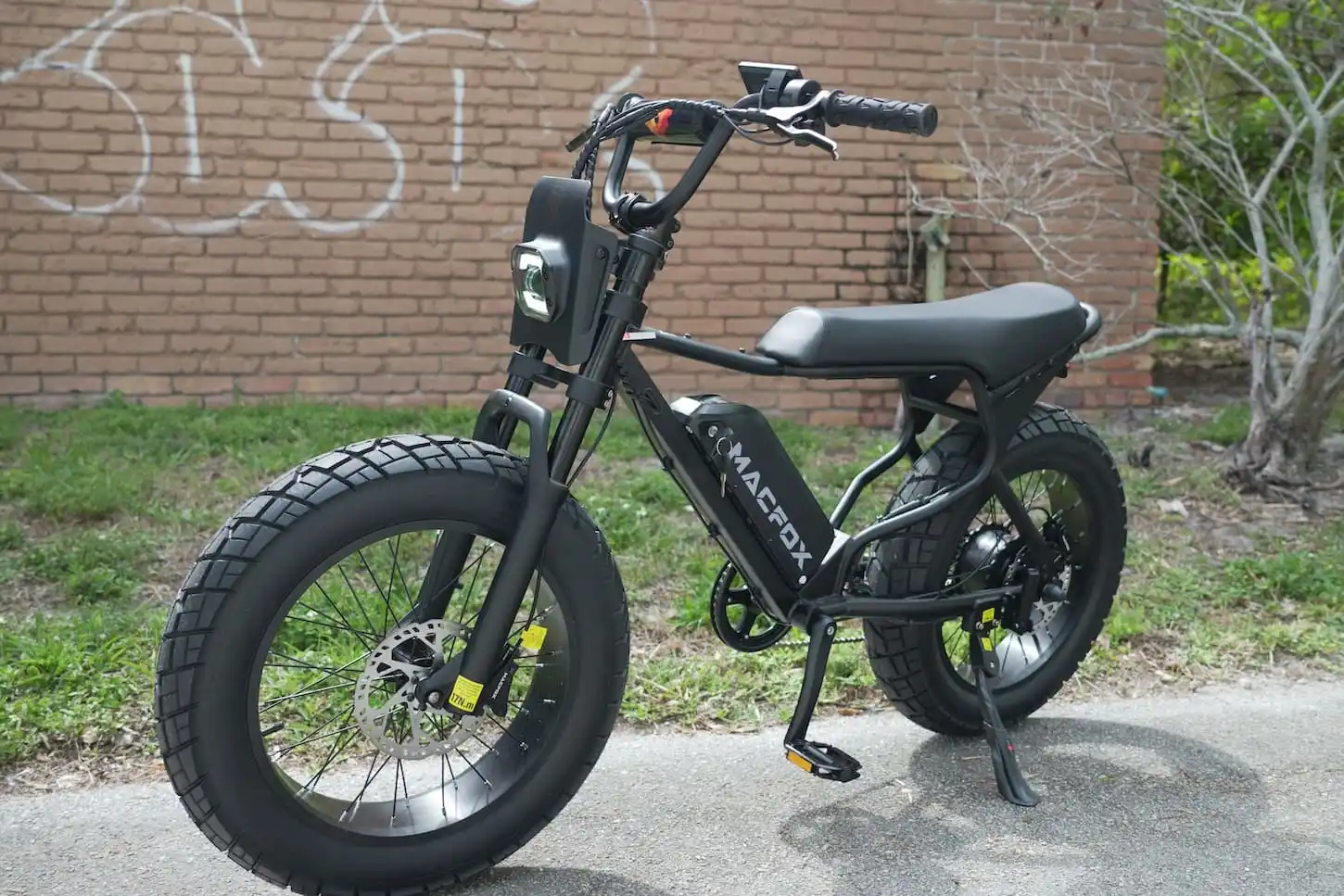
Then there is the front suspension. On the X1S, that dual crown setup was basically just cosmetic. It looked aggressive but rode exactly like a heavy, stiff fork. The X7 features a real hydraulic hybrid spring fork that actually adjusts, meaning you can finally tune it to your weight or whatever rough roads you are tackling.
 Credit: Electrek
The controls got a massive ergonomics upgrade too. Our original tester found the old full twist throttle incredibly laggy and awkward to modulate. Macfox fixed this by separating the display from the throttle entirely, swapping to a standalone thumb lever. You can adjust its angle, slide it around or even flip it to the left side of the bars.
There are plenty of smaller, smart adjustments scattered across the frame. A sharp, shield-shaped LED headlight replaces the cheap round bucket lamp. There is an actual, wired-in LED taillight instead of the sad reflector and dead-end wire we found on the X1S. Plus, the tires themselves got a compound rewrite for better durability and flat protection.
It is not all good news, though. The X7 weighs a whopping 87 lb. That is a massive 22-pound jump over the bike we put together in 2024. A bigger battery, wider rims and a thicker frame will do that. If you live on the third floor of an apartment building and do not have an elevator, you really need to sit down and think about that number before buying.
Performance and Components
 Credit: Macfox
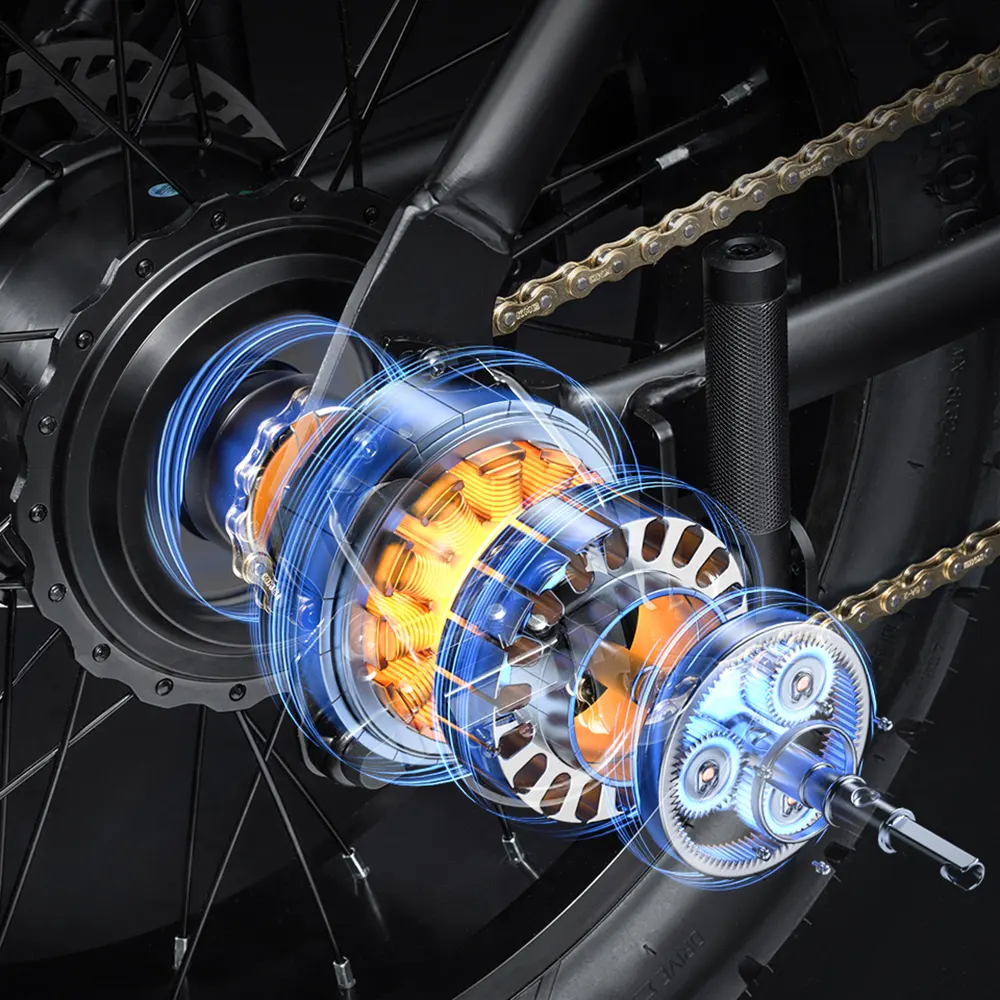
The actual riding mechanics will feel instantly familiar if you have spent any time researching the X1S. You are looking at a 500W rear hub motor pulling 750W at its peak, routed through a single speed drivetrain. There are no derailleurs, no gear shifters and no hassle. We honestly loved the single speed configuration on the old bike because it turns the entire experience into a simple matter of twist-and-go, and the X7 leaves that formula completely intact.
One surprise is that the top speed is now capped at 20 mph, down from the 25 mph maximum the X1S claimed two years back. While that looks like a downgrade on a spreadsheet, it is a much more practical choice in the real world. Locking the entire lineup into Class 2 specs means these bikes remain completely legal on standard US roads and paved bike paths without messing with DMV registration or licenses. It also paved the way for the strict UL safety certifications they have been chasing. For quick neighborhood runs or short daily commutes, 20 mph under pure throttle is plenty fast.
 Credit: Macfox
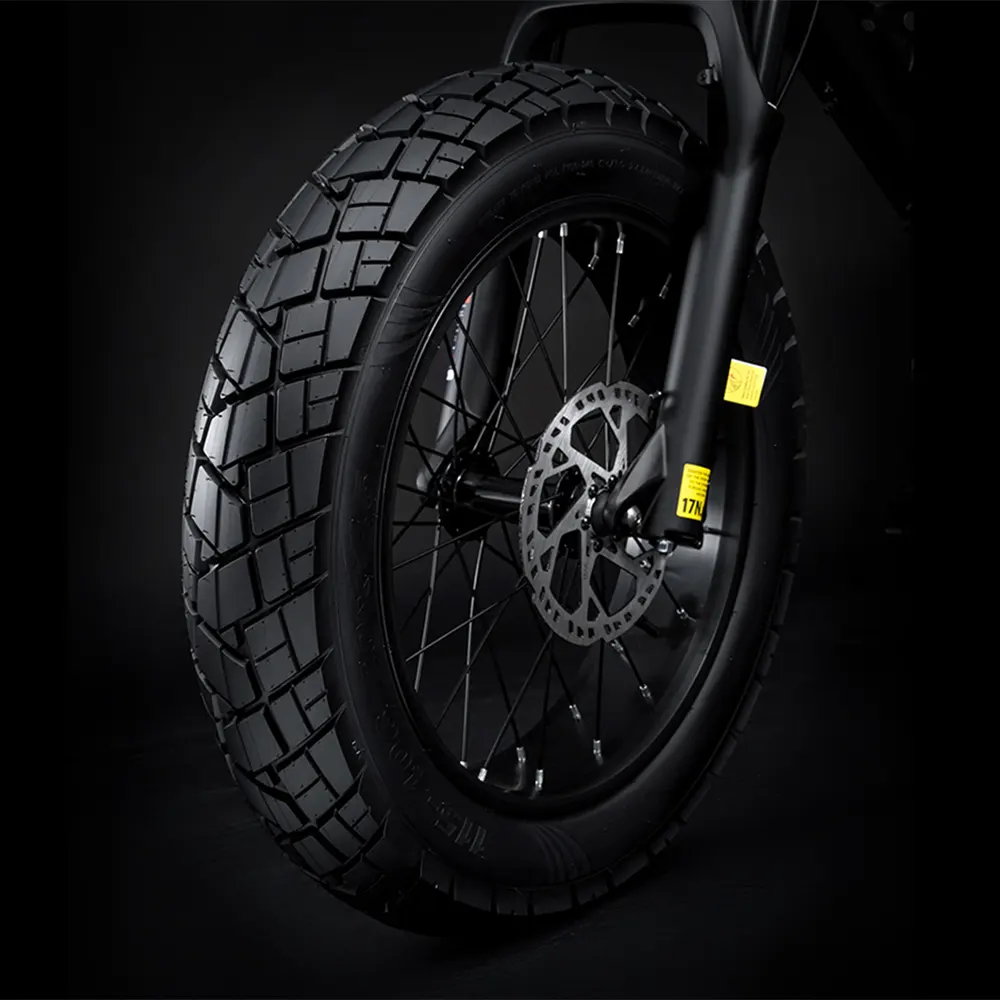
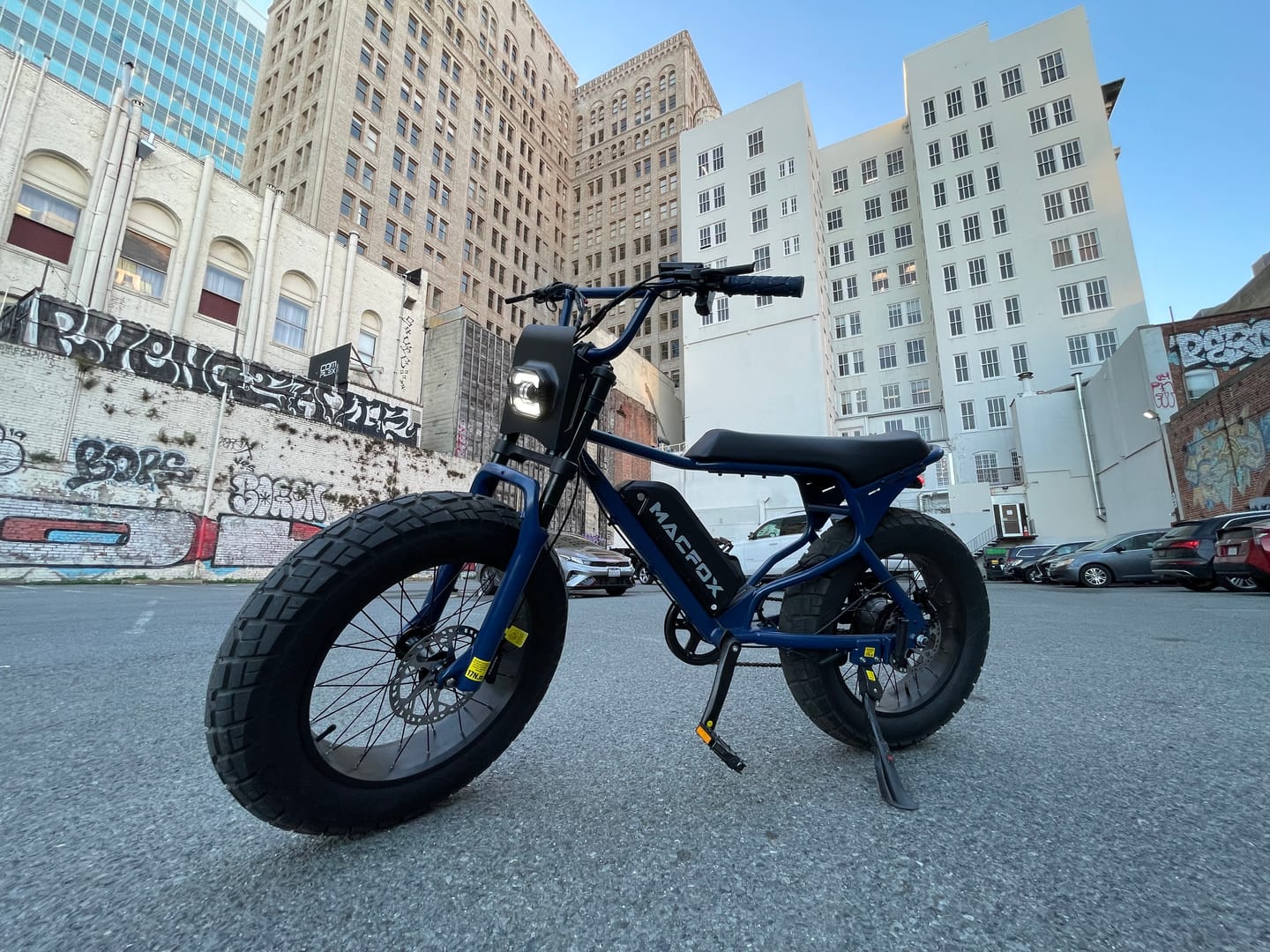
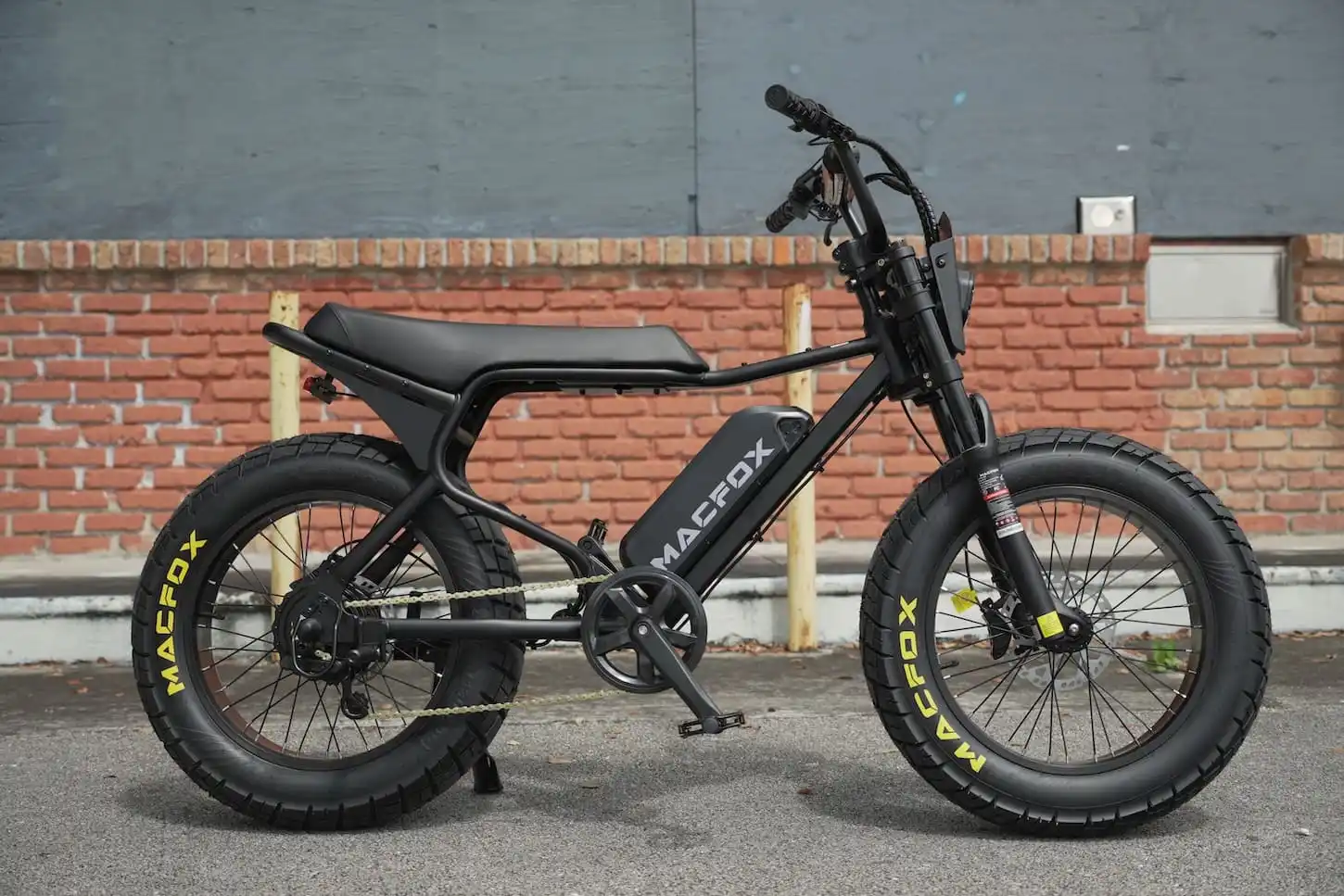
The real magic of the X7 comes down to the rubber. Running a staggered 20×4.5-inch front and 20×5.0-inch rear tire setup is practically unheard of in this bracket. According to everyone who has thrown a leg over it, the payoff is a beautifully planted, stable ride that standard, bicycle-derived frames just cannot match. Electrek explicitly noted that the X7 rides a lot more like a lightweight electric moped than a traditional bicycle, while still keeping things completely legal where local police care to check.
Up top, the cockpit keeps that clean, wide layout we liked on the X1S, now anchored by a separate LCD screen that tracks your speed, battery level, trip miles and assist mode. The carbon steel frame comes finished in a sharp matte black, and Macfox is now selling a massive catalog of official bolt-on accessories. You can grab different seats, alternative tires, colored chains or custom handlebars if you want to customize your ride.
Battery, Range, and Charging
 Credit: Macfox
The X7 runs on a 624Wh battery pack (48V 13Ah), which gives you roughly 25 percent more capacity right out of the box than the old X1S. Macfox advertises a 35-mile range under perfect laboratory conditions, meaning a standard weight rider cruising along on a flat road in a middle assist setting. Buying the optional second battery pack bumps that theoretical ceiling up to 70 miles, though there are two big catches. The second battery ships in a completely separate box, and the official UL 2271 safety rating only applies when you are running a single-battery configuration.
We should look at these numbers with the exact same skepticism we used back in 2024, when the X1S marketing team promised 76 miles and the bike actually died closer to 50. An 87-pound machine rolling on massive 5-inch tires creates a ton of rolling resistance. Heavy riders, steep hills, cold weather and leaning hard on the throttle will always drain the tank fast. The big difference this time around is that 35 miles feels like an honest real-world baseline instead of a total marketing fairy tale, which is real progress.
Charging up from a dead battery takes anywhere from 5 to 6 hours, which is completely standard for a pack this size. It still uses a key-lock system so you can pop the battery off and charge it at your desk or in your kitchen while leaving the heavy, muddy bike out in the garage or shed.
Design, Sizing, and Fit
 Credit: Electrek
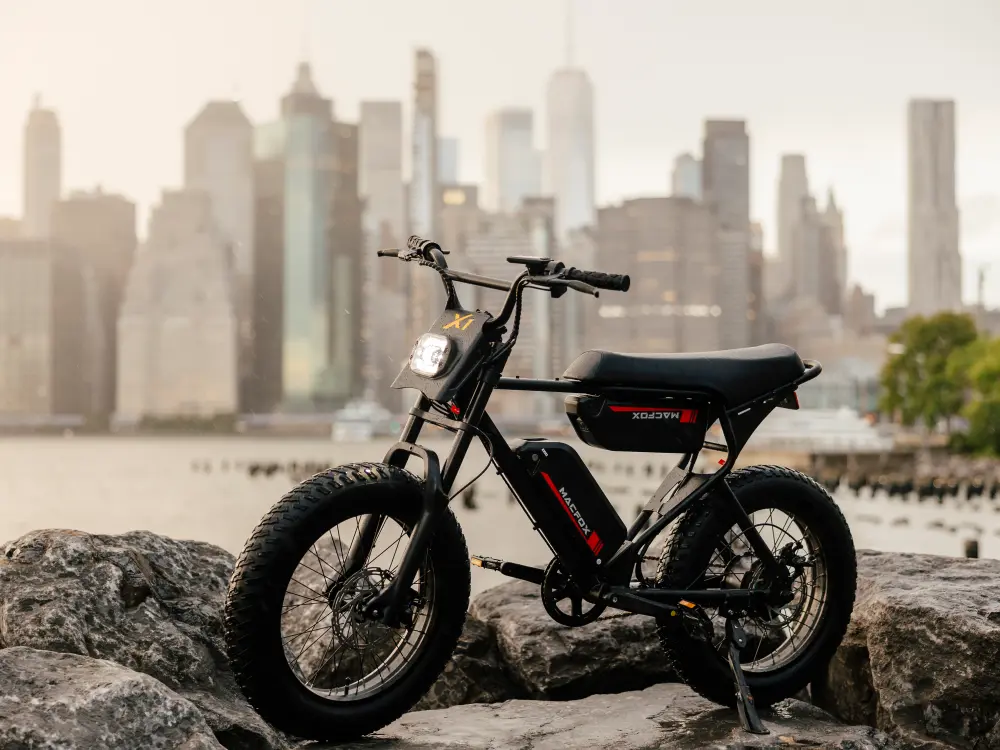
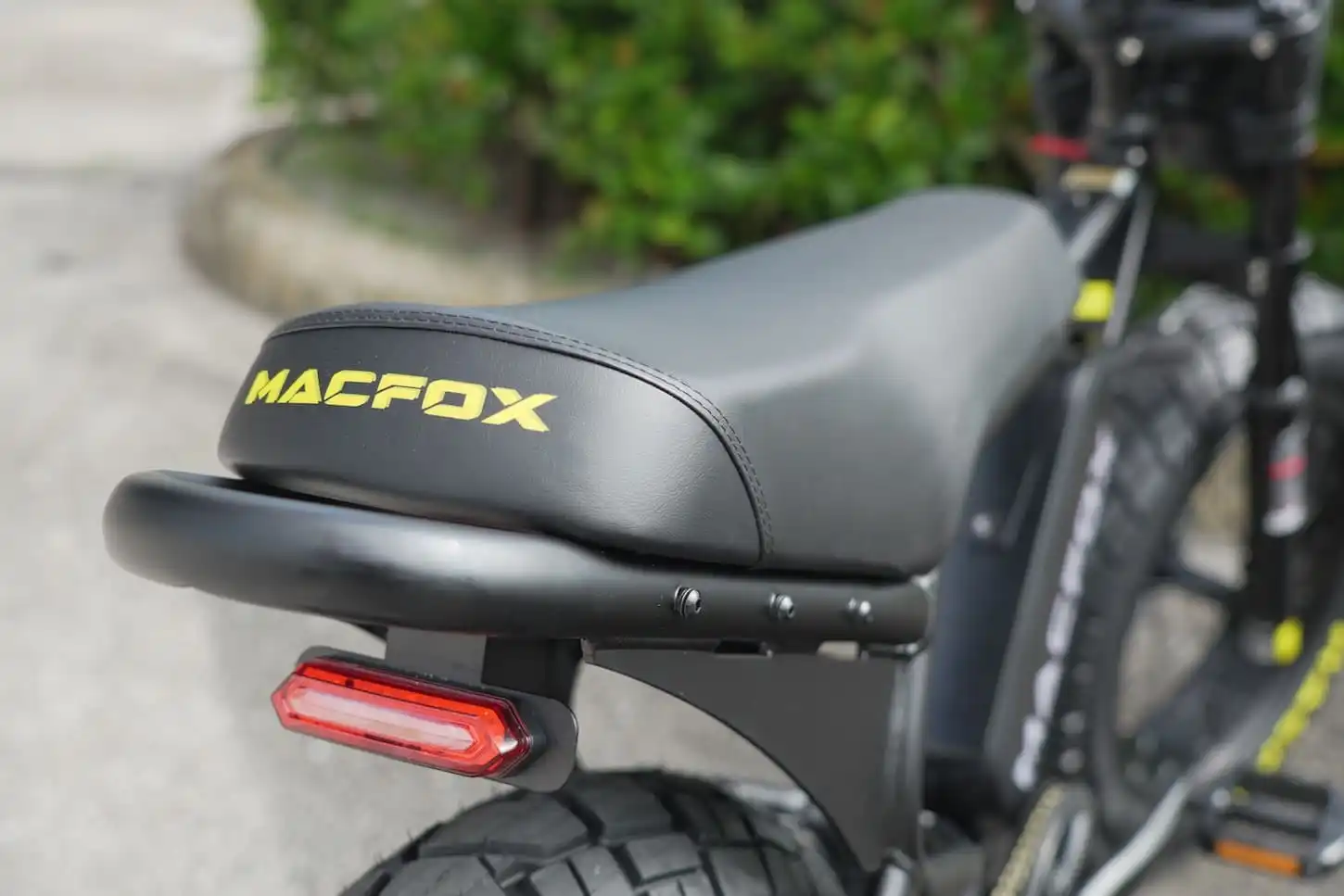
Visually, the X7 does not mess with the vintage scrambler vibe that made the X1S stand out in the first place. You get the signature long bench seat, wide-open frame tubes and a low, aggressive stance. That long seat remains one of the best comfort features on this platform because it gives you plenty of room to slide forward or backward to stretch your legs on longer commutes, rather than keeping you pinned to a tiny, painful bicycle saddle.
The big news for ergonomics is that the frame now comes in two distinct sizes, which is something the X1S never offered. The standard X7 uses a curved seat tube to deliver a low 30-inch seat height, making it a great fit for shorter riders down to 5’1″. The X7L raises that bench to 31.5 inches to better accommodate anyone 5’3″ or taller. Both versions boast a massive 330-pound payload rating. That is a huge 50% jump over the old X1S, and it is a big deal for larger riders or kids hauling a heavy backpack full of textbooks.
A Quick Reality Check: Macfox pushes their marketing heavily toward teenagers and parents looking for a cool neighborhood school commuter. However, the retro moped styling and simple twist-and-go mechanics give the X7 plenty of appeal for adult city commuters too. Even though the brand’s social media feeds love showing riders doing tricks and sliding around, our advice from 2024 remains exactly the same. Treat those clips as marketing hype, not an instruction manual. This is a street-legal commuter platform. Wear a helmet, get some proper gear and keep your speeds sensible, no matter what the glossy promo pictures look like.
How’s the Value for Money?
 Credit: Electroheads
At $1,599, the X7 is playing a completely different game than the old $999 X1S did, and that changes the math on whether it is worth buying. The original X1S was strictly a budget play where you forgave a lot of flaws just because it was cheap. The X7 asks for a lot more cash, but it makes it incredibly obvious where that money went, including real hydraulic brakes, a functioning front fork, a certified battery with more juice, massive tires, a 330-pound weight capacity and two frame sizes.
It still easily undercuts mid-range bikes from massive brands like SUPER73 while giving you almost the exact same look. Plus, Macfox is now backing their builds with a two-year factory warranty, which is significantly longer than what you usually get from cheap Amazon brands.
Of course, a few of our big questions from 2024 can only be answered with time. Long-term durability is still unproven, and our original X1S test left us dealing with a customer support team that was basically missing in action. The company’s massive growth over the last two years, their heavy investment in UL safety testing and great independent reviews from places like Electrek and Autoevolution all show they are moving in the right direction. Even so, if you are cross-shopping a newer brand against an established industry veteran, you should always factor post-purchase support into the equation.
The Bottom Line
 Credit: Electrek
When you look at the big picture, the X7 feels like the exact ebike the X1S always wanted to be. It keeps that incredibly fun, retro moped aesthetic but finally gives you the actual brakes, suspension and battery safety needed to back up the style. If you loved the original Macfox concept but did not want to live with all the cheap compromises, this is the version you have been waiting for.
At the time of writing, Macfox lists the X7 starting at $1,599, though they frequently run seasonal sales offering up to $100 off through the official Macfox site.