


The 2010 AGV Sport Tempest is a good all-around jacket at a very reasonable price. It’s comfortable in cooler weather and it does a good job at keeping out moisture on casual rides. There are literally dozens of motorcycle jacket reviews that have been published on webBikeWorld over the years, with prices ranging from front pocket change to nose-bleed astronomical.
I’d guess that choosing a jacket ends up being a decision based pretty much on two criteria — style and cost (or vice-versa). It all comes down to owner preferences and financial tolerance.
There’s a hope that expensive gear equates to, well, you name it: better crash protection, better rain protection, warmer, cooler…the list goes on. But who really knows? There is precious little real testing done to help the motorcyclist decide.
The EN standards in Europe are a start, but wouldn’t it be nice to have an independent lab certification? They would use standardized abrasion and wear tests that mimic what is needed in the real world to give motorcyclists a basis for comparison. One indicator of quality — like it or not — is price. Higher prices usually (usually) mean “better” gear. The problem here is that a lot of the extra cost may not be readily identifiable on or in the product.
Sometimes there are very subtle differences in fabrics, construction techniques and styling that make a difference, but the benefits of that difference isn’t always clear. The price/quality equation has changed dramatically, however, since we first started reviewing motorcycle clothing more than 10 years ago.
The differences that were very obvious back are not as obvious now, so comparing a jacket or helmet costing $200.00 and one that costs two or three times as much is a much more reasonable proposition.
While the good stuff may become even better and will always have buyers who want nothing but the best, inexpensive gear has improved dramatically in quality, styling, comfort and features — pretty much everything that matters to the vast majority of motorcycle riders.
Which brings us to the AGV Sport Tempest jacket. It has just about everything you’d need for street riding: style, comfort, protection, warmth, air flow, a modicum of water resistance and it all comes in at a copper Lincoln less than a pair of Ben Franklins.
AGV Sport Tempest Jacket Features
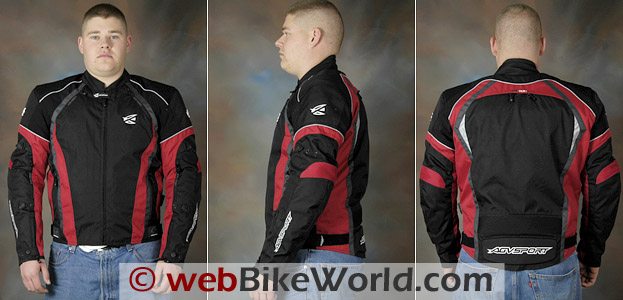
The AGV Sport Tempest jacket is new for 2010. Available in black, red, or blue, the Tempest is a basic but good-looking jacket.
The styling isn’t too over-the-top, so the jacket should have broad appeal with young and old. For example, the vertical colored strips down the front are a classic stylist’s trick to help make the wearer magically shed pounds, and I can state from experience — it works!
The Tempest jacket is also very well made; double rows of stitching or overlapping sections of material have been used where necessary.
The black fabric covering the elbows and the rest of the jacket feels very similar to the red fabric seen in the photos.
And due to the construction of the jacket it’s not possible to tell whether the abrasion areas like the elbows or shoulders have a double layer or not; feel tells me that they don’t.
But there are no missed stitches, loose stitches or hanging threads anywhere to be found and a careful examination of this jacket indicates a much better than expected level of construction and quality at this price range.
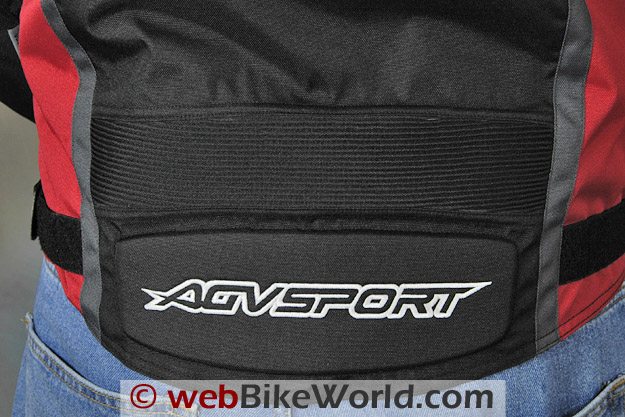
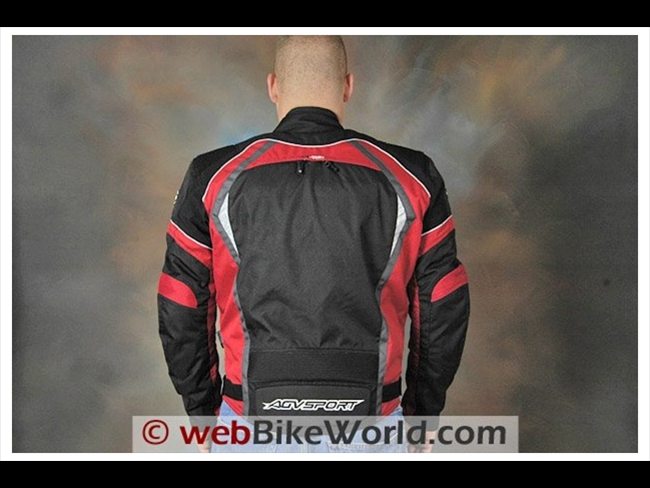
The Tempest jacket also uses accordion pleats at the shoulders and elbows, which add some flexibility without too much added bulk. A section of the accordion pleating is located at the lower back, but this section seems more for styling than for a practical purpose.
Shell and Water-Resistant Liner
The outer shell material has a relatively dense, thicker than average feel. It’s listed as polyester with just a touch of nylon. Polyester may have been chosen because it’s claimed to absorb less water than nylon, so perhaps it works better with the Reissa membrane bonded to the inside.
The Reissa membrane is one of those “breathable moisture barrier” types that we’ve seen before on many different items of motorcycle clothing and our experience with it has been positive.
Since the membrane is permanently bonded to the inside of the polyester shell, the Tempest jacket does not have a removable water-resistant liner. So the combination of the outer shell and bonded Reissa membrane must maintain the water resistance of the jacket (similar to theFirstgear Teton jacket we reviewed).
This format is preferred by some riders instead of the jackets with a removable water-resistant liner.
The outer shell of a jacket with a separate water-resistant liner may become waterlogged, while the shell on the Tempest may also become waterlogged, but the bonded water-resistant liner theoretically keeps the water from getting past the shell and on to the rider.
There are advantages and disadvantages to each type, but suffice it to say that it is very difficult to bond a water-resistant liner to the inside of a jacket shell and maintain 100% waterproof integrity, due to the stitching, pockets and vents.
We stopped using the term “waterproof”, despite the manufacturers’ claims, because our experience has indicated that very few, if any, “waterproof” jackets really are.
Our advice is to not to rely on the manufacturer’s claims and simply assume that every jacket (and pants and gloves) will leak. Some will protect better than others for longer periods of time, but if you’re really planning on riding in heavy rain for extended periods, buy a truly waterproof oversuit.
So where does this put the Tempest?
The Reissa membrane covers the entire inside of the jacket, even behind the vents. So the Tempest is surprisingly capable in mildly wet weather, based on our recent experience in wearing the jacket during a few days of on/off, light/heavy rain.
The thicker weave of the shell fabric repels water at first, but eventually it feels like the water starts to soak in to the outer shell, but the membrane works. Wearing a T-shirt means bare skin against the membrane will quickly chill, but it stays pretty dry inside.
Inside the front main zipper, the bonded membrane has a large flap that covers the rider’s chest, with the mating zipper offset to the left. This keeps a solid piece of the membrane behind the main jacket shell zipper, which definitely helps prevent drafts and rain from entering through the front.
Insulating Liner
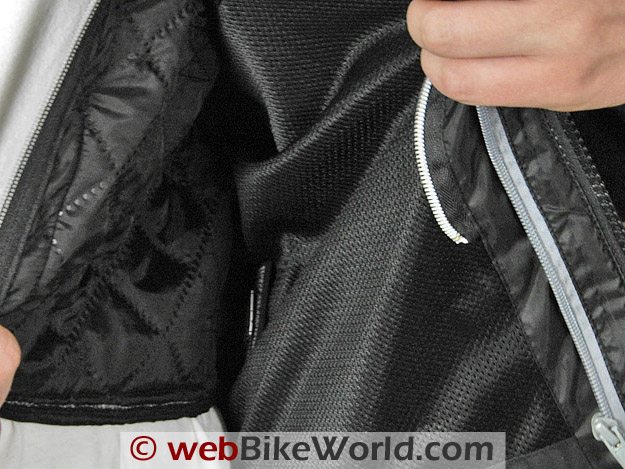
The Tempest jacket has a very nice insulating liner, with sleeves that continue to about mid-forearm to allow a thinner profile at the cuff to fit into gloves.
The liner feels very comfortable; I’ve been wearing the jacket with only a T-shirt underneath due to the seasonal weather, and then remove the liner as the day warms up.
Also, the permanently attached mesh liner material inside the Tempest jacket shell also feels more comfortable than this type of material usually does.
I noticed that the material feels more comfortable than usual when I’m wearing the T-shirt underneath. The mesh feels like it has a finer weave and care has apparently been taken to either hide the seams or construct them in a way that does not chafe the rider.
AGV Sport Tempest Jacket Venting
The Reissa membrane system bonded to the inside of the Tempest jacket and its water-resisting ability has an effect also on ventilation.
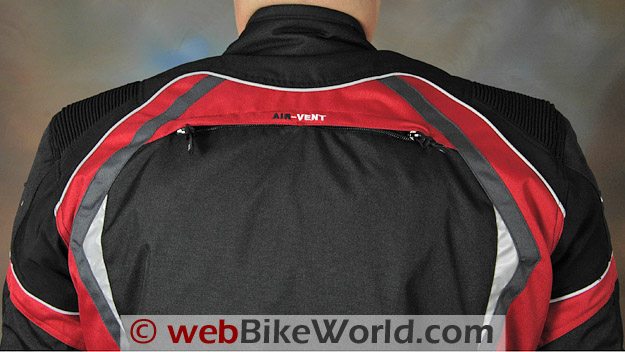
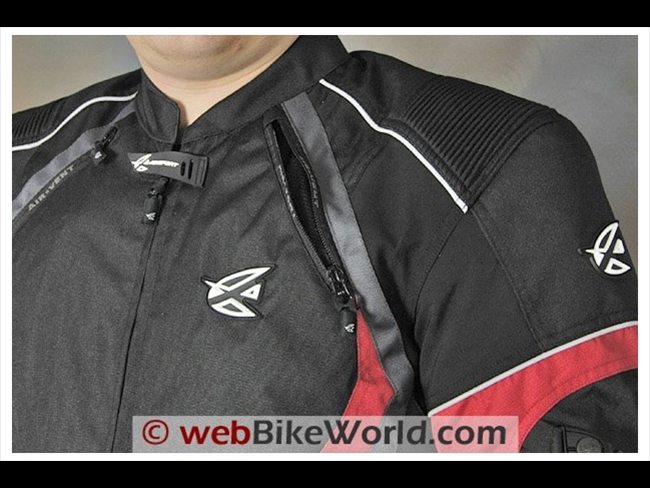
The jacket has vents located in potentially good air intake positions at the upper chest, on the upper arms and with a pair of short vents in the rear at the upper back.
But the Reissa membrane covers the entire inside of the jacket, including the vents. Shine a flashlight through the vent and the membrane appears very translucent, but it does block direct air flowing on to the rider.
However, the air circulates through the vents and out the back vents in the low-pressure zone, so unless it’s very hot or if the bike is stopped, the jacket remains relatively cool, although the air does not have a direct path through the vents an on to the rider’s skin.
When I’m wearing a T-shirt underneath the jacket with the insulating liner removed, I noticed that slow-speed riding behind a fairing can make my skin feel a bit sticky where it touches the liner, but that’s the compromise to be made for the water resistance.
When the temperatures reach past 80 degrees or so (27 C), it’s time for mesh anyway, so consider the Tempest as a three-season jacket that can shade either to colder weather with its removable liner or into summer until the heat forces a switch to full mesh.
The AGV Sport Tempest jacket has a comfortable (removable) insulating liner. The permanent mesh lining is also more comfortable than average.
Zippers and Closures
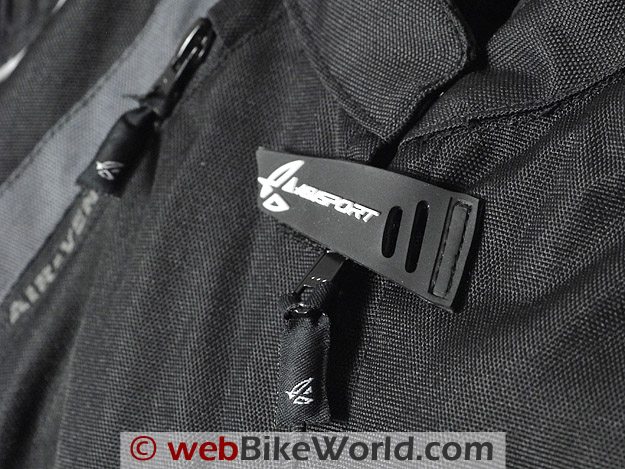
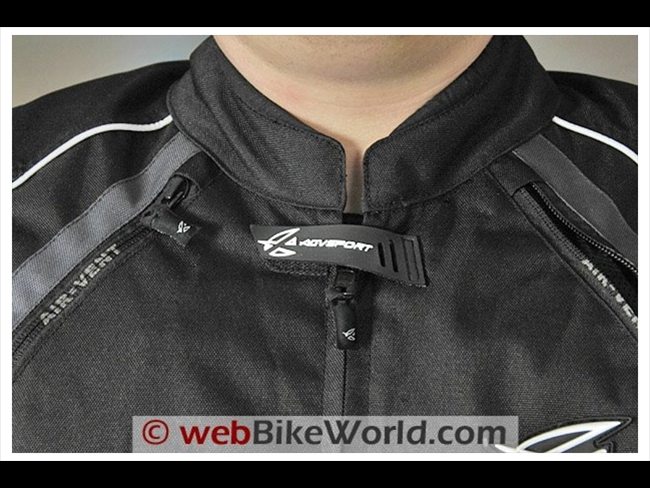
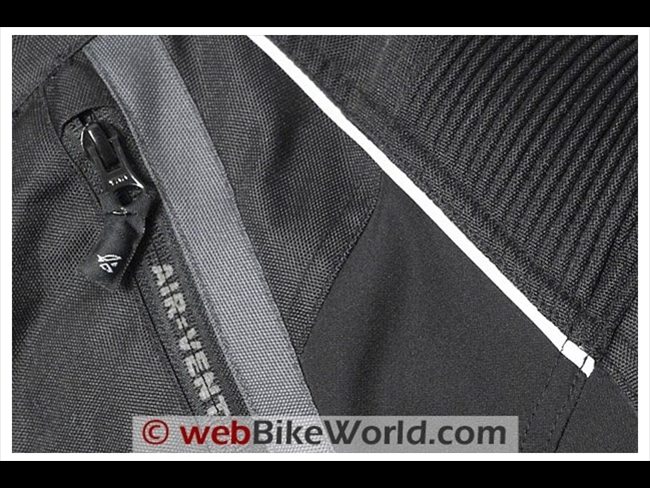
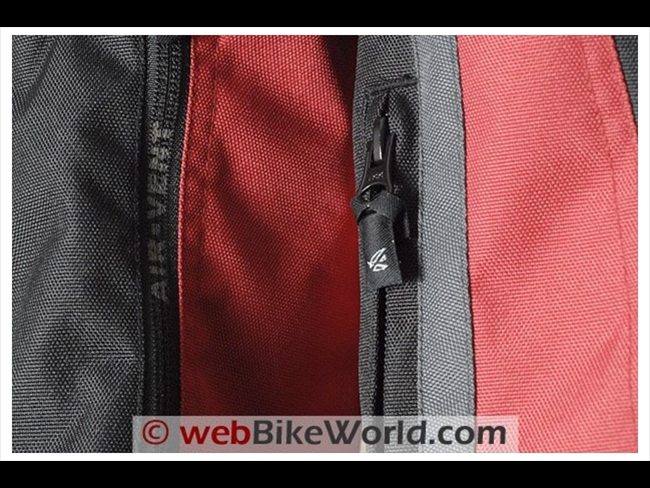
AGV Sport says that YKK zippers are used throughout on the Tempest jacket. I’m not sure if the zippers are made from a different type of material, but they seem to slide easier than average. The long fabric pull on each zipper helps also.
Trying to open the vents with one hand while riding can sometimes be an exercise in frustration with many brands of jackets, but doing so is both possible and practical on the Tempest.
Most of the zippers are labeled as YKK, except for the silver zipper that attaches the insulating liner.
This is a one-piece zipper that goes up one side, around the back of the neck and down the other side. The pull is not labeled but it has a quality feel.
The zipper that connects the Reissa membrane flap offset to the left also has an unlabeled pull. YKK usually has their logo on their zipper pulls.
The neck has a rudimentary closure system, with only a small piece of rubber-like material closing the upper neck with a hook-and-loop system.
There is basically no neck adjustment and the neck on this size large jacket fits my 17.5″ neck snug, but not uncomfortable. I don’t think it would stretch more than another 1/4″ or so.
The zippers covering the vents appear to have a variation of a water-resistant closing, with a material that almost seals over the zipper when the run is pulled shut. But the material feels like textile rather than the rubber-like substance usually found in water-resistant zippers.
I didn’t notice any unusual leakage through the vent zippers, but any moisture that does get through is blocked by the Reissa membrane anyway and large amounts of moisture can drain out the bottom of the jacket or sleeves, through metal grommets placed there for this reason.
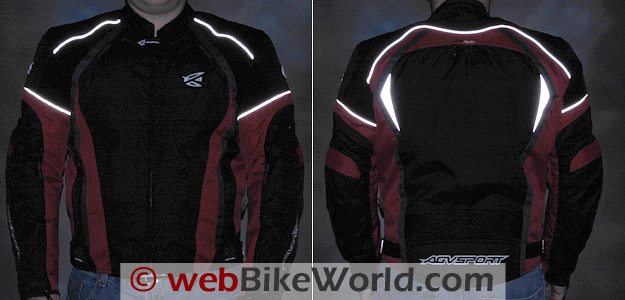
Reflective material used on the AGV Sport Tempest Jacket.Reflectivity
Illustrated in the photo above, the Tempest jacket includes highly reflective strips of reflective piping along the upper chest, back and arms, with additional reflective material sewn in as a dart behind the shoulders.
Jacket Sizing and Sleeve and Waist Adjusters
I’m combining these two sections for a reason, because they’re somewhat interrelated.
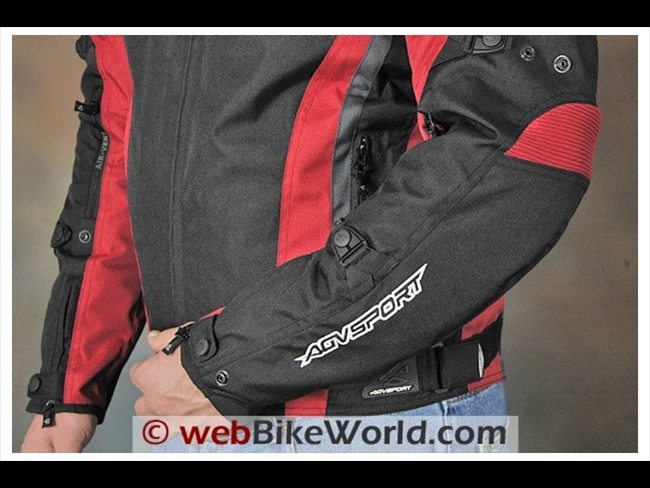
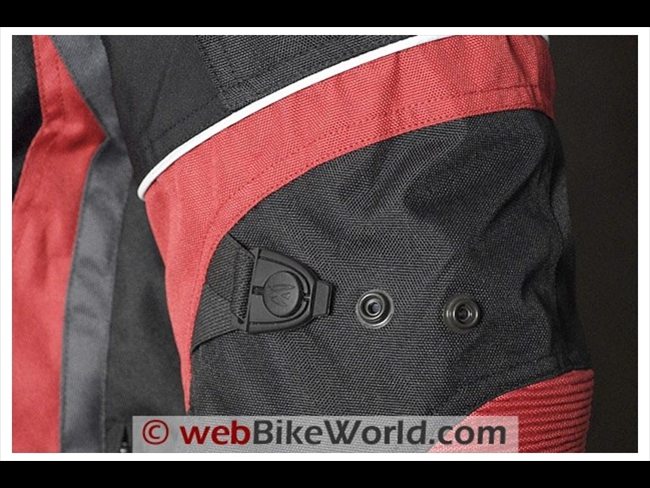
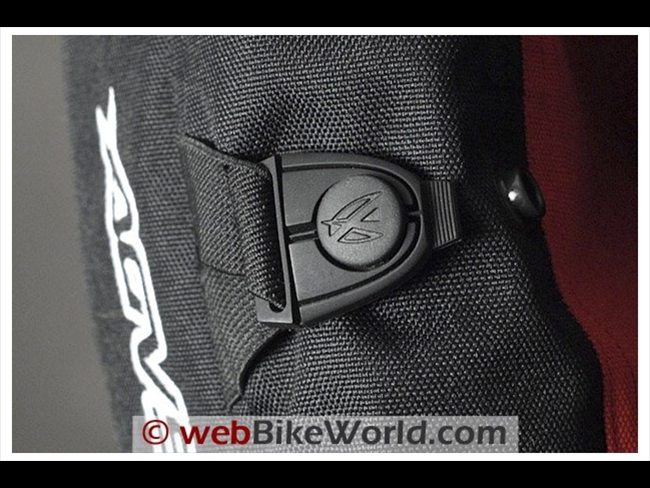
The Tempest jacket has adjusters on the upper arm and forearm. The adjusters are camouflaged black to blend in with the black material, but they are nicely styled with rubberized snaps attached to short sections of elastic.
They seem hardly necessary though; the sleeves on this size large are a bit tight for me, especially noticed when I bend my arms with the insulating liner installed.
I’d say that the sizing of the Tempest jacket runs one size smaller than I expected, with this size large probably fitting a 42″ to 43″ chest with the insulating liner installed, rather than the expected 44″.
The jacket also has a tighter than average tapered profile, which affects the sizing.
The AGV Sport U.S. website lists jacket sizes in Euro numbers only and not letter sizes, and it does not list chest sizes for each jacket size, which is an oversight.
This jacket is marked “L”, but since the sizing is in Euro numbers on the website, I can’t tell what the corresponding chest size is for the jacket.
AGV Sport products are distributed in the U.S. by Motonation, who also distributes Sidi boots (and who kindly sent the Tempest jacket for this review). The Motonation website has a discussion on AGV Sport sizing, which says “AGV Sport offers its jackets in two distinctly different “cuts”.
The numeric sized items are a more tightly- tailored cut and is offered in the more precise sizing runs. The American cut is a looser fit (especially around the belly) and is offered in the customary small thru XXL (or larger) sizes”.
Regarding letter sizes, the Motonation website lists the following: “Small/Medium = 42, Large = 44-46, X-Large = 48-50, XX-Large =52”. I think the size L Tempest jacket shown here is more like a 43/44; I’m not sure a 45 or 46 would fit. I’m a 44 and although I haven’t tried it, I think I may feel more comfortable in an XL.
So I can only say that the size L shown here feels like a U.S. men’s size 43 (43″ chest) when the insulating liner is installed. The jacket gains back that one size with the insulating liner removed.
We’ll have to assume my experience holds true for other sizes, but again, having the jacket with a letter size and the size chart with Euro numbers doesn’t help, and this is something that AGV Sport should fix.
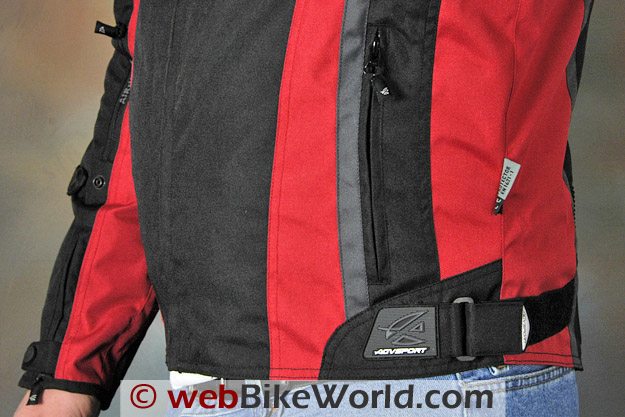
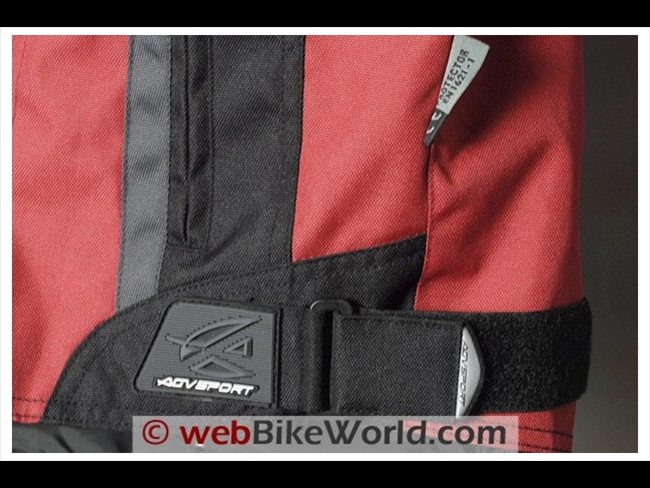
The Tempest has a nice tapered profile, so I left the waist adjusters (actually hem adjusters) in the full width position they were set to when the jacket arrived.
They look nicely styled, just like the sleeve adjusters and they work via a hook-and-loop system, so they should offer no problems and they provide about 80 mm of adjustment.
Dual air vent in the rear of the AGV Sport Tempest jacket.Kudos to the Sleeve Cuffs
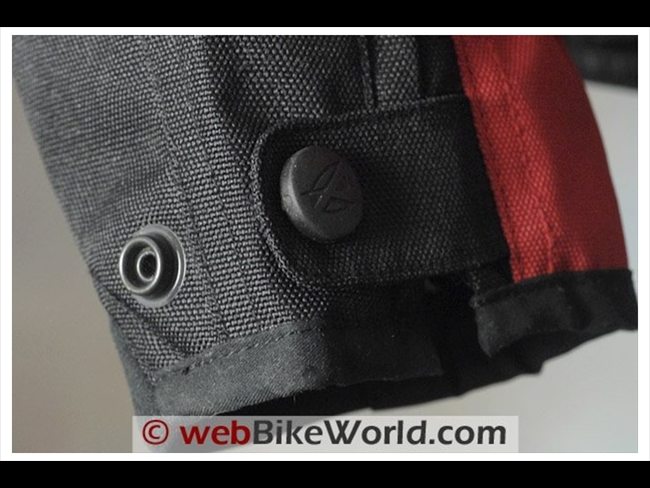
The cuffs on the Tempest jacket are actually rather nicer than I expected. They have a long zipper that starts about where the insulating liner sleeve ends — mid-forearm — and zip closed down to the cuff.
The cuffs have a very rubbery-feeling snap cover that hides a metal snap to secure the cuff, and this works effectively also to keep the zipper closed at the cuff, a problem we’ve seen on some other jackets lately that have a zipper that runs all the way down to the cuff seam.
The snap has two adjustment positions.
The cuffs are lined with a very soft material at the inside edge that widens to a large area in the rear of the cuff.
This material is also used in the neck, and it not only feels softer and more comfortable than the material used in many jackets, it’s supposed to be moisture-wicking also.
A glance inside the sleeve cuff on the Tempest jacket shows the care that was taken in construction. Sleeve cuffs are usually thrown together with the basics, probably figuring that the owner will never look inside.
But the stitching and seams are perfect inside the cuffs of the Tempest jacket, with a double row of stitching used in the back of the sleeve in the wider section of lining mentioned in the previous paragraph.
The sleeve cuffs have a metal grommet drain hole, as does the body of the jacket. This is to drain any water than might penetrate the liner and get to the outside of the Reissa membrane.
So AGV Sport gets an extra gold star for paying attention to a small detail like a sleeve cuff system (including the cuff, the zipper and the snap). It’s a very nice detail, especially at this price point, and better in fact than the cuff system used on jackets costing twice as much and more.
Close-up of zipper pulls and neck closure on the Tempest Jacket.
Pockets
The Tempest jacket features two hand pockets in the front. They are vertically oriented and open with zippers only. The pockets are lined and the lining feels like it’s the same Reissa membrane material, but this is unconfirmed.
The pocket feels like it’s a separate membrane placed in front of the membrane attached to the inside of the jacket shell.
The zippers used on the pockets do not have the water-resistant type of material that joins in the center when the zipper is pulled, and some water can enter through the zipper, but the location of the pockets and the zippers are such that this isn’t much of a concern.
The insulating liner has a tall narrow pocket inside on the right; it appears to be designed to hold a cell phone. A twin of this pocket is also located on the inside of the jacket shell.
The left side of the insulating liner has a larger patch pocket. Both of these are secured with hook-and-loop.
There’s also a slit sewn into the insulating liner on the left to allow access to a horizontally-oriented zippered pocket built into the permanent mesh lining inside the jacket shell.
This is a simple but nice feature and the pocket has the same long zipper pull used on the outside zippers. This pocket is behind the Reissa membrane and is handy for storing a wallet.
I’m not sure why they didn’t add a slit in the insulating liner over the jacket shell cell phone pocket also; instead, there are two of these pockets, one on the insulating liner and one on the jacket shell. So they could both be used for storage also.
Sizing
See the Jacket Sizing and Sleeve and Waist Adjusters section above.
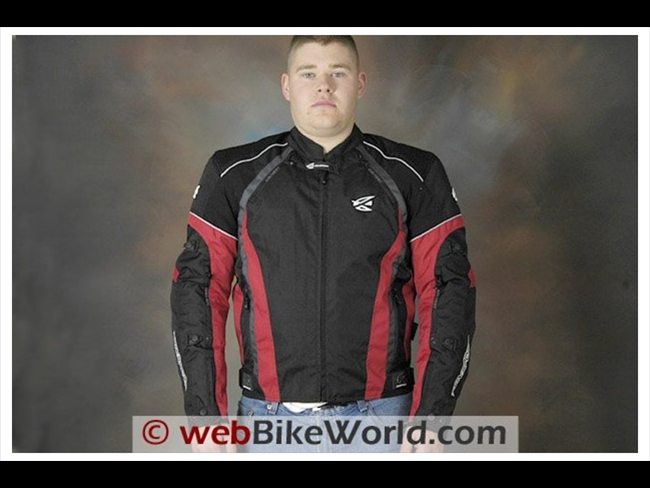
The model shown in the photographs usually takes a size XL, and the photos show that this size L Tempest looks a bit tight in the waist and across the shoulders.
The Tempest does seem to have a sharper “V” profile than some of the other short textile jackets we’ve reviewed, such as the Shift Trifecta jacket that was reviewed as part of this ongoing series.
Safety and Protection
The Tempest jacket includes CE-approved dual-density elbow and shoulder protectors, which feel well shaped and are integrated into the design.
The back has a thin (~8 mm) piece of removable padding in a pocket attached to the inner mesh liner. It’s possible that some types of small accessory back protectors could be fitted inside the pocket, but this is not confirmed.
The lower back of the jacket also has a built-in section of padding, seen below with the embroidered AGV Sport logo on top.
Detail of the lower back and embroidered AGV Sport logo. Close-up the waist adjusters, hand pockets and zipper pulls. Sleeve cuff and arm adjuster on the AGV Sport Tempest Jacket.Miscellaneous Features
The Tempest jacket has a short attachment zipper in the rear that can be used for attachment to AGV Sport pants. Although we haven’t tried them, the 2010 AGV Sport “Telluride” pants look like they’d make a nice match for the Tempest jacket, as they have similar styling.
Conclusion
The AGV Sport Tempest jacket is a good all-around choice for street riding in a range of temperatures and conditions. It has an array of usable features that provide utility and excellent construction, and the Reissa membrane offers good protection from the weather (within reason).
The insulating liner and the permanent mesh liner feel comfortable when wearing only a T-shirt underneath, and the extra care taken with the sleeve cuffs is a bonus.
That AGV Sport has an excellent worldwide reputation also counts, because you’re buying an established brand that has years of experience and a strong following. All of this makes the Tempest jacket a solid choice.
But the jacket has one big Ace up its sleeve, so to speak — when the very reasonable $200.00 list price is factored in, the Tempest also becomes an excellent value.
| wBW Product Review: AGV Sport Tempest Jacket | |
|---|---|
| Manufacturer: AGV Sport (U.S.) | List Price (2010): $199.99 |
| Colors: Black, Red/Black, Blue/Black. Sizes: S-3XL |
Made In: China |
| Review Date: May 2010 | |
Owner Comments and Feedback
See details on submitting comments.